In this article
What you’ll learn
- Grade A teak is a lifetime investment that lasts 30-50+ years.
- Avoid teak oils; use UV-protectant sealers instead to preserve color.
- Never use a pressure washer or steel wool on teak surfaces.
Teak furniture is widely considered the gold standard of outdoor living. With its high concentration of natural oils and silica, high-quality Grade A teak can last between 30 and 50 years—even when exposed to harsh elements. However, maintaining that legendary durability and aesthetic appeal requires more than just an occasional wipe-down. Knowing how to clean teak furniture properly is the difference between a piece that ages gracefully into a silver-gray patina and one that succumbs to mold, pitting, or structural damage.
In this guide, we will explore the professional techniques for maintaining teak in 2025, focusing on sustainable practices and modern design trends like the popular "Japandi" aesthetic.
Understanding Your Teak: Grades and the Patina Process
Before you grab a scrub brush, it is essential to understand what kind of wood you are working with.
The Three Grades of Teak
Teak is categorized based on which part of the tree the wood is harvested from. This significantly impacts how you should approach cleaning.
| Feature | Grade A | Grade B | Grade C |
|---|---|---|---|
| Source | Heartwood (Mature) | Semi-mature wood | Sapwood (Outer layer) |
| Oil Content | Very High | Moderate | Low |
| Durability | 30-50+ Years | 10-20 Years | 1-5 Years |
| Appearance | Rich honey/amber | Lighter, uneven grain | Very light, prone to knots |
Note: Grade A teak is the only grade that should be left untreated outdoors. Grades B and C lack the natural oils to resist rot and will require significantly more chemical protection.
The Natural Silver Patina
When teak is exposed to UV rays and rain, the surface oils evaporate and the top layer of wood fibers oxidizes. This turns the wood a distinctive silver-gray. This is purely cosmetic and does not mean the wood is dying. In 2025, many designers are leaning into this "raw" look as part of the Japandi trend, which blends Japanese minimalism with Scandinavian functionality.
The Best Way to Clean Teak Furniture: Routine Maintenance
For most homeowners, the best way to clean teak furniture is the simplest one: mild soap and water. You don't need harsh chemicals to remove surface dust, pollen, and bird droppings.
Step 1: Preparation
Choose a cloudy day or work in the shade. If teak is hot to the touch, the cleaning solution will dry too quickly, leaving streaks. Remove all cushions and fabric accessories.
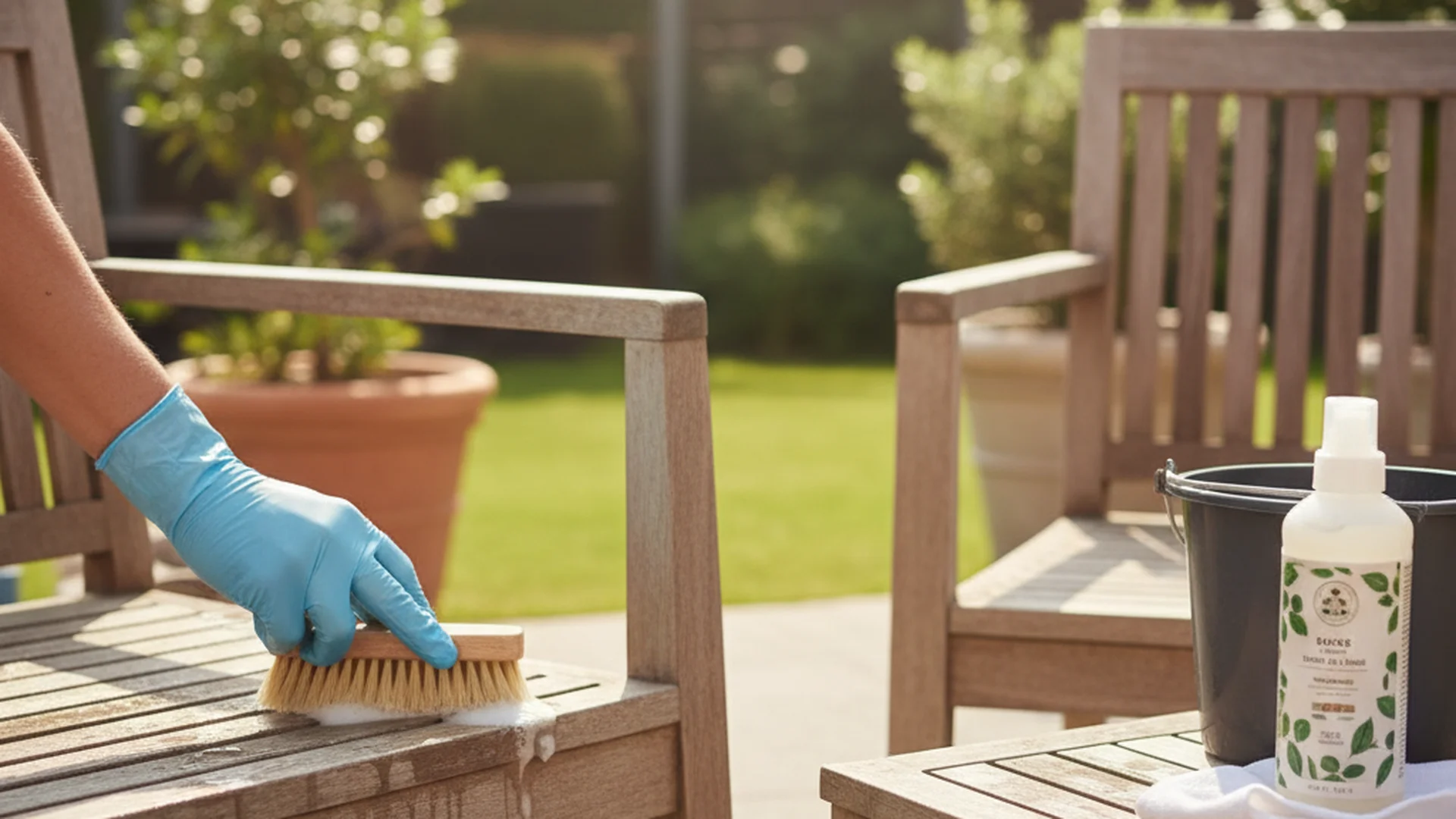
Step 2: The Soapy Scrub
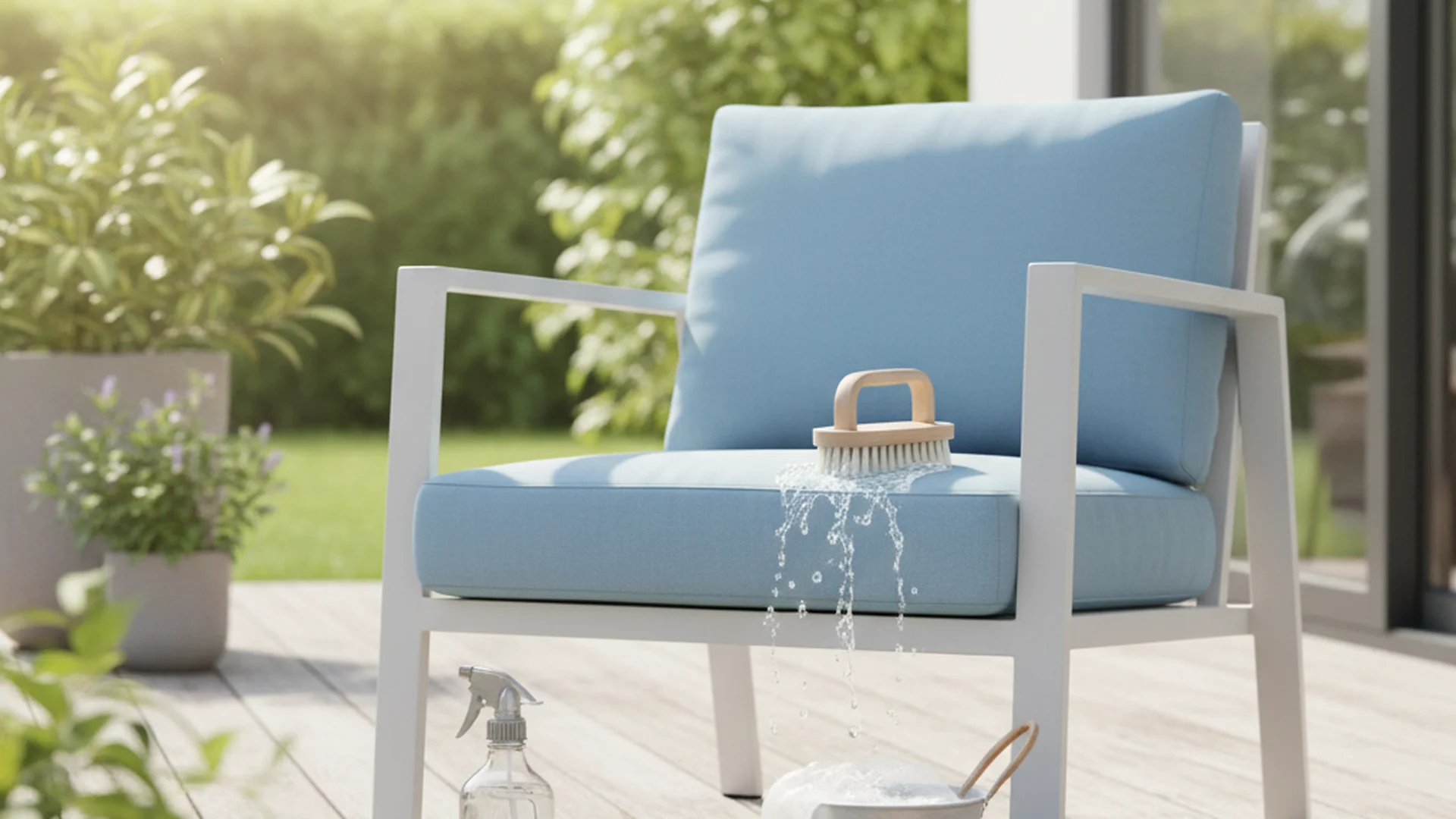
Mix a solution of warm water and a mild dish soap (like Dawn). Using a soft-bristle brush, scrub the wood gently.
Tip: Always scrub in the direction of the wood grain. Scrubbing across the grain can create tiny scratches that trap dirt and moisture, eventually leading to "fuzzing" of the wood fibers.
Step 3: Rinse and Dry
Rinse the furniture thoroughly with a garden hose on a "shower" setting. Ensure all soap residue is gone, as dried soap can attract more dirt.
Success: Regular cleaning twice a year (Spring and Fall) prevents the buildup of organic matter that allows mold to take root.
Deep Cleaning and Restoration
If your furniture has been neglected or has developed black spots, you’ll need a more robust approach.
Dealing with Mold and Mildew
Black spots are usually a sign of mildew feeding on surface contaminants (like spilled food or pollen), not the wood itself.
- The Solution: Mix 1 part household bleach with 9 parts soapy water.
- The Process: Apply to the affected area, let sit for 10 minutes (do not let it dry), and scrub with a soft brush.
Restoring the Golden Glow
If you prefer the honey-gold look over the silver patina, you must remove the oxidized top layer.
- Use a Teak Cleaner: Use an eco-friendly, oxalic acid-based cleaner. This is safer for your garden than traditional two-part acid brighteners.
- Light Sanding: Once dry, use 220-grit sandpaper to smooth out any raised grain.
- Apply Sealer: This is the most critical step. Unlike oil, a teak sealer locks in the wood's natural oils and provides UV protection.
Warning: Never apply sealer to damp wood. Trapping moisture inside the wood grain is a leading cause of internal rot and fungal growth. Ensure the piece has dried for at least 24 to 48 hours in dry conditions before sealing.
Real-World Examples of Teak Maintenance
Example 1: The Coastal Retreat
A homeowner in a high-salt environment noticed their teak chairs felt "gritty." This was salt crystallization. By switching to a monthly freshwater rinse and a bi-annual soft-brush cleaning, they prevented the salt from abrading the wood fibers, preserving the smooth texture of their Grade A set.
Example 2: The Historic Bench Restoration
A "silver" garden bench that had been outside for 20 years was restored to its original gold. The process involved a citrus-based cleaner and light sanding. Because it was Grade A heartwood, the interior was still perfectly preserved and full of oil, proving that teak is truly a "lifetime" material.
Example 3: The Modern Mixed-Material Balcony
In 2025, teak is often paired with powder-coated aluminum or nautical rope. When cleaning these "mixed material" pieces, owners must be careful not to get acidic teak cleaners on the metal, which can cause corrosion. Using a microfiber cloth to apply cleaner specifically to the wood sections is the professional approach.
Common Mistakes to Avoid
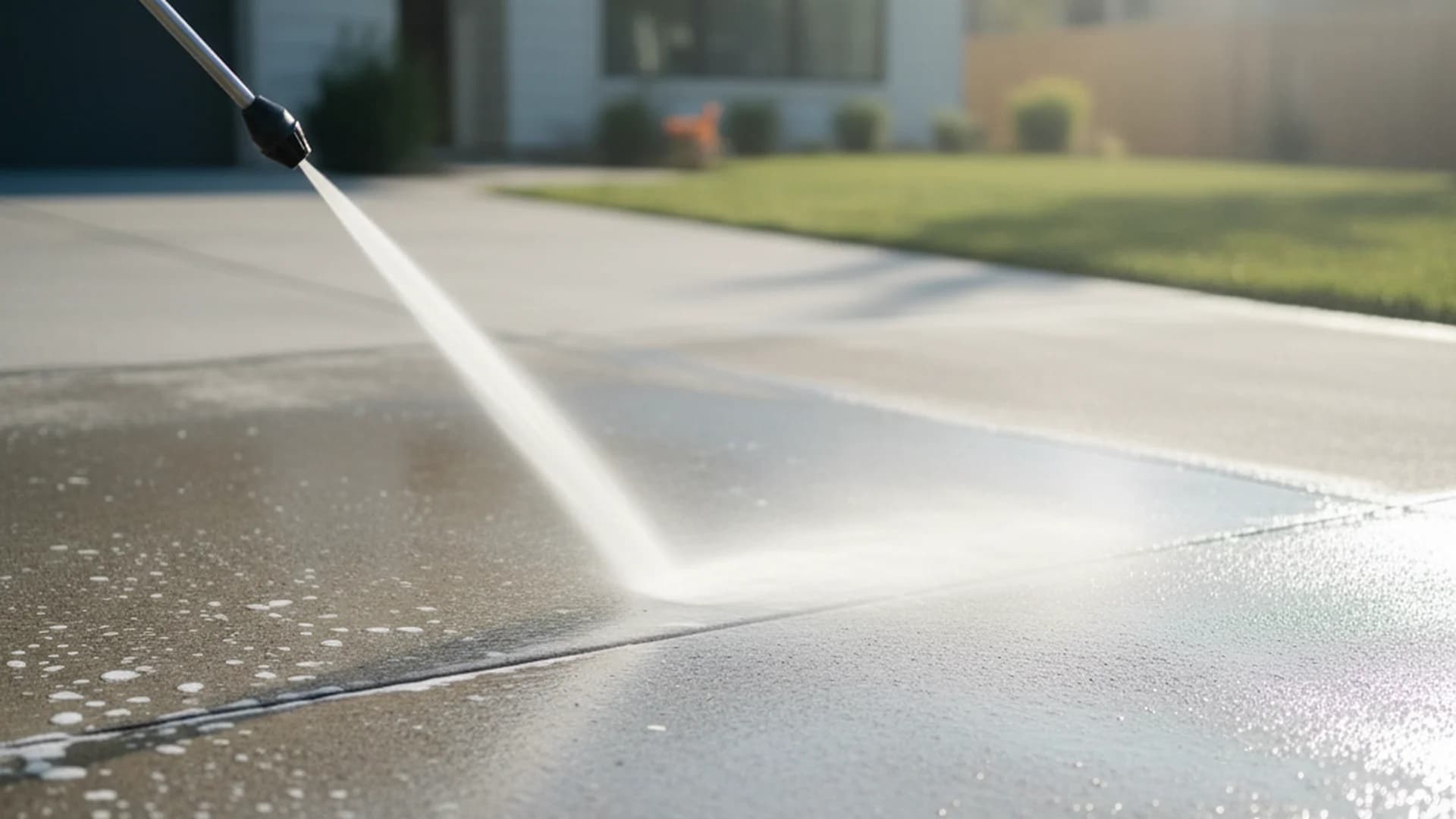
- Using a Pressure Washer: This is the most common way teak is ruined. High-pressure water blasts away the soft grain, leaving the wood pitted and "furry." It also strips the deep-seated oils that provide the wood's natural protection.
- Applying "Teak Oil": Contrary to its name, most commercial "teak oils" are actually linseed or tung oil mixed with solvents. These oils sit on the surface and create a sticky film that attracts mold and turns black over time.
- Using Steel Wool: Small fragments of steel can break off and become lodged in the grain. When these fragments get wet, they rust, leaving permanent dark stains on your furniture. Use bronze wool or synthetic Scotch-Brite pads instead.
- Non-Breathable Covers: Covering teak with tight plastic or vinyl traps humidity. This creates a greenhouse effect for mold. Always use breathable, high-performance fabric covers.
2025–2026 Trends in Teak Care
The industry is moving toward "closed-loop" and sustainable maintenance. We are seeing a massive shift toward FSC-certified (Forest Stewardship Council) and reclaimed teak as 2026 environmental regulations tighten globally.
Design-wise, the trend is moving away from high-gloss varnishes. Modern enthusiasts prefer matte finishes that highlight the natural grain. Additionally, eco-friendly cleaners based on citrus or oxalic acid are replacing harsh chemical brighteners, making maintenance safer for those with backyard gardens and pets.
Frequently Asked Questions
Should I use "Teak Oil" on my outdoor furniture?
How do I remove the silver-gray patina?
Can I use a pressure washer?
How often should I clean it?
Conclusion
Mastering how to clean teak furniture is an essential skill for any outdoor enthusiast. By choosing the right materials—like soft brushes and mild soaps—and avoiding the "quick fixes" like pressure washers and synthetic oils, you ensure that your furniture remains a beautiful centerpiece for decades. Whether you embrace the modern Japandi silver patina or the classic golden glow, proper maintenance is the key to protecting your investment.
Success: Following these expert steps will keep your teak furniture structurally sound and aesthetically pleasing for 30 to 50 years.
Cleaning that keeps score
Every task earns points, every streak multiplies them, and Premium adds a household leaderboard plus a monthly Dustagorgon to beat.
- Free forever
- 30 badges to earn
- Up to 6 in a household
No card needed. Set up your rooms in a couple of minutes.