In this article
What you’ll learn
- Deep clean residential decks twice yearly to prevent algae-related slip hazards.
- Choose cleaners based on material: oxygen bleach for wood and enzymatic cleaners for stone.
- Always perform a "water bead test" to determine if your deck needs resealing.
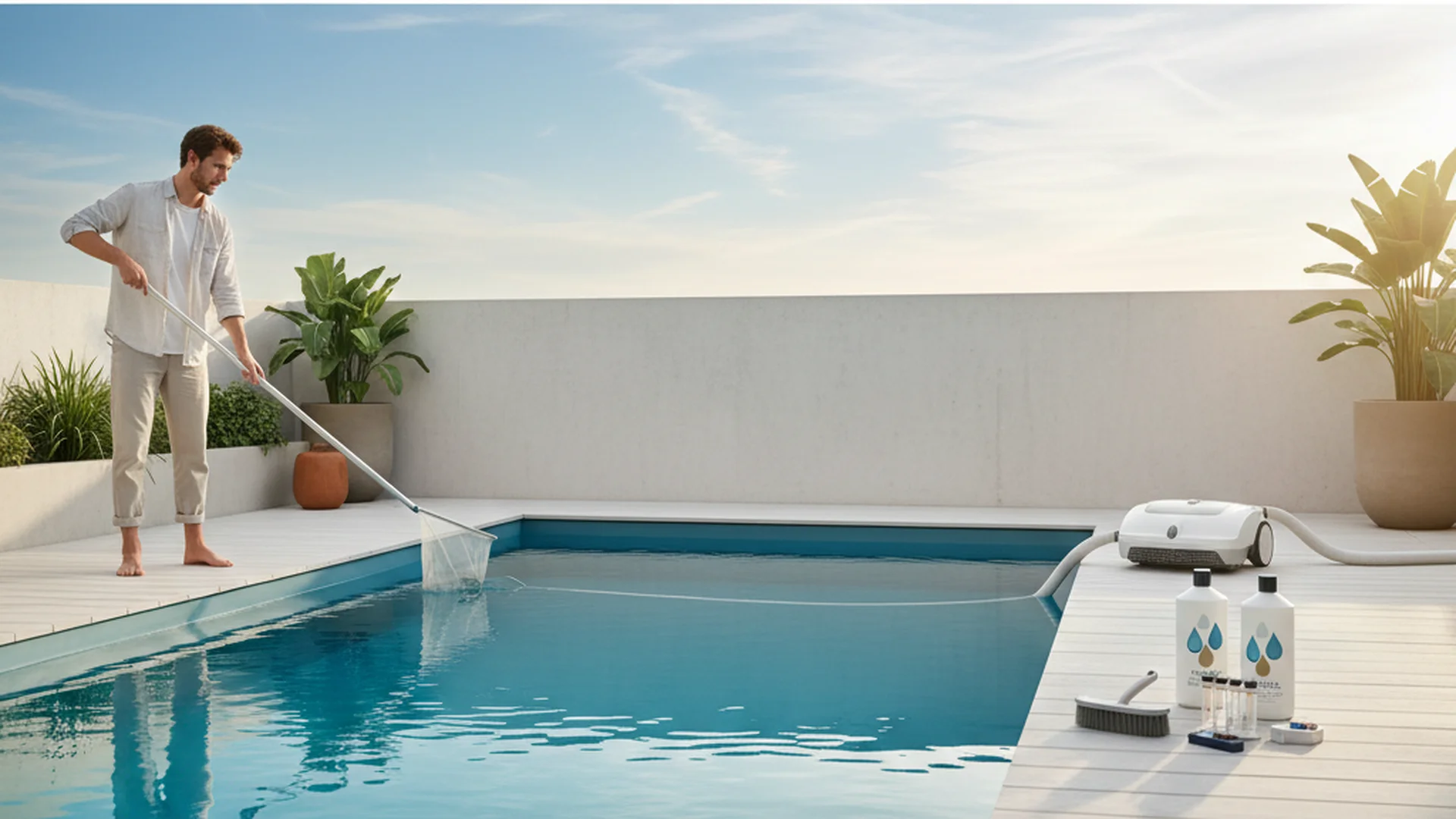
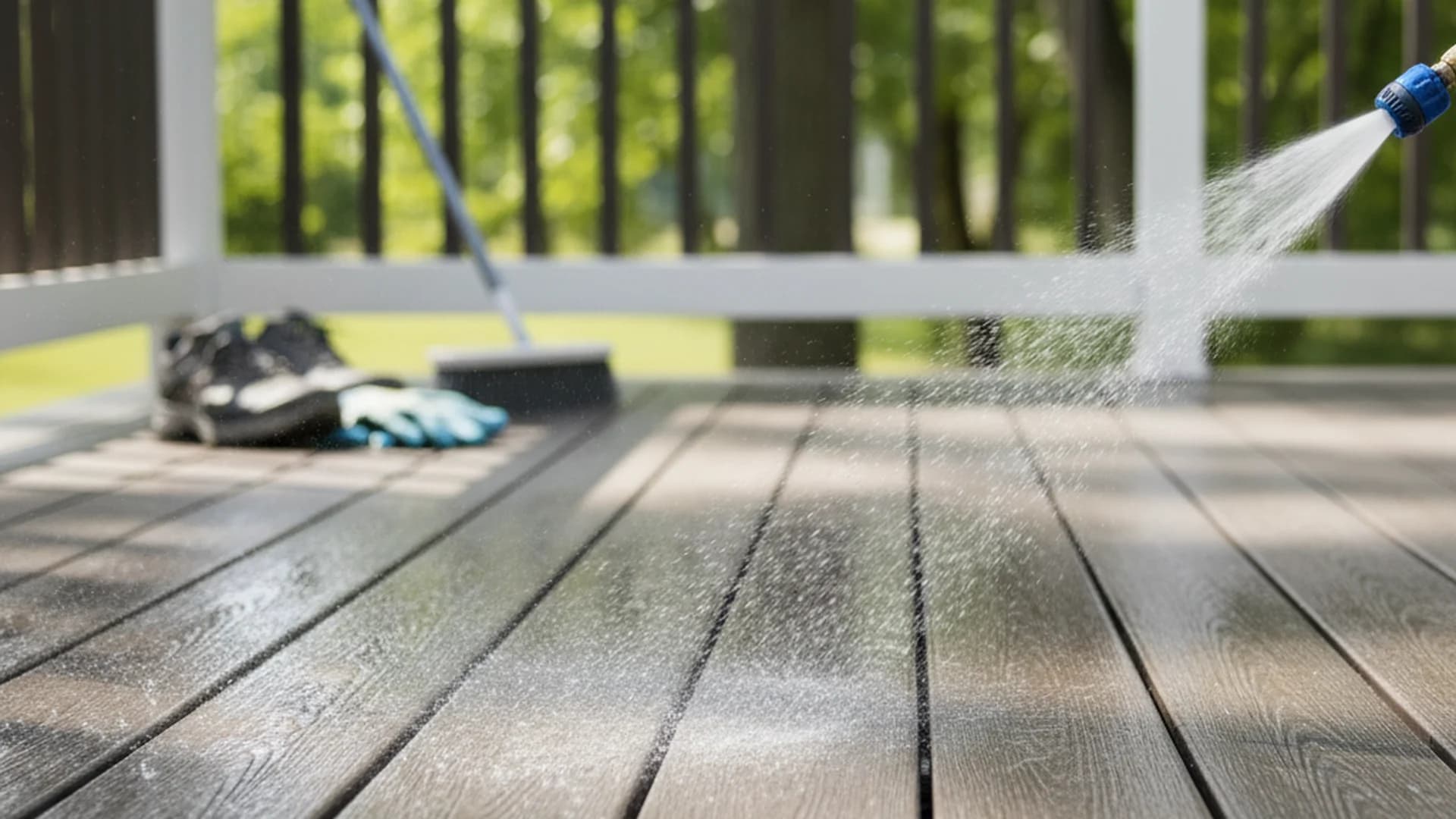
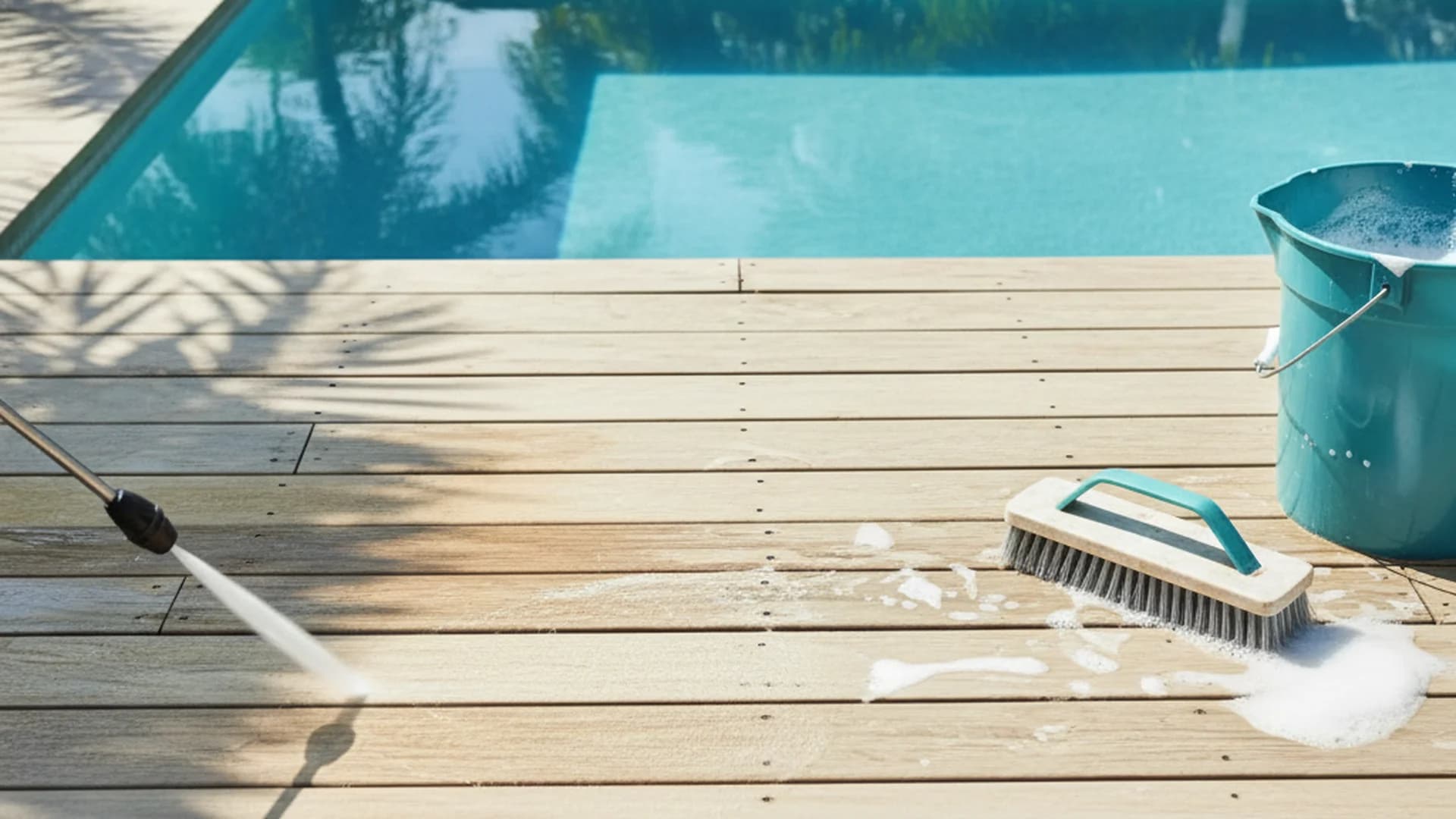
Your pool deck is the centerpiece of your backyard oasis, but it is also one of the most high-traffic and high-stress areas of your home. Between the constant exposure to UV rays, splashing chlorine, and the inevitable buildup of organic debris, knowing how to clean pool deck surfaces correctly is vital for both safety and home value. In 2025, pool maintenance has evolved beyond simple scrubbing.
Why Regular Deck Maintenance is Non-Negotiable
Cleaning your pool deck isn't just about aesthetics. Slippery surfaces caused by algae and mold are a leading cause of "slip and fall" accidents around residential pools. For homeowners, a neglected deck can quickly become a liability. Furthermore, proper maintenance protects your financial investment. For instance, expertly sealing and cleaning a concrete deck can extend its lifespan by 10–15 years, helping you avoid the deep-seated cracks that cost an average of $3,000–$5,000 to repair in today's market.
Note: Aim for a deep clean at least twice per year for residential decks, though high-traffic areas or humid climates may require quarterly attention.
The Best Way Clean Pool Deck Surfaces by Material
There is no one-size-fits-all solution for outdoor surfaces. The best way clean pool deck areas depends entirely on what lies beneath your feet. Using the wrong pressure or chemical can lead to permanent damage.
Concrete Decks
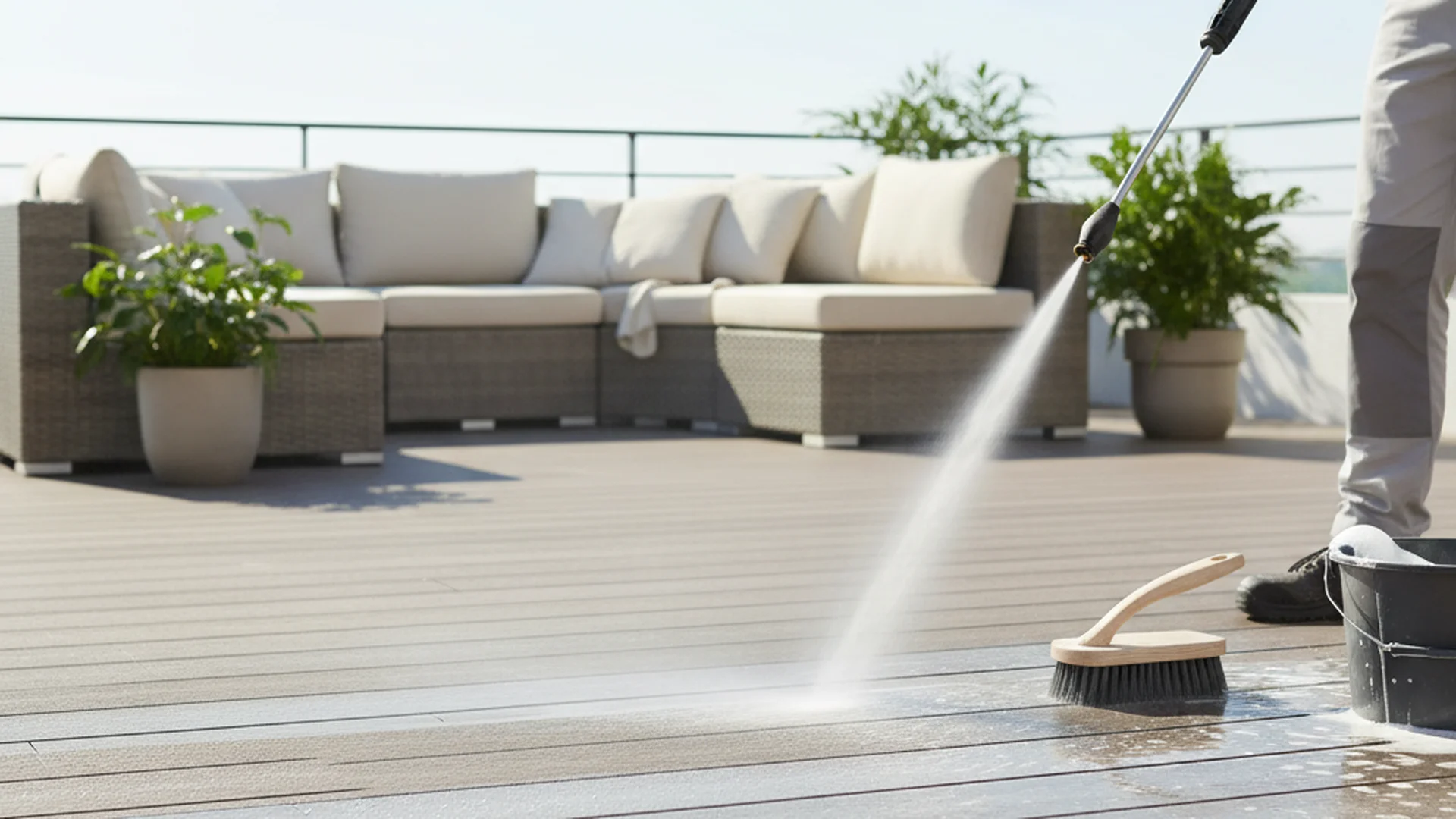
Concrete is durable but porous. In 2025, the standard for concrete cleaning involves a balance of pressure and chemistry. You should use a pressure washer at a maximum of 3,000 PSI with a 25-degree nozzle.
Warning: Maintain a distance of at least 12 inches between the nozzle and the concrete. Getting too close can cause "etching," leaving permanent "zebra-stripe" patterns that are impossible to remove.
Pavers and Natural Stone
For pavers, the focus shifts to the joints. Traditional pressure washing can blast out the polymeric sand that holds the stones in place. Professionals now recommend using a "surface cleaner" attachment. This tool glides over the pavers, providing even pressure without digging into the cracks.
Wood and Composite Decks
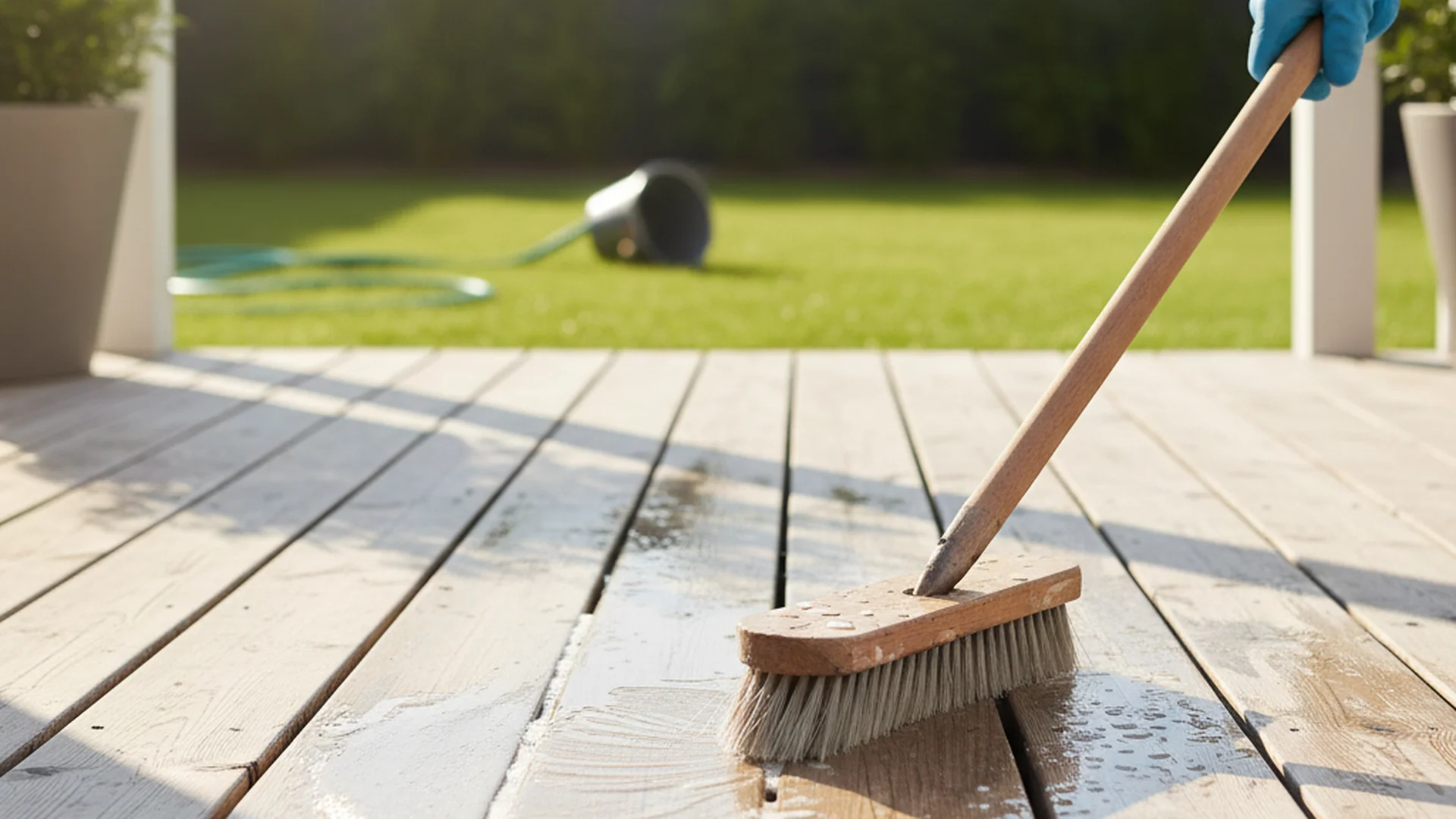
Wood is the most delicate material. High pressure can "fur" the wood, causing splinters. Instead of chlorine bleach, which can damage wood fibers and kill your lawn, 2025 standards favor Oxygen Bleach (sodium percarbonate). This breaks down organic stains through oxidation rather than harsh corrosion.
| Material | Recommended Cleaner | Pressure Setting | Tool |
|---|---|---|---|
| Concrete | Alkaline Degreaser | 2500-3000 PSI | Fan Nozzle |
| Pavers | Enzymatic Cleaner | 1500-2000 PSI | Surface Cleaner |
| Wood | Oxygen Bleach | Low (Scrubbing) | Soft-Bristle Brush |
| Composite | Mild Detergent | 1500 PSI | Microfiber Mop |
Real-World Examples of Deck Cleaning Success
To understand how to clean pool deck surfaces effectively, let’s look at three common scenarios homeowners face in 2025:
- The Humidity Battle (Florida Example): A homeowner in a high-humidity region noticed green algae blooming every three months. Instead of repeated heavy pressure washing, they switched to a "Low-Impact, High-Frequency" model using a robotic deck scrubber and enzymatic cleaners. This kept the algae at the root level without wearing down the concrete finish.
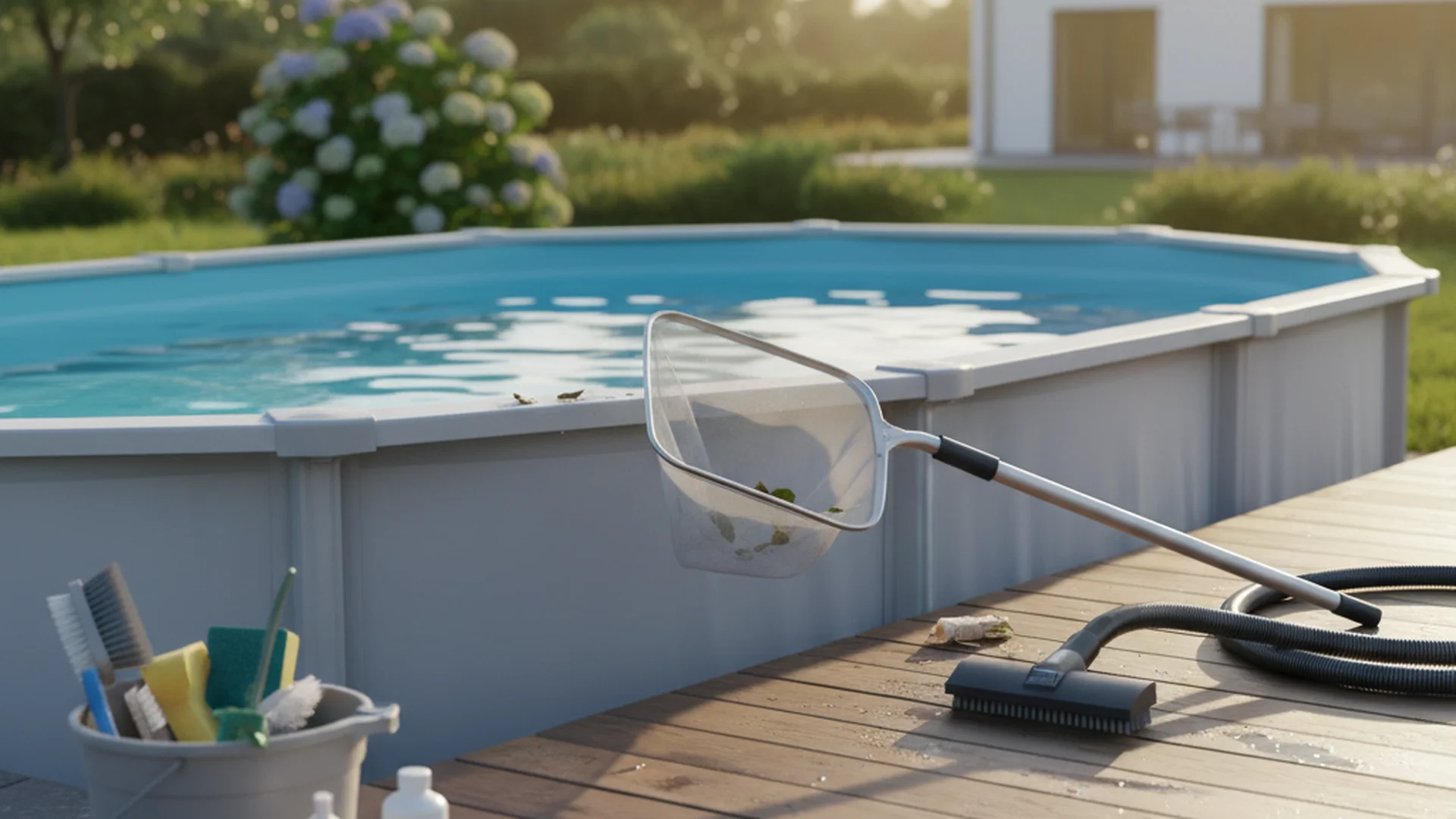
- The Landscape Protection (California Example): A homeowner with expensive, drought-resistant hydrangeas around their pool feared chemical runoff. By following the "pre-soak" method—saturating the soil and plants with fresh water before applying any cleaner—they created a water barrier that allowed the cleaning runoff to pass over the soil without being absorbed by the plant roots.
- The Rental Property (Arizona Example): To prepare for a busy summer rental season, a property manager applied a "cool-deck" heat-reflective coating after a deep clean. This not only improved the look but reduced the surface temperature by 20%, making the deck safer for guests' bare feet in the desert sun.
Step-by-Step Guide: How to Clean Pool Deck Properly
Step 1: Preparation and Clearing
Remove all furniture, plants, and pool toys. Sweep the entire area thoroughly.
Tip: Daily sweeping to remove organic debris like leaves and pollen is essential. Decaying organic matter creates localized pH changes that can permanently stain natural stone.
Step 2: Pre-Soak the Perimeter
Before applying any cleaning agents, wet down your surrounding grass and landscaping.
Success: Pre-soaking ensures that if any cleaning solution splashes onto your garden, the soil—already saturated with water—won't absorb the chemicals.
Step 3: Apply the Cleaning Solution
Work in small sections (roughly 10x10 feet). If you are using modern enzymatic cleaners, these products use bacteria-based enzymes to "eat" mold and algae at the root, providing a longer-lasting clean than traditional chemicals.
Note: Never apply cleaners in direct sunlight. The heat will cause the solution to evaporate before it can work, leading to unsightly streaks.
Step 4: Agitate and Rinse
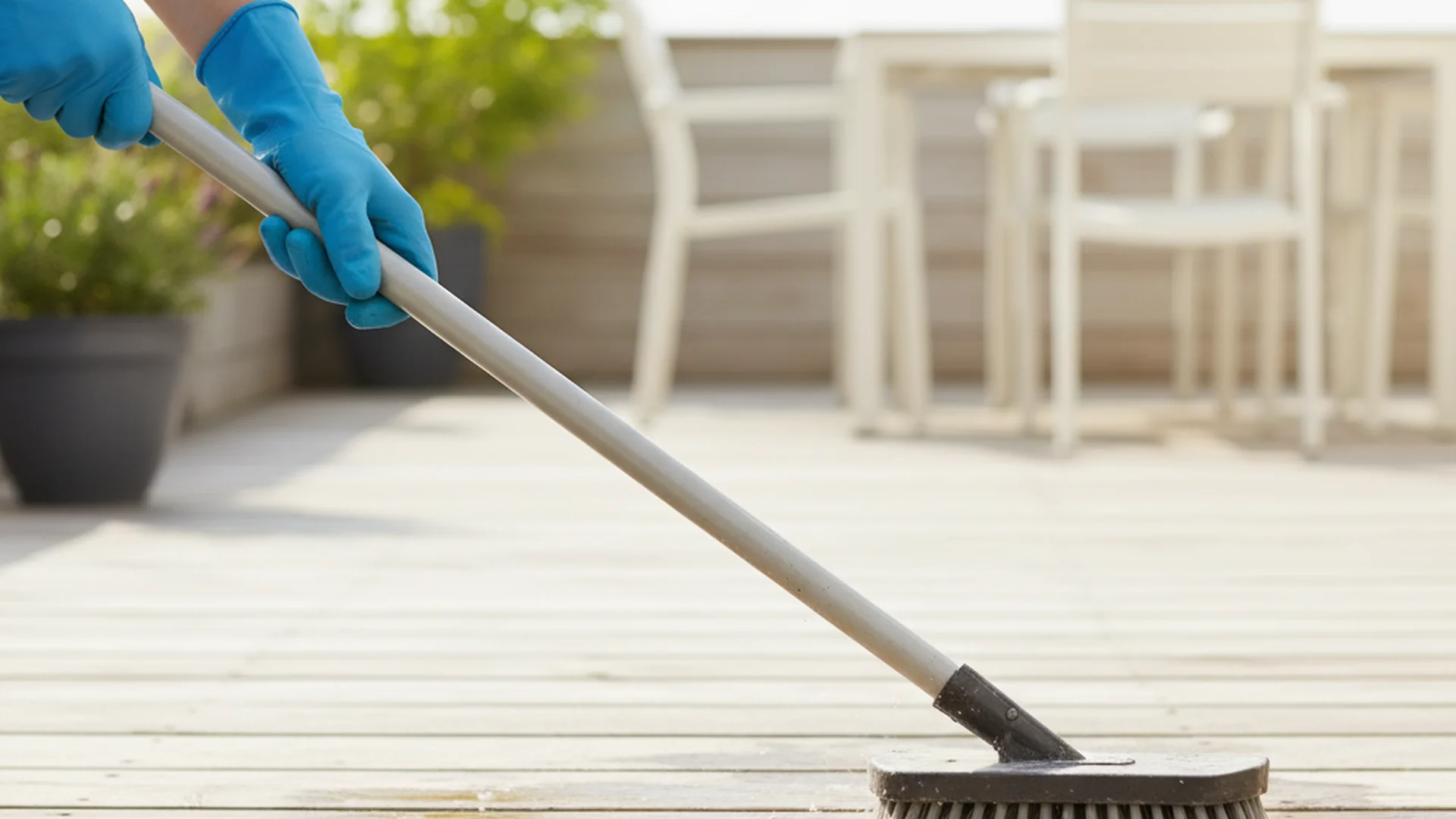
For stubborn stains, use a medium-bristle brush. Rinse thoroughly, ensuring the water flows toward a drainage area and not directly into the pool.
Common Mistakes to Avoid
Even with the best intentions, it is easy to make a mistake that could cost thousands in repairs.
- Relying on Chlorine Bleach: While it kills surface mold, bleach does not reach the "roots" in porous materials like concrete. It often causes the mold to return faster while corroding metal pool fixtures.
- The "Close-Range" Blast: As mentioned, holding a pressure washer too close is the #1 cause of deck damage.
- Neglecting the Seal: High-pressure cleaning opens up the pores of your deck. If you don't apply a sealant afterward, dirt and salt will penetrate even deeper than before.
- Cleaning in the Noon Sun: Applying chemicals to a hot surface causes them to dry instantly, leaving a chemical residue that is incredibly difficult to rinse off.
2025 Trends in Outdoor Maintenance
The world of outdoor cleaning is becoming "smarter" and "greener." One of the biggest shifts this year is the rise of Robotic Deck Cleaners. Similar to the robotic vacuums used inside homes, these autonomous devices map your deck and use specialized brushes to maintain the surface daily, preventing the need for aggressive deep cleans.
Additionally, Smart App Integration is now common among professional maintenance services. These apps track local UV exposure and rainfall to alert homeowners exactly when their next cleaning or sealing is due, taking the guesswork out of the maintenance schedule.
Frequently Asked Questions
Can I use bleach on my pool deck?
How often should I pressure wash my deck?
Is a pressure washer better than a scrub brush?
How do I know if it is time to reseal my deck?
Conclusion
Mastering how to clean pool deck surfaces is a vital skill for any homeowner looking to maintain a safe, beautiful, and long-lasting outdoor space. By moving away from harsh chemicals and high-pressure "blasts" toward the modern standards of enzymatic cleaners and material-specific care, you can protect your investment for years to come. Remember, the goal of the best way clean pool deck is "Low-Impact, High-Frequency"—a little maintenance today prevents a massive repair bill tomorrow.
Success: Consistently following these 2025 standards will keep your pool area looking like a five-star resort while ensuring the safety of your family and guests.
Cleaning that keeps score
Every task earns points, every streak multiplies them, and Premium adds a household leaderboard plus a monthly Dustagorgon to beat.
- Free forever
- 30 badges to earn
- Up to 6 in a household
No card needed. Set up your rooms in a couple of minutes.