In this article
What you’ll learn
- Use oxygen-based cleaners instead of bleach to preserve wood lignin.
- Follow the Chemical First, Physical Second approach to prevent structural damage.
- Always use a wood brightener after cleaning to neutralize pH levels.
A deck is more than just an outdoor space; it is a significant financial investment that expands your living area. However, many homeowners struggle with the specifics of how to clean wood deck surfaces without causing long-term damage. Whether you are dealing with a weathered cedar platform or a modern pressure-treated pine structure, proper maintenance offers a staggering 80% Return on Investment (ROI) by boosting curb appeal and preventing structural rot.
As we move into the 2025–2026 season, the "old school" methods of high-pressure blasting and harsh bleach applications are being replaced by smarter, more sustainable techniques. Understanding the best way clean wood deck materials involves a balance of chemistry and patience. Neglecting this task can lead to replacement costs exceeding $15,000, while a dedicated afternoon of cleaning costs only a fraction of that.
Why Proper Cleaning Matters: The Lignin Factor
Before you pick up a hose, it is vital to understand the biology of your deck. Wood is held together by lignin, an organic "glue" that keeps fibers bonded. Traditional household bleach is the enemy of lignin.
Using bleach-based cleaners can destroy up to 20–30% of the wood’s cellular structure over time. This leads to "fuzzing," where the wood becomes soft and brittle. By learning how to clean wood deck surfaces using oxygen-based solutions, you preserve this structural integrity, ensuring your deck lasts its full 20-year lifespan rather than rotting out in ten.
Warning: Never use household bleach (sodium hypochlorite) on wood decks. It whitens the surface but fails to kill deep-seated mold spores and dries out the natural oils in the timber.
The "Chemical First, Physical Second" Methodology
Modern professionals use a "soft wash" philosophy. This means letting chemistry do the heavy lifting so that you don't have to use aggressive physical force that can gouge the wood.
Step 1: Preparation and Plant Protection
Clear all furniture, grills, and planters. Before you apply any cleaning solutions, you must protect your landscaping. Pre-wet all surrounding grass and shrubs with plain water, then cover them with plastic sheeting. The water layer acts as a barrier against any runoff.
Step 2: Pre-Wetting the Wood
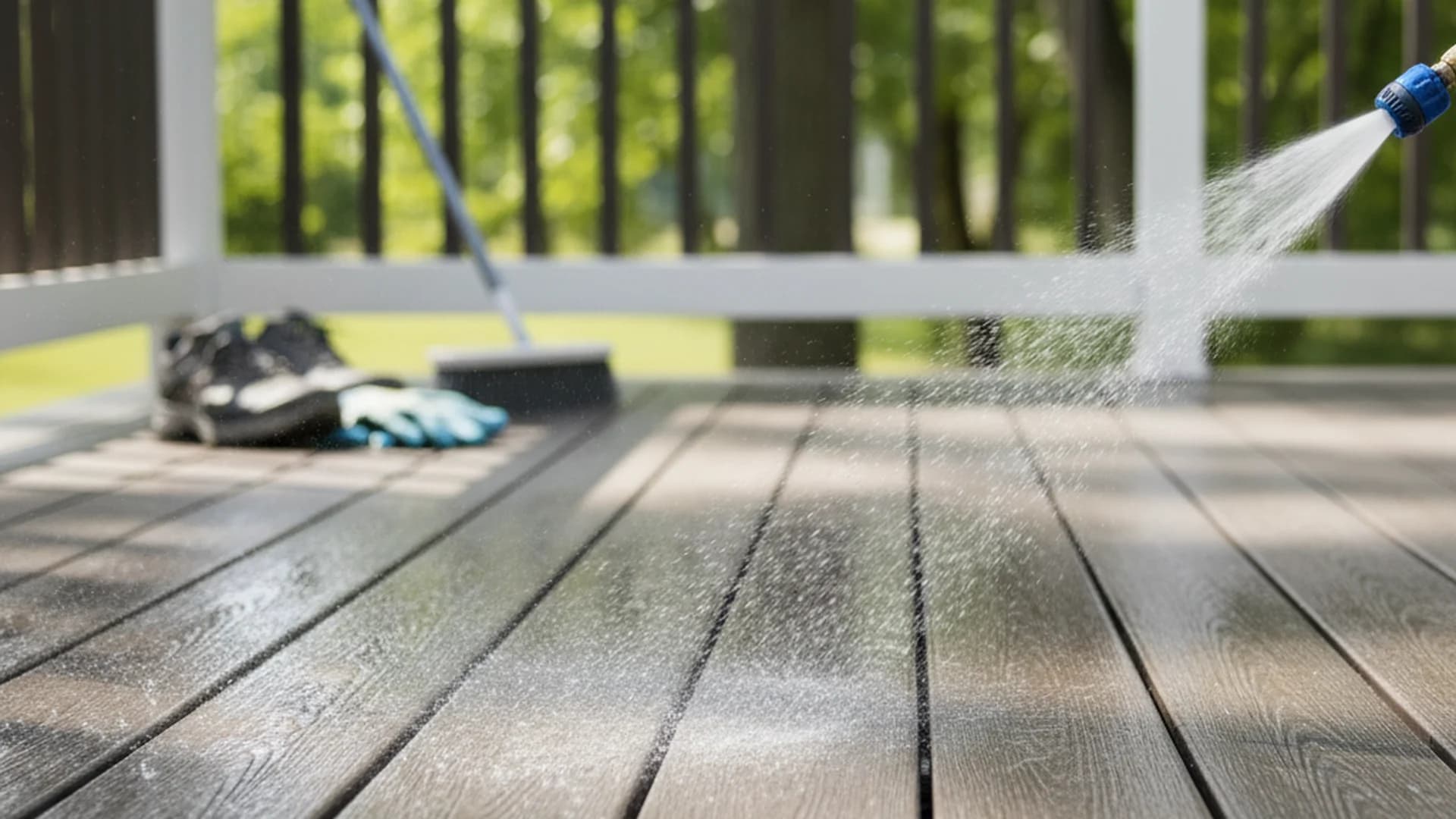
Never apply a cleaning solution to bone-dry wood. If the wood is dry, it will act like a sponge, pulling the chemicals too deep into the grain where they are hard to rinse out. A light misting with a garden hose is all you need.
Step 3: Applying Oxygen-Based Cleaners
The best way clean wood deck surfaces is with sodium percarbonate. Unlike bleach, oxygen-based cleaners break down into water, oxygen, and soda ash. They effectively lift dirt and kill organic growth without damaging the wood fibers.
Tip: Products like Restore-A-Deck or Simple Green Oxy Solve are excellent choices for this step.
Step 4: Dwell and Scrub
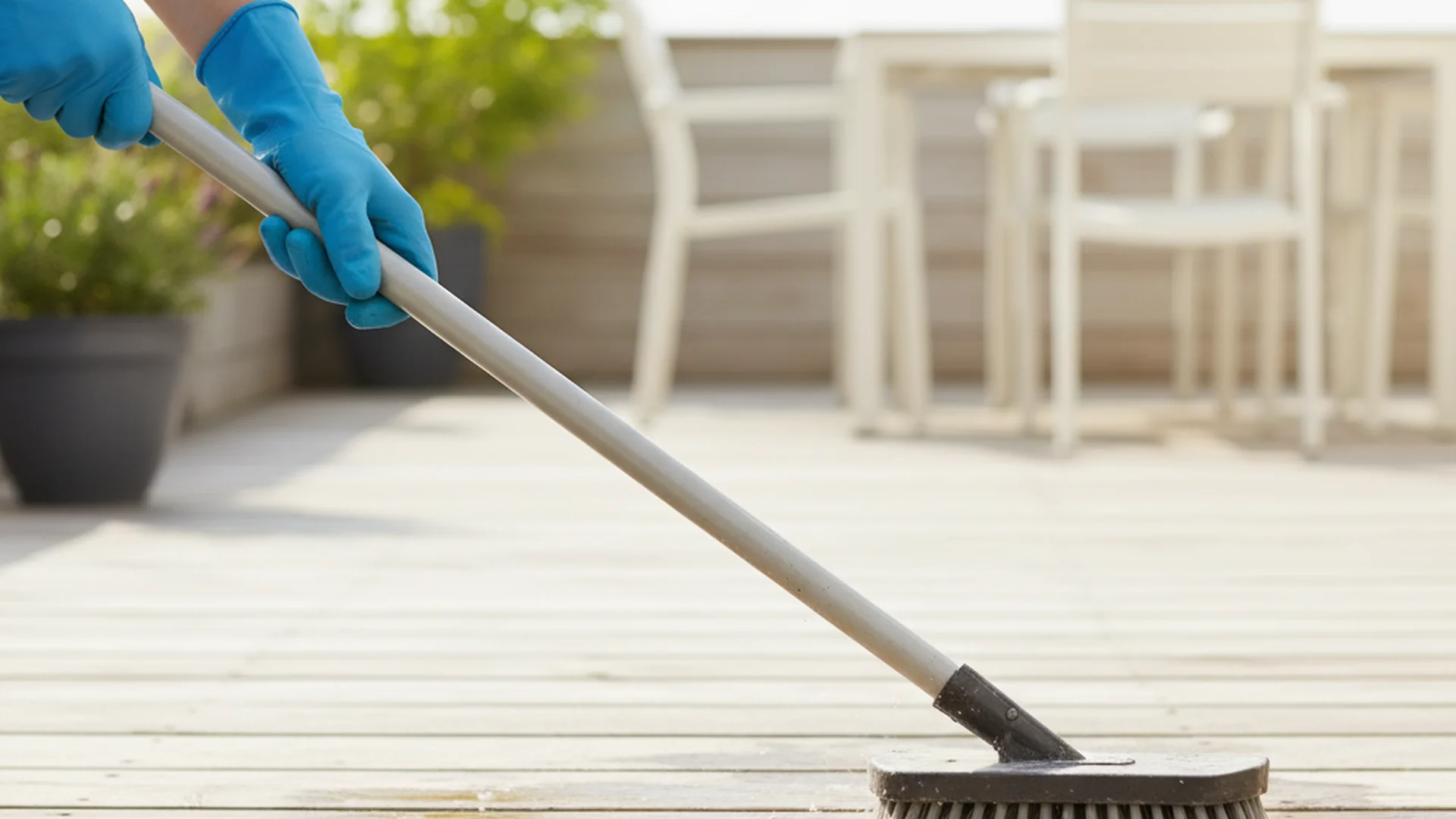
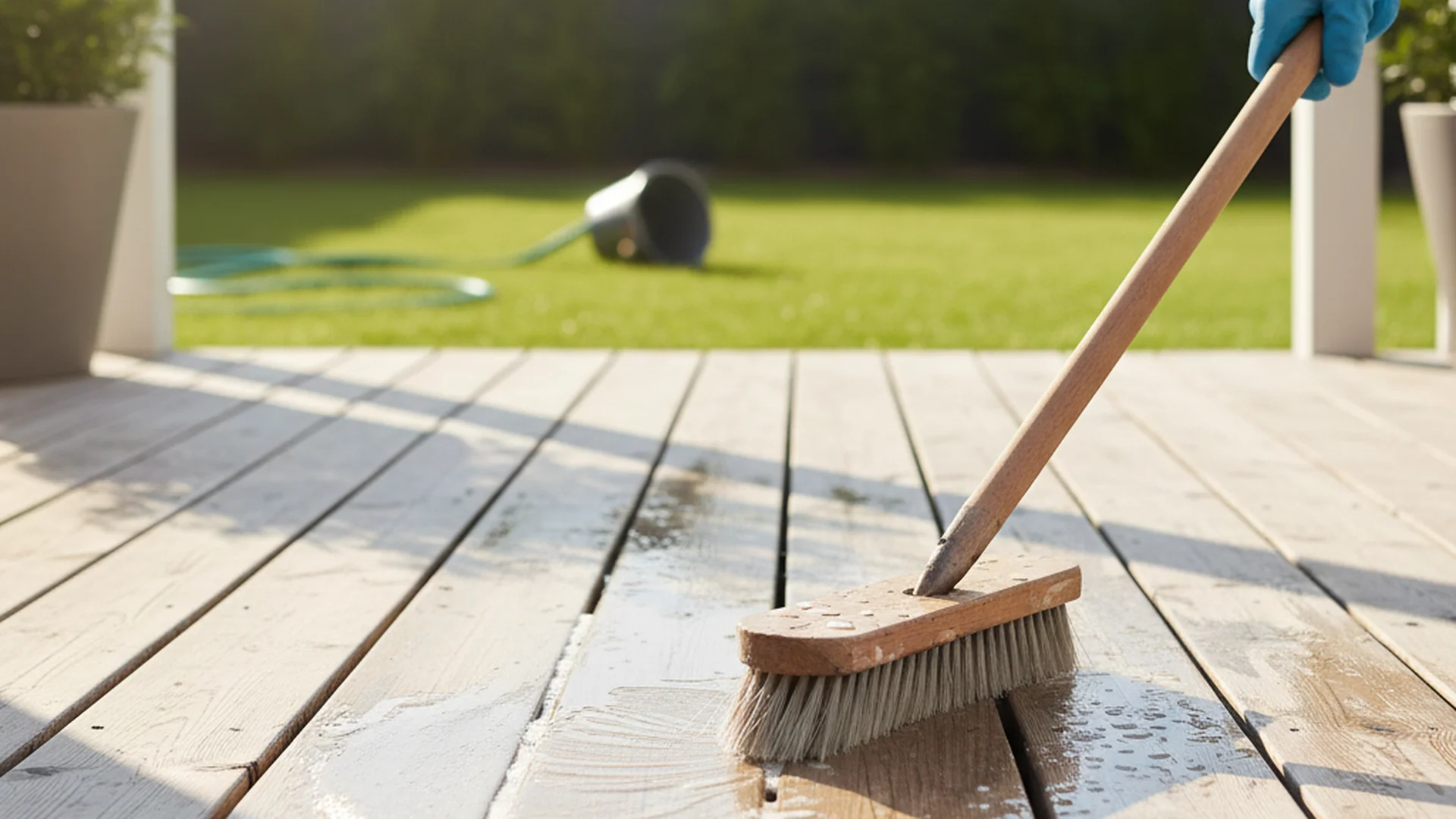
Apply the cleaner with a pump sprayer and let it "dwell" for 10–15 minutes. This is where the magic happens—the oxygen bubbles lift the grime to the surface. Use a synthetic, stiff-bristle brush to scrub in the direction of the grain.
Step 5: The Essential Neutralization (Brightening)
This is the step most homeowners skip, yet it is the most important. After cleaning, wood is in a highly "alkaline" state. If you leave it this way, your next coat of stain will likely peel. Using a wood brightener (oxalic acid) neutralizes the pH, closes the fibers, and restores the wood’s natural "honey" look.
| Step | Product Type | Purpose |
|---|---|---|
| Clean | Sodium Percarbonate | Lifts dirt and kills mold |
| Scrub | Synthetic Brush | Manually displaces debris |
| Brighten | Oxalic Acid | Neutralizes pH and restores color |
| Seal | Penetrating Oil | Protects from UV and moisture |
Note: Wait at least 24 to 48 hours for the wood to dry completely before applying any stain or sealer.
Real-World Examples of Deck Restoration
Example 1: The "Abandoned" Pine Deck
A homeowner in a humid climate hadn't cleaned their pressure-treated pine deck in five years. It was covered in thick green algae. Instead of using a high-pressure washer, they used an enzyme-based cleaner and a soft-wash technique. By letting the enzymes "eat" the organic matter for 30 minutes, they were able to rinse the algae away with a standard garden hose, saving the wood from the "fuzzing" often caused by pressure washers.
Example 2: The New Cedar Deck
A family installed a premium cedar deck and wanted to stain it immediately. However, they noticed the stain wasn't soaking in. This was due to "mill scale"—a glaze created during the lumber milling process. By performing a light cleaning and using a wood brightener, they opened the wood's pores, allowing the stain to penetrate deeply and last twice as long as expected.
Example 3: The Shady Retreat
A deck located under heavy oak trees suffered from "compost pockets"—piles of wet leaves trapped in the gaps. The homeowner used a putty knife to clear the gaps and then applied a bio-based surfactant. This prevented structural rot on the joists, which is the leading cause of deck collapse.
Common Mistakes to Avoid
- The "Rain Clean" Myth: Many believe a heavy rainstorm cleans the deck. In reality, rain often pushes dirt and organic spores deeper into the wood grain, accelerating rot.
- Sweeping Into Gaps: Avoid sweeping debris into the gaps between boards. This creates "compost pockets" that trap moisture against the joists, leading to structural rot from the inside out.
- Using Metal Brushes: Wire or metal brushes can leave tiny metal shards in the wood that will rust, creating black or orange specks that are nearly impossible to remove.
- Cleaning in Direct Sun: Cleaning on a hot, sunny day causes chemicals to evaporate before they can work. Aim for a "Goldilocks" day: overcast, dry, and between 50°F–70°F.
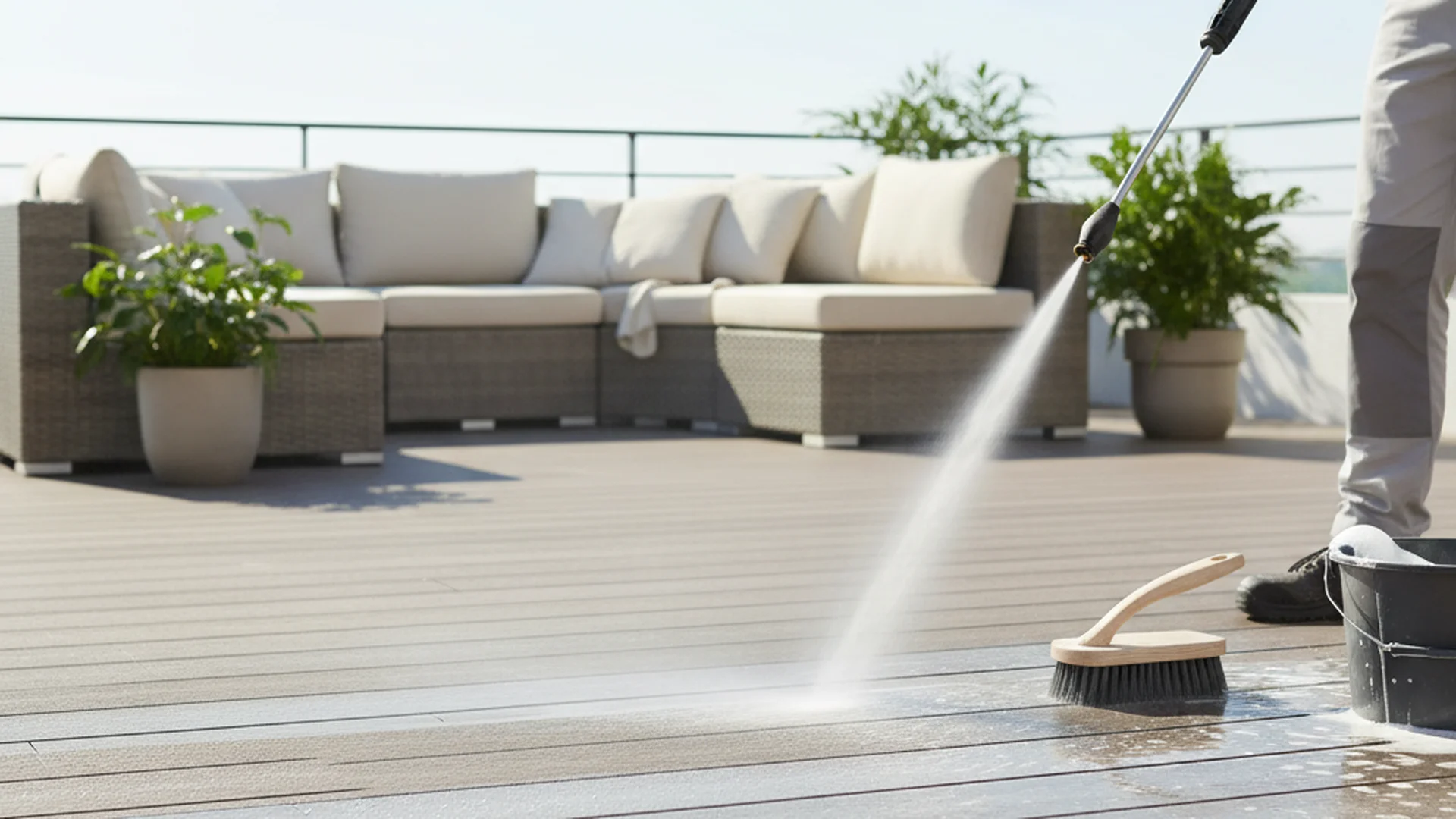
Warning: If using a pressure washer, stay between 1,200–1,500 PSI for softwoods like cedar or pine. Anything higher will permanently damage the surface grain.
2025–2026 Trends in Deck Maintenance
The industry is moving toward "Smart Maintenance." Homeowners are now installing smart-home moisture sensors underneath deck boards. These sensors alert your phone when the wood’s internal moisture remains too high for too long, indicating it's time for a deep clean and reseal to prevent rot.
Additionally, enzyme-based cleaners are becoming the gold standard. These use natural proteins to target specific stains (like tannins from leaves or oils from food) without affecting the surrounding environment. For those with hybrid or "CoolDeck" coated surfaces, 2026 technology focuses on specialized surfactants that preserve heat-reflective properties, keeping the surface up to 35% cooler in the summer sun.
Frequently Asked Questions
Can I use household bleach?
How often should I clean my deck?
Is pressure washing safe for wood?
Should I wait for a new deck to "weather" before cleaning?
Conclusion
Mastering how to clean wood deck surfaces is a vital skill for any homeowner. By moving away from harsh chemicals and high-pressure tactics, you can extend the life of your outdoor space by decades. Remember that the best way clean wood deck materials is a patient process: prepare the area, use oxygen-based chemistry, and never skip the brightening step.
Maintaining your deck doesn't just make your summer barbecues more pleasant—it protects one of your home's most valuable assets. With the right tools and a little "elbow grease," your deck can remain a beautiful, safe retreat for your family for years to come.
Success: Regular maintenance prevents the need for a $20,000 replacement and keeps your outdoor living space looking brand new year-round.
Cleaning that keeps score
Every task earns points, every streak multiplies them, and Premium adds a household leaderboard plus a monthly Dustagorgon to beat.
- Free forever
- 30 badges to earn
- Up to 6 in a household
No card needed. Set up your rooms in a couple of minutes.