In this article
What you’ll learn
- Master the Three Cs: Circulation, Cleaning, and Chemistry.
- Run your pump 8-12 hours daily for optimal water turnover.
- Leverage 2025 technology like cordless robotic cleaners and AI monitoring.
Owning a backyard oasis has never been more popular. Knowing how to clean above ground pool systems correctly not only protects your investment—which is often 70-80% more cost-effective than in-ground alternatives—but also ensures a safe, hygienic environment for your family.
Whether you are a new owner or a seasoned pro, finding the best way clean above ground pool surfaces involves a blend of traditional "elbow grease" and modern technology. In this guide, we will break down the essential steps to keep your water sparkling through the 2025-2026 seasons.
The Foundation: Understanding the Three C’s
Before diving into the manual labor, every pool owner must understand the "Three C’s" of maintenance: Circulation, Cleaning, and Chemistry. These pillars work in tandem to prevent the dreaded "green pool" scenario.
1. Circulation
Stagnant water is a breeding ground for algae and bacteria. To ensure a full "turnover" of water, your pump should run for at least 8 to 12 hours daily during the peak summer season. Moving water carries debris to the filter and ensures that your chemicals are evenly distributed.
2. Cleaning
Physical removal of debris is non-negotiable. This includes skimming the surface, brushing the walls, and vacuuming the floor. Even with the best chemicals, physical contaminants like leaves and dirt will eventually consume your chlorine and cloud the water.
3. Chemistry
Maintaining the delicate balance of your water is what keeps it safe for skin and eyes. Using a high-quality test kit is essential for monitoring levels.
| Chemical Component | Ideal Range |
|---|---|
| pH Level | 7.2 – 7.6 |
| Free Chlorine | 1.0 – 3.0 ppm |
| Total Alkalinity | 80 – 120 ppm |
| Calcium Hardness | 200 – 400 ppm |
Tip: Always test your water at least twice a week, and more frequently after heavy rain or a large pool party.
The Step-by-Step Cleaning Routine
To achieve the best results, follow this structured routine. Consistency is the secret to a low-maintenance pool.
Step 1: Skim the Surface
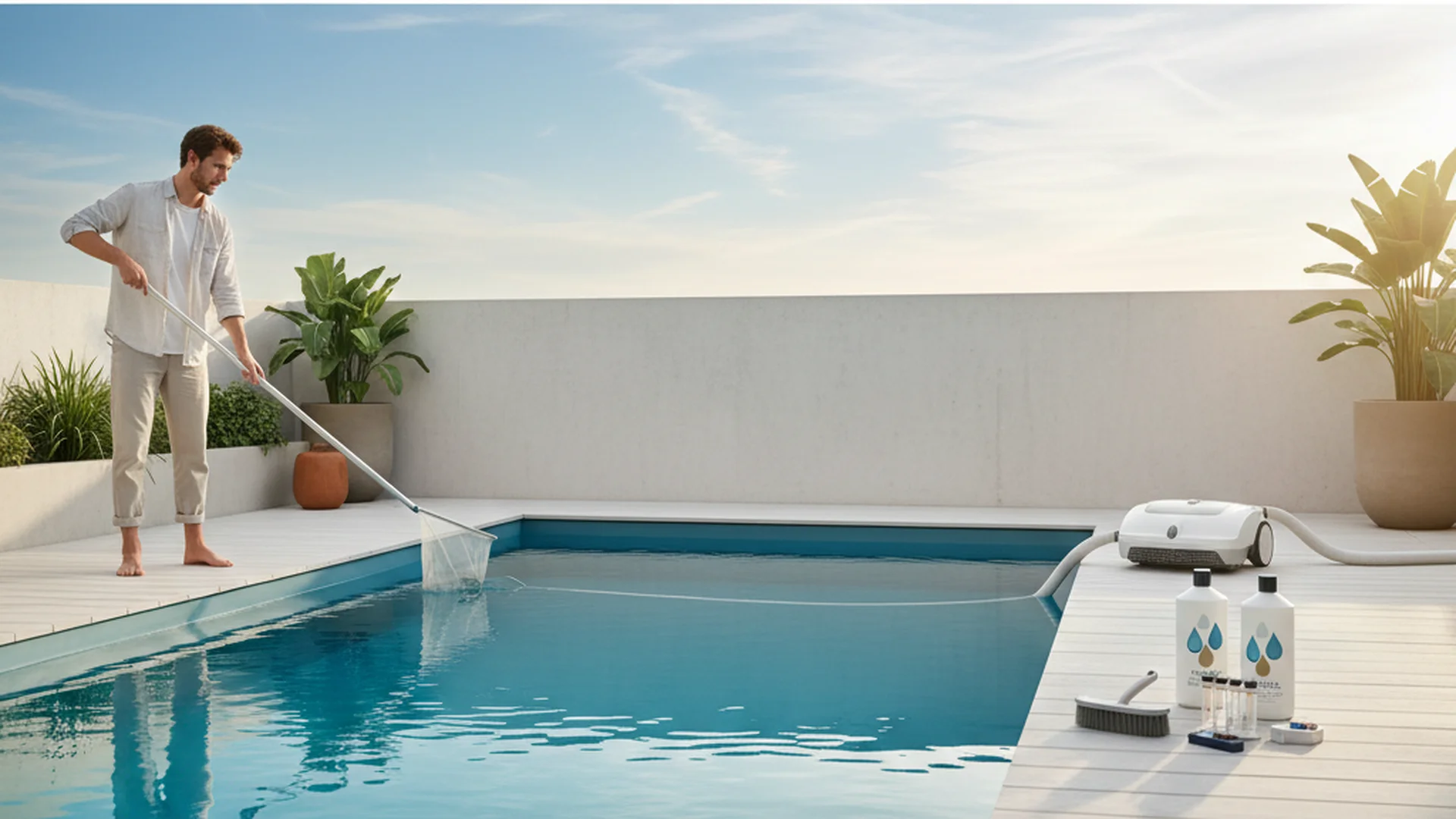
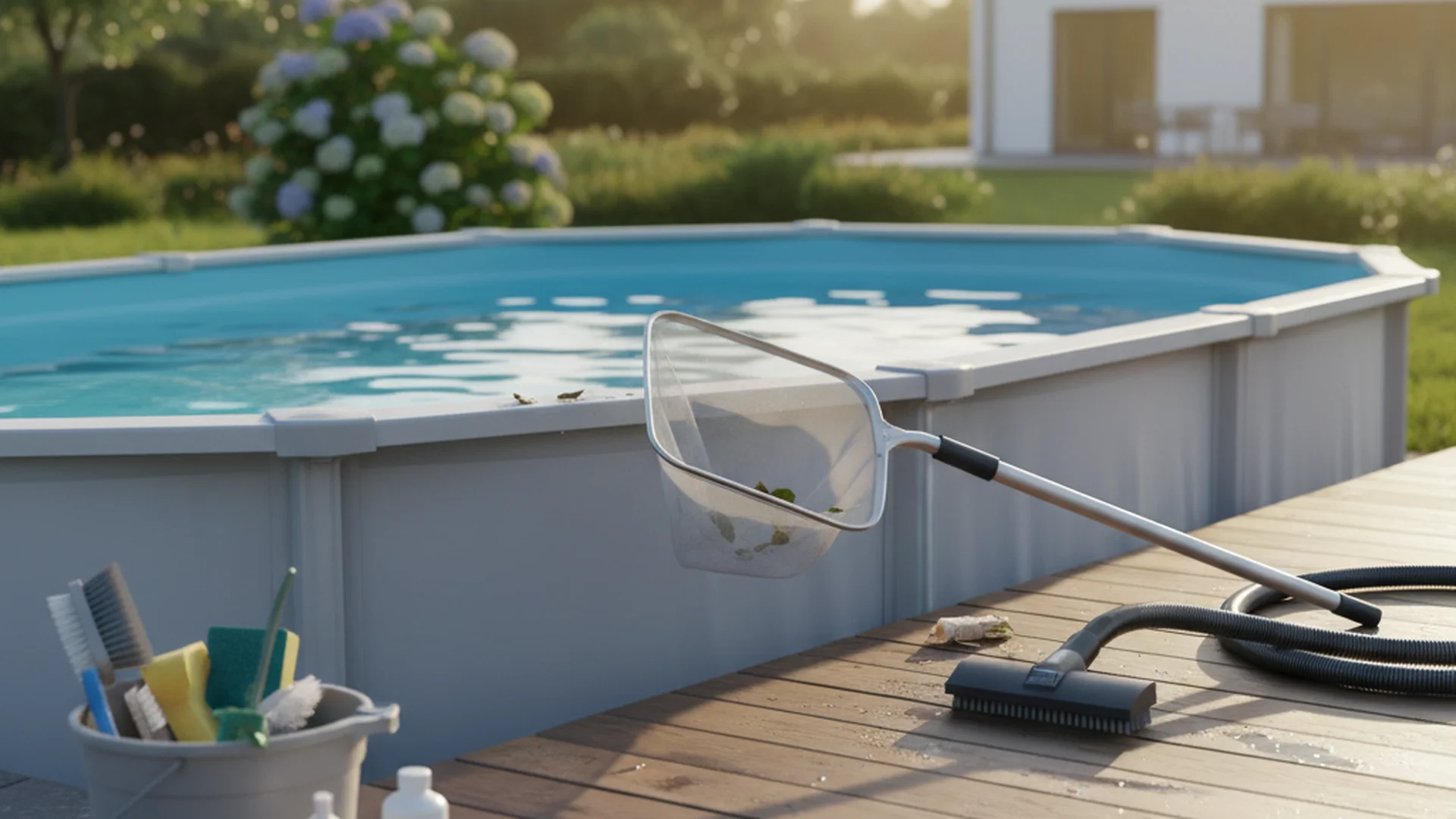
Use a long-handled leaf net to remove floating debris daily. By catching leaves and insects before they sink, you prevent them from breaking down and affecting your water chemistry.
Step 2: Brush the Walls and Floor
This is the most overlooked step. Algae spores often cling to the vinyl liner in microscopic layers. Use a soft-bristled brush (specifically designed for vinyl) to scrub the walls, ladder, and floor once a week.
Warning: Never use a stiff stainless-steel brush on an above-ground pool. These are designed for concrete pools and will tear or strip the protective coating of your vinyl liner.
Step 3: Vacuum the Floor
Once you have brushed the walls, the debris will settle on the floor. You can use a manual vacuum attached to your skimmer or an automatic cleaner.
Success: For those looking for the ultimate hands-off approach, the 2025 trend toward cordless robotic cleaners, such as the Aiper Scuba X1 Pro Max, allows for 360-degree mapping and waterline cleaning without the hassle of tangled hoses.
Real-World Maintenance Scenarios
Example 1: The "Post-Party" Recovery
Imagine you hosted a birthday party with 15 children. The combination of sunscreen, sweat, and organic matter will plummet your chlorine levels. In this case, you should "shock" the pool immediately after the sun goes down. Nighttime shocking is crucial because UV rays burn off unstabilized chlorine, making daytime treatments much less effective.
Example 2: The After-Storm Cleanup
Heavy rain doesn't just add water; it brings nitrates, phosphates, and debris. After a major storm, check your water level. It should be at the midpoint of your skimmer. If it’s too high, the skimmer won't effectively pull in surface debris. Empty your skimmer baskets and run the pump for a full 24 hours to filter out microscopic silt.
Example 3: The "Cloudy Water" Mystery
If your chemicals are perfectly balanced but the water remains hazy, the culprit is likely your filter. Monitor your pressure gauge. When it rises 8–10 PSI above its "clean" starting point, it’s time to backwash your sand filter or rinse your cartridge.
Note: Above-ground pools can now utilize Variable Speed Pumps (VSPs). These high-efficiency units can reduce your energy costs by up to 80% and are becoming the standard for 2026 compliance.
Common Mistakes to Avoid
Even experienced owners can fall into bad habits that damage their equipment or liner.
- Adding Chemicals Directly to the Skimmer: This sends highly concentrated chemicals directly through your pump and filter, leading to premature corrosion of internal seals and components.
- Over-Backwashing: It sounds counterintuitive, but a slightly "dirty" filter actually traps smaller particles than a brand-new one. Only backwash when the pressure gauge indicates it is necessary.
- Draining the Pool Completely: Never fully drain an above-ground pool without professional guidance. The weight of the water is what holds the liner in place against the frame. Without it, the liner can shrink or the walls can collapse inward.
- Ignoring the Water Level: If the water drops below the skimmer opening, the pump will suck in air. This can cause the motor to overheat and burn out in a matter of hours.
Warning: Using "mineral systems" or salt-water conversions is trending for 2026, but ensure your pool frame is compatible with salt to prevent rust and structural failure.
Future Trends: 2025 and 2026
The industry is moving toward "set and forget" maintenance. AI-powered monitoring systems are now hitting the market, offering IoT sensors that integrate with Alexa or Google Home. These systems provide real-time alerts to your smartphone, telling you exactly which chemical to add and when, effectively removing the guesswork from pool care.
Furthermore, sustainable sanitation is a major focus for 2026. Many owners are moving away from liquid chlorine in favor of Saltwater Chlorine Generators (SWCG) specifically designed for above-ground systems, which provide a softer, more skin-friendly swimming experience.
Frequently Asked Questions
How often should I vacuum my above-ground pool?
Can I clean my pool without a vacuum?
Why is my pool water cloudy even though chemicals are balanced?
Do I really need to shock the pool every week?
Is it safe to use salt in an above-ground pool?
Conclusion
Mastering how to clean above ground pool systems doesn't have to be a daunting task. By sticking to the "Three C’s," utilizing modern tools like cordless robotic vacuums, and avoiding common pitfalls like adding chemicals to the skimmer, you can keep your backyard retreat pristine all summer long. Remember, the best way clean above ground pool units is through consistent, small actions rather than occasional, massive overhauls.
Success: Regular maintenance not only keeps the water beautiful but can extend the life of your vinyl liner by up to 5 years!
Cleaning that keeps score
Every task earns points, every streak multiplies them, and Premium adds a household leaderboard plus a monthly Dustagorgon to beat.
- Free forever
- 30 badges to earn
- Up to 6 in a household
No card needed. Set up your rooms in a couple of minutes.