In this article
What you’ll learn
- Clean bird baths every 2-4 days to prevent disease and mosquito breeding.
- Use a 1:9 vinegar-to-water solution for safe, effective daily maintenance.
- Avoid dish soap, as it strips essential oils from bird feathers.
For many homeowners, a backyard bird bath is more than just a garden ornament—it is a vital sanctuary for local wildlife. However, providing water comes with a significant responsibility. Learning how to clean bird bath basins properly is the single most important thing you can do to support your feathered visitors. In 2025, with the continued prevalence of Avian Influenza (H5N1), a sparkling clean water source is no longer just an aesthetic choice; it is a matter of life and death for the birds we love to watch.
Why Bird Bath Hygiene Matters in 2025
A stagnant bird bath is a breeding ground for invisible threats. When birds congregate to drink and bathe, they leave behind more than just a few feathers. Droppings, dander, and environmental debris quickly turn a fresh pool into a "toxic soup" of pathogens.
Recent data from 2024-2025 highlights that dirty bird baths are primary vectors for Salmonella, Avian Pox, and Trichomoniasis. Furthermore, the rise of H5N1 has forced wildlife agencies to urge bird lovers toward more rigorous hygiene standards. Beyond disease, there is the issue of mosquito control. Mosquitoes can complete their life cycle in as little as 7–10 days, but their eggs can hatch in just 48 hours in stagnant water. By maintaining a strict cleaning schedule, you effectively break this cycle.
Success: Birds are 80% more likely to visit a clean, shallow water source than one with visible algae. Clear water allows them to see the bottom, making them feel safer from submerged predators.
The Gold Standard: How to Clean Bird Bath Surfaces Step-by-Step
To maintain a healthy habitat, you need a reliable routine. While there are several methods, the following five-step process is considered the "Gold Standard" by experts for 2025.
Step 1: Dump and Clear
Begin by emptying the old, stagnant water. Do not simply tip it onto your nearby flower beds if you plan on using a disinfecting solution, as the runoff can harm sensitive plants. Instead, dump the water into a gravel area or a designated drainage spot.
Step 2: The Deep Scrub
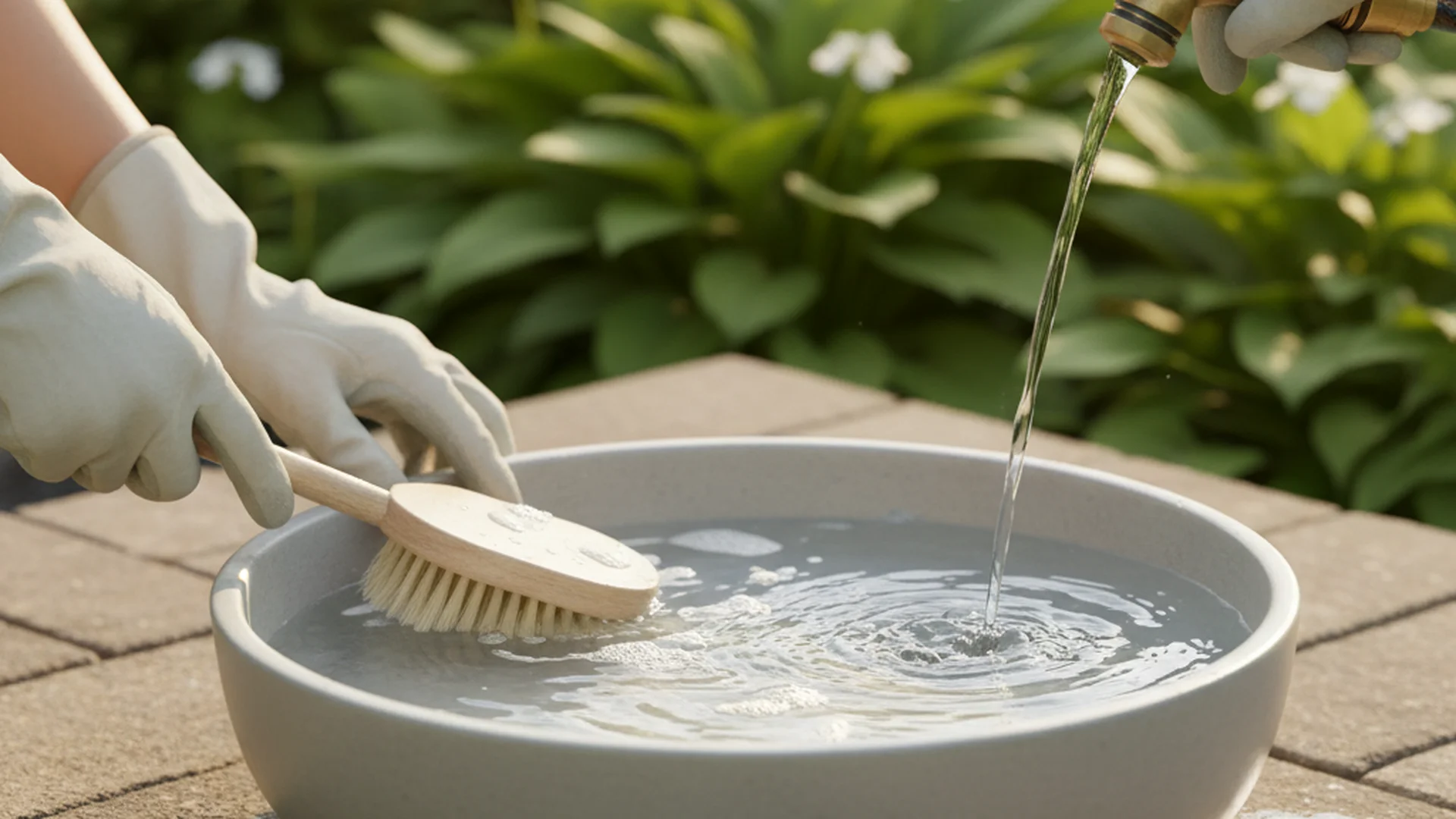
Use a stiff-bristled brush to remove the "biofilm"—that slippery, slimy layer that forms on the surface of the bath. This film is a colony of bacteria and algae that clings to porous surfaces.
Note: Reserve a specific brush solely for your bird bath. Never use the same brush you use for household dishes or automotive cleaning to avoid cross-contamination.
Step 3: Disinfecting Safely
This is where many hobbyists differ on the best way clean bird bath materials. For daily or weekly maintenance, a 1:9 vinegar-to-water solution is ideal. It kills most bacteria without leaving harsh residues. For a monthly deep clean, or if you notice sick birds in your area, a 1:10 bleach-to-water solution is recommended.
Step 4: Rinse and Sun Dry
Rinsing is the most critical step. If you use bleach, you must rinse the basin until the smell of chlorine is completely gone. After rinsing, let the bird bath sit in direct sunlight for at least 15 minutes. The UV rays act as a natural secondary disinfectant.
Step 5: Refill with Intention
Fill the bath with no more than 1–2 inches of fresh water. Birds prefer shallow water for safety. If your bath is naturally deep, consider adding flat river stones to act as "landing pads" so smaller songbirds can bathe without fear of drowning.
Choosing Your Cleaning Agent: Vinegar vs. Bleach
| Feature | Vinegar Solution (1:9) | Bleach Solution (1:10) |
|---|---|---|
| Safety | High (Eco-friendly) | Low (Must be rinsed perfectly) |
| Effectiveness | Great for Algae/Biofilm | Best for Viruses/Pathogens |
| Residue | Minimal | Chemical (can harm feathers) |
| Frequency | Every 2-4 days | Once a month or after illness |
Warning: Never mix vinegar and bleach together. This creates toxic chlorine gas, which is lethal to both humans and wildlife.
2025-2026 Trends in Bird Bath Maintenance
The world of backyard birding is evolving. If you are looking to upgrade your setup this year, keep these trends in mind:
Solar Aeration and Bubblers
The biggest trend in 2025 is the integration of low-profile solar bubblers. Moving water is highly attractive to birds—they can hear the splashing from a distance. More importantly, moving water prevents mosquitoes from landing to lay eggs, significantly reducing the maintenance burden on the homeowner.
Sustainable Materials: The Rise of Polyboo
We are seeing a shift away from heavy, porous concrete bird baths. Concrete traps bacteria in its microscopic pores, making it nearly impossible to fully disinfect. Modern enthusiasts are moving toward Polyboo—a sustainable composite of recycled plastic and bamboo fiber. These baths are lightweight, frost-proof, and have a non-porous surface that wipes clean in seconds.
Bio-Enzymatic Cleaners
2026 marks a shift toward wildlife-safe enzyme drops. These "beneficial bacteria" products break down organic waste and bird droppings automatically. While they don't replace the need for a scrub, they can extend the time between deep cleanings by preventing the buildup of sludge.
Common Mistakes to Avoid
Even the most well-intentioned bird lovers can make mistakes that compromise the health of their backyard flock.
- The "Topping Off" Mistake: Simply adding fresh water to a half-empty bath without dumping the old water. This concentrates bird waste and bacteria, creating a dangerous environment.
- Improper Placement: Placing the bath directly under a bird feeder. Falling seeds and hulls decay quickly in water, fueling rapid bacterial blooms.
- Neglecting the "Splash Zone": Not cleaning the ground under the bird bath. Droppings and spilled water on the grass can harbor parasites like coccidia.
- Using Dish Soap: Experts advise against most dish soaps. Soap residue can strip the essential oils from bird feathers, which they need for insulation and waterproofing.
Tip: In areas with active H5N1 outbreaks, experts now recommend wearing gloves and a mask when cleaning baths to prevent zoonotic transmission.
Real-World Examples of Bird Bath Maintenance
Example 1: The Oregon H5N1 Response
In late 2024, a community in Oregon noticed a spike in sick finches. Local residents coordinated a "Clean Sweep" week where everyone committed to a daily 1:9 vinegar scrub. Within two weeks, the sighting of symptomatic birds dropped by 60%, proving that localized hygiene efforts have a massive impact.
Example 2: The Copper Penny Hack
A gardener in suburban Georgia struggled with rapid algae growth due to intense sun exposure. By adding a pre-1982 copper penny (which has high copper content) to the water, they utilized copper's natural algicidal properties. While it didn't replace cleaning, it kept the water clear for an extra 48 hours between scrubs.
Example 3: The Polyboo Transition
A nature center in Vermont replaced their traditional stone baths with high-density resin and Polyboo models. They reported a 40% reduction in the time required for maintenance because the smooth surfaces didn't allow algae to "root" into the material.
Frequently Asked Questions
Can I use bleach to clean my bird bath?
Is vinegar safe for birds?
How do I stop algae from growing so fast?
Why shouldn't I use dish soap?
Conclusion
Providing a water source for birds is a rewarding hobby that brings nature directly to your window. However, the best way clean bird bath setups involves consistency and the right materials. By following the "Gold Standard" routine and staying informed about 2025-2026 hygiene trends, you can ensure your backyard remains a safe, healthy haven for every bird that stops by for a dip.
Cleaning that keeps score
Every task earns points, every streak multiplies them, and Premium adds a household leaderboard plus a monthly Dustagorgon to beat.
- Free forever
- 30 badges to earn
- Up to 6 in a household
No card needed. Set up your rooms in a couple of minutes.