In this article
What you’ll learn
- Always saturate pavers with water before applying cleaners to prevent deep staining.
- Reseal every 2–3 years to maintain structural integrity and property value.
- Use enzymatic cleaners to target organic growth like moss and algae sustainably.
A beautiful backyard starts with a pristine foundation, but learning how to clean paver patio surfaces effectively requires more than just a garden hose and a prayer. As we move into the 2025–2026 outdoor living season, homeowners are shifting away from harsh chemicals in favor of sustainable, high-tech maintenance routines. Whether you are dealing with stubborn moss, oil spills from a summer barbecue, or the natural "white powder" of efflorescence, professional-grade results are within your reach.
Maintaining your hardscaping isn’t just about aesthetics; it is a vital financial investment. With well-maintained patios increasing home resale values by up to 12%, keeping your stones spotless is one of the most cost-effective home improvements you can undertake this year.
Why Modern Patio Care is Changing
In previous years, "cleaning" often meant blasting stones with high-pressure water and dousing the yard in bleach. However, the 2025 landscaping landscape is defined by "sponge city" concepts and permeable pavers. These systems are designed to manage water runoff, which means our cleaning methods must now account for drainage layers and eco-friendly runoff.
Furthermore, with 83% of consumers demanding green cleaning alternatives, the best way clean paver patio surfaces now involves biological agents rather than corrosive acids. These "smart" cleaners work with the environment, not against it, ensuring your surrounding garden stays as healthy as your patio looks.
Essential Tools and Materials
Before you begin, gather the right supplies. Using the wrong brush or chemical can lead to permanent surface etching.
| Tool/Material | Purpose | Expert Recommendation |
|---|---|---|
| Stiff Nylon Brush | Agitating surface dirt | Never use steel/wire bristles |
| Enzymatic Cleaner | Breaking down organic stains | Bio-based plant safe formulas |
| Polymeric Sand | Filling joints and stopping weeds | Select a color-matched variety |
| Wide-Fan Nozzle | Controlled rinsing | Keeps PSI low to protect stone |
| Push Broom | Pre-cleaning debris | Essential for dry-sweeping |
Note: As of 2025, many homeowners are opting for automated outdoor scrubbers. These robotic patio cleaners can handle large, flat surfaces, allowing you to focus on detail work around edges and fire pits.
The Step-by-Step Guide to Cleaning Your Pavers
Following a specific order of operations is the best way clean paver patio stones without causing accidental damage.
Step 1: Surface Preparation and Weeding
Start by removing all furniture and sweeping the area thoroughly. If you have weeds growing between the cracks, pull them by hand or use a specialized weeding tool.
Tip: If you find yourself constantly weeding, it’s a sign that your joint sand has washed away. We will address how to fix this in Step 5.
Step 2: The "Wet-First" Rule
This is the most important step that DIYers often skip. Always saturate your pavers with plain water before applying any cleaning solution. Because pavers are porous, they act like a sponge. If you apply cleaner to a dry paver, the stone will pull the chemicals deep into its core, potentially causing internal staining or "locking in" the dirt.
Step 3: Applying the Cleaning Solution
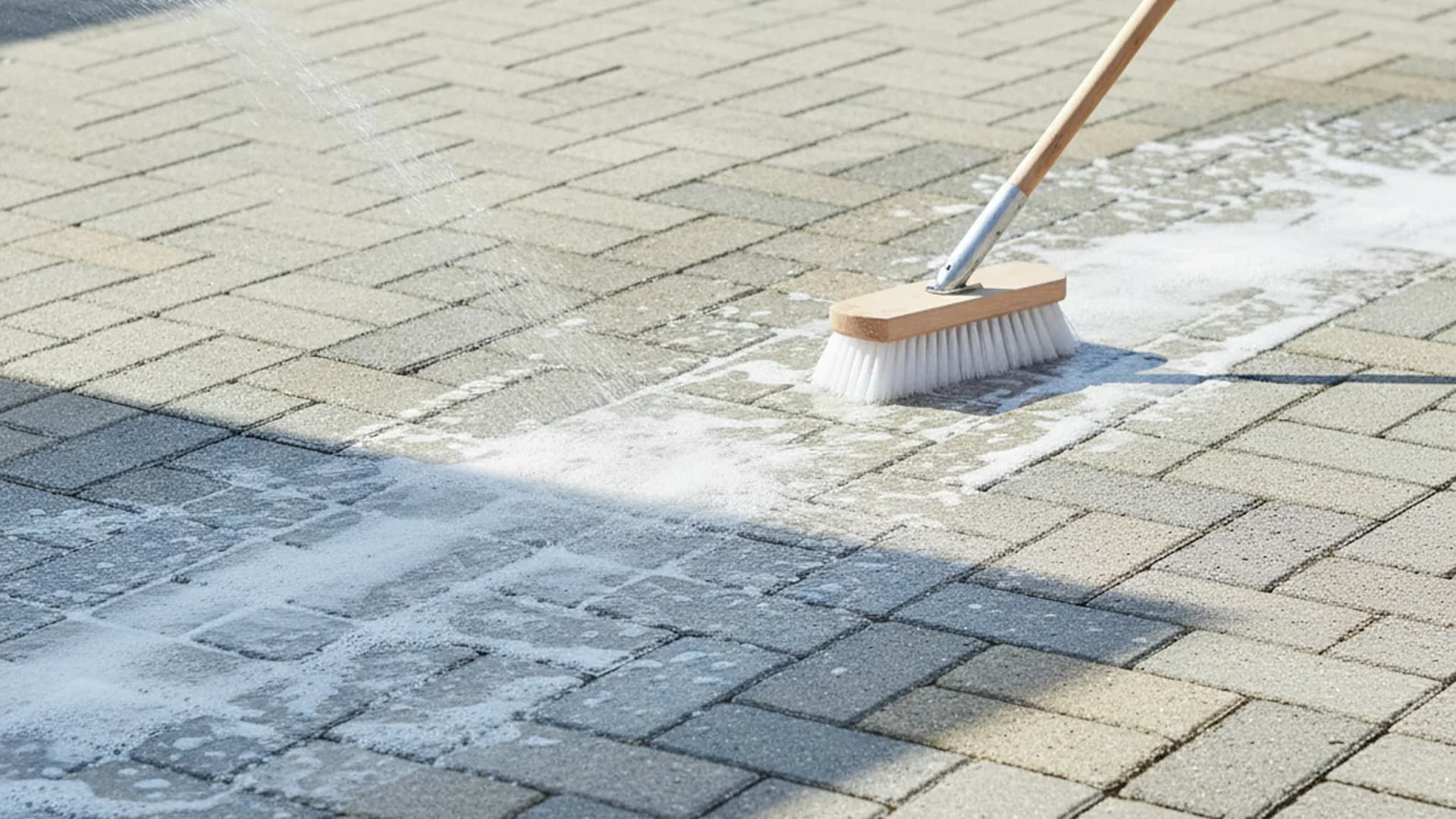
For general grime, a mixture of warm water and mild dish soap works well. However, for 2026, experts recommend enzymatic cleaners. These products use "good" bacteria to eat away at algae, lichen, and moss over several days.
- Real-World Example: A homeowner in Portland recently switched from bleach to a bio-based enzymatic cleaner. While the bleach killed the moss instantly (and the grass next to it), the enzymatic cleaner kept the moss from returning for an entire season by breaking down the spores at a microscopic level.
Step 4: The Scrubbing Technique
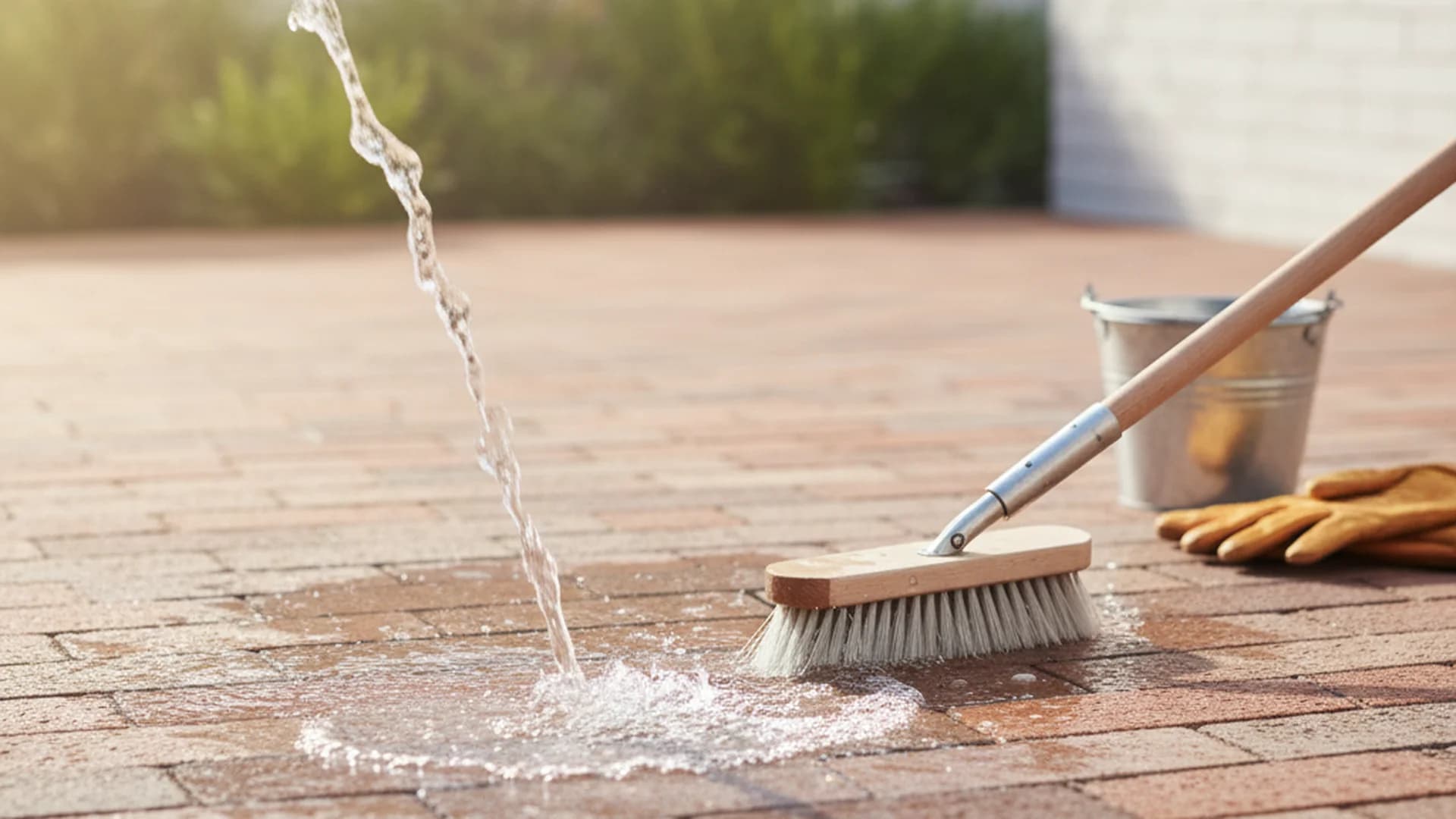
Use a stiff-bristled nylon brush and scrub in a circular motion. This technique is more effective at lifting dirt from the textured crevices of natural stone or concrete than scrubbing back and forth.
Warning: Avoid high-pressure washers on soft stones like sandstone or limestone. High PSI can "etch" the surface, exposing the ugly aggregate underneath and making the patio look decades older than it is.
Step 5: The Post-Clean Rinse and Joint Care
Rinse the patio thoroughly until no soap bubbles remain. Any leftover residue will act as a magnet for dust and pollen once it dries. Once the patio is 100% dry (usually 24 hours later), inspect the joints. If the sand is low, sweep in new polymeric sand. This "smart" sand hardens when misted with water, creating a barrier that prevents weeds and shifting.
Common Mistakes to Avoid
Even seasoned homeowners make errors that can lead to costly repairs. Avoid these frequent pitfalls:
- Sealing "Dirty" Pavers: If you apply a sealer before the patio is completely clean, you will permanently trap stains and moisture under the coat. This often results in a "milky" or hazy appearance that requires professional stripping to fix.
- Using Muriatic Acid: While often suggested in old DIY forums, this acid is too aggressive for modern concrete pavers. It dissolves the cement binder, leading to crumbling stones.
- Cleaning in Direct Sunlight: On a scorching hot day, cleaning solutions dry too quickly, leaving streaks. Aim for an overcast morning for the best results.
- Neglecting Permeable Systems: If you have permeable pavers, do not use standard sand. Use the specific aggregate recommended by the manufacturer to ensure the drainage system doesn't clog.
Success: Following the "Wet-First" rule and using enzymatic cleaners will extend the life of your patio by up to 5 years compared to traditional high-pressure methods.
Recent Trends in Patio Maintenance (2025-2026)
The world of outdoor cleaning is becoming increasingly digital. One of the most exciting shifts in 2025 is the rise of AI-Driven Maintenance Apps. Homeowners can now take a photo of a mystery stain on their patio, and the app uses image recognition to identify if it is rust, tannin from fallen leaves, or oil. The app then calculates the exact dilution ratio for the cleaner needed.
Another trend is the use of Bio-Based "Smart" Sealers. These 2026-era products are breathable. Unlike old-school acrylic sealers that could trap moisture and cause "spalling" (surface peeling), these plant-based polymers allow moisture to escape from the stone while still providing a beautiful matte or "wet look" finish.
Frequently Asked Questions
Is a pressure washer safe for all pavers?
Can I use vinegar or bleach to clean my patio?
Why do my pavers have a white, powdery film?
What is the best way to stop weeds from growing between pavers?
Conclusion
Mastering how to clean paver patio surfaces is a blend of traditional elbow grease and modern technology. By moving toward enzymatic cleaners, respecting the "Wet-First" rule, and utilizing the latest in "smart" sealers, you ensure your outdoor space remains a high-value asset for years to come. Remember, consistency is key—an annual deep clean is far easier than a massive restoration project every decade.
Cleaning that keeps score
Every task earns points, every streak multiplies them, and Premium adds a household leaderboard plus a monthly Dustagorgon to beat.
- Free forever
- 30 badges to earn
- Up to 6 in a household
No card needed. Set up your rooms in a couple of minutes.