In this article
What you’ll learn
- Always use the 'Dry-First' rule by brushing off loose debris before applying water.
- Stand cushions vertically on their sides to ensure faster and more efficient drying.
- Modern 2025 trends prioritize bio-based enzymes and nanotechnology for fabric protection.
As the "outdoor living" boom continues to reshape our homes, the backyard has officially become the new living room. However, keeping those stylish investments looking pristine requires more than just a quick wipe-down. If you are wondering how to clean outdoor cushions without damaging the specialized UV-resistant fabrics, you have come to the right place. This guide incorporates the latest 2025–2026 maintenance protocols to ensure your outdoor space remains a sanctuary rather than a chore.
Why Regular Maintenance Matters
In the world of outdoor furniture, neglect is the leading cause of premature replacement. While many premium fabrics, such as Sunbrella, are engineered to be mildew-resistant, they aren't invincible. Interestingly, mold rarely grows on the synthetic fibers themselves; instead, it thrives on the microscopic layers of dirt, pollen, and organic debris trapped on the surface.
Experts now recommend a light cleaning every 2–3 weeks during the peak summer season. This prevents environmental pollutants from "baking" into the fabric under intense UV rays. By following the best way clean outdoor cushions—which involves a balance of regular dusting and strategic deep cleaning—you can extend the lifespan of your furniture by several years.
The Preparation: The "Dry-First" Rule
Before you reach for the garden hose, there is one essential step that most homeowners skip. This is known as the "Dry-First" rule.
Warning: Never apply water to outdoor cushions while they are covered in loose dirt, leaves, or thick pollen. Adding moisture to loose debris creates "mud stains" that can be ground deeper into the fabric weave, making them significantly harder to remove.
Preparation Checklist
- Vacuum: Use an upholstery attachment to clear out the crevices and seams.
- Brush: Use a soft-bristled brush to whisk away dried bird droppings or stuck-on dirt.
- Inspect: Check the care labels for specific manufacturer instructions (e.g., "W" for water-based cleaners).
Step-by-Step: How to Clean Outdoor Cushions
Whether you are dealing with a light layer of dust or a season's worth of grime, your approach should be methodical. Here is the standard protocol for 2025.
Step 1: Prepare Your Cleaning Solution
Depending on the level of dirt, you will need to choose the right "cocktail."
| Cleaning Level | Recipe | Purpose |
|---|---|---|
| Mild Maintenance | 1/4 cup mild dish soap + 1 gallon lukewarm water | General dust and light stains |
| Deep Clean | 1/2 cup Borax + 2 tbsp dish soap + 1 gallon water | Deep-set grime and brightening |
| Mold & Mildew | 1 cup bleach + 1/4 cup mild soap + 1 gallon water | Tough fungal growth (Bleach-safe only) |
Step 2: Application and Scrubbing
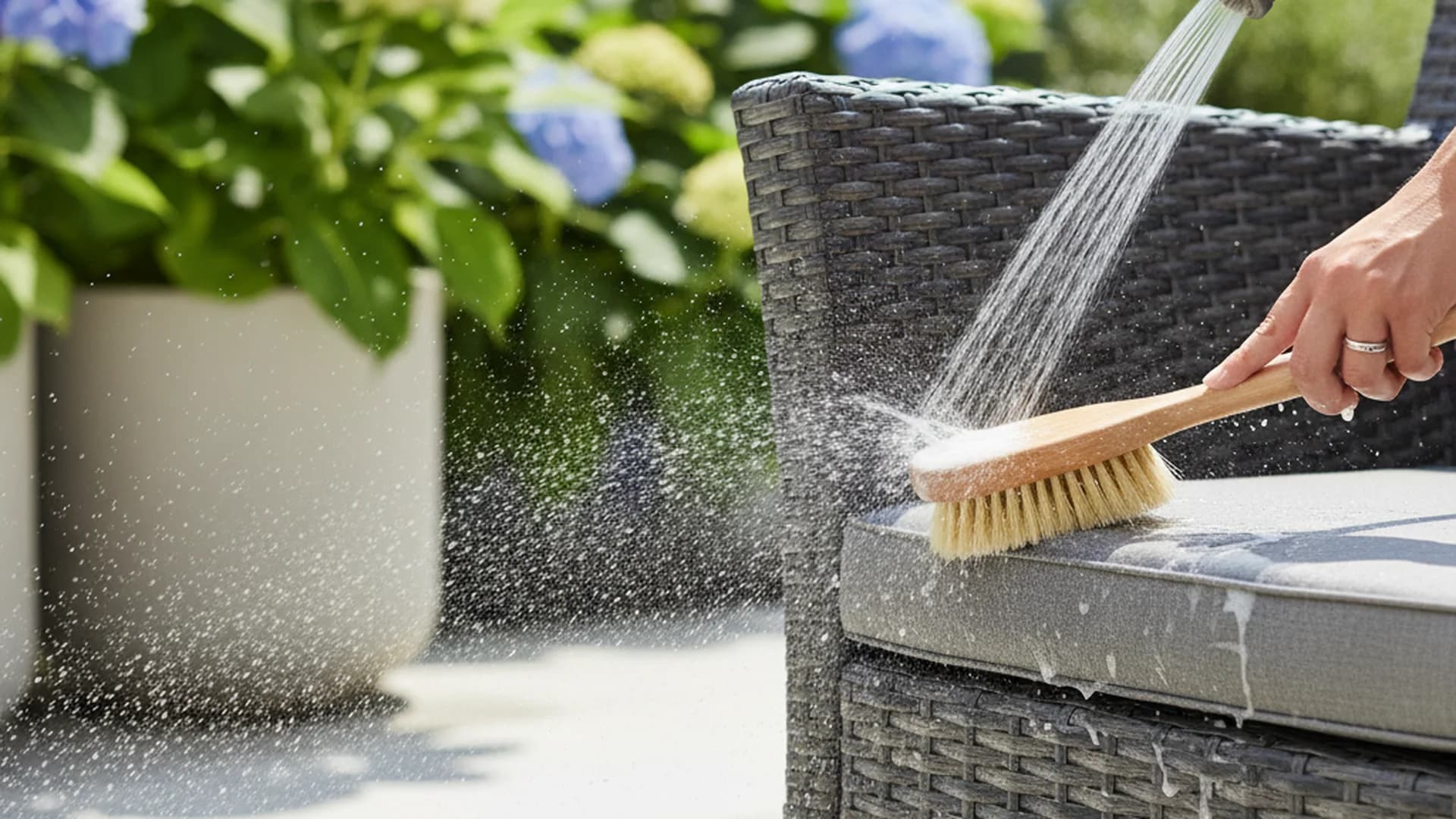
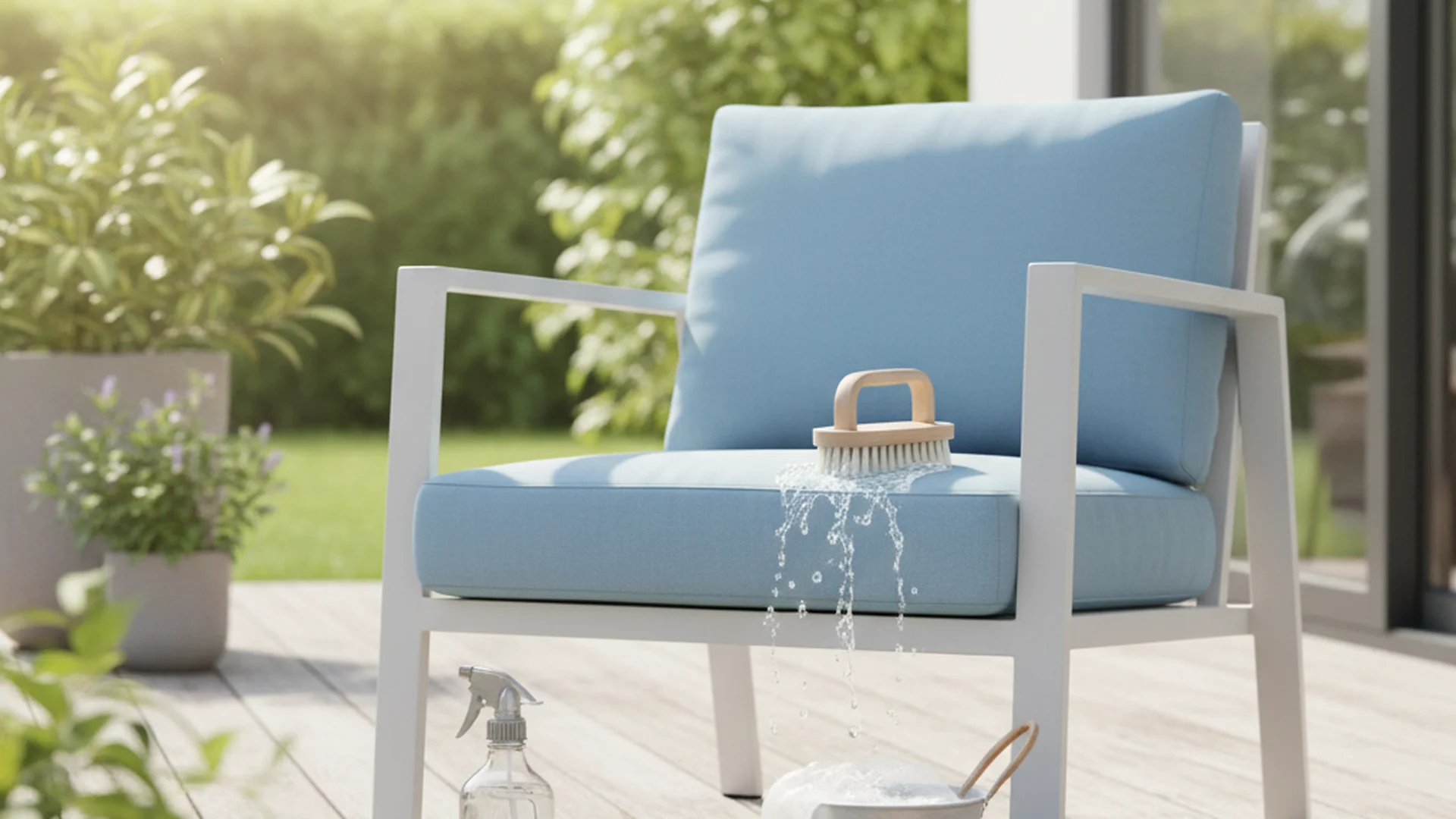
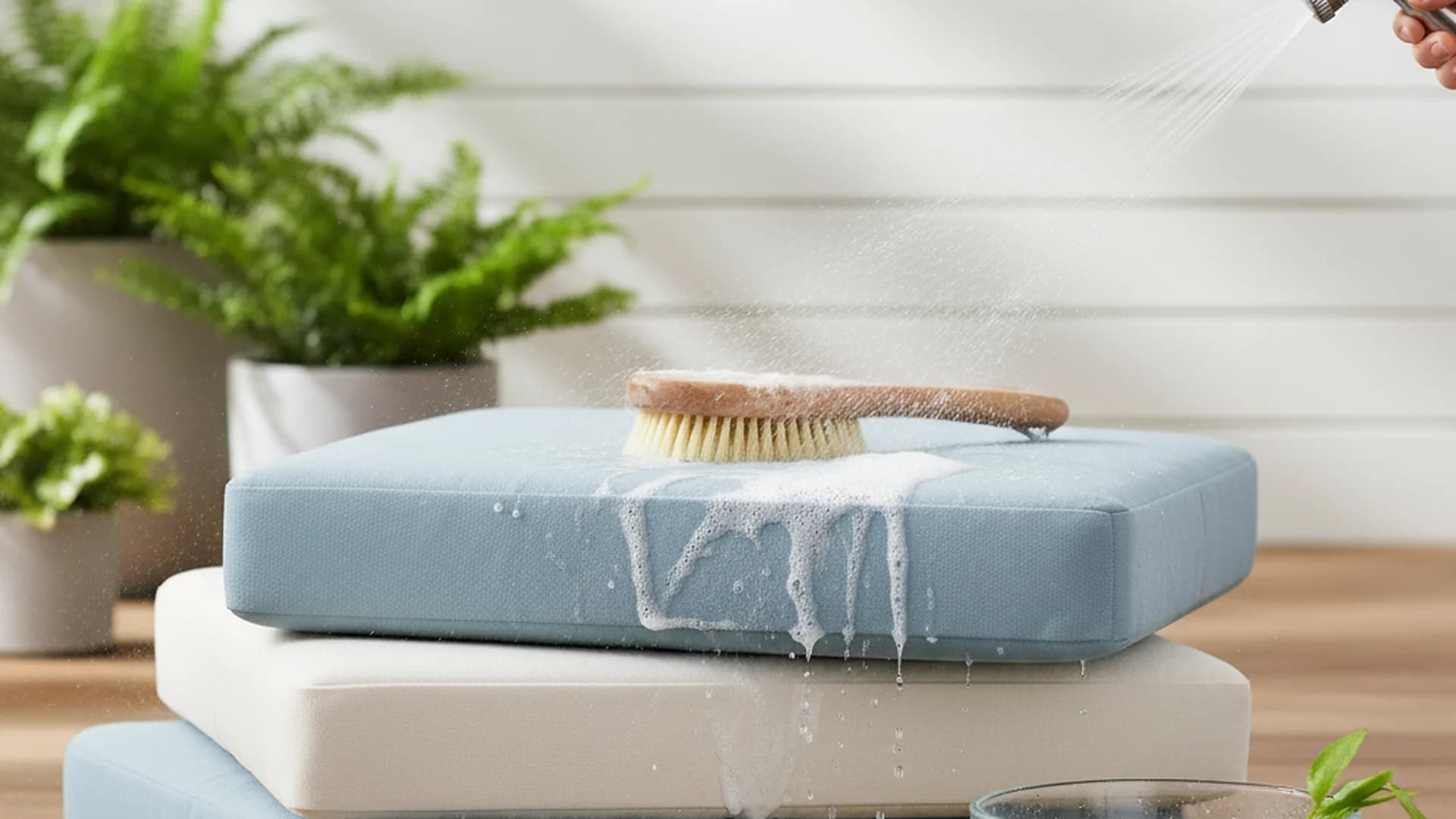
Spray the solution onto the fabric rather than soaking the entire cushion. Use a soft-bristled brush to work the solution into the fibers using circular motions.
Tip: For stubborn stains, let the cleaning solution sit on the fabric for 15 minutes. This allows the surfactants to break the bond between the dirt and the fabric.
Step 3: The Rinse
Rinsing is perhaps the most underrated part of the process. Residual soap acts as a magnet for new dirt, meaning a poorly rinsed cushion will get dirty twice as fast. Rinse with a garden hose until the water runs completely clear and no suds are visible.
Real-World Scenarios: Dealing with Specific Stains
Cleaning outdoor cushions isn't always about general dirt; sometimes, life happens. Here are three common real-world examples:
- The BBQ Mishap: Imagine a guest drops a greasy burger or smears sunscreen on your beige lounger. Because oil is hydrophobic, water alone won't work. The Solution: Apply cornstarch or baking soda directly to the grease. Let it sit for 10 minutes to absorb the oil, then scrape it off with a credit card before washing with soap.
- The "Musty" Storage Surprise: You pull your cushions out of the deck box in April and they smell like a damp basement. The Solution: Use a 2026-trend "Bio-Based" cleaner with enzymes that specifically target odor-causing bacteria rather than just masking them with fragrance.
- The Bird Dropping Dilemma: Dried droppings can be acidic. The Solution: Gently scrape off the excess when dry, then spot-treat with a mix of white vinegar and water (1:3 ratio) to neutralize the pH before a standard wash.
Note: Always test any cleaning solution, especially bleach or vinegar, on a small, inconspicuous area of the cushion first to check for colorfastness.
Advanced 2025–2026 Cleaning Trends
As we move into 2026, the industry is shifting toward more sustainable and high-tech solutions.
Bio-Based and Enzyme Cleaners
There is a major shift toward plant-based surfactants derived from coconut and corn. These "bio-based" cleaners are now just as effective as traditional chemicals but are much safer for the surrounding lawn and garden.
Dry Steam Cleaning
Dry steam is emerging as a water-saving trend. High-temperature steam can sanitize fabric and kill mold spores without fully saturating the foam core. This is particularly useful for integrated cushions that cannot be easily moved.
Nanotechnology Sprays
Once your cushions are clean and dry, the final step is protection. Modern "nanotech" fabric protectors (like the latest versions of 303 Fabric Guard) create a breathable, microscopic barrier that is far more durable than the old silicone-based sprays of the past.
Common Mistakes to Avoid
Even with the best intentions, it is easy to ruin expensive outdoor upholstery. Avoid these frequent pitfalls:
- Cleaning on the Grass: Never clean your cushions directly on the lawn. You risk picking up grass stains or creating a muddy mess. Use a clean driveway, deck, or a plastic tarp.
- Using a Pressure Washer: High pressure can strip the Durable Water Repellent (DWR) finish or even tear the fibers of the fabric. If you must use one, keep it on the lowest setting and stay at least 3 feet away.
- The Dryer Trap: Never put cushion covers in a machine dryer. The high heat can shrink the fabric or melt the UV-protective coatings, rendering the covers useless.
- Storing While Damp: Placing a slightly damp cushion into a storage box is a recipe for a mold explosion. Ensure they are bone-dry throughout the entire foam core.
Warning: Over-saturating the internal foam core is the leading cause of "internal mold." Use a spray bottle to dampen the fabric rather than a hose to soak the interior unless a deep soak is absolutely necessary.
Frequently Asked Questions
Can I put outdoor cushion covers in the washing machine?
What is the best way to dry outdoor cushions?
How do I remove deep-set mold and mildew?
How often should I re-apply fabric protector?
Conclusion
Mastering the best way clean outdoor cushions is about more than just aesthetics; it's about protecting a significant investment in your home's comfort. By adopting the "Dry-First" rule, utilizing modern bio-based cleaners, and ensuring proper vertical drying, you can keep your outdoor space looking like a 2025 showroom year-round. Remember that consistency is key—a quick brush-off every two weeks will save you hours of scrubbing at the end of the season.
Success: By following these expert protocols, you will maintain the vibrant color and structural integrity of your outdoor cushions for many seasons to come.
Cleaning that keeps score
Every task earns points, every streak multiplies them, and Premium adds a household leaderboard plus a monthly Dustagorgon to beat.
- Free forever
- 30 badges to earn
- Up to 6 in a household
No card needed. Set up your rooms in a couple of minutes.