In this article
What you’ll learn
- Car interiors can harbor a surprising amount of bacteria; deep cleaning is essential for health.
- Always follow the top-to-bottom rule to prevent re-contaminating lower surfaces.
- Professional detailing can increase a vehicle's resale value by up to $2,000.
For many of us, the car is no longer just a mode of transportation; it is a mobile office, a dining room, and a sanctuary. That also means our "second home" can quietly turn into a biological hazard. To effectively clean car interior surfaces in 2025, we have to look beyond just removing visible dust. With vehicles staying on the road longer than ever, maintenance is no longer about vanity—it is about preserving your investment and your health.
The high-touch points in a cabin—the steering wheel, the gearstick, the door handles—collect a remarkable amount of grime and bacteria, and they rarely get the attention a kitchen counter would. Whether you are looking for the best way clean car interior materials to prep for a sale or simply want a more hygienic commute, this guide provides the professional blueprint for success.
Why Modern Interior Cleaning Has Changed
In the past, a quick vacuum and a spray of scented silicone were enough to satisfy most car owners. Today, the landscape is different. We are dealing with advanced materials like "vegan leather" (synthetic polymers), high-resolution OLED touchscreens, and sophisticated HVAC systems that require more than just a bucket of soapy water.
The economic incentive has also shifted. In today’s market, a professionally maintained interior can boost a vehicle's resale value by anywhere from $500 to $2,000. By following these clean car interior tips, you are effectively paying yourself through equity preservation.
Note: The "Health Detailing" trend of 2025 emphasizes the use of steam and VOC-free chemicals to ensure the cabin air quality remains safe for families and pets.
The Golden Rule: The Top-to-Bottom Approach
The most common mistake DIYers make is starting with the carpets. Gravity is your enemy in detailing. When you clean the dashboard or the headliner last, dust and chemical residue fall onto your freshly vacuumed floors, forcing you to do the work twice.
The Headliner and Pillars
Start at the very top. The headliner (the fabric on the ceiling) is delicate and held together by sensitive adhesives.
Warning: Never spray cleaning solution directly onto the headliner. Over-saturation can cause the glue to fail, leading to a "sagging" ceiling that is expensive to repair.
Instead, spray a microfiber cloth with a mild upholstery cleaner and gently blot away any stains. This is particularly important for the A-pillars (the posts next to the windshield), which often get touched when entering or exiting the vehicle.
Mastering the Dashboard and Electronics
The dashboard is the focal point of the interior, but it’s also the most exposed to UV damage. Modern vehicles are also packed with technology that requires specific care.
Cleaning Touchscreens and Displays
With screens getting larger and more prominent, using the wrong chemical can be a costly error. Many modern displays have anti-glare coatings that are easily stripped by ammonia-based glass cleaners.
- The Best Approach: Use a dry, high-GSM (grams per square meter) microfiber cloth for fingerprints. For stubborn grime, use a dedicated electronic-safe cleaner or a 50/50 mix of distilled water and isopropyl alcohol, applied to the cloth first.
Vents and Crevices
The HVAC vents are the primary source of "old car smell" because they trap dust and moisture, leading to mildew growth.
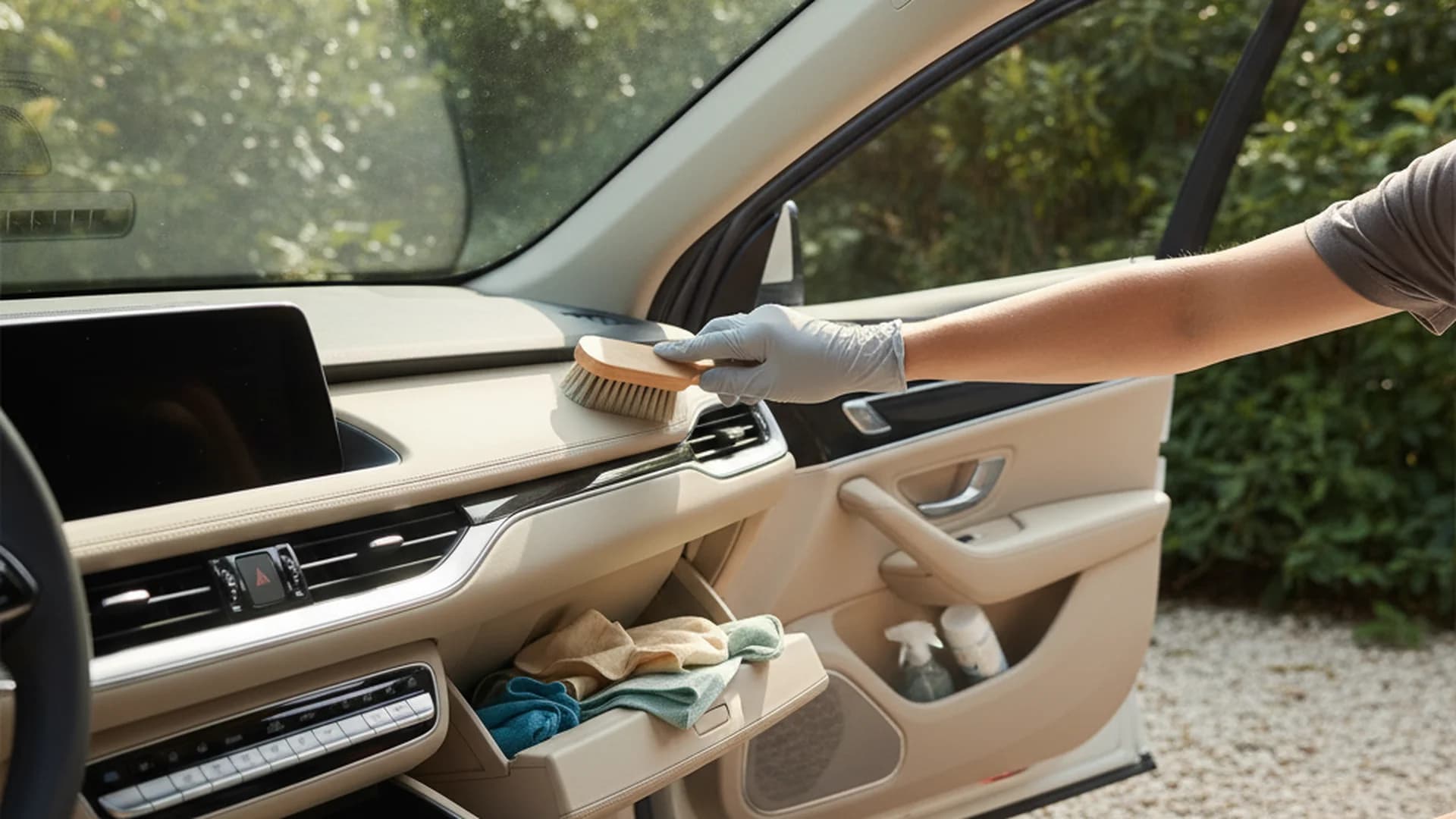
Tip: Use a small detailing brush or a can of compressed air to dislodge dust from vents before vacuuming. This ensures the dust is sucked out of the car rather than recirculated through the cabin.
Upholstery and Seating: Material-Specific Care
The best way clean car interior seats depends entirely on the material. Treating leather like fabric—or vice versa—will lead to permanent damage.
Genuine Leather
Leather is skin; it needs to breathe and stay hydrated. In 2025, professionals recommend a pH-balanced cleaner.
- Apply cleaner to a soft-bristled brush.
- Agitate in a circular motion to create a foam that lifts dirt out of the pores.
- Wipe away with a clean microfiber.
- Follow up with a UV-blocking conditioner to prevent cracking.
Vegan Leather and Synthetic Polymers
Found in almost all modern EVs (like Tesla and Rivian), these materials are non-porous. Traditional leather conditioners will simply sit on top and create a greasy mess. Use an interior detailer specifically formulated for synthetic polymers to maintain a matte, factory-fresh look.
Fabric and Alcantara
Fabric seats are magnets for liquid spills.
Success: A real-world example of modern protection is the use of interior ceramic coatings. One client, a parent of three, had their SUV's fabric seats ceramic coated. When a full chocolate milkshake was spilled, the liquid beaded up on the surface, allowing it to be wiped away with a paper towel without leaving a single stain.
Deep Cleaning Carpets and Floor Mats
The floors are the "germ hub" of the vehicle. The trunk and the driver's footwell tend to collect the most bacteria, often brought in from the bottom of your shoes.
The Multi-Stage Vacuum Technique
Professional detailers don’t just vacuum once.
- Stage 1: Initial vacuum to remove loose debris.
- Stage 2: Agitation. Use a stiff-bristled brush or a massage gun (a popular 2025 pro-tip) to vibrate the carpet. This brings "hidden" sand and grit to the surface.
- Stage 3: Final vacuum to remove the newly loosened material.
| Surface Type | Recommended Tool | Cleaning Product |
|---|---|---|
| Carpet | Stiff Brush | Fabric Shampoo |
| Leather | Horsehair Brush | pH-Neutral Soap |
| Plastics | Microfiber | Matte Detailer |
| Glass | Waffle-Weave | Alcohol-Based |
Common Mistakes to Avoid
Even the most well-intentioned cleaning session can go wrong if you fall into these common traps:
- Cleaning in Direct Sunlight: Heat causes chemicals to evaporate before they can encapsulate dirt, leaving behind unsightly streaks and spots. Always work in the shade or a garage.
- The "Silicone Shine" Trap: Avoid high-gloss dressings that contain heavy silicones. These products create a greasy glare on the dashboard that reflects onto the windshield, significantly reducing visibility while driving.
- Using Household Soaps: Dish soap is designed to strip grease from pans. On a car interior, it will strip the natural oils from leather and the UV protectants from vinyl, leading to premature aging and "ashy" surfaces.
- Over-Saturating Electronics: Never spray liquids directly onto buttons or screens. Capillary action can pull the liquid into the electronics, causing short circuits.
Warning: Using bleach or hydrogen peroxide on car upholstery can cause permanent discoloration and weaken the structural integrity of the seat fibers.
Frequently Asked Questions
How often should I clean my car interior?
What is the best way to remove stubborn odors like smoke or pet smells?
Can I use a magic eraser on my interior plastics?
Why is my windshield always foggy on the inside after cleaning?
Conclusion: The Value of a Clean Cabin
Mastering how to clean car interior surfaces is an essential skill for the modern driver. By moving away from superficial sprays and toward biologically deep cleaning, you protect your health, improve your daily driving experience, and secure a much higher resale value for the future.
Remember, the goal of 2025 detailing is a matte, clean, and sanitized finish—not a greasy, scented mask. With the right tools and a top-to-bottom strategy, your 12-year-old vehicle can look, feel, and smell like it just rolled off the showroom floor.
Success: Consistent maintenance prevents the "permanent" wear that usually leads to expensive upholstery replacements or a lower trade-in value.
Cleaning that keeps score
Every task earns points, every streak multiplies them, and Premium adds a household leaderboard plus a monthly Dustagorgon to beat.
- Free forever
- 30 badges to earn
- Up to 6 in a household
No card needed. Set up your rooms in a couple of minutes.