In this article
What you’ll learn
- Regular cleaning can extend mower lifespan by 5–8 years.
- Never tip a gas mower with the air filter facing down.
- Modern electric and robotic mowers require dry cleaning methods for sensors and electronics.
A lush, green lawn is the pride of many homeowners, but the unsung hero behind every perfect stripe is the lawn mower. However, most people neglect the very machine that does the heavy lifting. Knowing how to clean lawn mower components effectively is the difference between a tool that lasts five years and one that lasts fifteen. As we move into the 2025–2026 seasons, the technology in our sheds is changing—from traditional gas guzzlers to high-tech robotic units—and our cleaning habits must evolve with them.
In this guide, we will explore the best way clean lawn mower decks, engines, and sensors to ensure your equipment runs efficiently, saves you money on fuel, and provides a professional-grade cut every single time.
Why Cleaning Your Mower is Non-Negotiable
It is easy to park the mower in the shed and forget about it until the grass grows again. However, ignoring maintenance has immediate and long-term consequences. Grass clippings are naturally acidic; when they are left to cake onto a metal deck, they trap moisture against the steel, leading to rust perforation in as little as three to four seasons.
Furthermore, buildup under the deck creates a physical barrier to airflow. A mower relies on a vacuum effect to pull grass blades upright before the blade slices them. Research shows that heavy buildup can reduce this airflow by up to 30%, resulting in a "ragged" cut that leaves your lawn susceptible to disease.
Success: Regular maintenance can extend a standard mower’s life from a 10-year average to over 15 years, saving you hundreds in replacement costs.
Safety First: Pre-Cleaning Checklist
Before you grab a hose or a scraper, safety is paramount. A lawn mower blade is essentially a heavy, rotating knife, and accidental startups are a real risk when you are working near the undercarriage.
Step 1: Kill the Power
For a gas mower, you must disconnect the spark plug wire. Simply turning the mower off is not enough; manually moving the blade can sometimes create enough compression to start the engine. For electric or battery-powered mowers, remove the battery pack entirely.
Step 2: The Tipping Rule
If you have a gas mower, you will likely need to tip it on its side to reach the deck.
Warning: Always tip a gas mower with the air filter and carburetor facing UP. Tipping it the wrong way allows oil to drain into the air filter or spark plug, which can ruin the engine or prevent it from starting.
The Best Way to Clean Lawn Mower Decks
The undercarriage, or "deck," is where the most significant wear and tear occurs. This is the core of the cleaning process.
1. The "Dry" Clean
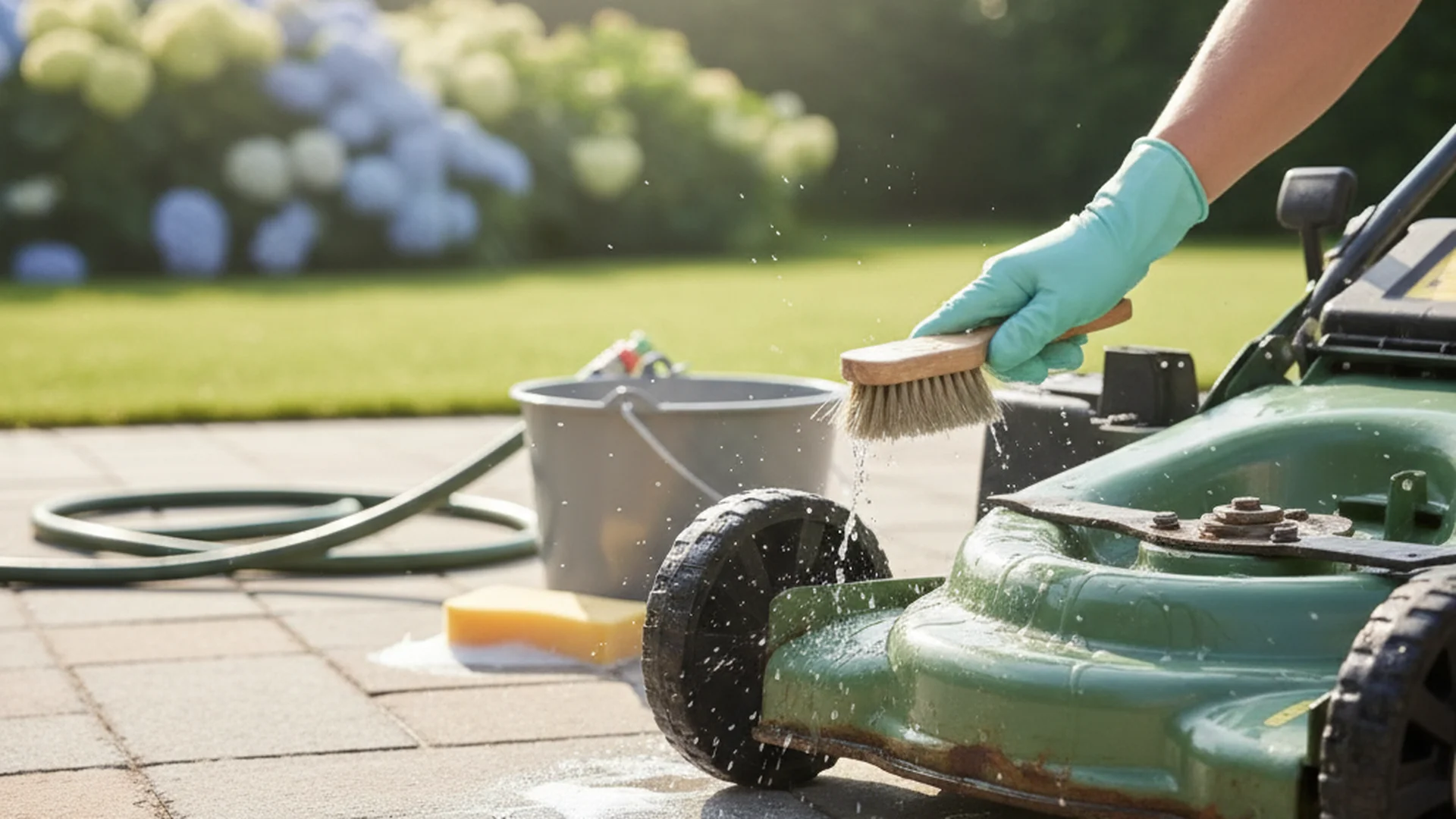
Before introducing water, use a stiff brush or a leaf blower to remove loose debris, dust, and pollen from the top of the mower. This prevents mud from forming in the nooks and crannies of the engine housing.
2. Scraping the Undercarriage
Use a plastic or metal putty knife to scrape away "caked" grass. This is easiest when the grass is still slightly damp immediately after a mow. If the grass has dried into a concrete-like substance, you may need to use a specialized deck scraper.
3. Using the Wash Port
Many modern mowers come equipped with a deck wash port.
- Attach your garden hose to the port.
- Turn on the water.
- Start the mower on a flat, grassy surface and let it run for two minutes.
- The spinning blade acts as a centrifuge, spraying water at high velocity to clear the deck.
Tip: After cleaning and drying the deck, spray the underside with non-stick cooking spray or silicone spray. This creates a hydrophobic layer that prevents grass from sticking during your next session.
| Mower Component | Cleaning Method | Frequency |
|---|---|---|
| Deck/Underside | Scrape & Wash | After every use |
| Air Filter | Replace/Clean | Every 25 hours |
| Wheels | Wipe down | Monthly |
| Sensors | Microfiber cloth | Weekly (Robotic only) |
Cleaning by Mower Type: 2025 Trends
The residential market is shifting rapidly, with electric and robotic mowers now accounting for over 40% of sales in suburban areas. These machines require a different approach than the "hose and scrub" method used for gas engines.
Electric Mower Maintenance
Electric mowers have sensitive wiring and circuit boards. You should avoid high-pressure water entirely. Instead, manufacturers in 2025 are moving toward "Electronic Dry Cleaning." Use compressed air to blow out the motor housing and specialized brushes to clean the blade area.
Robotic Mower Sensor Care
Robotic mowers (like Husqvarna or Worx) introduce a new challenge: Sensor maintenance. Dust, mud, or grass juice on ultrasonic or optical sensors can cause the mower to "see" ghosts, leading it to miss patches of grass or stop unnecessarily. Use a damp microfiber cloth to wipe sensor lenses weekly.
Note: Many 2026 mower models now sync with apps to send "Clean Deck" notifications based on engine load and moisture sensors. Pay attention to these alerts to prevent motor strain.
Common Mistakes to Avoid
Even with the best intentions, a few common errors can lead to expensive repairs.
- Cleaning a Hot Engine: Never spray cold water on a hot engine block. The sudden temperature drop can cause the metal to crack or warp due to thermal shock. Wait at least 20 minutes after mowing before cleaning.
- The Pressure Washer Pitfall: It is tempting to use a pressure washer for a "deep clean," but high-pressure water can force moisture into sealed bearings, the carburetor, or electrical components. Stick to a standard garden hose.
- Storing While Wet: Putting a freshly washed mower into a dark, unventilated shed is a recipe for mold and corrosion. Always let the mower air dry in the sun for 20 minutes before storage.
- Neglecting the Wheels: Grass buildup on wheels changes the cutting height. This leads to an uneven "rake" across your lawn. Wipe the wheel treads after use to maintain a level cut.
Real-World Example: The "Acidic Grass" Trap
A homeowner in a humid climate left damp grass clippings on his steel-deck mower for an entire month. By the time he scraped it clean, the acidic nature of the decomposing grass had pitted the metal so deeply that the deck eventually snapped during a hit against a small rock. Regular cleaning would have neutralized this acidity and saved the machine.
Frequently Asked Questions
Can I use a pressure washer on my mower?
How often should I clean the deck?
Is it safe to tip a gas mower on its side?
Do I really need to remove the spark plug just to clean it?
Conclusion
Mastering how to clean lawn mower equipment is one of the most effective ways to protect your investment and ensure a beautiful yard. By shifting toward "dry" cleaning methods for modern electric units and being diligent with scraping gas mower decks, you can improve fuel efficiency by up to 15% and keep your machine running for decades.
Success: A clean mower isn't just a chore; it's a commitment to a healthier lawn and a more efficient home maintenance routine.
Cleaning that keeps score
Every task earns points, every streak multiplies them, and Premium adds a household leaderboard plus a monthly Dustagorgon to beat.
- Free forever
- 30 badges to earn
- Up to 6 in a household
No card needed. Set up your rooms in a couple of minutes.