In this article
What you’ll learn
- Use pH-neutral cleaners to avoid damaging the protective sealer.
- Reseal every 2–3 years to maintain color and prevent UV damage.
- Avoid de-icing salts and metal shovels during winter months.
Stamped concrete has revolutionized the way we approach outdoor aesthetics. As of 2024, it dominates the decorative concrete industry, accounting for over 40% of global revenue. It offers the high-end look of natural stone, slate, or brick with the durability of a solid slab. However, many homeowners are left wondering about the long-term upkeep. Learning how to clean stamped concrete properly is the most critical step in protecting your investment and ensuring your patio, driveway, or walkway remains a focal point of your home’s curb appeal for decades.
Why Stamped Concrete Maintenance Matters
Proper maintenance provides a high return on investment (ROI), typically adding between 50% to 90% of the project cost back into your home's value. Without regular cleaning and resealing, the vibrant pigments are vulnerable to UV fading, and the textured surface can become a magnet for ground-in dirt. By following a professional cleaning regimen, you can extend the lifespan of your concrete from a standard 10–15 years to more than 30 years.
The Best Way to Clean Stamped Concrete
The best way clean stamped concrete is to focus on gentle, consistent methods rather than aggressive, high-pressure tactics. The goal is to remove surface contaminants without stripping away the protective sealer that gives the concrete its sheen and color depth.
Essential Supplies Checklist
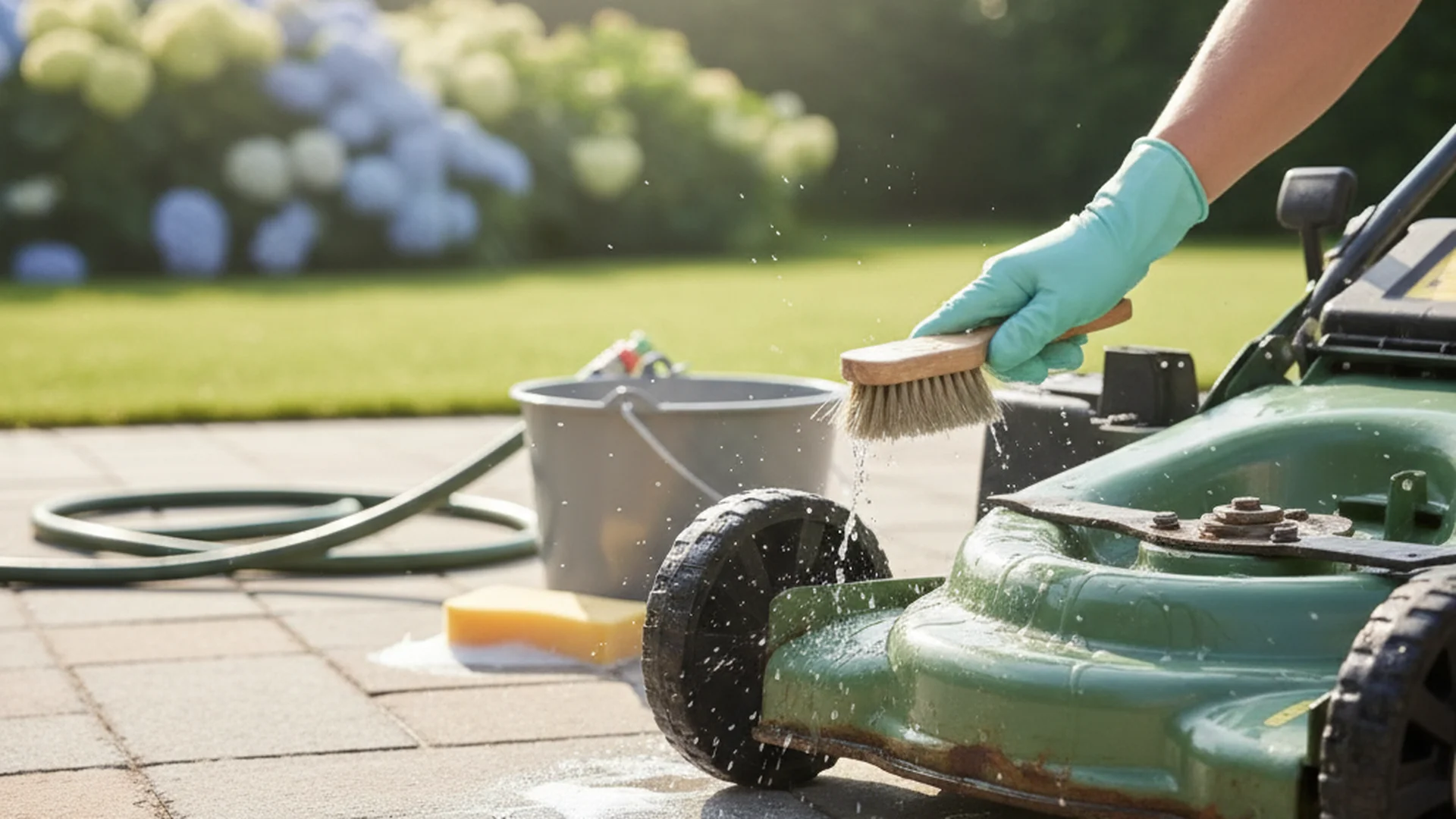
Before you begin, gather the following supplies to ensure a smooth process:
- A soft-bristle push broom or leaf blower
- A standard garden hose with a spray nozzle
- A pH-neutral cleaner or mild dish soap (e.g., Dawn)
- A large bucket and a soft-bristle scrubbing brush
- A pressure washer (optional, for heavy-duty jobs)
Tip: Always choose a pH-neutral cleaner. Harsh acidic or alkaline cleaners can react with the concrete's minerals and cause permanent discoloration or etching.
The Step-by-Step "Double Rinse" Method
Industry experts recommend a systematic approach known as the "Double Rinse" to ensure no soap residue is left behind, which can cause unsightly "whitening" or streaks.
1. Debris Removal
Start by removing all loose items from the area, including furniture, planters, and rugs. Use a leaf blower or a soft-bristle broom to clear away grit, pine needles, and leaves. This step is vital because walking on grit while wet can act like sandpaper against the sealer.
2. The Initial Rinse
Spray the entire surface with a garden hose. This loosens dried mud and surface grime, making the chemical cleaning process much more effective.
3. Application of Cleaning Solution
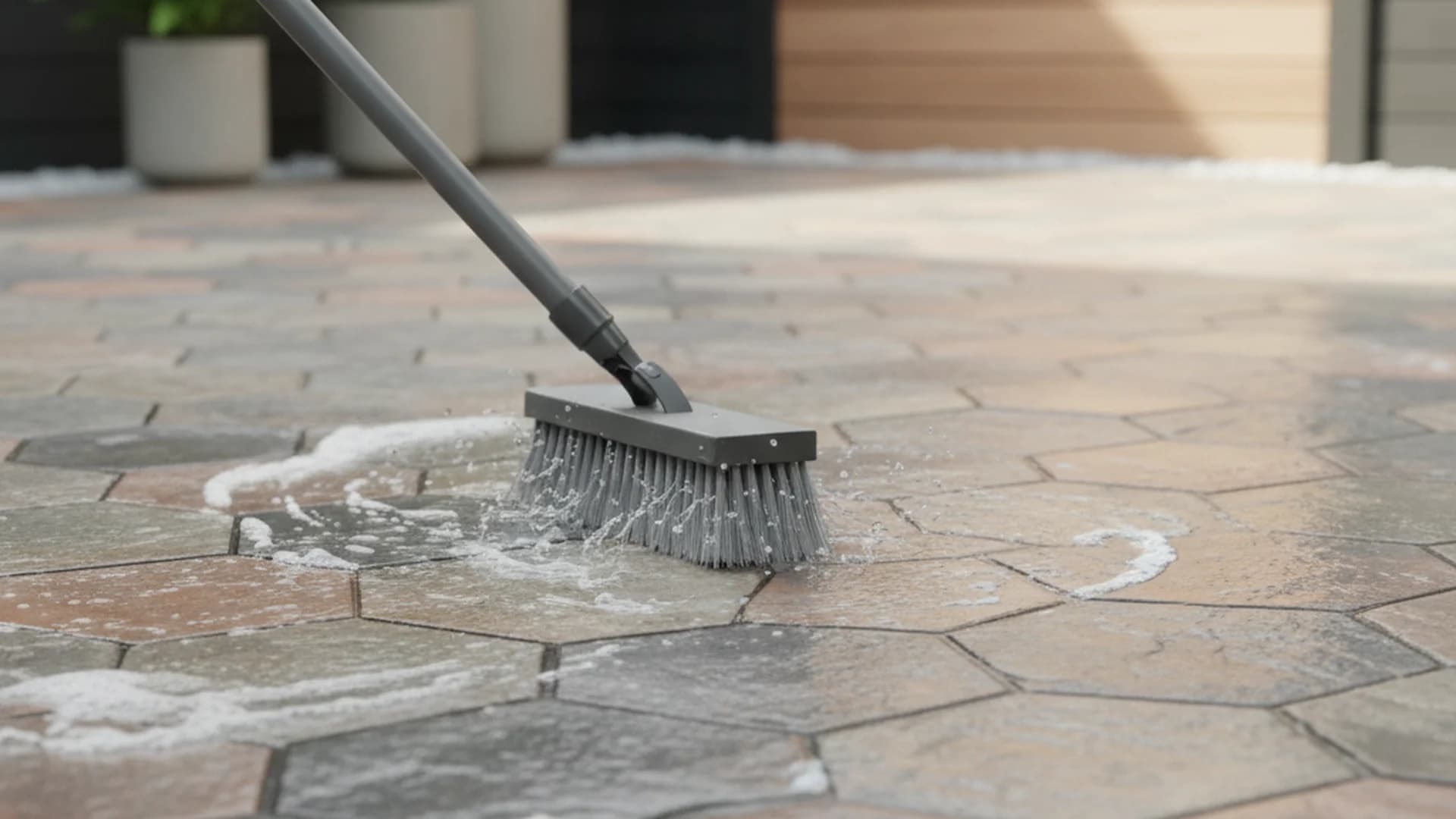
Mix your pH-neutral soap with warm water in a large bucket. Apply the solution to the concrete in sections. Use a soft-bristle push broom to scrub the surface, paying extra attention to the "grout" lines and deep textures where dirt tends to settle.
4. The Final Rinse
Thoroughly wash away all soap suds. Do not allow the soapy water to dry on the surface, as it can leave a film that attracts more dirt later. Continue rinsing until the water runs clear.
Warning: Avoid using ammonia or bleach for regular cleaning. These chemicals can cloud the sealer over time, requiring a premature strip-and-reseal job.
Real-World Examples: Cleaning Scenarios
Example 1: The High-Traffic Driveway
A homeowner in a suburb noticed dark tire marks and oil spots on their Ashlar Slate driveway. Instead of reaching for a metal scraper, they used a specialized citrus-based degreaser and a stiff (but plastic) brush. By letting the degreaser sit for 10 minutes before scrubbing and rinsing, they lifted the stains without scratching the stamped pattern.
Example 2: The Pool Deck Algae
In humid climates, stamped concrete pool decks often develop a thin layer of green algae in shaded spots. A "Success" story involves using a 1:10 mixture of distilled white vinegar and water, applied only to the affected area, scrubbed gently, and rinsed immediately to prevent the acid from etching the sealer.
Example 3: Post-Winter Grit
After a long winter, a patio was covered in dried mud and leftover traction sand. The homeowner used the Double Rinse method but incorporated a low-pressure power wash (2,500 PSI) at a 45-degree angle to lift the stubborn silt from the deep wood-plank textures without damaging the finish.
Advanced Maintenance: Pressure Washing and Sealing
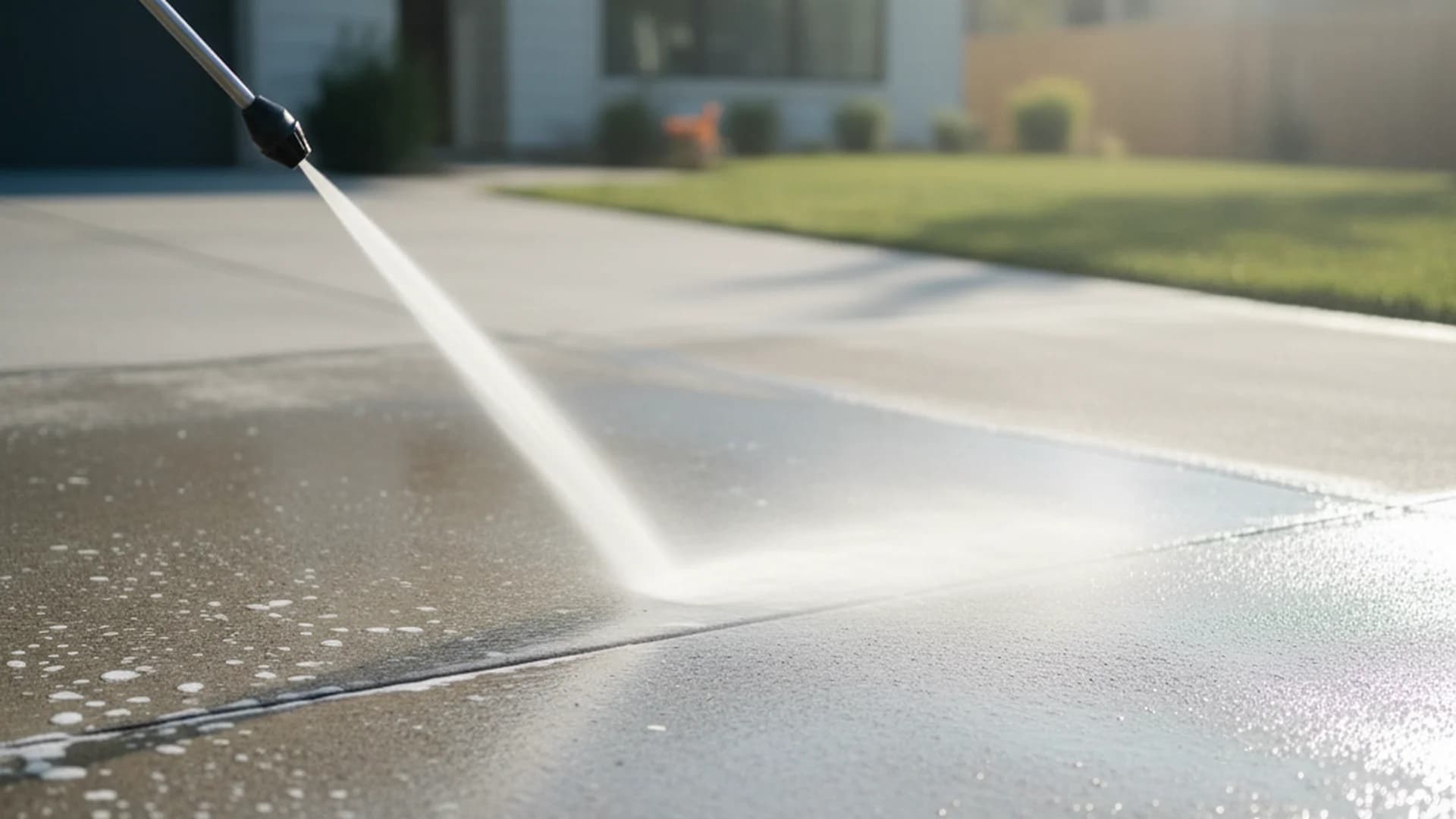
While a garden hose works for monthly cleaning, a pressure washer is sometimes necessary for deep-seated grime.
Pressure Washing Guidelines
- PSI Limit: Stay under 3,000 PSI.
- Distance: Keep the nozzle at least 12–18 inches from the surface.
- Nozzle Tip: Use a fan tip (25 or 40 degrees) rather than a pinpoint stream to distribute pressure evenly.
Note: If you see "beading" water on your concrete after cleaning, your sealer is still intact. If the water soaks in and darkens the concrete, it is time to reseal.
Resealing Frequency
For most residential properties, resealing should occur every 2–3 years. However, high-traffic areas like driveways may require maintenance every 18–24 months. In 2025-2026, the cost for professional resealing typically ranges from $1.00 to $2.50 per square foot.
| Feature | Low-Traffic Walkway | High-Traffic Driveway | Pool Deck |
|---|---|---|---|
| Cleaning Frequency | Bi-Annually | Monthly | Weekly (Rinse) |
| Resealing Interval | 4–5 Years | 2 Years | 2–3 Years |
| Common Issues | Moss/Mildew | Oil/Tire Marks | Chlorine/Salt Fade |
2026 Trends in Concrete Care
The world of decorative concrete is shifting toward more sustainable and natural-looking finishes.
- Matte Finishes: In 2026, there is a marked decline in the "High Gloss" wet-look. Homeowners are opting for matte or satin sealers which look more like natural stone and hide minor scratches better.
- Water-Based Nano-Sealers: These new products offer deep penetration and weather resistance with lower VOC levels, making them safer for garden-adjacent surfaces.
- Anti-Slip Technology: Modern maintenance now involves mixing micronized polymer beads into the sealer. This can reduce slip-and-fall risks by up to 20%, which is essential for wet pool decks.
Common Mistakes to Avoid
- Using Metal Tools: Never use metal shovels to clear snow or metal scrapers to remove gum. Metal will gouge the concrete and chip the decorative edges.
- Over-Sealing: Don't apply a new coat of sealer every year "just because." This leads to a thick, plastic-like buildup that can trap moisture, turning the surface white and causing it to flake off.
- De-Icing Salts: Magnesium chloride and traditional rock salt are the enemies of concrete. They cause freeze-thaw damage that can pop the "face" off your stamped pattern. Use sand for traction instead.
Warning: Never apply sealer to damp concrete. Wait at least 24 hours after cleaning. Trapped moisture is the leading cause of sealer failure and "blushing."
Frequently Asked Questions
Can I use a pressure washer on stamped concrete?
Can I use vinegar to remove stains?
How do I know when it’s time to reseal?
Why is my stamped concrete turning white?
Conclusion
Maintaining stamped concrete is a straightforward process that yields massive dividends in home value and aesthetic pleasure. By employing the "Double Rinse" method and using pH-neutral cleaners, you protect the intricate textures and vibrant colors that make this material so popular. Remember that the best way clean stamped concrete is with patience and the right materials—avoiding harsh chemicals and metal tools will keep your outdoor space looking pristine for decades.
Success: Regular maintenance not only keeps your concrete looking like new but also prevents the need for costly repairs or total replacement in the future.
Cleaning that keeps score
Every task earns points, every streak multiplies them, and Premium adds a household leaderboard plus a monthly Dustagorgon to beat.
- Free forever
- 30 badges to earn
- Up to 6 in a household
No card needed. Set up your rooms in a couple of minutes.