In this article
What you’ll learn
- Identify material cleaning codes (W, S, WS, X) before applying liquids.
- Treat upholstery stains within 48 hours for a 99% success rate.
- Use the "seam-to-seam" rule to prevent water rings on fabric stools.
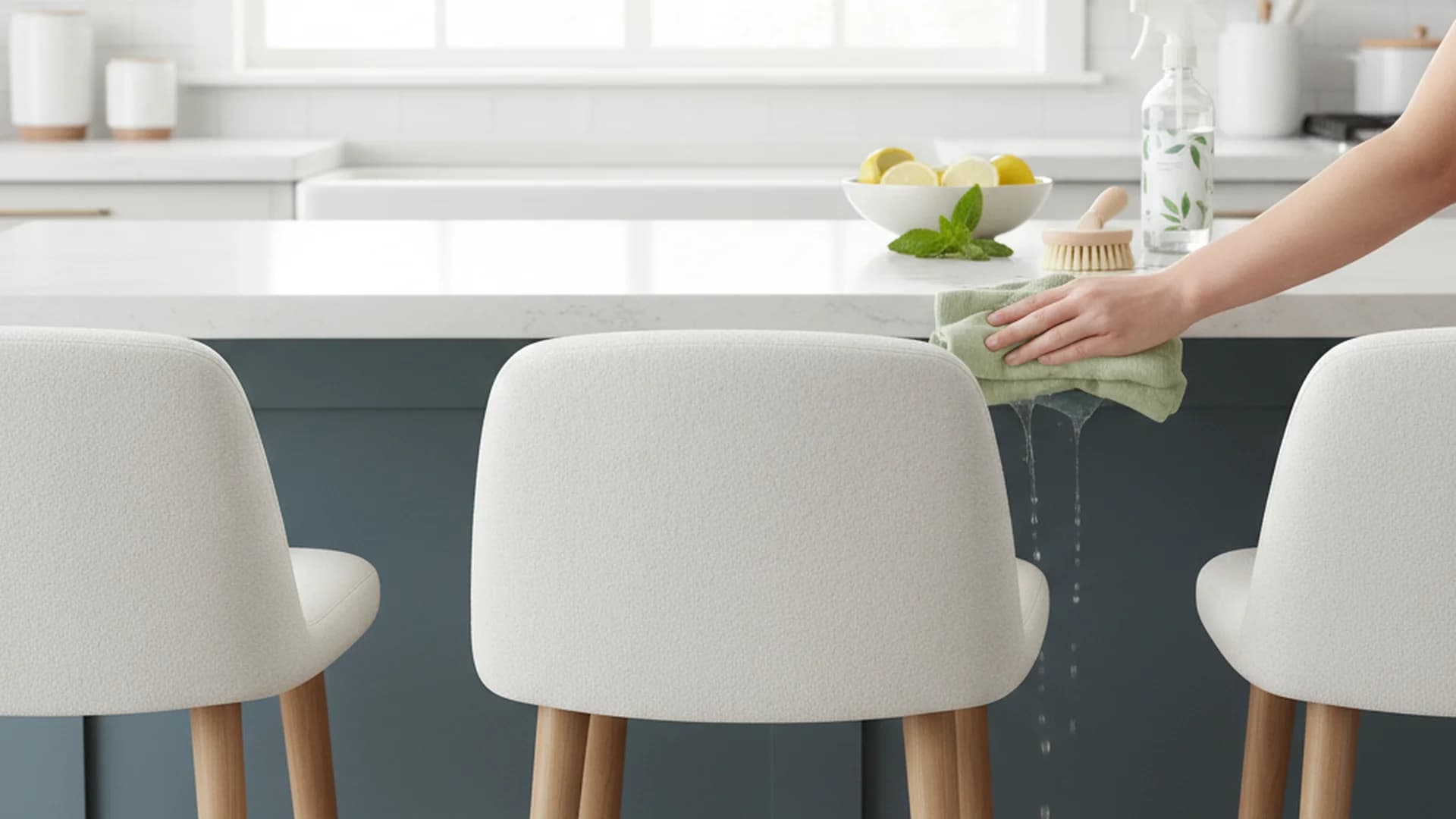
Cleaning bar stools is a critical yet often overlooked part of home and commercial maintenance. As high-touch items located in high-traffic zones like kitchens and breakfast bars, these pieces of furniture are magnets for both visible grime and invisible pathogens. Whether you are dealing with sticky honey on a wooden seat or red wine on a fabric cushion, knowing how to clean bar stools properly ensures your kitchen remains both beautiful and hygienic.
In this guide, we will explore the best way to clean bar stools based on modern 2025 standards, covering everything from material-specific care to the latest probiotic cleaning trends.
The Hidden Science of Bar Stool Grime
Before we dive into the "how," it is important to understand the "why." Research into high-traffic seating reveals that the average kitchen or bar chair can harbor as many as 184 individual bacteria per square centimeter. Common pathogens like E. coli and Staphylococci are frequently transferred from hands, grocery bags, or clothing directly onto the seat and backrest.
Despite Americans cleaning their kitchens an average of 20 times per month, seating is often the most skipped surface.
Identifying Your Material: The Cleaning Code Key
The most important step in learning how to clean bar stools is identifying the material. Modern upholstery usually comes with a cleaning tag tucked under the seat. Following these codes is non-negotiable to prevent permanent damage.
| Code | Meaning | Cleaning Method |
|---|---|---|
| W | Water-Based | Use water-based upholstery cleaner or mild soap. |
| S | Solvent-Based | Dry clean only; use specialized water-free solvents. |
| WS | Universal | Safe for both water and solvent-based cleaners. |
| X | Vacuum Only | No liquids allowed; professional cleaning recommended. |
Warning: Never use a water-based cleaner on an "S" coded stool. Doing so can cause permanent shrinking, staining, or "bleeding" of the fabric dyes.
How to Clean Fabric and Upholstered Bar Stools
Fabric stools are often the most comfortable but also the most prone to deep-set stains. Success in stain recovery is time-sensitive: nearly 99% of stains can be removed if treated within the first 48 hours. Once a stain "sets" past the 72-hour mark, the success rate drops significantly.
The Seam-to-Seam Rule
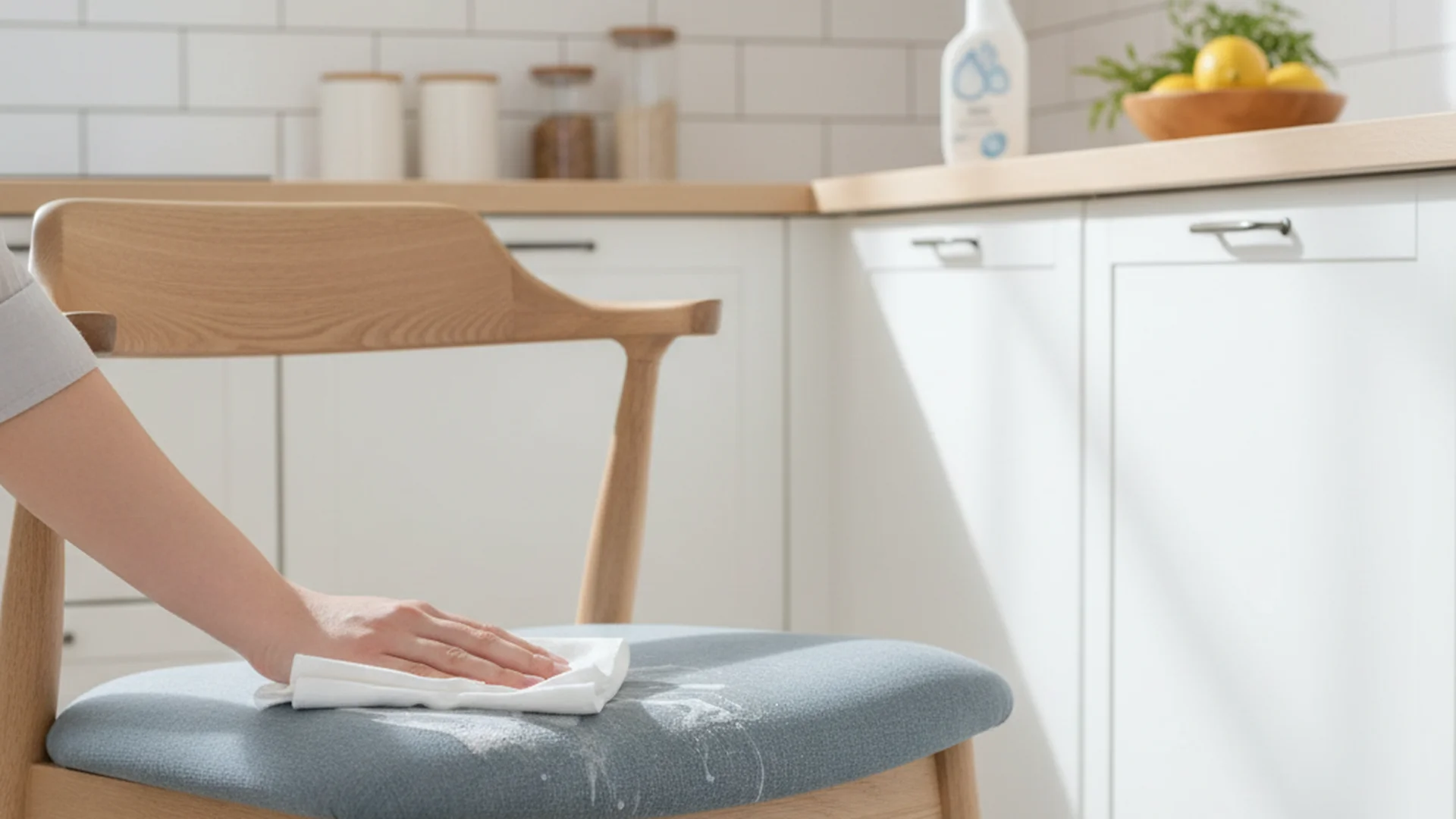
A common mistake when cleaning a single spot is only wetting the area of the stain. This often results in a "water ring" as the fabric dries. Instead, use the Seam-to-Seam Rule: once you have treated the spot, lightly clean the entire panel of fabric from one seam to the next. This ensures uniform drying and a flawless finish.
Real-World Example: The Red Wine Disaster
Imagine a guest knocks over a glass of Cabernet on your linen-blend bar stool.
- Immediate Action: Blot (don't scrub) with a clean white cloth to lift the liquid.
- Treatment: Apply an enzyme-based cleaner or a mix of dish soap and cool water.
- Finish: Clean the entire seat cushion to the edges to prevent rings.
Tip: For performance fabrics like Crypton or Sunbrella, which are popular in 2025 for their moisture-beading properties, most spills can be wiped away with a dry cloth if caught instantly.
Maintaining Leather and Faux-Leather Stools
Leather stools add a touch of luxury, but they are susceptible to the dry heat of a kitchen. Over time, heat causes the natural oils in the leather to evaporate, leading to "skinning" or cracking.
- Dusting: Use a dry microfiber cloth weekly to remove abrasive dust particles.
- Cleaning: Use a pH-neutral leather cleaner. Avoid "all-purpose" sprays which are often too alkaline for organic leather.
- Conditioning: Apply a high-quality leather conditioner every 6 months. This keeps the material supple and creates a protective barrier against spills.
Note: If you have faux-leather (vegan leather), avoid heavy conditioners. A simple wipe with a damp cloth and mild soap is usually sufficient.
The Best Way to Clean Wood and Metal Stools
Hard-surface stools are easier to sanitize but are often victims of improper tools.
Wooden Stools
Always wipe with the grain of the wood. For sticky residues—a common occurrence near kitchen islands—use a single drop of mild dish soap in a bowl of warm water.
- The Golden Rule: Use a damp cloth, followed immediately by a dry microfiber cloth. Never let water "sit" on wood, as it can cause warping or clouding of the finish.
Metal and Chrome Accents
Chrome legs are magnets for scuff marks and water spots. To restore a mirror-like shine, use a 50/50 mix of white vinegar and water.
Removing Rust: If you notice small rust spots on metal stool legs, don't reach for harsh chemicals.
- The Foil Trick: Take a ball of crumpled aluminum foil, dip it in water or vinegar, and gently scrub the rust. The chemical reaction between the aluminum and the rust dissolves the oxidation without scratching the metal.
Modern Cleaning Trends: 2025–2026 Updates
The way we clean is changing. In 2026, we are seeing a move away from "sterile" environments toward "balanced" ones.
Probiotic Cleaners
A major trend this year is the use of probiotic sprays. These cleaners leave behind "beneficial bacteria" that continue to eat away at organic grime (like skin cells and food microscopic particles) for up to 72 hours after you finish wiping.
UV-C Sanitization
For those with "X" code fabrics or delicate velvets, liquid cleaners are off the table. Handheld UV-C wands have become a household staple, capable of killing 99.9% of bacteria and viruses on fabric surfaces using light waves rather than chemicals.
Cleaning as "Self-Care"
The "Sunday Reset" has evolved into a meditative ritual. Many homeowners are now using essential-oil-based DIY cleaners—featuring lemon, eucalyptus, and tea tree—to turn furniture polishing into an aromatherapeutic experience.
Common Mistakes to Avoid
- Scrubbing Stains: Scrubbing is the enemy of upholstery. It pushes the liquid deeper into the foam padding and can fray the fabric fibers. Always blot from the outside of the stain toward the center.
- Using Abrasive Pads: Scouring pads or "magic" sponges can create micro-scratches on wood or chrome. These scratches actually trap more dirt and bacteria over time.
- Over-Wetting Leather: Excessive water strips natural oils. Your cloth should be damp, never dripping.
- Ignoring the "Patch Test": Even "natural" cleaners like vinegar are acidic. Always perform a patch test on the underside of the stool to ensure it won't etch the finish or change the color.
Frequently Asked Questions
How often should I clean my bar stools?
Can I use a steam cleaner on fabric stools?
My wooden stools feel "sticky" even after wiping. Why?
How do I remove scuff marks from metal stool bases?
Conclusion
Mastering how to clean bar stools is about more than just aesthetics; it is about maintaining a healthy home environment. By understanding your specific materials, acting quickly on stains, and utilizing modern tools like probiotic cleaners or UV-C light, you can extend the life of your furniture by years.
Success: Regular maintenance prevents the need for expensive professional reupholstering and keeps your kitchen looking showroom-ready every day.
Cleaning that keeps score
Every task earns points, every streak multiplies them, and Premium adds a household leaderboard plus a monthly Dustagorgon to beat.
- Free forever
- 30 badges to earn
- Up to 6 in a household
No card needed. Set up your rooms in a couple of minutes.