In this article
What you’ll learn
- Routine cleaning prevents bacterial growth and premature tarnishing.
- Avoid abrasive DIY methods like toothpaste, which cause micro-scratches.
- Different materials (pearls vs. diamonds) require specific cleaning techniques.
Your favorite ring or necklace does more than just sparkle—it also acts as a magnet for daily grime. Whether it is an engagement ring you never take off or a pair of heirloom earrings, knowing how to clean jewelry properly is essential for both the longevity of your investment and your personal hygiene. Many people are shocked to learn that jewelry can carry far more bacteria than the skin underneath it, even after washing your hands. A ring worn day in and day out becomes a sheltered pocket where moisture and microbes collect.
Maintaining your collection doesn't require a trip to the jeweler every time a piece looks dull. By learning the best way to clean jewelry at home, you can restore brilliance while ensuring your skin stays healthy. This guide will walk you through the most effective, time-tested methods for 2025 and 2026 to keep your treasures looking brand new.
Why Regular Jewelry Maintenance is Essential
Beyond the obvious aesthetic benefits, cleaning your jewelry is a matter of health. Because jewelry sits against the skin, it traps dead skin cells, oils, and sweat. When mixed with environmental moisture, this creates a breeding ground for bacteria and fungi.
Furthermore, gold and diamond pieces represent significant financial investments, and neglect can lead to permanent damage. Humidity is a silent killer; storing your jewelry in a bathroom is one of the most common causes of premature tarnishing in silver and plated items. Learning to clean jewelry at home properly can save you thousands in restoration costs.
Note: Professional-grade maintenance has moved into the home, with more and more people taking luxury care into their own hands.
The "Gold Standard" Method for At-Home Cleaning
For most gold, platinum, and hard-stone jewelry (like diamonds, sapphires, or rubies), the most effective method remains the simplest. This "Gold Standard" process is recommended by professionals to avoid the harsh chemicals found in some commercial cleaners.
Step 1: The Gentle Soak
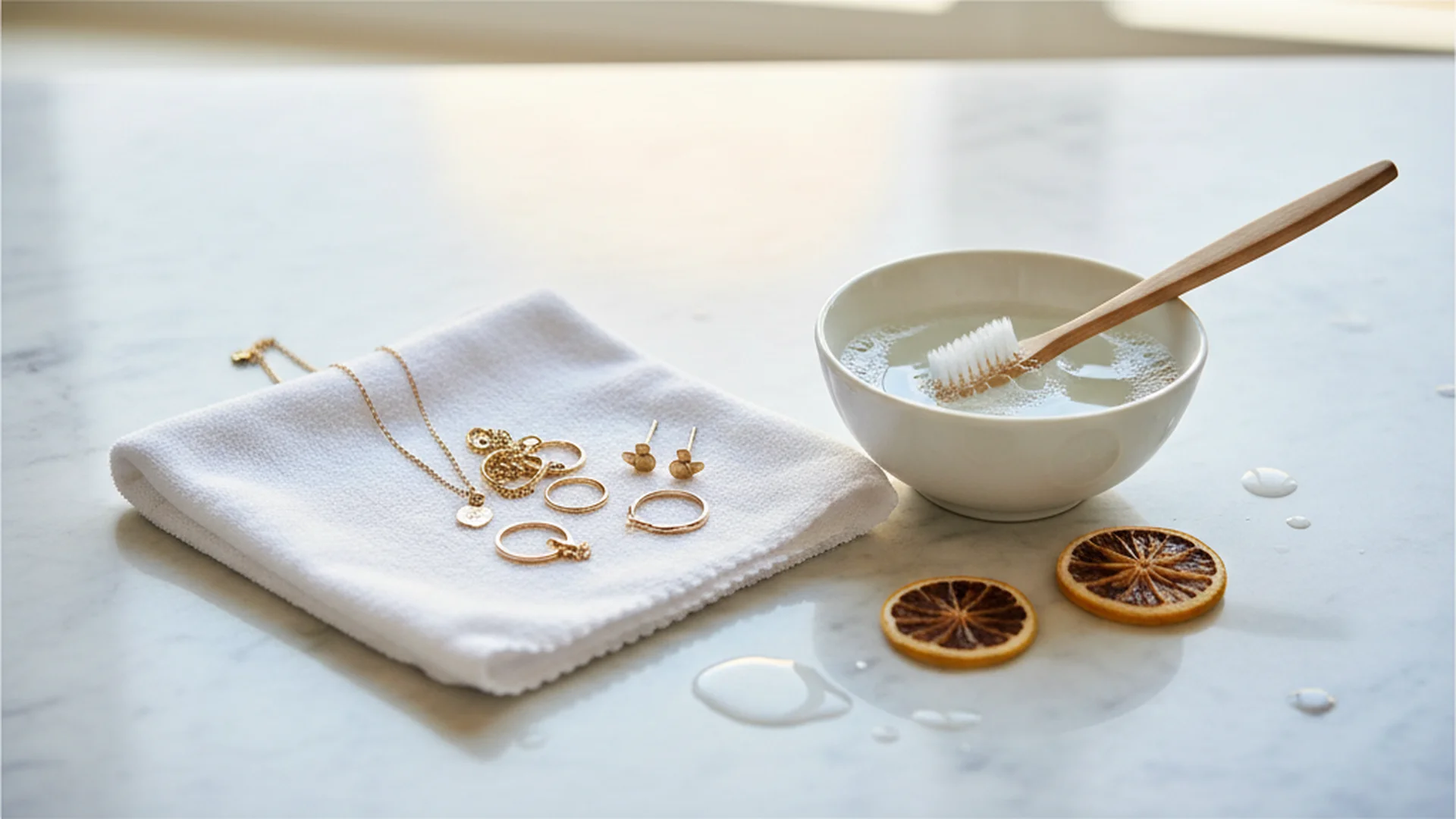
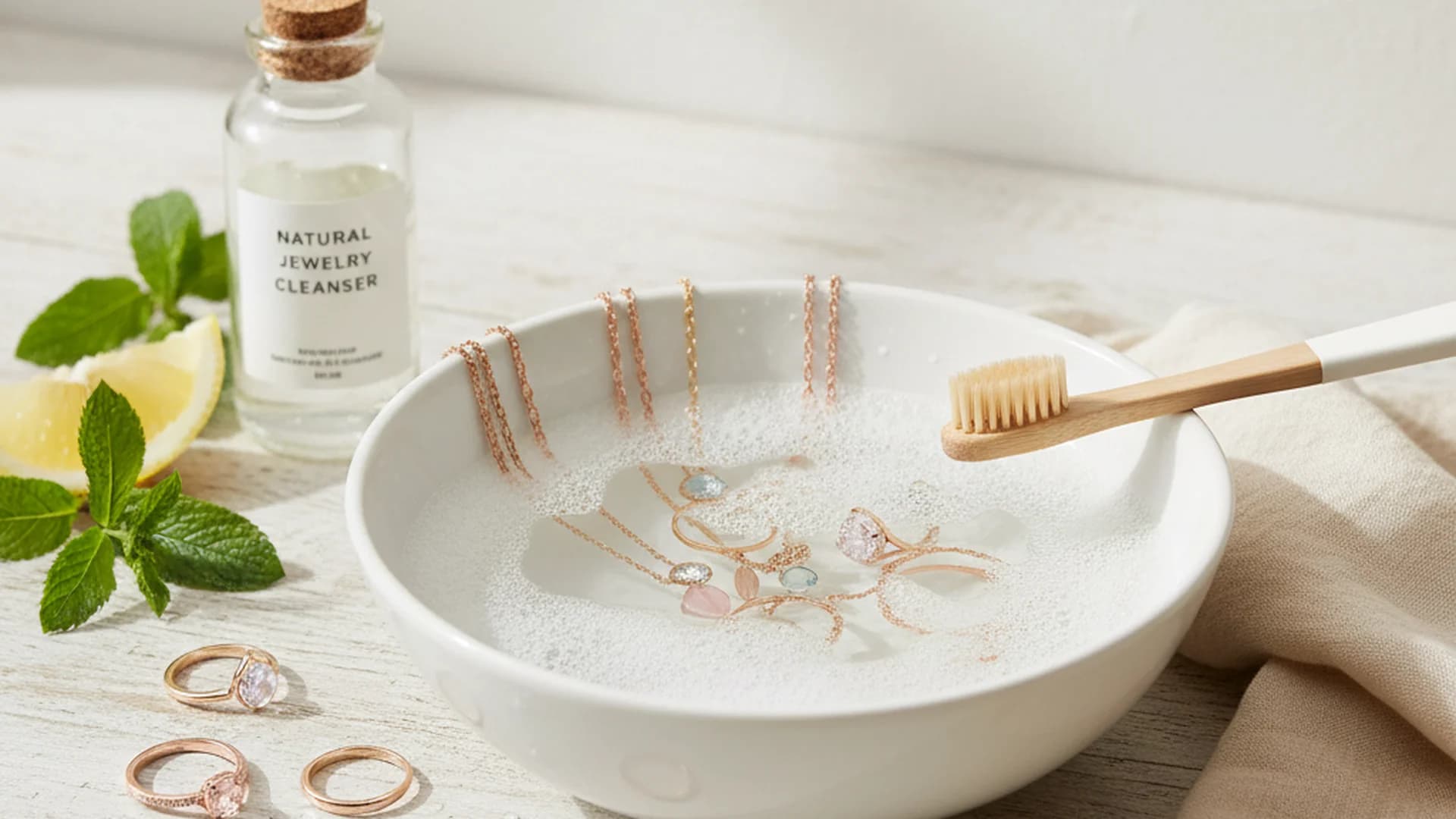
Mix a few drops of mild dish soap (alkaline-free brands like Dawn are ideal) with warm—not boiling—water in a small bowl. Submerge your jewelry and let it soak for 15 to 20 minutes. This allows the soap to break down the "grease magnet" effect of skin oils and lotions.
Step 2: Precision Scrubbing
Use a new, soft-bristled toothbrush to gently agitate the dirt. Pay close attention to the underside of the stones and the small crevices in the setting where grime likes to hide.
Step 3: The Safe Rinse
Never rinse your jewelry directly over an open sink drain. Instead, use a separate bowl of clean, room-temperature water. This eliminates the risk of a loose stone or a slippery ring disappearing down the pipes—a common "real-world" disaster I see far too often.
Step 4: Drying and Buffing
Pat your jewelry dry with a microfiber or lint-free cloth.
Warning: Avoid using paper towels or tissues. These wood-pulp products can cause micro-scratches on soft metals like 18k gold or silver.
Tailoring Care to Your Specific Materials
Not all jewelry is created equal. While a diamond is incredibly hard, organic gems like pearls and opals are porous and delicate.
| Jewelry Type | Cleaning Method | Frequency |
|---|---|---|
| Diamonds | Dish soap soak & soft brush | Every 2 weeks |
| Pearls | Damp cloth wipe (no soaking) | After every wear |
| Gold/Silver | Mild soap & microfiber buff | Monthly |
| Costume/Plated | Dry microfiber wipe | Daily |
Caring for Pearls and Opals
Pearls are organic and highly sensitive to chemicals and moisture. You should never submerge them in water, as this can weaken the silk thread they are strung on. Instead, use a clean makeup brush dipped in a very mild soapy solution to gently wipe each pearl, then follow with a dry, soft cloth.
The Diamond Exception
Diamonds are "grease magnets." Even the touch of a finger can leave enough oil to dull their brilliance. To maintain that "fire," a more frequent cleaning schedule is required compared to other gemstones.
Tip: Use the "10-Second Dry Rule." Wiping down your jewelry with a cloth within 10 seconds of taking it off removes sweat and moisture before they can cause oxidation. This simple habit heads off most of the oxidation that ruins plated jewelry.
Recent Trends in Jewelry Care (2025-2026)
The world of jewelry maintenance is evolving with technology and environmental consciousness.
- Green Cleaners: The biggest trend for 2026 is the rise of plant-based, biodegradable cleaning formulations. Modern consumers are moving away from ammonia-based solutions in favor of eco-friendly alternatives that are safer for both the skin and the environment.
- Smart Ultrasonic Devices: While ultrasonic cleaners used to be for pros only, compact home versions are now common. The latest 2026 models use AI to detect the type of stone in the basket, automatically adjusting the vibration frequency to prevent "shattering" in stones with internal inclusions.
- Conductive Tarnish Removal: New "tarnish-fighting pens" utilize a mild electrical charge to lift oxidation from silver and gold without the need for abrasive scrubbing or acids.
Common Mistakes to Avoid
In my experience as a consultant, I’ve seen more jewelry damaged by "cleaning" than by actual wear.
The Toothpaste Myth
One of the most persistent myths is that toothpaste is the best way to clean jewelry. This is false. Toothpaste is far too abrasive for precious metals. It creates micro-scratches that actually trap more grime over time, dramatically accelerating tarnishing.
The Boiling Water Trap
While heat helps break down wax and heavy oils, extreme temperatures can cause "thermal shock." This can lead to immediate cracks in gemstones like emeralds, opals, and tanzanite. Always stick to lukewarm water.
Chemical Exposure
Many people forget to remove their rings before swimming. Chlorine is a chemical enemy to jewelry; it can cause "stress corrosion cracking," which eats through gold alloys and can cause a ring to snap unexpectedly.
Warning: Overusing rubbing alcohol to "sanitize" jewelry can dry out protective coatings on gems and cause micro-cracking in organic stones like turquoise.
Storage: The Final Step in Care
The "One-Box" trap is where many collections go to die. Storing all your jewelry in a single bowl allows harder stones (like diamonds) to scratch softer metals (like gold) and gems.
For 2026, the trend is moving toward anti-tarnish bags and individual soft-lined compartments. If you live in a high-humidity area, consider placing silica gel packets in your jewelry box to absorb the moisture that causes silver to turn black.
Frequently Asked Questions
Can I use vinegar to clean my jewelry?
How often should I have my jewelry professionally checked?
Is it safe to use an ultrasonic cleaner for all my jewelry?
Why did my silver jewelry turn black so quickly?
Conclusion
Cleaning your jewelry is about more than just maintaining a high-wattage sparkle; it is about preserving history, value, and personal hygiene. By following the "Gold Standard" method and staying away from abrasive DIY "hacks" like toothpaste, you can ensure your pieces remain in pristine condition for generations. Remember: a 20-minute soak every two weeks is all it takes to keep your collection safe from bacteria and tarnish.
Success: Consistent, gentle care is the secret to a lifetime of brilliance. Your jewelry will thank you by looking as stunning as the day you first wore it.
Cleaning that keeps score
Every task earns points, every streak multiplies them, and Premium adds a household leaderboard plus a monthly Dustagorgon to beat.
- Free forever
- 30 badges to earn
- Up to 6 in a household
No card needed. Set up your rooms in a couple of minutes.