In this article
What you’ll learn
- Use warm water and mild dish soap for the safest cleaning results.
- Avoid abrasive materials like toothpaste and harsh chemicals like chlorine.
- Seltzer water is an expert-recommended secret for loosening deep-seated grime.
Gold has been the ultimate symbol of luxury and endurance for millennia, yet even this "noble metal" isn't immune to the dulling effects of daily life. Whether it’s a sentimental engagement ring, a family heirloom, or a modern gold-plated chain, learning how to clean gold correctly is essential for maintaining both its aesthetic brilliance and its financial value. Over time, skin oils, lotions, perfumes, and environmental pollutants create a film that masks the metal's natural luster.
Many people assume that professional-grade cleaning requires expensive chemicals or a trip to the jeweler. However, as a domestic efficiency specialist, I’ve found that the most effective methods often involve simple, non-toxic household items. By understanding the chemistry of gold and the specific needs of different purities, you can achieve a professional shine from the comfort of your kitchen.
The Science of Gold Tarnish and Maintenance
Before we dive into the cleaning process, it is important to understand what we are fighting. While pure 24k gold does not tarnish, most jewelry is an alloy—a mix of gold and other metals like copper, silver, or nickel to increase durability. These alloying metals are what react with the environment.
By far the most common cause of tarnish is improper storage in high-humidity environments, such as bathrooms.
Note: Gold-plated jewelry is particularly vulnerable. Plated items can lose their luster within a matter of weeks if they aren't cleaned and stored correctly.
The Best Way to Clean Gold: The "Soak-and-Brush" Method
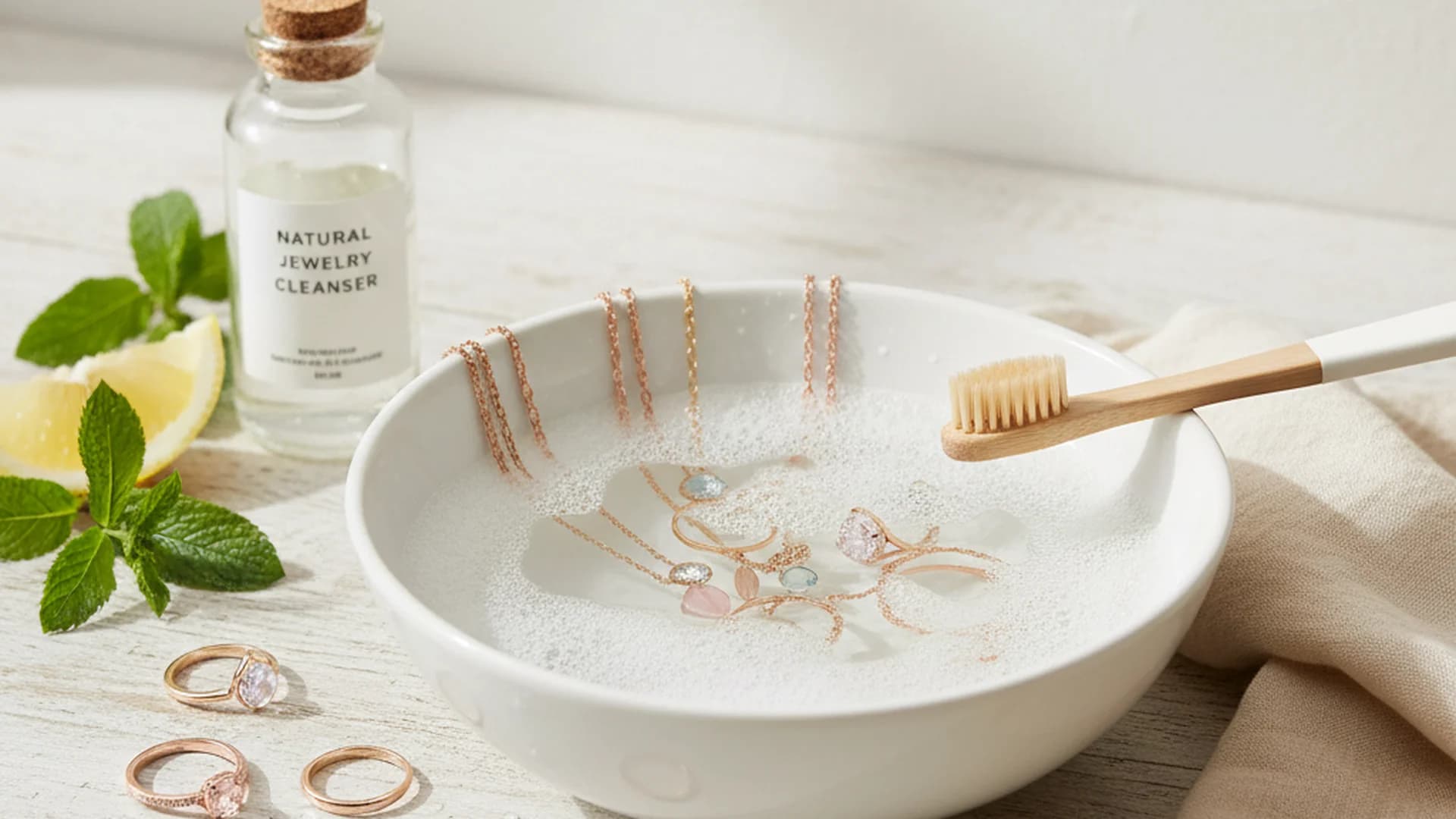
The safest and most effective way to clean gold at home is the gentle bath method. This approach works for yellow, white, and rose gold.
Step 1: The Gentle Bath
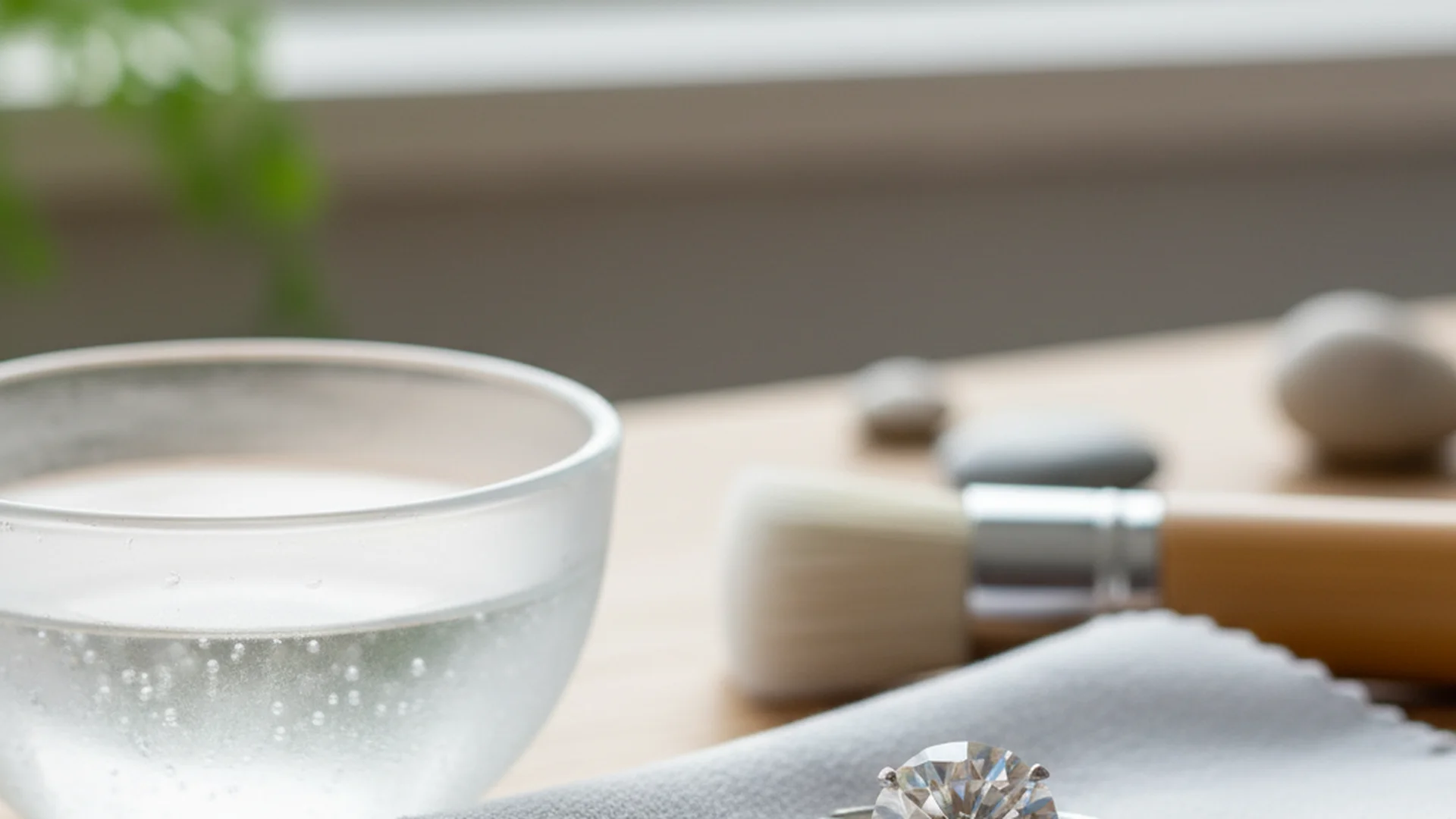
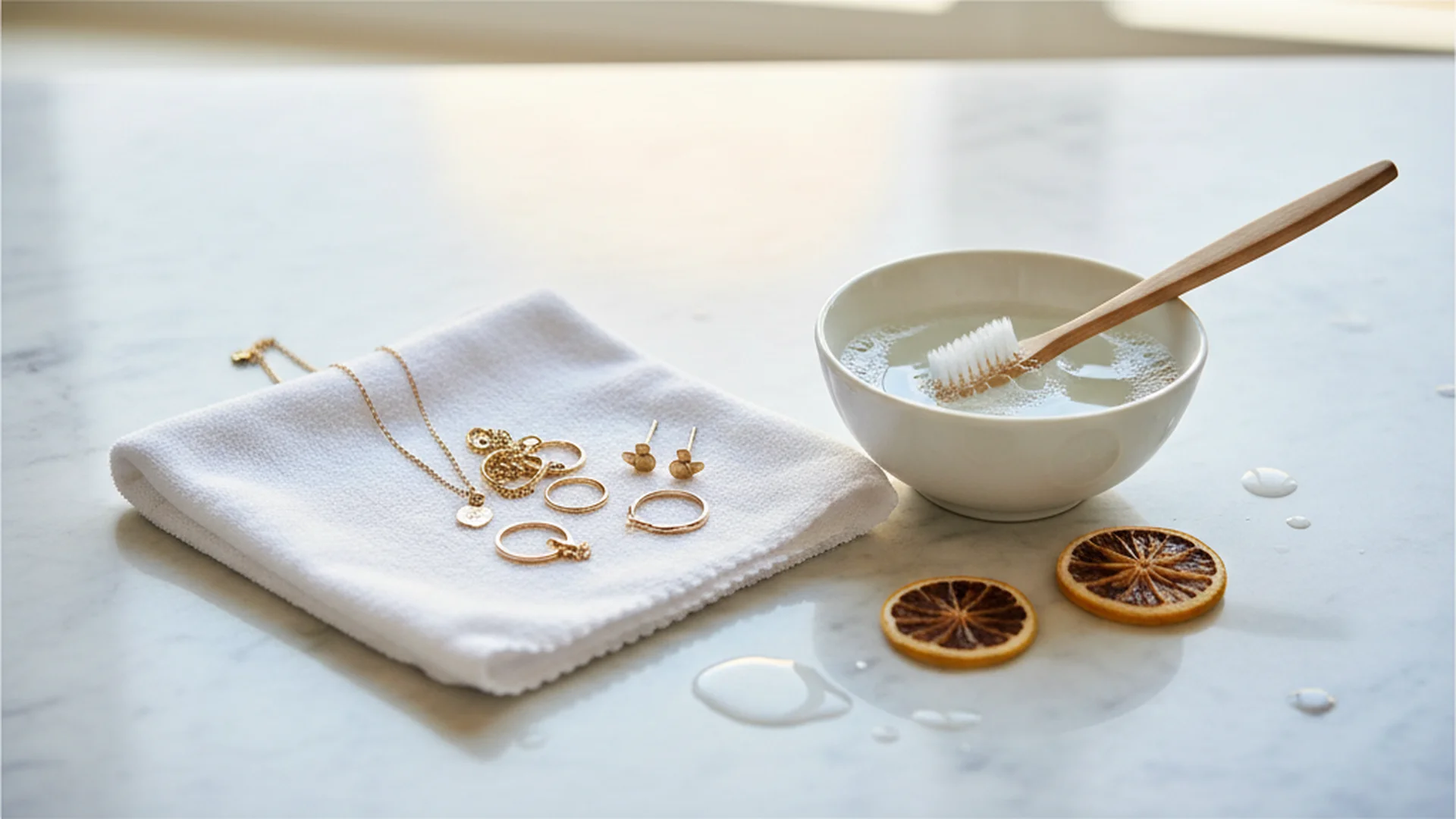
Fill a small glass bowl with lukewarm water. Do not use boiling water, as extreme temperature shifts can damage certain gemstones or weaken solder joints. Add 2–3 drops of mild, phosphate-free dish soap.
Tip: Use seltzer water or club soda instead of tap water. The carbonation helps break up and lift dirt from intricate engravings and tight settings.
Step 2: The Deep Soak
Submerge your jewelry in the solution for 15–20 minutes. This duration is critical because it allows the soap to emulsify accumulated body oils and soften hardened "gunk" (a mix of dead skin and lotion) that often accumulates behind gemstones.
Step 3: Detailed Scrubbing
Using a soft-bristled baby toothbrush, gently scrub the piece. Focus on the underside of the mounting and the prongs, as these are high-collection areas for debris. Avoid using medium or firm bristles, as these can leave microscopic scratches on the soft gold surface.
Step 4: The Final Rinse
Rinse each piece individually under lukewarm running water.
Warning: Always ensure the sink drain is plugged or use a fine-mesh strainer. Countless rings are lost every year to the "plumbing gods" during the rinsing phase.
Step 5: Drying and Polishing
Pat the jewelry dry with a lint-free microfiber cloth. Avoid paper towels or facial tissues, which contain wood fibers that can scratch the surface of the gold. For an extra gleam, use a dedicated jewelry polishing cloth, but do so sparingly.
Comparing Gold Cleaning Methods
Not all gold is created equal. Depending on whether your item is solid gold, gold-filled, or plated, you may need to adjust your approach.
| Gold Type | Recommended Method | Frequency |
|---|---|---|
| Solid Gold (14k-24k) | Seltzer & Mild Soap | Weekly |
| Gold-Plated | Quick Damp Wipe | After every wear |
| Gold with Diamonds | Soap & Warm Water | Weekly |
| Gold with Pearls | Damp Soft Cloth Only | After every wear |
Real-World Examples of Gold Care
Example 1: The "Engagement Ring" Transformation
A client recently complained that her 18k yellow gold diamond ring looked "cloudy." Upon inspection, the "cloudiness" was actually a thick layer of hand sanitizer residue and lotion. By using the seltzer water soak for 20 minutes and focusing the brush on the "pavilion" (the bottom) of the diamond, the ring regained its fire and brilliance immediately.
Example 2: The Gym-Goer’s Chain
Sweat and body oils are acidic and can quickly dull a gold chain. A daily runner noticed his gold-plated chain was turning dark. Because gold plating is thin, we used a microfiber cloth dampened with a tiny amount of highly diluted soapy water to wipe it down daily, preventing the salt from the sweat from eating through the plating.
Example 3: The Vintage Brooch
An heirloom brooch with delicate filigree work was cleaned using the "Soak-and-Brush" method. Because the piece had intricate crevices that a cloth couldn't reach, the carbonation of the seltzer water was the key factor in "boiling out" decades of dust without the need for aggressive scrubbing.
2025–2026 Trends in Jewelry Care
As we look toward 2026, the world of jewelry maintenance is becoming more high-tech and eco-conscious.
- Jewelry Skincare: There is a shift toward treating jewelry like skin. New plant-based, biodegradable cleaning concentrates are replacing traditional ammonia-based cleaners. These are safer for the wearer’s skin and the environment.
- Nano-Protection Sprays: One of the most exciting developments is "Nano-shield" technology. You can now apply an invisible, skin-safe coating to your gold jewelry that repels sweat and makeup, significantly extending the time between deep cleans.
- Smart Storage: 2026 is seeing the rise of jewelry organizers equipped with integrated humidity sensors. These devices alert your smartphone if the environment becomes too damp, helping you prevent tarnish before it starts.
- Affordable Ultrasonics: While once reserved for professionals, high-quality ultrasonic cleaners have become miniaturized for home use, often priced between $30 and $60.
Success: Adopting these modern tools and eco-friendly solutions can extend the lifespan of your jewelry by decades.
Common Mistakes to Avoid
Even with the best intentions, it is easy to damage gold if you use the wrong techniques. Avoid these common pitfalls:
- The Toothpaste Hack: Despite what you may have heard, toothpaste is too abrasive. It contains silica that creates permanent microscopic scratches, which eventually make the gold look duller.
- Boiling Water: Some believe boiling water sterilizes jewelry. In reality, it can cause "thermal shock," cracking gemstones like emeralds or opals, and can weaken the solder that holds the piece together.
- Chlorine Exposure: Chlorine is the "kryptonite" of gold. It attacks the alloy metals, making the jewelry brittle. Never wear gold in a swimming pool or hot tub.
- Over-Polishing: Every time you use a polishing cloth, you are removing a microscopic layer of metal. For gold-plated items, aggressive polishing can strip the gold entirely in just a few months.
- Using Vinegar on Plated Items: While diluted vinegar is okay for solid gold, its acidity can quickly dissolve the thin layer of gold on plated or "vermeil" jewelry.
Frequently Asked Questions
Can I use vinegar to clean gold?
Is rubbing alcohol safe for cleaning gold?
How often should I clean my gold jewelry?
Can I use a hair dryer to dry my jewelry?
Conclusion
Maintaining the glow of your gold collection doesn't require a professional's budget—just a professional's patience and technique. By sticking to the best way to clean gold—the gentle soak-and-brush method—and avoiding abrasive DIY "hacks," you can ensure your jewelry remains a brilliant asset for years to come. Remember that prevention is just as important as cleaning; store your pieces in dry, separate pouches to avoid the friction and humidity that lead to tarnish.
Success: By following this guide, you are not just cleaning your jewelry; you are preserving history and value.
Cleaning that keeps score
Every task earns points, every streak multiplies them, and Premium adds a household leaderboard plus a monthly Dustagorgon to beat.
- Free forever
- 30 badges to earn
- Up to 6 in a household
No card needed. Set up your rooms in a couple of minutes.