In this article
What you’ll learn
- Always rinse lenses before wiping to prevent abrasive scratches.
- Avoid window cleaners and paper products which strip coatings.
- Wash microfiber cloths weekly without using fabric softener.
Whether you are rocking a classic pair of aviators or the latest smart eyewear, knowing how to clean sunglasses properly is essential for both visual clarity and eye health. We are living through a quiet "dirty lens epidemic," with most people wearing eyewear clouded by skin oils, sweat, and environmental dust. While it is tempting to use the hem of your shirt for a quick buff, this common habit is the fastest way to ruin expensive lenses.
In this guide, we will dive into the professional "Rinse-Soap-Dry" protocol, explore the latest 2025 trends in eyewear maintenance, and show you the best way to clean sunglasses at home without risking damage to polarized filters or advanced UV coatings.
Why Proper Cleaning Matters
Most of us view sunglasses as a fashion accessory, but they are primarily precision optical instruments. Plenty of adults reach for the nearest shirt tail to clean their lenses. While it seems harmless, repeatedly wiping a lens with a T-shirt — day after day, for a couple of years — builds up a visible haze and permanently damages anti-reflective coatings.
Furthermore, neglecting your frames can lead to more than just blurry vision. Skin oils and bacteria accumulate on nose pads and hinges, which can cause skin irritation or even lead to the structural failure of the frame.
Warning: Never use paper towels, tissues, or napkins to clean your lenses. These are made from wood pulp and contain microscopic fibers that act like sandpaper on delicate lens coatings.
The Professional Rinse-Soap-Dry Protocol
If you want to master how to clean sunglasses, follow this simple three-step protocol. This method ensures that you remove abrasive grit before any physical contact is made with the lens.
Step 1: The Initial Rinse
Before you touch the lenses, hold your sunglasses under a gentle stream of lukewarm tap water. This is the most crucial step because it washes away sand, salt, and dust. If you skip this and go straight to wiping, you are simply grinding that grit into the lens surface.
Step 2: The Soap Application
Apply a single, tiny drop of lotion-free dish soap to your fingertips. Gently massage the soap onto both sides of the lenses and across the entire frame. Pay close attention to the nose pads and the areas where the temples meet the lenses, as these are hotspots for sweat and oil buildup.
Tip: Always check that your dish soap does not contain "skin-softening" agents or moisturizing lotions. These additives leave a greasy streak that is incredibly difficult to remove.
Step 3: Rinse and Dry
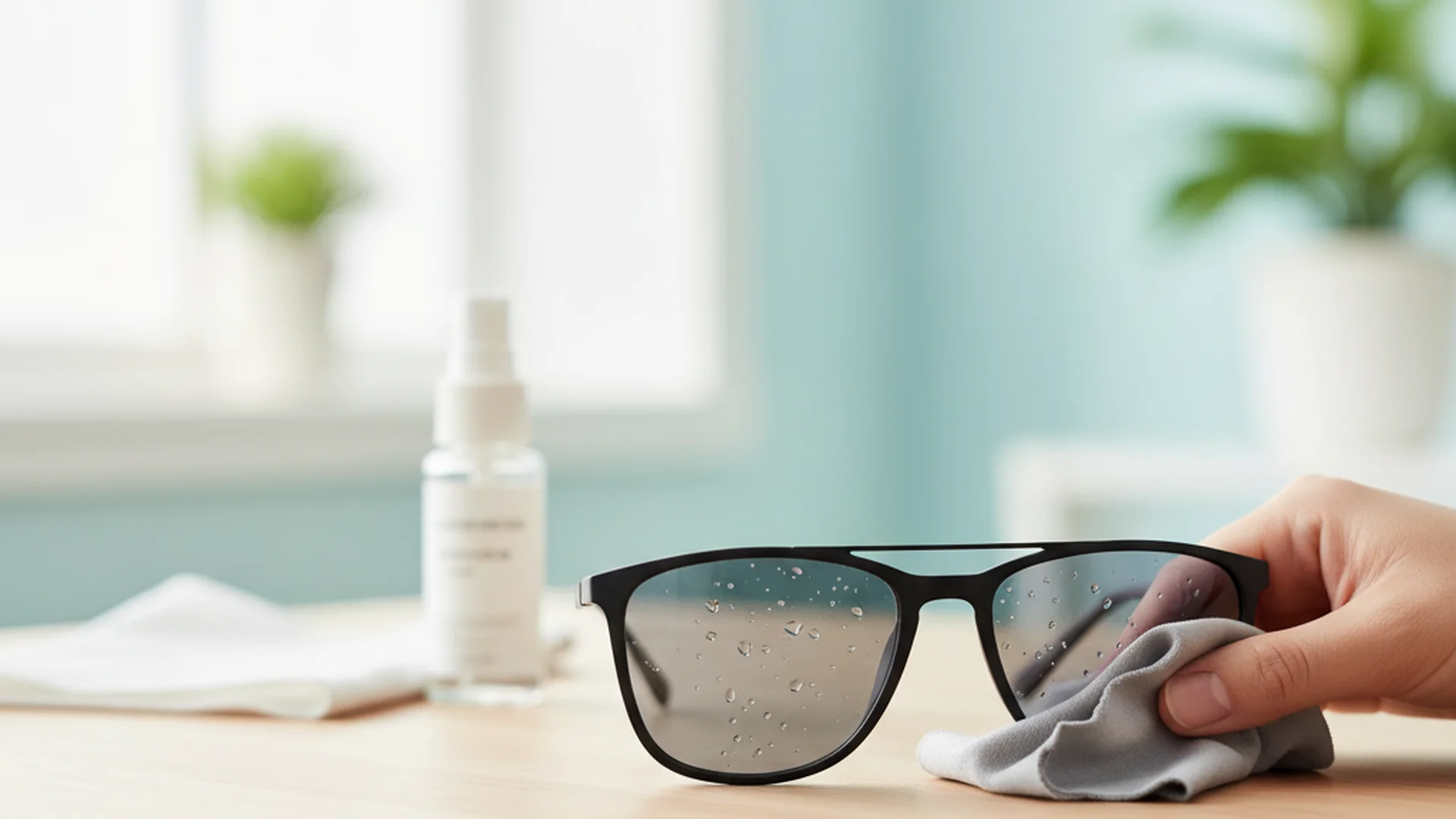
Rinse the glasses thoroughly to ensure no soap residue remains. Finally, dry the lenses and frame using a clean, dedicated microfiber cloth. Avoid air-drying, as tap water can leave behind mineral spots that are difficult to buff out later.
| Cleaning Method | Risk of Scratches | Effectiveness | Recommendation |
|---|---|---|---|
| T-shirt/Clothing | High | Low | Avoid |
| Paper Products | High | Medium | Avoid |
| Professional Kit | Very Low | High | Highly Recommended |
| Ultrasonic Tank | Zero | Superior | Best for Deep Cleans |
Cleaning Specialized Sunglasses
Not all sunglasses are created equal. As we move into 2025, the rise of specialized technology requires more nuanced care.
How to Clean Polarized Sunglasses
Polarized filters are often a delicate film layered within or on top of the lens. To clean sunglasses at home that feature polarization, you must avoid all chemicals. Harsh cleaners can cause the layers to "delaminate," meaning the filter will literally begin to peel away from the lens. Stick strictly to lukewarm water and neutral soap.
Maintaining Smart Eyewear (AI & Camera Integrated)
With the growth of AI-integrated sunglasses, such as Ray-Ban Meta, cleaning has become more complex. These devices feature microphones, speakers, and camera lenses.
- Do not submerge smart glasses in water.
- Use a dry microfiber cloth for the frame and electronic components.
- Apply a specialized lens cleaning spray to the cloth first, rather than spraying the glasses directly, to prevent liquid ingress.
Note: Some high-end 2026 models are now featuring "lotus-effect" nanotechnology. These coatings cause water and oils to bead off instantly, meaning you may only need a dry microfiber buff for daily maintenance.
Real-World Examples: When to Clean
To understand the best way to clean sunglasses, consider these three common scenarios:
- The Beach Day: Saltwater and sand are the ultimate enemies of eyewear. If you've been at the beach, your sunglasses are coated in abrasive crystals. Never wipe them dry. Rinse them with fresh water immediately to prevent the salt from "eating" the coatings.
- The High-Intensity Workout: Sweat is acidic and contains oils that can degrade rubber nose pads and matte frame finishes over time. After a run or cycle, use the Rinse-Soap-Dry method to neutralize the acidity of the sweat.
- The Coffee Shop Smudge: We’ve all been there—accidentally touching the lens while adjusting your frames. For these minor oily smudges, a clean microfiber cloth and a dedicated lens spray are sufficient, provided there is no visible dust on the lens.
Common Mistakes to Avoid
Even with the best intentions, many people accidentally damage their eyewear. Avoid these common pitfalls to ensure your shades last for years.
The "Heat Trap"
Leaving your sunglasses on a car dashboard is a recipe for disaster. In the summer, temperatures can exceed 60°C (140°F), which is hot enough to warp acetate frames and cause "crazing"—a web-like cracking of the anti-reflective coating.
Using Saliva
It is a common "emergency" tactic, but saliva is not a cleaning agent. It contains enzymes and bacteria that smear oils further and can leave a film that actually attracts more dust.
The Dry-Wipe Mistake
Wiping a lens when it is completely dry is the number one cause of micro-scratches. Even if you don't see the damage immediately, these tiny scratches accumulate, leading to a "foggy" appearance that cannot be repaired.
Success: Following the "Rinse-Soap-Dry" protocol keeps your sunglasses usable far longer than the habitual shirt-swipe ever will.
Recent Trends: Ultrasonic Cleaners
A significant trend for 2025–2026 is the adoption of home ultrasonic cleaners. These compact devices use 45kHz sound waves to create microscopic bubbles that vibrate dirt out of tight hinges and nose pads. If you own multiple pairs of high-end glasses, a home ultrasonic unit is a worthwhile investment for a monthly deep clean.
Frequently Asked Questions
Can I use window cleaner (like Windex) on my lenses?
How do I clean my microfiber cloth?
Is it possible to fix a scratch on my sunglasses?
Why do my sunglasses still look smeary after cleaning?
Conclusion
Mastering the best way to clean sunglasses at home doesn't require expensive equipment, but it does require patience and the right technique. By moving away from the "shirt-swipe" habit and adopting the Rinse-Soap-Dry protocol, you protect your investment and ensure your vision remains sharp. Remember, a great many pairs are ruined simply because nobody bothered with the case—so once they are clean, tuck them away safely!
Cleaning that keeps score
Every task earns points, every streak multiplies them, and Premium adds a household leaderboard plus a monthly Dustagorgon to beat.
- Free forever
- 30 badges to earn
- Up to 6 in a household
No card needed. Set up your rooms in a couple of minutes.