In this article
What you’ll learn
- Copper is a 'living finish' metal that naturally heals itself and changes color over time.
- Avoid harsh chemicals like bleach and abrasive pads which can damage the surface.
- The 'Daily Three' routine (Rinse, Wipe, Dry) is the most effective way to prevent spotting.
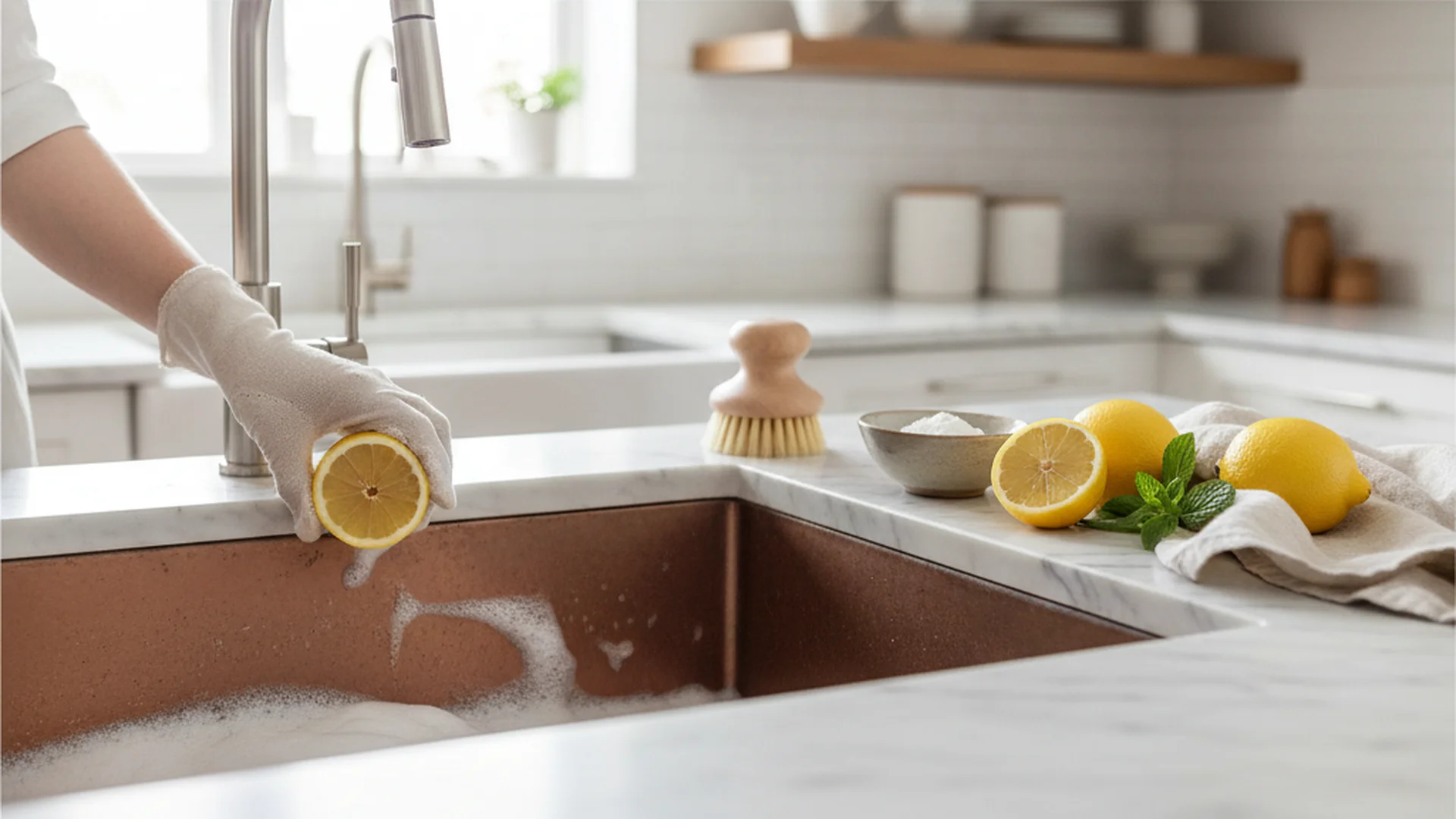
In the 2025–2026 home design landscape, the kitchen has evolved from a mere utility space into a sanctuary of "Rustic Luxe." At the heart of this trend is the copper sink. Homeowners are increasingly moving away from the sterile, industrial feel of stainless steel in favor of the warm, organic glow of copper. However, owning such a statement piece often comes with a common question: how to clean copper sink surfaces without ruining that beautiful, aged look?
Copper is more than just a decorative choice; it is often referred to as the "Wellness Metal" due to its incredible biostatic properties. Recent studies have highlighted that copper surfaces can kill up to 99.9% of bacteria and viruses—including E. coli and MRSA—within just two hours of contact. But to keep those antimicrobial benefits and the aesthetic appeal intact, you need a specific maintenance strategy.
The Science of the "Living Finish"
Before diving into the cleaning steps, it is essential to understand what makes copper unique. Copper is a "living metal," meaning it undergoes a continuous chemical reaction with oxygen and moisture. This process creates a patina—a natural protective layer that deepens the metal’s color from a bright, "new penny" orange to a rich, chocolatey brown.
Many new owners panic when they see their sink changing colors, but this is a sign of a healthy, high-quality material. The patina is not dirt; it is a shield that prevents corrosion. In 2025, the design trend of "Elevated Authenticity" prioritizes unsealed copper that is allowed to age naturally, often paired with dark gunmetal fixtures for a sophisticated, high-contrast look.
Note: Indoor copper sinks rarely turn green. That "verdigris" color seen on the Statue of Liberty only occurs with prolonged exposure to salt and excessive outdoor moisture.
The Best Way Clean Copper Sink: The "Daily Three" Routine
The secret to a beautiful copper sink isn't a secret chemical—it's consistency. Because copper is naturally antimicrobial, you don't need heavy disinfectants. Follow this daily routine to maintain the perfect balance of hygiene and aesthetics.
1. The Thorough Rinse
After every use, whether you’ve just washed dishes or dumped leftover coffee, flush the sink with warm water. This removes food particles and, more importantly, food acids (like those found in citrus, tomatoes, or vinegar) that can "strip" the patina.
2. The Gentle Wipe
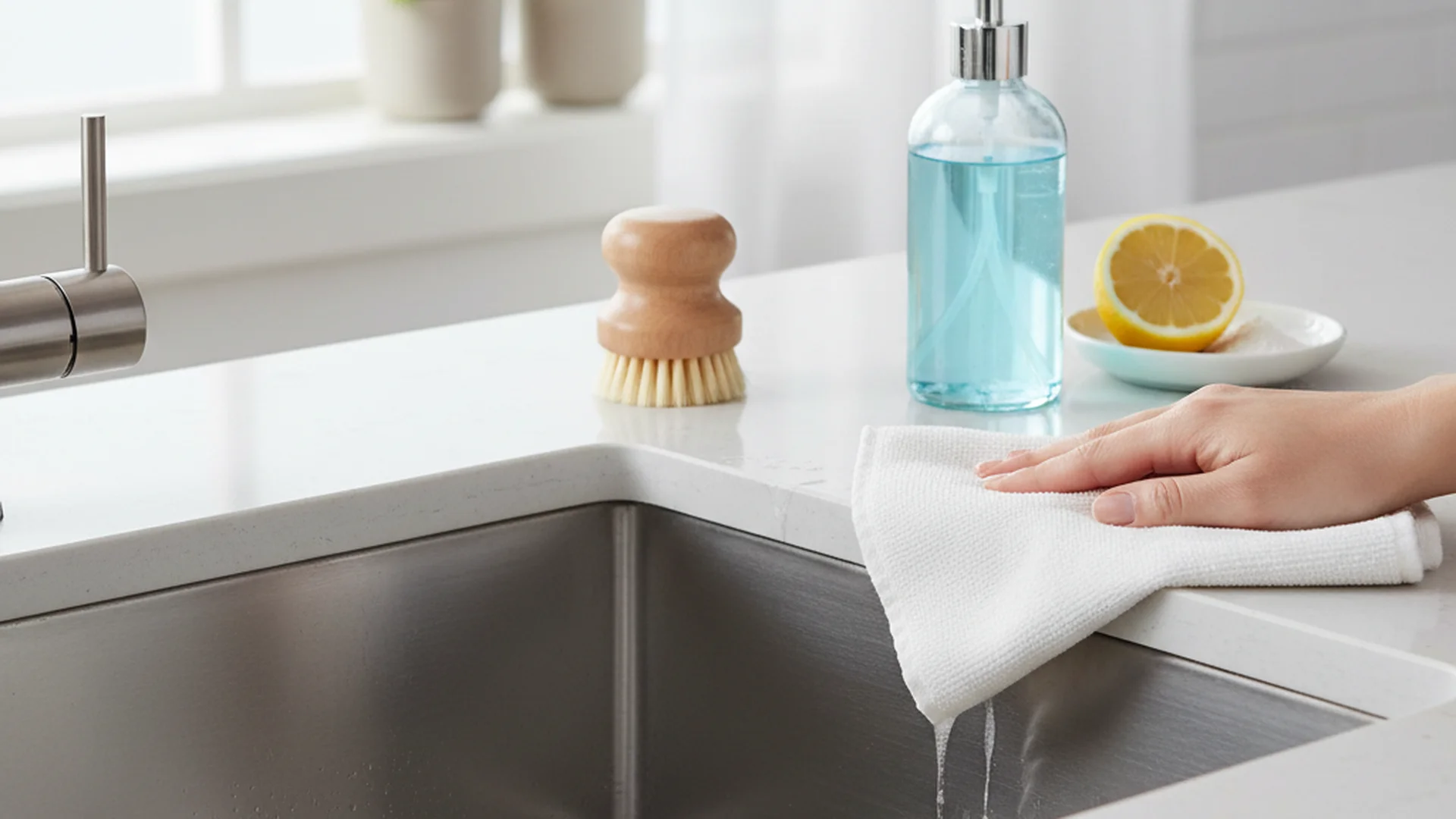
Use a soft sponge or microfiber cloth and a mild, pH-neutral dish soap. Brands like Seventh Generation or basic Dawn are ideal. Gently wipe down the basin to remove oils and residues.
3. The Essential Dry
This is the most skipped, yet most important step. Use a dry microfiber cloth to wipe the sink completely dry. This prevents "hard water spots" and mineral buildup, which can be difficult to remove once they calcify on the copper surface.
Success: Regularly drying your sink after use will keep the patina looking even and prevent the chalky white buildup often caused by hard water.
Monthly Protection and Maintenance
While the daily routine keeps the sink clean, monthly maintenance ensures the water continues to bead off the surface and the patina develops evenly.
Applying Copper Wax
Once a month, apply a specialized copper wax or a high-quality furniture-grade wax (such as Renaissance Wax). This creates a temporary hydrophobic barrier.
- Clean and dry the sink thoroughly.
- Apply a thin layer of wax with a soft cloth.
- Allow it to dry for a few minutes, then buff it out with a clean cloth.
Restoring the "New Penny" Shine
If you prefer the bright, polished look over the dark patina, you will need to be more proactive.
- Use a specialized copper cream to strip the oxidation.
- Immediately follow up with a wax sealant to "lock in" the shine and slow down the natural re-patination process.
| Maintenance Task | Frequency | Recommended Product |
|---|---|---|
| Soap & Water Wash | Daily | pH-neutral dish soap |
| Microfiber Drying | After Use | Clean, dry cloth |
| Wax Protection | Monthly | Copper CareIQ or Renaissance Wax |
| Deep Polishing | Optional | Wright’s Copper Cream |
Common Mistakes to Avoid
Even the most well-meaning homeowner can accidentally damage their copper. Avoid these five common pitfalls to ensure your sink lasts for the 50+ years it's designed for.
1. Using Bleach or Harsh Chemicals
Warning: Never use bleach, ammonia, or harsh chemical drain cleaners in a copper sink. These are far too alkaline or acidic and will strip the patina instantly, leaving permanent, unsightly spotting.
2. Abrasive Scrubbing Pads
Copper is a relatively soft metal. Using steel wool, the "green" side of a scouring sponge, or abrasive powders will leave visible scratches. Stick to soft cloths.
3. Leaving Wet Sponges in the Basin
A wet sponge left sitting on the copper overnight is the fastest way to get a dark, circular stain or even a small patch of green verdigris. Always store sponges in a separate, ventilated holder.
4. Acidic Exposure
Leaving a sliced lemon, a puddle of ketchup, or even certain toothpastes (which contain acidic whitening agents) in the sink will "brighten" the copper, effectively stripping the patina in that one spot.
5. Neglecting the Bottom Grid
If you use a stainless steel bottom grid to protect your sink from heavy pots, don't forget to clean underneath it. Grime and food particles often get trapped at the contact points between the grid and the copper.
Real-World Scenarios: How to Fix Common Issues
The "Bright Spot" Panic
Example: You accidentally left a lime wedge in the sink, and now there is a bright, shiny circle in the middle of your dark brown patina.
- The Fix: Don’t panic and don't try to "scrub it even." Simply clean the area with mild soap and continue your daily routine. Copper has a "memory" and will naturally re-oxidize. Within a few weeks, the bright spot will darken and blend back into the rest of the sink.
Hard Water "White Spots"
Example: You live in an area with high mineral content, and your sink has developed cloudy, white patches.
- The Fix: Use a 50/50 solution of water and white vinegar to gently dab the spots, then rinse immediately. Do not soak the sink in vinegar. Once the spots are gone, apply wax to prevent the minerals from sticking again.
The "Dirty" Misconception
Example: A guest tells you your sink looks "dirty" because it is dark and mottled.
- The Fact: Education is the best tool here. Explain that the darker the patina, the more "self-healed" and protected the metal is. In 2026, this "aged" look is a hallmark of high-end, authentic design.
2025–2026 Design Trends: Copper Evolution
As we look toward 2026, the way we use and maintain copper is shifting:
- Workstation Sinks: Copper is being integrated into multi-functional designs featuring built-in cutting boards and drying racks. These require extra attention to ensure food debris doesn't sit in the "tracks" of the workstation.
- Nano-Coating Technology: Some premium 2026 models now come with factory-applied hydrophobic nano-coatings. These repel water and oils automatically, significantly reducing the frequency of waxing required.
- The "Health-First" Kitchen: Post-pandemic hygiene remains a priority. Copper’s status as a "Wellness Metal" is making it a top choice for high-traffic family kitchens where reducing surface bacteria is essential.
Frequently Asked Questions
Will my copper sink turn green?
Can I use bleach to disinfect my copper sink?
How do I fix "bright spots" from acidic food?
Is copper high maintenance?
Conclusion
A copper sink is more than just a place to wash dishes; it is a lifetime investment that adds character, warmth, and a layer of biological safety to your home. By mastering the "Daily Three" routine and avoiding harsh abrasives, you ensure that your sink remains the centerpiece of your kitchen for decades to come. Whether you prefer the "new penny" brilliance or the "Rustic Luxe" of a deep patina, copper remains the ultimate choice for the eco-conscious and design-forward homeowner in 2025 and beyond.
Cleaning that keeps score
Every task earns points, every streak multiplies them, and Premium adds a household leaderboard plus a monthly Dustagorgon to beat.
- Free forever
- 30 badges to earn
- Up to 6 in a household
No card needed. Set up your rooms in a couple of minutes.