In this article
What you’ll learn
- Hand-washing is essential to double the lifespan of your pan.
- Avoid aerosol cooking sprays to prevent sticky carbonized oil buildup.
- Use the "boil method" with vinegar for stubborn, burnt-on food.
Finding the best way clean non stick pan surfaces is often the difference between a kitchen tool that lasts five years and one that ends up in a landfill after six months. We have all been there: you prepare a perfect omelet, only to find a stubborn, gummy residue left behind that refuses to budge. As we move into 2025, the technology behind our cookware is changing, with a massive shift toward PFAS-free coatings and hybrid surfaces. However, regardless of whether you use traditional PTFE or a modern ceramic finish, knowing how to clean non stick pan sets correctly is the key to preserving that effortless food release we all love.
Understanding Your Non-Stick Coating
Before we dive into the cleaning process, it is vital to understand what you are working with. The lifespan of your cookware depends heavily on its material. Most standard non-stick pans last between 1 to 5 years. High-quality PTFE (Teflon) pans typically last 3–5 years, while ceramic-coated pans often begin to lose their effectiveness after just 2 years if not maintained perfectly.
By 2026, the market is seeing a massive shift toward "Forever Chemical-Free" (PFAS-free) labeling. Cookware manufactured after 2013-2014 is already required to be PFOA-free, but modern consumers are now looking for even cleaner alternatives. Proper maintenance can extend the life of these pans by up to 2x compared to frequent dishwasher use.
| Coating Type | Average Lifespan | Heat Sensitivity | Best Cleaning Method |
|---|---|---|---|
| PTFE (Teflon) | 3–5 Years | High (>500°F) | Hand-wash, Mild Soap |
| Ceramic | 1–2 Years | Medium | Baking Soda Paste |
| Titanium Hex | 5+ Years | Low | Abrasive-Safe |
The Daily Cleaning Routine
The most effective way to keep your pan in top shape is a gentle, consistent daily cleaning routine. While many brands claim to be "dishwasher safe," experts almost universally recommend hand-washing. High-heat cycles and abrasive detergents in dishwashers degrade the non-stick surface, causing it to become brittle and lose its slickness over time.
Step 1: The Cool Down
Never plunge a hot pan into cold water. This creates a "thermal shock" that can warp the metal base and cause the non-stick coating to crack or peel. Let the pan reach room temperature naturally on the stove or a heat-safe mat.
Step 2: Gentle Scrubbing
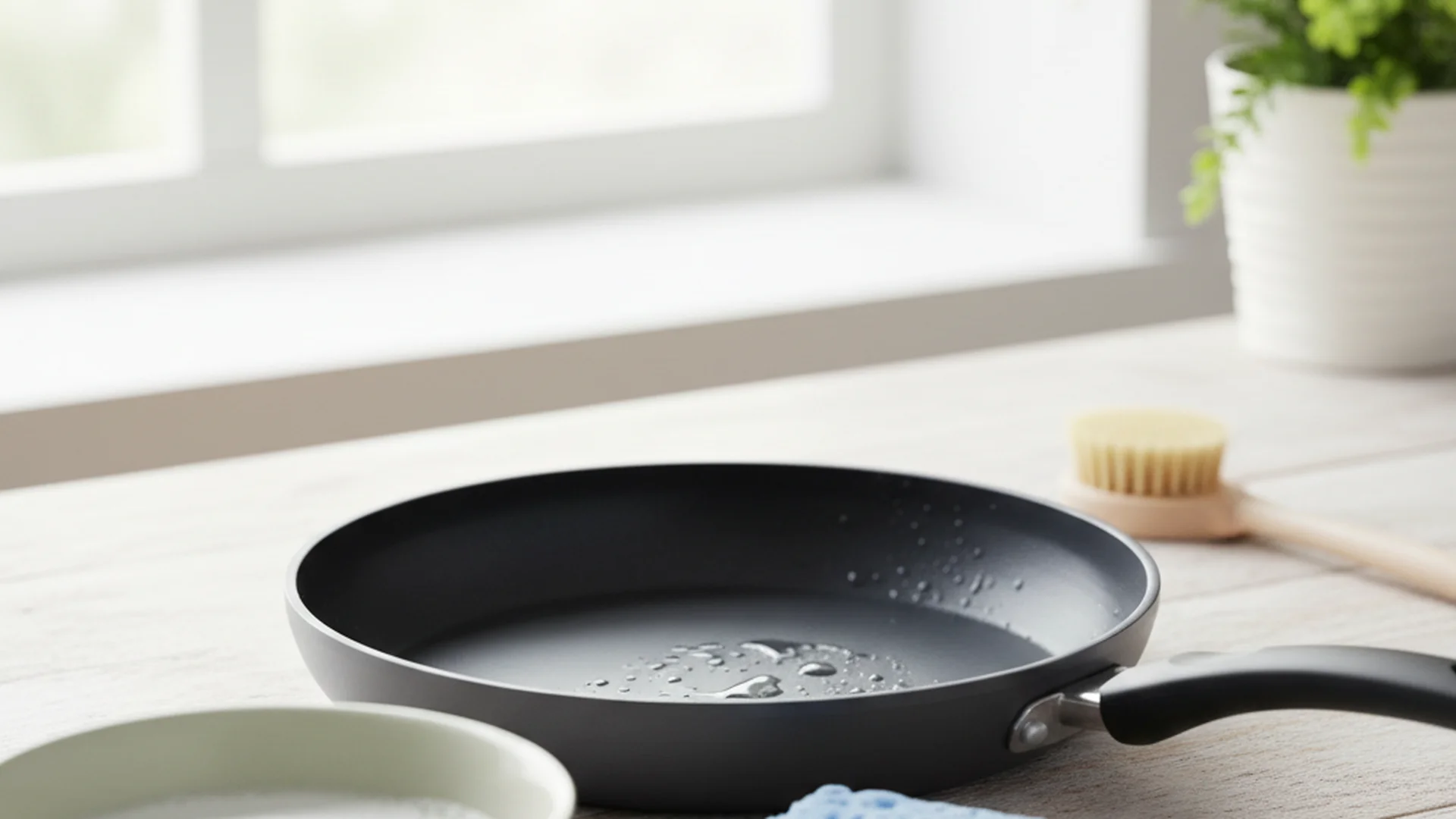
Use warm water, a few drops of mild liquid dish soap, and a soft cloth or a blue (non-scratch) sponge. Avoid the green scouring pads, as they are often abrasive enough to create micro-scratches that eventually lead to sticking.
Step 3: Thorough Drying
Always dry your pan immediately with a soft towel. Leaving a pan to air dry can allow minerals in hard water to settle on the surface, creating a film that interferes with the non-stick properties.
Note: If you notice a white, cloudy film on your pan after drying, it is likely mineral buildup from your water. A quick wipe with a cloth dampened with white vinegar will clear this right up.
How to Clean a Burnt Non-Stick Pan
Sometimes, things go wrong. Maybe the heat was too high, or you walked away for a moment too long, leaving behind a layer of carbonized food. When food is truly stuck, don't reach for a metal scraper.
The Boil Method
For stubborn, burnt-on residue, the "boil method" is the gold standard.
- Fill the pan halfway with water.
- Add a half-cup of white vinegar.
- Bring the mixture to a simmer for about 10 minutes.
- As the bubbles work, the burnt particles will begin to lift.
- Use a wooden spatula to gently nudge the debris.
- Drain and wash with soap as usual.
The Baking Soda Paste
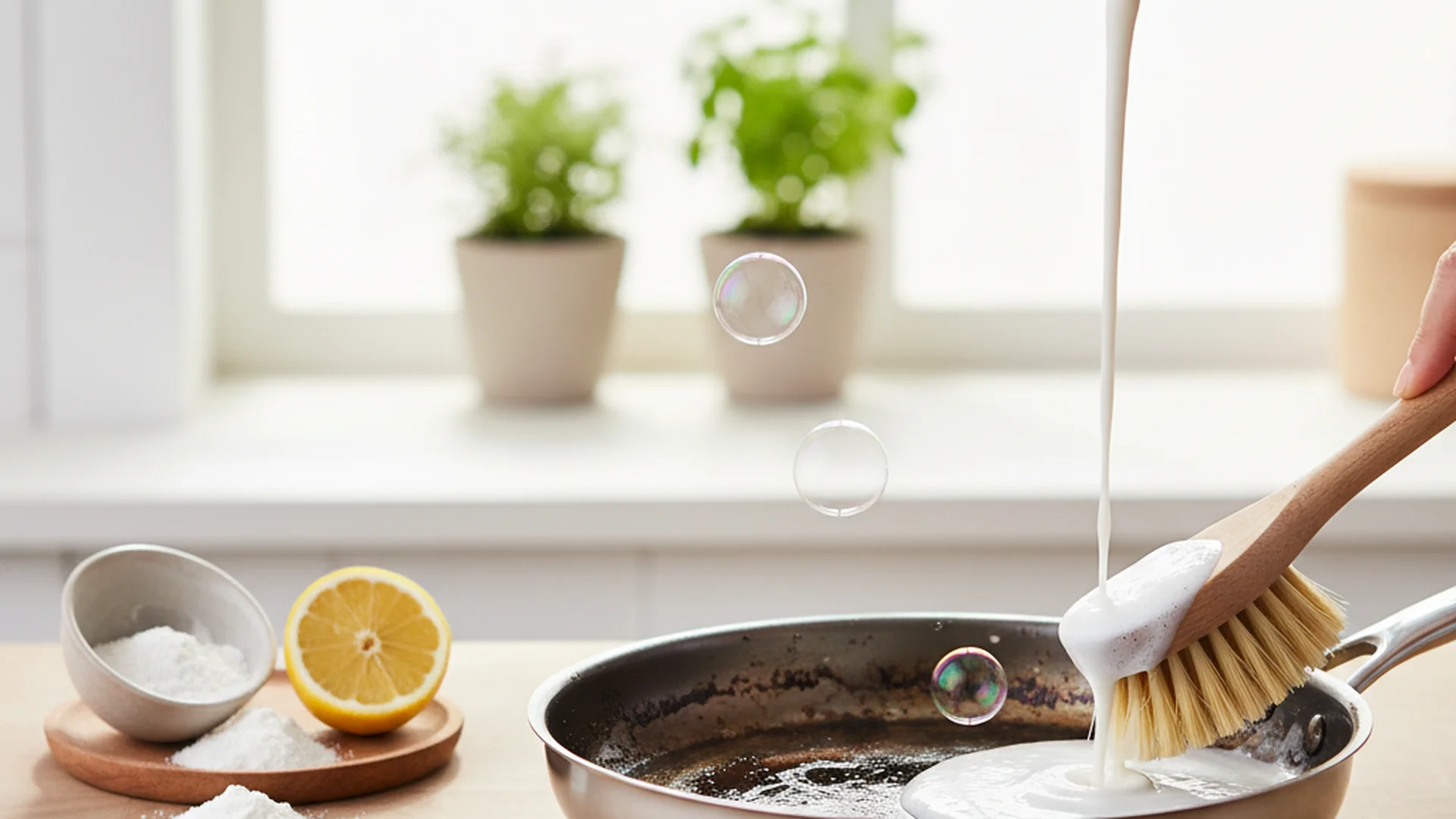
If the boil method doesn't catch everything, a baking soda paste is your next best friend. Mix 3 parts baking soda to 1 part water to create a thick paste. Apply this to the problem areas and let it sit for 15 minutes. The mild alkalinity of the baking soda helps break down the bond of carbonized oils without scratching the coating.
Success: Using the baking soda paste method can often restore a "dead" non-stick pan by removing the invisible layer of burnt oil that causes sticking.
Real-World Examples of Care
Example 1: The Omelet Enthusiast
Sarah noticed her eggs began sticking to her ceramic pan after only three months. After investigation, she realized she was using "high" heat to speed up her morning. By switching to medium-low heat and implementing the "cool down" rule before washing, her replacement pan has now lasted over two years without a single stick.
Example 2: The Cooking Spray Trap
Mark used aerosol "non-stick" sprays daily, thinking he was helping the pan. Within weeks, a sticky, brown "glue" formed on the edges. This was caused by soy lecithin in the spray. Mark switched to a refillable oil mister with pure olive oil and used the baking soda paste to remove the old residue, successfully restoring the pan's surface.
Example 3: The Stacker
Jessica lived in a small apartment and stacked her pans to save space. She noticed deep circular scratches on the interior of her favorite skillet. By simply placing a felt protector (or a folded paper towel) between her pans, she prevented further damage and saved her cookware from premature retirement.
Advanced Maintenance: Micro-Seasoning
Unlike cast iron, non-stick doesn't need heavy seasoning. However, 2025 kitchen experts recommend "reconditioning" or "micro-seasoning" the surface every few months.
- Clean and dry the pan thoroughly.
- Rub a half-teaspoon of neutral oil (like grapeseed or vegetable oil) onto the surface.
- Heat the pan on low for 1-2 minutes.
- Wipe away any excess oil with a clean paper towel.
This process helps fill in microscopic pores in the coating and keeps the surface supple.
Tip: If you are using newer 2026 "titanium hex-grid" pans, you can actually use metal utensils, but micro-seasoning still helps maintain that "slide-off-the-pan" performance.
Common Mistakes to Avoid
- Preheating an Empty Pan: Heating an empty non-stick pan can cause it to reach toxic temperatures (above 500°F) in under two minutes. Always add a small amount of fat or the food itself before turning on the heat.
- The "Cooking Spray" Mistake: Aerosol sprays contain lecithin, which bonds to the coating and creates a "glue-like" residue. Use liquid oils or butter instead.
- Using High Heat: Non-stick is designed for low to medium heat. If you need to sear a steak, use cast iron or stainless steel. High heat is the #1 cause of coating failure.
- Metal Utensils: Even if a pan says "metal utensil safe," using silicone or wood will significantly extend the life of the coating.
Warning: If your pan's coating is flaking, peeling, or deeply gouged, it is time to replace it. Ingesting coating particles is not recommended, and a damaged surface can no longer be cleaned effectively.
2025-2026 Trends in Non-Stick Care
The world of cookware is evolving. One major 2026 trend is the rise of titanium hex-grid technology. These pans use a physical texture rather than a chemical coating to release food, making them dishwasher-safe and virtually indestructible.
Additionally, we are seeing Smart Induction Integration. Newer non-stick pans are being designed with integrated thermal sensors that alert your smartphone if the pan exceeds 450°F. This prevents accidental overheating, which protects both your health and the longevity of the pan.
Eco-cleaning is also taking center stage. Consumers are moving away from plastic sponges toward compostable walnut-shell sponges and lemon-scented white vinegar concentrates to remove grease without harsh chemicals.
Frequently Asked Questions
Can I put a dishwasher-safe non-stick pan in the dishwasher?
Why is food starting to stick to my non-stick pan?
Is it safe to use a pan with a small scratch?
How do I store my pans safely?
Conclusion
Mastering how to clean non stick pan surfaces doesn't require expensive chemicals or hours of labor. By following the "cool down" rule, avoiding the dishwasher, and treating the surface with a little baking soda when things get sticky, you can ensure your cookware remains a reliable part of your kitchen for years to come. Remember, the best way clean non stick pan is the gentlest way—low heat, soft sponges, and a little bit of patience.
Cleaning that keeps score
Every task earns points, every streak multiplies them, and Premium adds a household leaderboard plus a monthly Dustagorgon to beat.
- Free forever
- 30 badges to earn
- Up to 6 in a household
No card needed. Set up your rooms in a couple of minutes.