In this article
What you’ll learn
- Perform a deep clean twice a year to prevent permanent staining.
- Never use wire brushes as they leave rust-prone metal fragments.
- Modern bio-enzymatic cleaners are the safest choice for the environment.
A pristine outdoor living space is the hallmark of a well-cared-for home. However, because concrete is naturally porous, it acts like a giant sponge for dirt, oil, and organic debris. If you are wondering how to clean concrete patio surfaces effectively, you are not alone. Whether you are prepping for a summer barbecue or cleaning up after a long winter, mastering the best way clean concrete patio slabs can drastically improve your home's aesthetics and longevity.
Beyond just looks, a clean patio is a financial asset. Research shows that a well-maintained patio can increase curb appeal and contribute to a property value return on investment (ROI) of 50% to 90%.
Why Regular Concrete Cleaning is Essential
Many homeowners view concrete as a "set it and forget it" material. In reality, concrete's porous nature means it can absorb liquids within minutes. Without regular maintenance, simple spills like red wine or motor oil can become permanent fixtures.
Furthermore, neglected concrete is a breeding ground for mold, mildew, and moss. These organic growths don't just look unsightly; they can create slippery hazards and eventually lead to surface degradation. Experts recommend a bi-annual deep clean—once in the Spring to remove winter grime and once in the Fall to clear away organic debris before the damp months take hold.
The 5-Step Process to a Like-New Finish
To achieve professional-grade results without hiring a contractor, follow this structured five-step process.
Step 1: The "Dry Sweep" Preparation
Before you even touch a hose, you must remove loose debris. Using a leaf blower or a wide push broom to clear away leaves, twigs, and dust is critical.
Warning: Never wet a dirty patio before sweeping. Doing so creates a "muddy slurry" that grinds fine dirt deeper into the concrete's pores, making it significantly harder to clean.
Step 2: Pre-Treating Specific Stains
Every patio has its "problem areas." Treat these before you begin the general wash.
- Oil and Grease: Use an absorbent like kitty litter or baking soda for fresh spills. For set-in stains, use a specialized concrete degreaser.
- Rust Stains: Common from metal patio furniture, rust can be dissolved using lemon juice or white vinegar. Let it sit for 10-15 minutes before scrubbing.
- Tannin Stains: These brown spots come from decaying leaves. A specialized organic stain remover or a light bleach solution usually does the trick.
Step 3: Sectional Scrubbing
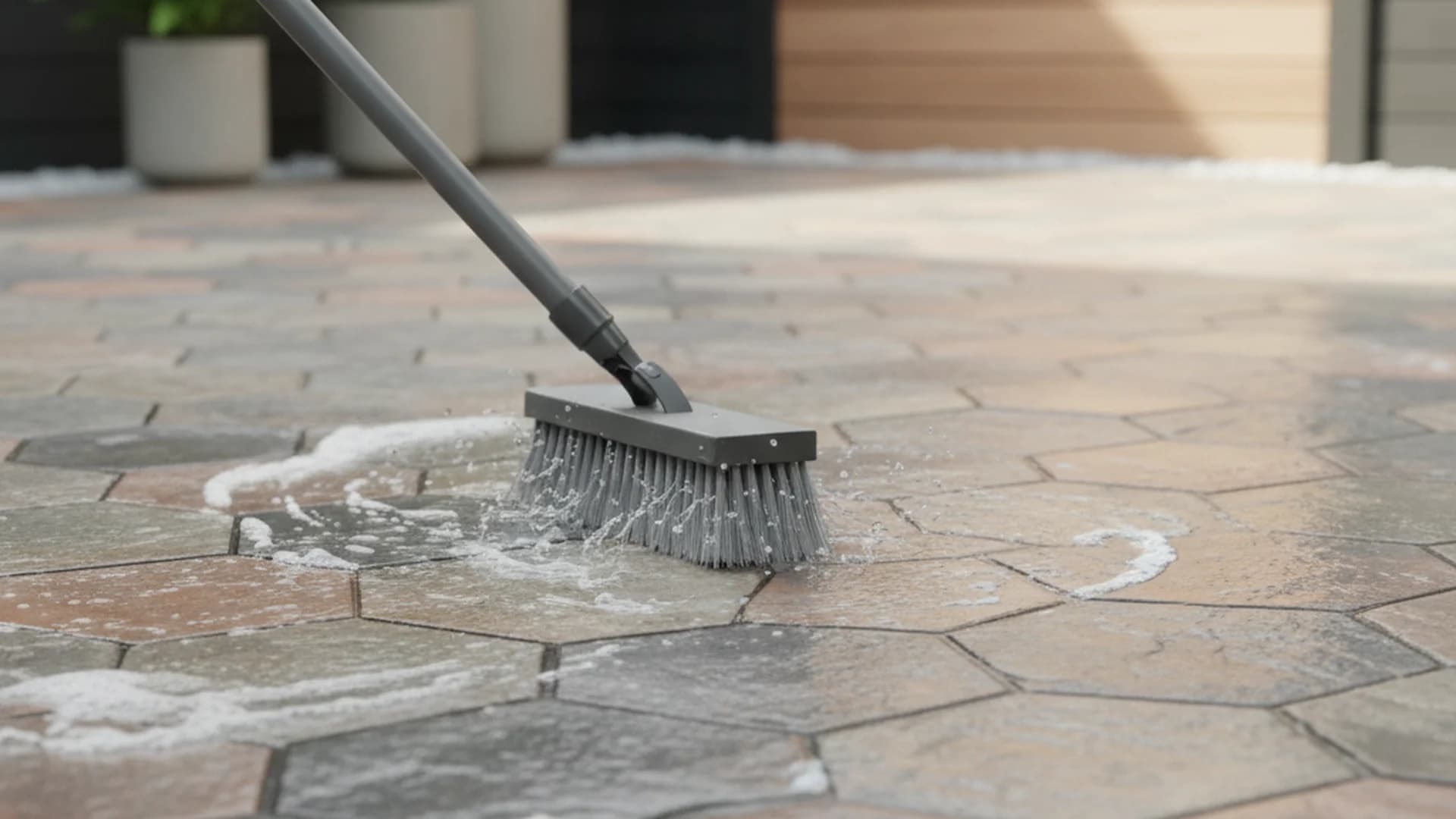
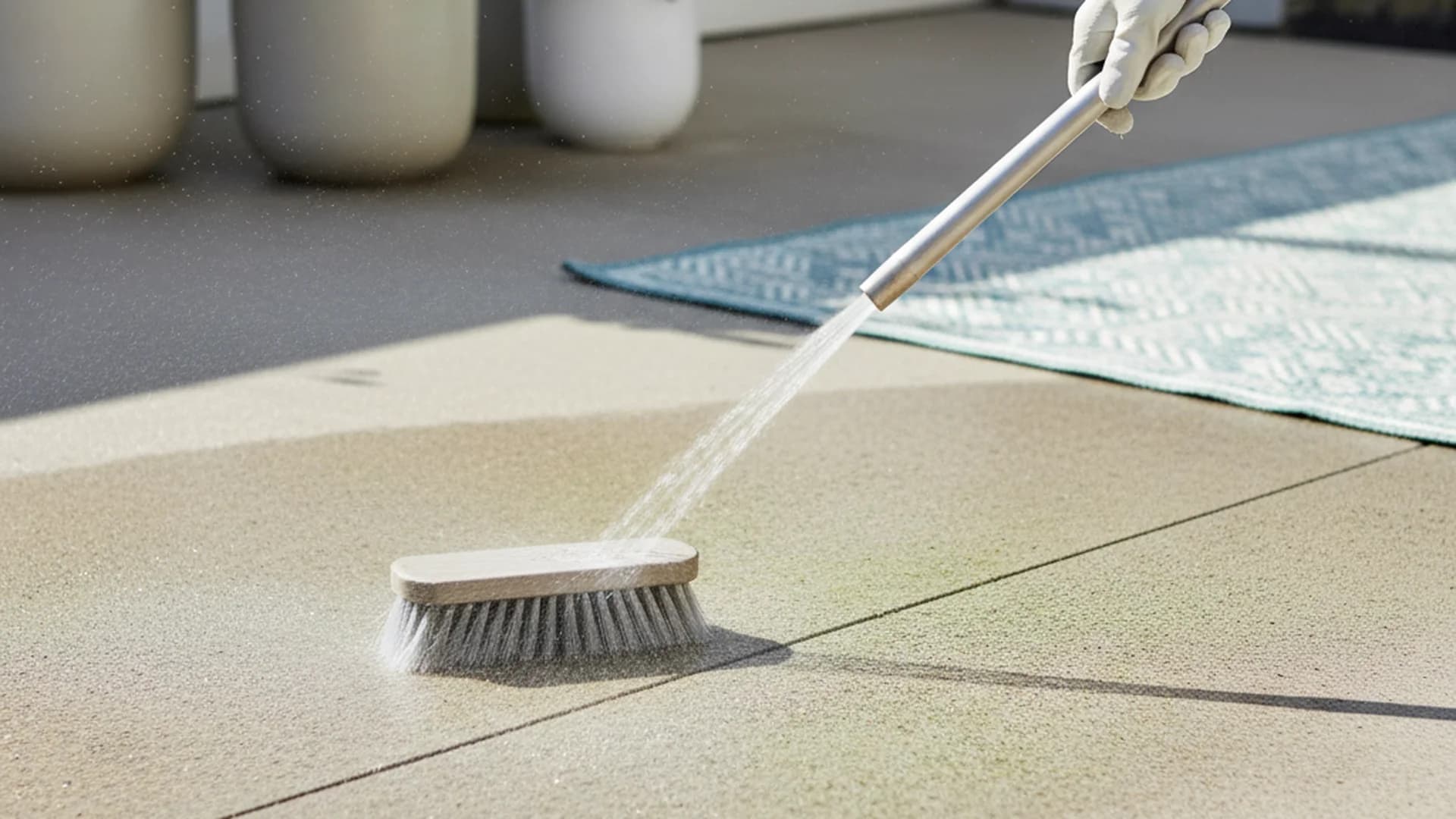
Work in manageable 5x5 foot sections to ensure the cleaner doesn't dry before you can scrub it. Use a stiff-bristled nylon brush to work your cleaning solution into the surface.
Tip: Avoid metal or wire brushes. They can scratch the "cream coat" (the smooth top layer) of your concrete and leave behind metal fibers that will eventually rust, creating permanent orange speckles.
Step 4: Controlled Rinsing
Rinsing is where many people go wrong. If you are using a pressure washer, use a 40-degree "fan" tip. This disperses the pressure evenly and prevents etching. Always rinse from the highest point of the patio toward your designated drainage area to avoid "pooling."
Step 5: Protective Sealing
Once the concrete is completely dry (usually 24 to 48 hours after cleaning), apply a high-quality sealer. This fills the pores and prevents future staining.
Success: Properly sealed concrete can resist oil and water-based stains for 2–3 years, making your future cleaning sessions much faster and easier.
Real-World Examples: Concrete Restoration
Example 1: The BBQ Aftermath
A homeowner in Austin, Texas, faced a massive grease stain after a Fourth of July party. By applying a paste of baking soda and liquid dish soap, letting it sit overnight, and then scrubbing with a nylon brush the next morning, the stain was lifted completely without the need for harsh industrial chemicals.
Example 2: The "Hidden" Patio
In the Pacific Northwest, a moss-covered patio was restored using a bio-enzymatic cleaner. Instead of high-pressure washing, which can damage older slabs, the enzymes "ate" the organic material over 48 hours, allowing the homeowner to simply rinse the debris away with a standard garden hose.
Example 3: The Stamped Concrete Revival
A decorative stamped concrete patio had turned a dull, chalky white (efflorescence). After a gentle wash with a pH-neutral cleaner and the application of a modern UV-resistant breathable sealer, the original "slate" colors were restored, adding immediate value back to the property.
2025-2026 Trends in Concrete Maintenance
The world of outdoor cleaning is evolving. Here are the trends dominating the 2025 season:
- Eco-Friendly "Bio-Cleaners": There is a massive shift toward bio-enzymatic cleaners. These products use specialized bacteria to consume organic stains like algae and moss. They are safer for your pets, your lawn, and local waterways.
- Smart Sealants: Forget the "yellowing" acrylics of the past. 2025 trends highlight UV-resistant, breathable sealers. These allow moisture trapped inside the slab to escape while preventing surface liquids from entering.
- Climate-Smart Prep: In regions with extreme temperature swings, "polyjacking" (injecting foam to level sunken slabs) is now a standard part of the cleaning prep process. This eliminates pooling water that leads to mold growth.
Common Mistakes to Avoid
Even with the best intentions, a few common errors can ruin your concrete surface:
- Over-Cleaning with High Pressure: Using a pressure washer exceeding 3,000 PSI or holding the nozzle too close (less than 12 inches) can "blast away" the smooth top layer of the concrete. This leaves it permanently rough and more prone to deep-set staining.
- Letting Cleaners Dry: Allowing soapy water or chemical cleaners to dry on the slab before rinsing often results in white, chalky streaks known as efflorescence.
- Neglecting the Joints: Weeds and dirt collect in the joints. If you don't clean these out, they will hold moisture and cause the concrete to crack during freeze-thaw cycles.
- Using the Wrong Chemicals: Using generic acidic cleaners on decorative or stamped concrete can strip the color and ruin the finish.
| Stain Type | Recommended Cleaner | DIY Alternative |
|---|---|---|
| Oil/Grease | Concrete Degreaser | Baking Soda Paste |
| Rust | Oxalic Acid | Lemon Juice |
| Mold/Algae | Bio-Enzymatic | Diluted Bleach |
| Tire Marks | Solvent-based | Dish Soap/Scrub |
Frequently Asked Questions
Can I use bleach on my concrete patio?
What is the best way to remove oil stains?
Is a pressure washer safe for all concrete?
How often should I reseal my patio?
Conclusion
Learning how to clean concrete patio surfaces properly is a vital skill for any homeowner. By following the "dry sweep" method, using the best way clean concrete patio tools like nylon brushes and fan-tip pressure washers, and staying updated on eco-friendly bio-cleaners, you can keep your outdoor space looking like new for decades.
Remember, the key to a beautiful patio isn't just the deep clean you do today—it's the consistent maintenance and sealing you do over time. Start your spring cleaning early this year and enjoy a spotless, high-value outdoor oasis all season long.
Note: If your concrete has significant structural cracks or major sinking, consult a professional for "polyjacking" before proceeding with a deep clean.
Cleaning that keeps score
Every task earns points, every streak multiplies them, and Premium adds a household leaderboard plus a monthly Dustagorgon to beat.
- Free forever
- 30 badges to earn
- Up to 6 in a household
No card needed. Set up your rooms in a couple of minutes.