In this article
What you’ll learn
- Follow the 4 C’s: Circulation, Cleaning, Chemistry, and Care.
- Transition to variable-speed pumps and cordless robotic cleaners for maximum efficiency.
- Never shock your pool during the day; UV rays destroy unstabilized chlorine.
Owning a swimming pool is the ultimate symbol of summer relaxation, but keeping that water sparkling requires more than just a passing interest in maintenance. Whether you are one of the 10.7 million pool owners in the U.S. or a new enthusiast, learning how to clean pool surfaces and balance water chemistry effectively is the difference between a backyard oasis and a swampy eyesore.
In this guide, we will break down the latest technological advancements—from AI-driven navigation to cordless robotics—while mastering the foundational "4 C's" of pool care. By following these how to clean pool tips, you can reduce your professional maintenance costs by up to 40% and ensure your water is always ready for a dip.
The Foundation: The 4 C’s of Pool Care
The best way how to clean pool systems involves a holistic approach. Experts in 2026 categorize successful maintenance into four distinct pillars. If one pillar fails, the entire ecosystem of your pool can collapse into an algae bloom.
1. Circulation
Stagnant water is the enemy of cleanliness. Circulation ensures that your chemicals are evenly distributed and that water is filtered properly. In 2026, the standard recommendation is to run your filter for at least 10–12 hours during the peak summer months.
Tip: Ensure "dead spots," such as the areas behind ladders or in deep corners, are addressed by adjusting your return jets to push water toward these stagnant zones.
Transitioning to a variable-speed pump is one of the smartest moves you can make this year. These pumps can save homeowners up to $1,500 per year in energy costs compared to traditional single-speed models.
2. Cleaning
Physical debris must be removed before it has a chance to break down and affect your water chemistry.
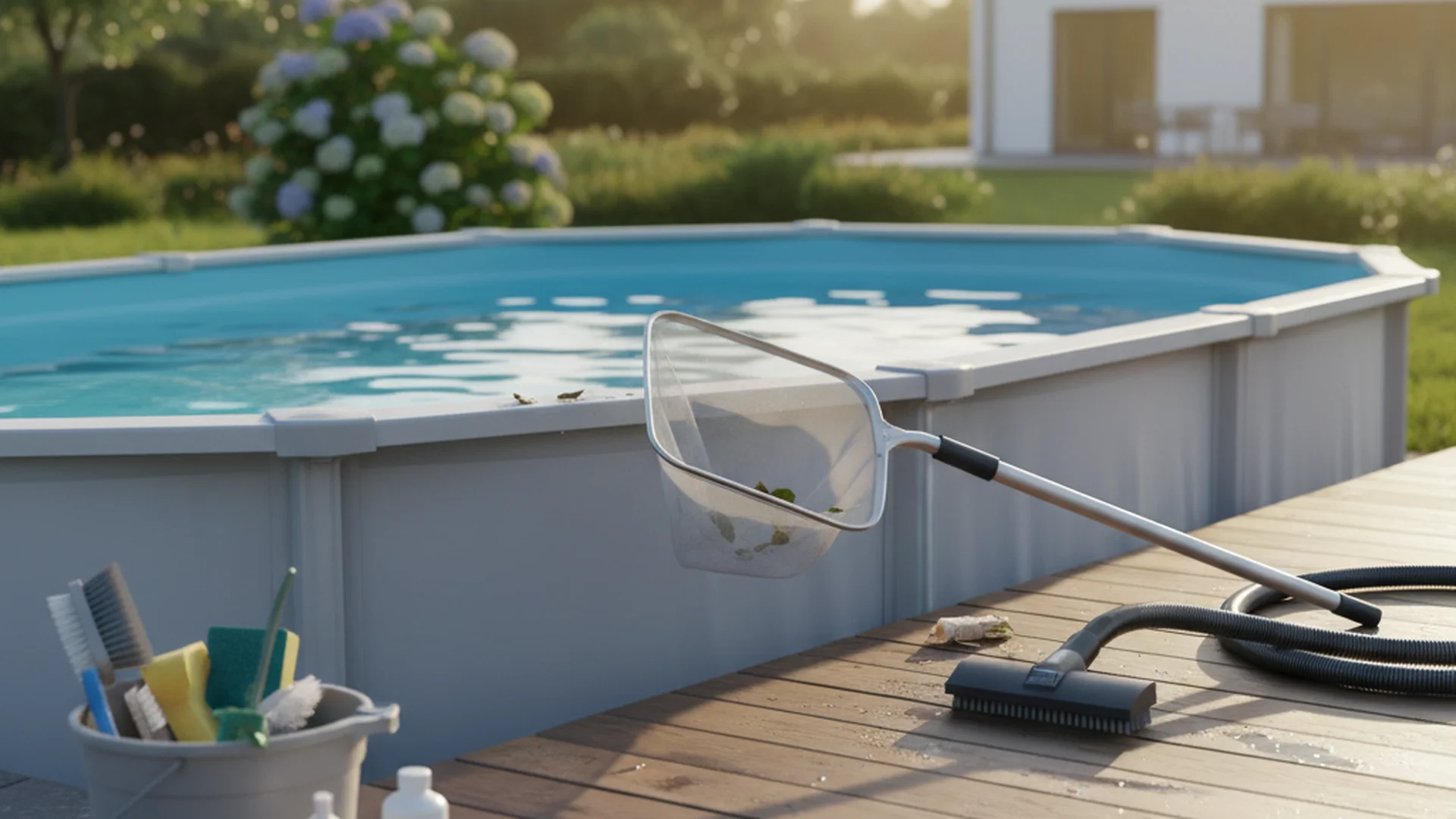
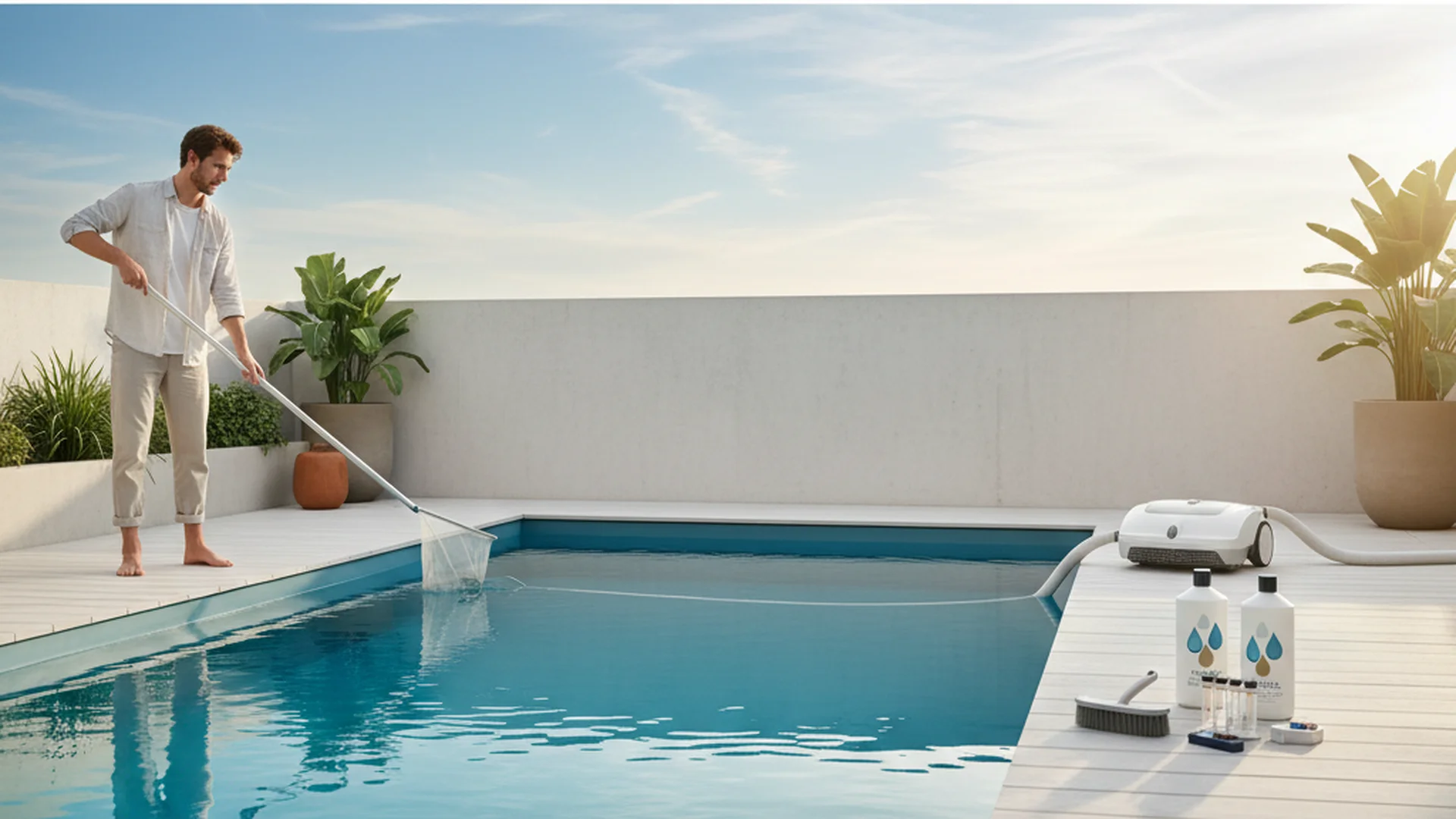
- Skimming: This should be a daily task. Removing leaves and insects before they sink prevents organic load from overwhelming your chlorine.
- Brushing: This is the most overlooked step. Brushing the walls and the "waterline" breaks up biofilm and scale.
- Vacuuming: While robotic cleaners handle the heavy lifting, manual vacuuming is still necessary for tight corners.
3. Chemistry
Water chemistry is the "invisible" part of knowing how to clean pool water. For 2026, the ideal ranges have been refined for maximum bather comfort and equipment longevity:
- pH: 7.2 – 7.6
- Free Chlorine: 1.0 – 4.0 ppm
- Total Alkalinity: 80 – 120 ppm
- Calcium Hardness: 200 – 400 ppm
Note: A saltwater pool is not "chemical-free." It simply uses a salt-chlorine generator to produce chlorine. You must still monitor pH and alkalinity levels regularly.
4. Care (Filtration)
Your filter is the kidney of your pool. Whether you use sand, cartridge, or DE (Diatomaceous Earth), you must monitor the pressure gauge. A common rule of thumb is to clean or backwash your filter when the pressure reads 8–10 PSI above its "clean" starting pressure.
High-Tech Cleaning Trends for 2025-2026
The era of "sweep and suck" is over. We are now in the age of automated, intelligent maintenance. If you are looking for the best way how to clean pool floors with minimal effort, consider these recent trends.
Cordless Robotic Cleaners
The "Hottest Trend of 2025-2026" is the move toward battery-powered, cordless robots. These machines eliminate "cable tangles"—the number one complaint of pool owners for decades. Modern units now feature app-integrated mapping, allowing you to see exactly which parts of the pool floor have been cleaned.
AI-Driven Navigation
Newer models in 2026 use AI to analyze pool geometry. Instead of bouncing randomly off walls, these cleaners calculate the most energy-efficient path, ensuring 100% coverage in half the time of older models.
IoT and Smart Sensors
Wi-Fi-enabled sensors are changing the game. Systems like those from Skovish Pools provide real-time water chemistry alerts directly to your smartphone. Instead of guessing how much "pH Down" to add, the app tells you the exact dosage based on your pool’s volume.
Success: Homeowners using AI-driven sensors and variable-speed pumps report spending 50% less time on manual testing and significantly less on "emergency" chemical treatments.
Step-by-Step: How to Deep Clean a Problem Pool
Sometimes, regular maintenance isn't enough, especially after a storm or a long period of neglect. Here is the professional process for reclaiming your water.
Step 1: Manual Debris Removal
Start by skimming the surface and then using a leaf rake to scoop debris from the bottom. Do not use your vacuum for large piles of leaves, as this can clog your pipes.
Step 2: Brushing the Biofilm
Brush everything—the walls, the floor, the steps, and especially the tile line. This knocks algae into suspension so the chlorine can kill it.
Step 3: Vacuuming "To Waste"
If you have a significant algae problem, do not use a robotic cleaner. You must manually vacuum "to waste" (if your filter allows it). This bypasses the filter and sends the dirty water and algae spores directly out of the pool system.
Warning: Vacuuming a heavy algae bloom through your filter can ruin the filter media and spread spores back into the pool.
| Cleaning Method | Best For | Frequency |
|---|---|---|
| Skimming | Surface Debris | Daily |
| Robotic Vacuum | Floor & Walls | 3x Weekly |
| Manual Vacuum | Heavy Algae | As Needed |
| Brushing | Biofilm/Scale | Weekly |
Real-World Examples of Modern Pool Care
To understand how to clean pool systems effectively, it helps to see how these methods apply to real scenarios.
Example 1: The "Green to Clean" Rescue
A homeowner returned from a two-week vacation to find a pea-soup green pool. Instead of just adding chlorine, they followed the 2026 protocol: they tested the pH first (adjusting it to 7.2 to make the chlorine more effective), brushed the walls vigorously, and then performed a "triple shock" at dusk. By vacuuming "to waste" the next morning, they cleared the pool in 48 hours.
Example 2: The Smart Sensor Advantage
A DIY owner installed a Wi-Fi-enabled floating sensor. The sensor detected a sudden drop in ORP (Oxidation-Reduction Potential) after a heavy rainstorm. The owner received a smartphone notification and added a small dose of sanitizer immediately, preventing an algae bloom before it could even start.
Example 3: The Cost-Saving Pump Swap
By replacing an old 1.5 HP single-speed pump with a modern variable-speed pump and setting it to run at a lower RPM for 12 hours, a family reduced their monthly electricity bill from $180 to $45 while maintaining better water clarity.
Common Mistakes to Avoid
Even seasoned pool owners fall into traps that can cost hundreds of dollars in unnecessary chemicals.
- Mistake: Shocking during the day. Unstabilized shock is destroyed by UV rays. You can lose 1 ppm of chlorine every hour in direct sunlight. Always shock at dusk.
- Mistake: Adding chemicals directly to the water. This can bleach vinyl liners or etch plaster. Correction: Always pre-dissolve chemicals in a bucket of pool water first (adding chemical to water, never water to chemical).
- Mistake: Wearing street clothes in the pool. Cotton fibers and detergents from clothing clog filters and introduce phosphates, which act as "algae food."
- Misconception: "If the water is clear, it's clean." Pathogens like Cryptosporidium can exist in clear water if the pH is imbalanced. Clear water only indicates a lack of large debris, not biological safety.
Frequently Asked Questions
How often should I clean my pool?
Can I use a robotic cleaner for an algae problem?
How long should I run my filter every day?
Is a saltwater pool better than a chlorine pool?
Conclusion
Learning how to clean pool surfaces and maintain water balance is an evolving science. By embracing the "4 C’s" and staying updated on 2026 trends like AI navigation and eco-friendly UV sanitizers, you can keep your pool in peak condition with less effort than ever before. Remember, consistency is the key to crystal-clear water; a few minutes of daily skimming and weekly chemistry checks will save you from the "green pool" nightmare.
Success: By implementing a variable-speed pump and a cordless robotic cleaner, you are joining the top tier of efficient, modern pool owners who enjoy more swim time and less chore time.
Cleaning that keeps score
Every task earns points, every streak multiplies them, and Premium adds a household leaderboard plus a monthly Dustagorgon to beat.
- Free forever
- 30 badges to earn
- Up to 6 in a household
No card needed. Set up your rooms in a couple of minutes.