In this article
What you’ll learn
- Clean spills within 7 days to protect your Trex Stain Warranty.
- Use mild dish soap and warm water for standard semi-annual cleaning.
- Avoid chlorine bleach and metal shovels to prevent permanent damage.
One of the primary reasons homeowners invest in composite materials is the promise of a low-maintenance lifestyle. However, "low maintenance" does not mean "zero maintenance." If you want to preserve the beauty and structural integrity of your outdoor space, knowing how to clean trex decking properly is essential.
While traditional wood decks demand exhausting cycles of sanding, staining, and sealing, Trex decks are designed to withstand the elements with just a bit of regular care. In this guide, we will walk through the modern standards for composite deck care, ensuring your investment remains a neighborhood standout for decades to come.
Why Regular Cleaning is Critical for Composite Decks
It is a common misconception that composite decks are immune to the environment. While they won't rot like cedar or pine, they are susceptible to "biofilm" buildup. This thin layer of pollen, dust, and organic debris creates a buffet for mold and mildew spores.
Furthermore, Trex has a specific "Golden Rule" regarding their warranty: to maintain the Trex Stain Warranty, all food and beverage spills must be cleaned within 7 days of exposure. Neglecting a grease spot from a Sunday barbecue until the following month could result in a permanent shadow that the manufacturer won't cover.
Warning: Never sand a Trex deck to remove a scratch or stain. Sanding destroys the protective outer "cap" and exposes the wood-fiber core to rot, which immediately voids your warranty.
The Best Way to Clean Trex Decking: Step-by-Step
When looking for the best way clean trex decking, simplicity is usually the winner. You don't need expensive chemicals; in fact, the most effective tools are likely already in your kitchen.
Step 1: Clear and Inspect
Before getting the deck wet, remove all furniture, rugs, and planters. Take this moment to inspect the gaps between boards. Debris trapped in these gaps can prevent proper drainage and airflow, leading to moisture issues underneath the deck.
Step 2: Dry Sweep
Use a soft-bristle broom to remove loose dirt, leaves, and pine needles. Removing these dry materials first prevents you from creating a "mud" layer once you introduce water.
Step 3: Pre-Rinse
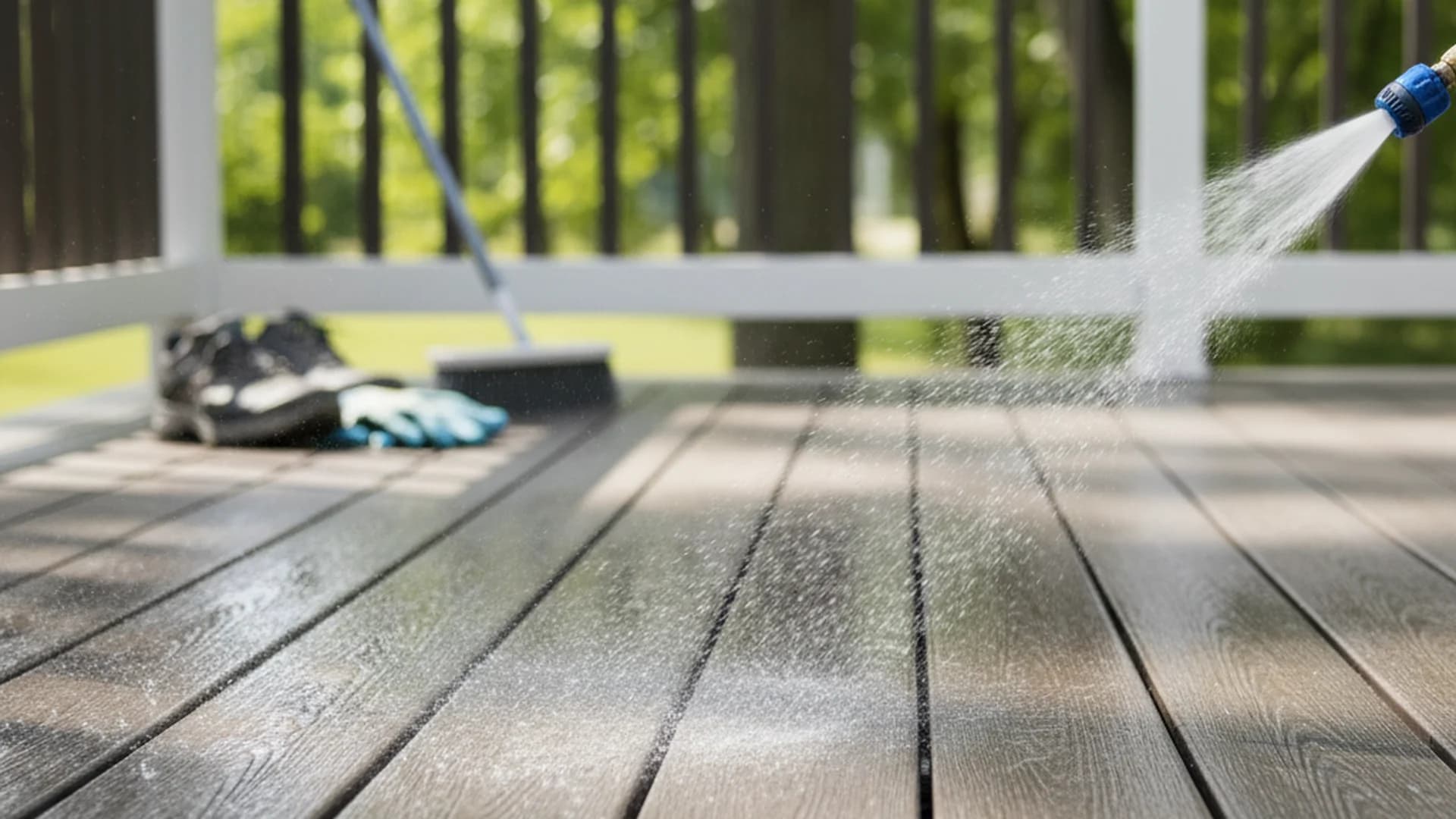
Spray the deck thoroughly with a garden hose to loosen surface grime. If you have hard water, you might notice spots forming; don't worry, we will address those in the scrubbing phase.
Step 4: Scrub with Mild Soap
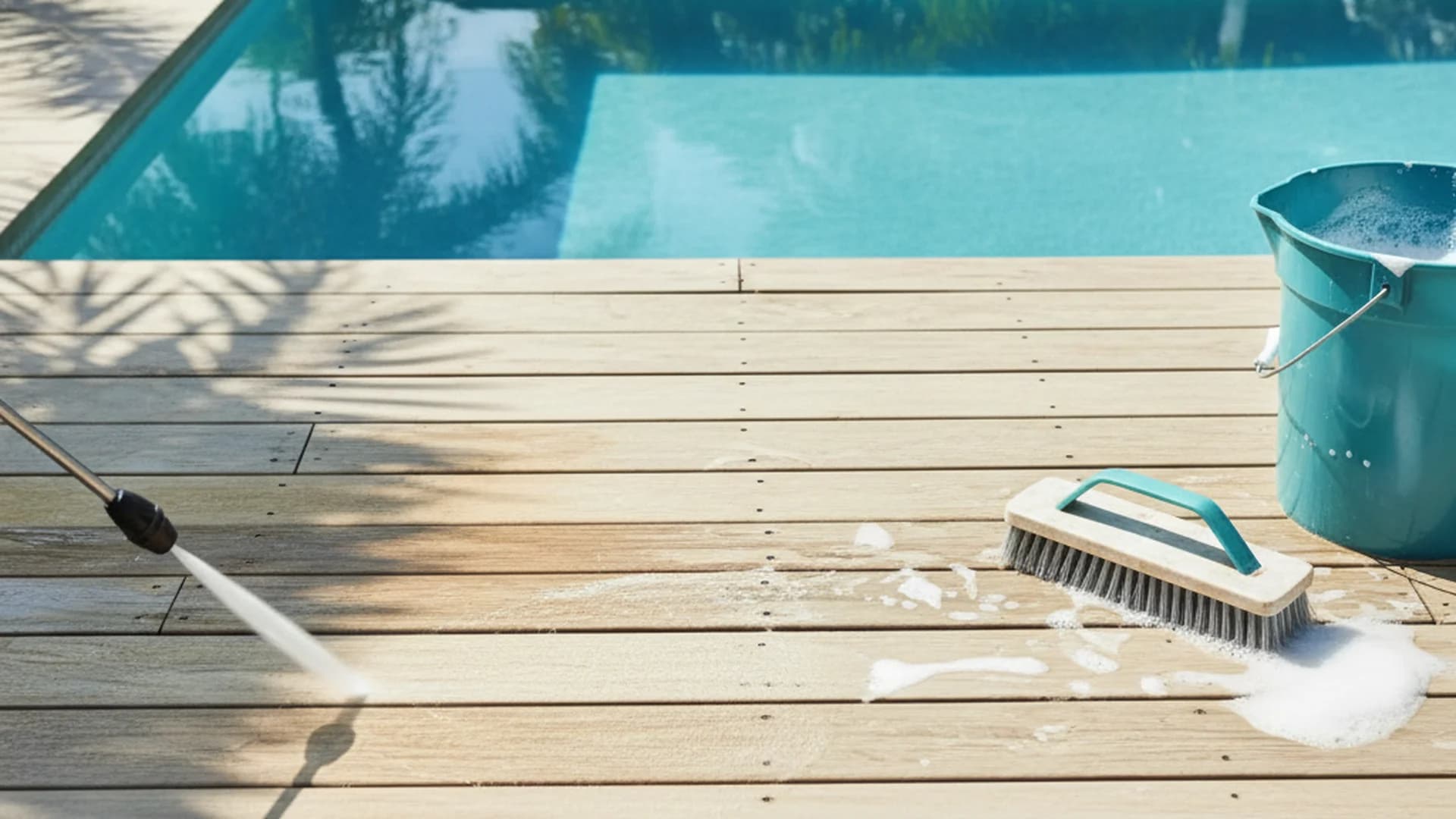
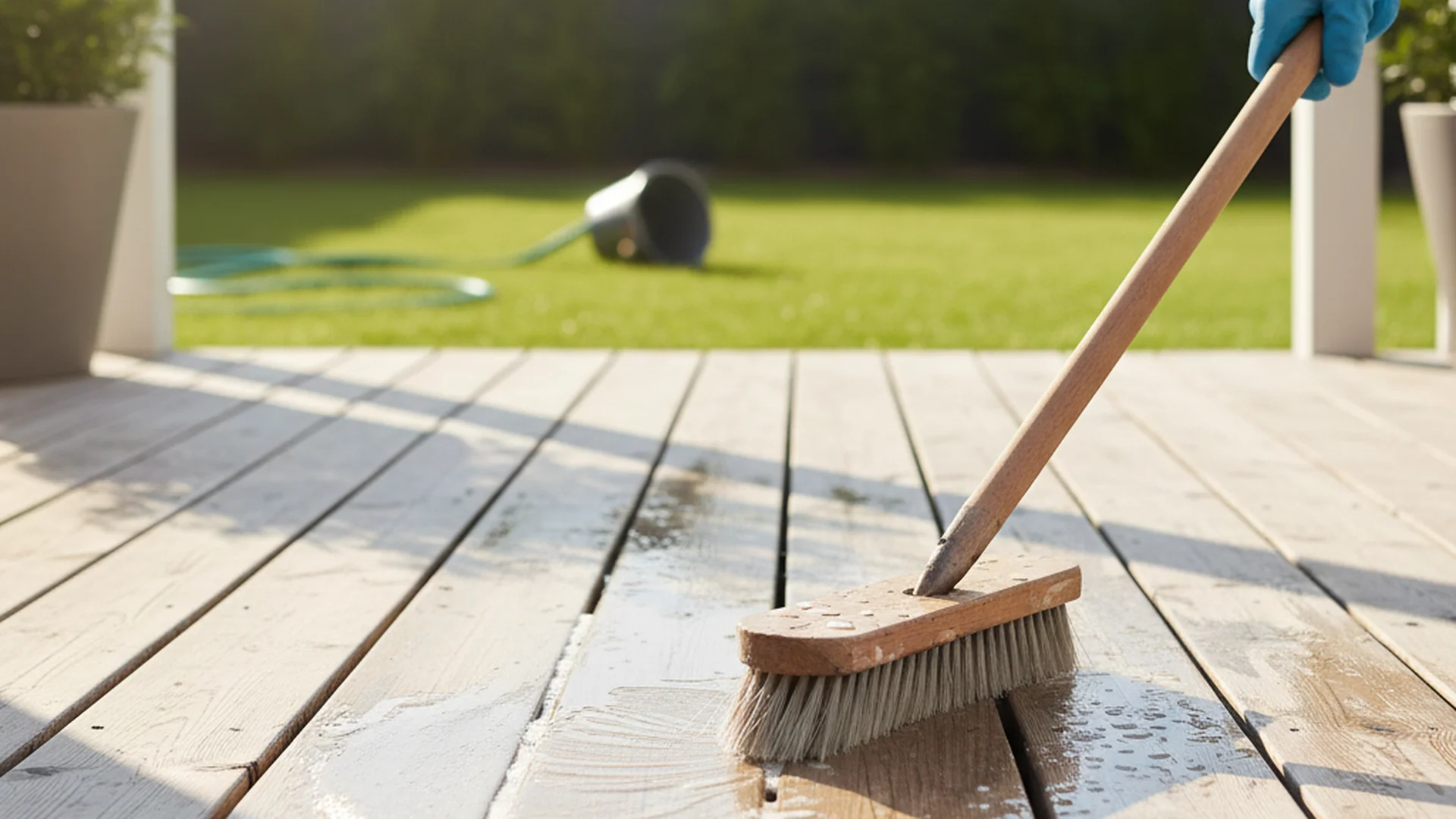
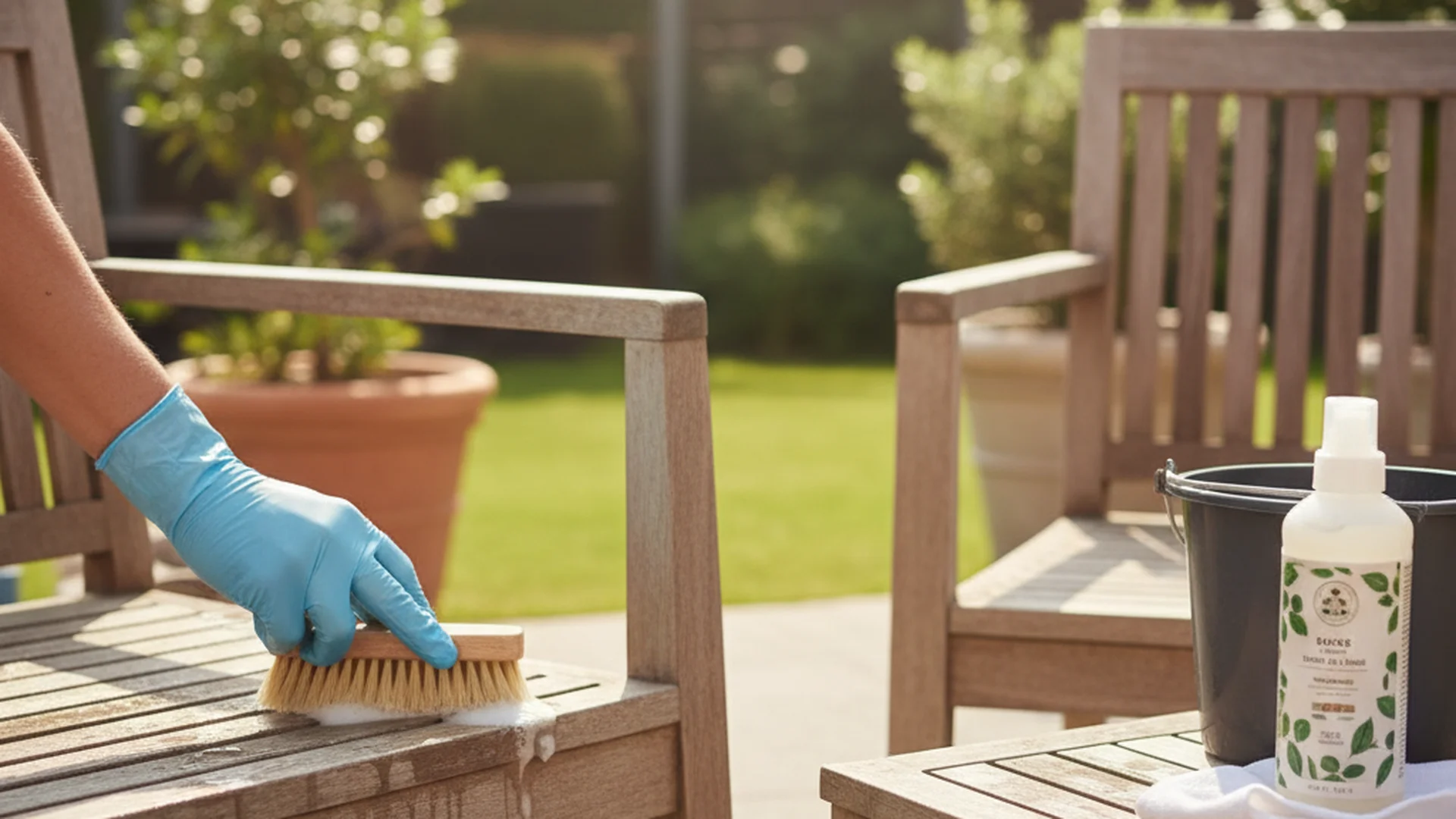
Mix warm water with a mild dish soap (like Dawn). Using a medium-stiffness nylon brush, scrub the boards in the direction of the grain. Work in small sections to ensure the soapy water doesn't dry before you can rinse it off.
Step 5: The Final Rinse
Rinse each section thoroughly. If dirty water is allowed to dry on the surface, it will leave a visible film that makes the deck look dull.
Tip: For stubborn hard water spots, a simple solution of 1 part white vinegar to 1 part water is highly effective and safe for the composite material.
Real-World Cleaning Scenarios
To help you visualize the process, here are three common real-world examples homeowners face.
Example 1: The BBQ Grease Disaster
Imagine a burger patty falls off the grill and sits on the deck for an hour. To clean this, you must act fast. Use hot water and a concentrated degreaser immediately. Because Trex boards are capped, the oil stays on the surface for a short window before it begins to migrate into the grain.
Example 2: The Autumn Leaf Stains
If wet leaves sit on your deck through a rainy November, they may leave "tannin" stains (dark brown spots). In this case, a standard soap wash might not be enough. You will need a deck brightener containing oxalic acid to safely lift the organic pigmentation without damaging the boards.
Example 3: The Winter Snow Removal
When clearing snow, always use a plastic shovel. A homeowner in Minnesota recently learned this the hard way when their metal-tipped shovel left deep, silver gouges across their entire "Tiki Torch" colored deck. Those scratches are permanent and cannot be buffed out.
Dealing with Specific Stains and Issues
| Stain Type | Recommended Cleaning Agent | Tool to Use |
|---|---|---|
| Oil & Grease | Dish Soap or Degreaser | Soft Brush |
| Mold/Mildew | Oxygen-Bleach Cleaner | Nylon Brush |
| Tannins | Oxalic Acid Brightener | Sponge |
| Ice & Snow | Calcium Chloride | Plastic Shovel |
Note: When using ice melt, ensure it is "safe for pets and paws" or specifically labeled as calcium chloride. Avoid rock salts that can be abrasive to the deck's finish.
2025–2026 Trends in Composite Maintenance
The world of outdoor living is evolving, and so are the cleaning methods. In 2025, we are seeing a significant shift toward enzymatic cleaners. These products use natural enzymes to "eat" organic stains like algae and mold. They are safer for the surrounding garden and require significantly less physical scrubbing.
Another trend is the focus on "Cooler-Touch" technology, such as the Trex Transcend Lineage line. While these boards stay cooler in the sun, they have specialized heat-mitigating coatings. If you own these newer lines, it is more important than ever to avoid stiff metal brushes or high-pressure washing, as you don't want to abrade the "cool" finish.
Success: Homeowners who switch from chemical detergents to eco-friendly oxygen bleach (Sodium Percarbonate) report better plant health around their decks and a cleaner, brighter finish on the boards.
Common Mistakes to Avoid
Even well-intentioned homeowners can accidentally damage their Trex deck. Avoid these four common pitfalls:
- Using Chlorine Bleach: Bleach is the enemy of composite decking. It can cause permanent discoloration and eventually break down the recycled plastic fibers.
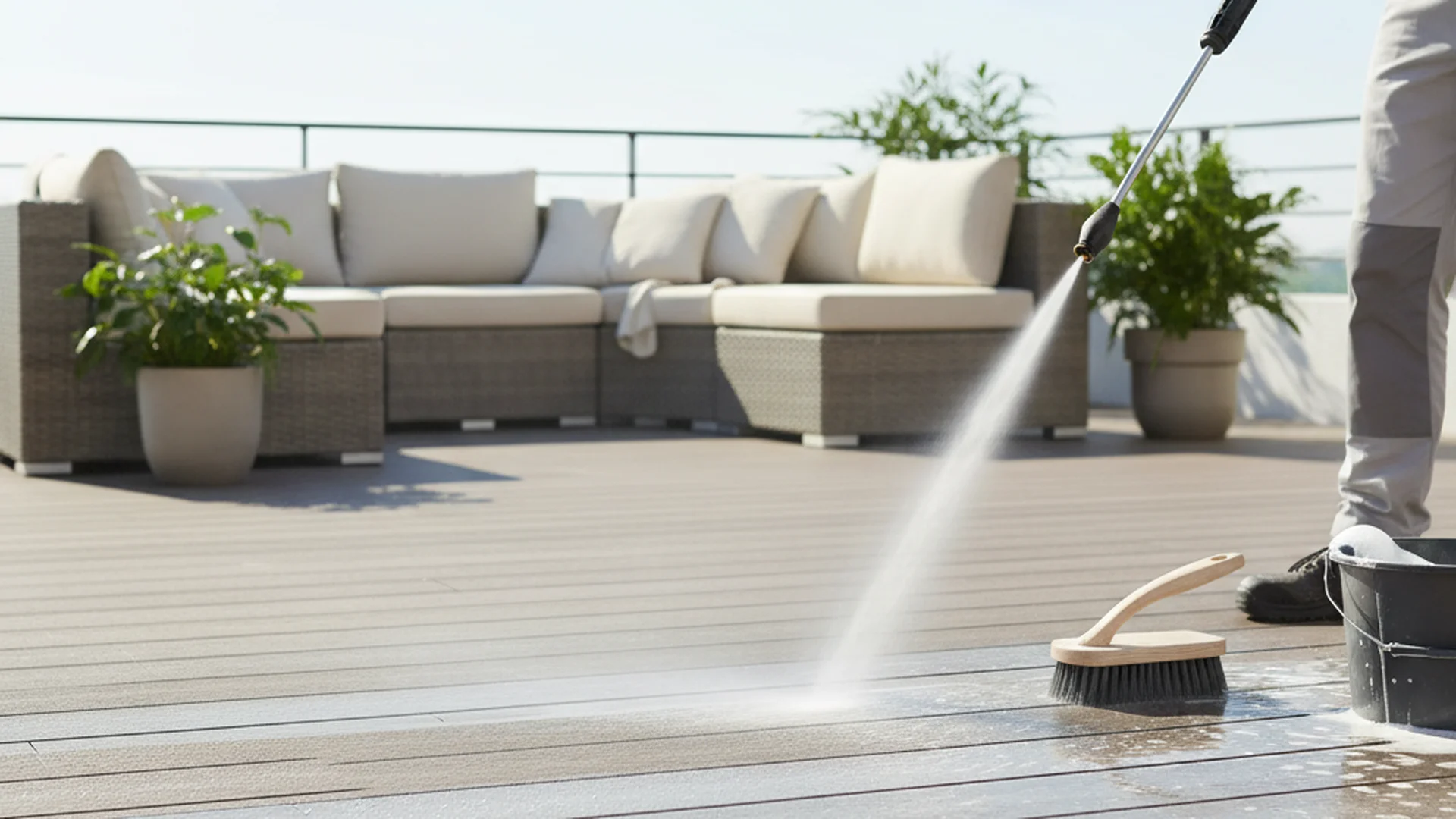
- Improper Pressure Washing: While you can pressure wash Trex, you must use a fan-tip nozzle at no more than 3100 PSI. Keep the wand at least 8 inches away from the surface. For older, "uncapped" Trex (pre-2010), pressure washing is not recommended at all.
- The Wrong Chalk Lines: If you are doing a DIY project, never use red or blue carpenter's chalk. These contain permanent dyes. Use Irwin Strait-Line Dust-Off (Purple) or baby powder instead.
- Neglecting the "Maintenance-Free" Myth: Don't let the marketing fool you. If you go three years without a wash, you will eventually have to deal with a stubborn biofilm that is much harder to remove than a simple twice-a-year rinse.
Frequently Asked Questions
Can I use bleach on my Trex deck?
How often should I clean my deck?
Is it okay to pressure wash Trex?
What is the best homemade cleaner?
Conclusion
Cleaning your Trex deck doesn't have to be a daunting chore. By sticking to a semi-annual schedule and using the right materials—mild soap, soft brushes, and plastic shovels—you can ensure your outdoor oasis remains beautiful for its entire 25-to-50-year lifespan. Remember that a little effort today prevents a permanent stain tomorrow.
Cleaning that keeps score
Every task earns points, every streak multiplies them, and Premium adds a household leaderboard plus a monthly Dustagorgon to beat.
- Free forever
- 30 badges to earn
- Up to 6 in a household
No card needed. Set up your rooms in a couple of minutes.