In this article
What you’ll learn
- Semi-annual cleaning is essential to prevent biofilm and mold growth.
- Never use metal tools or chlorine bleach on modern capped composite boards.
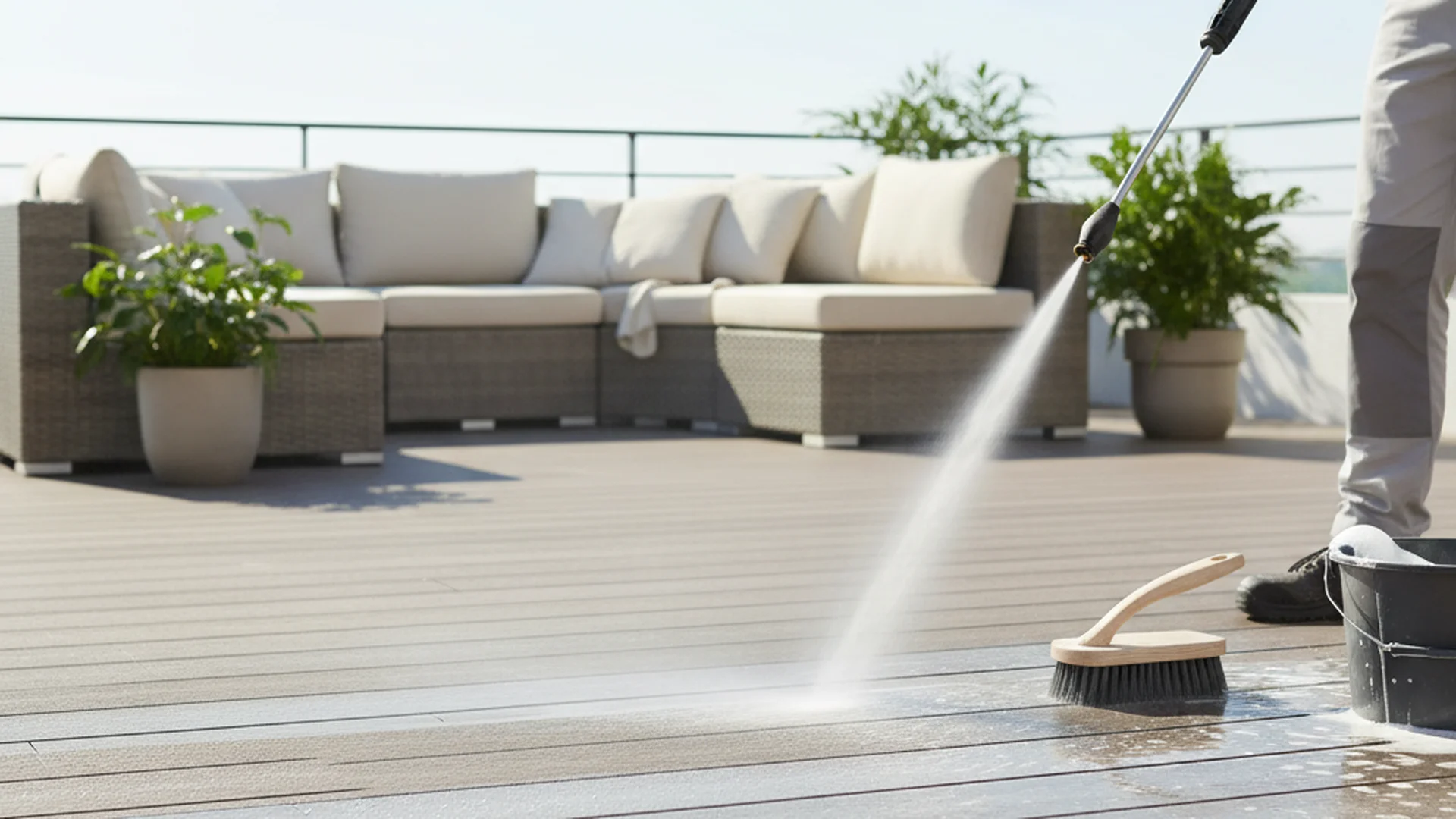
- Pressure washing is safe only under 3,100 PSI with a wide fan-tip nozzle.
As we move into 2025, the landscape of outdoor living has shifted dramatically. However, a common misconception persists: that these decks are "maintenance-free." In reality, they are "low-maintenance," and knowing how to clean composite deck surfaces correctly is the difference between a lifetime warranty and a voided one. In this guide, I will walk you through the professional standards for keeping your outdoor space pristine.
Understanding the Modern Composite Deck (2025 Update)
Before grabbing your scrub brush, it is vital to understand what you are standing on. Approximately 80% of the current market consists of "capped" composite. This means the boards have a protective polymer shell over a core made of recycled wood fibers and plastics (often up to 95% recycled material).
Cleaning a capped board is generally easier because the shell resists deep staining, but it is much more sensitive to physical abrasion. If you use the wrong tools, you can permanently "etch" the surface, ruining the aesthetic of your $20,000 investment.
| Feature | Traditional Wood | Capped Composite (2025 Standard) |
|---|---|---|
| Maintenance Needs | Staining/Sealing every 1-2 years | Soap and water wash twice a year |
| Average Annual Cost | $500 - $1,000 | $20 - $50 |
| Lifespan | 10-15 years | 25-30+ years |
| Stain Resistance | Low | High |
The Essential Cleaning Toolkit
To achieve the best way clean composite deck results, you don’t need expensive machinery. You need the right chemistry and soft tools.
- Soft-bristle nylon brush: Never use wire or stiff "deck" brushes designed for concrete.
- Mild liquid dish soap: Dawn is a professional favorite for its grease-cutting properties.
- Plastic shovel: For winter maintenance—metal is the enemy.
- Garden hose: A standard hose is usually sufficient, though a light pressure washer can be used with caution.
- Oxalic acid cleaner: Only for specific tannin stains (check manufacturer approval).
Tip: If you are looking for an eco-friendly alternative, sodium percarbonate-based cleaners are now the industry standard for 2025. they are biodegradable and safe for the plants surrounding your deck.
The "Pro-Standard" 5-Step Cleaning Process
Following this systematic approach ensures you remove the "biofilm"—that invisible layer of pollen and dust—that serves as food for mold and mildew.
Step 1: Preparation and Clearing
Clear all furniture, grills, and rugs. Use a leaf blower or a standard broom to remove loose debris. Pay close attention to the gaps between boards; if organic matter like pine needles or mulch gets trapped, it can block drainage and lead to rot or mold growth in the substructure.
Step 2: The Pre-Rinse
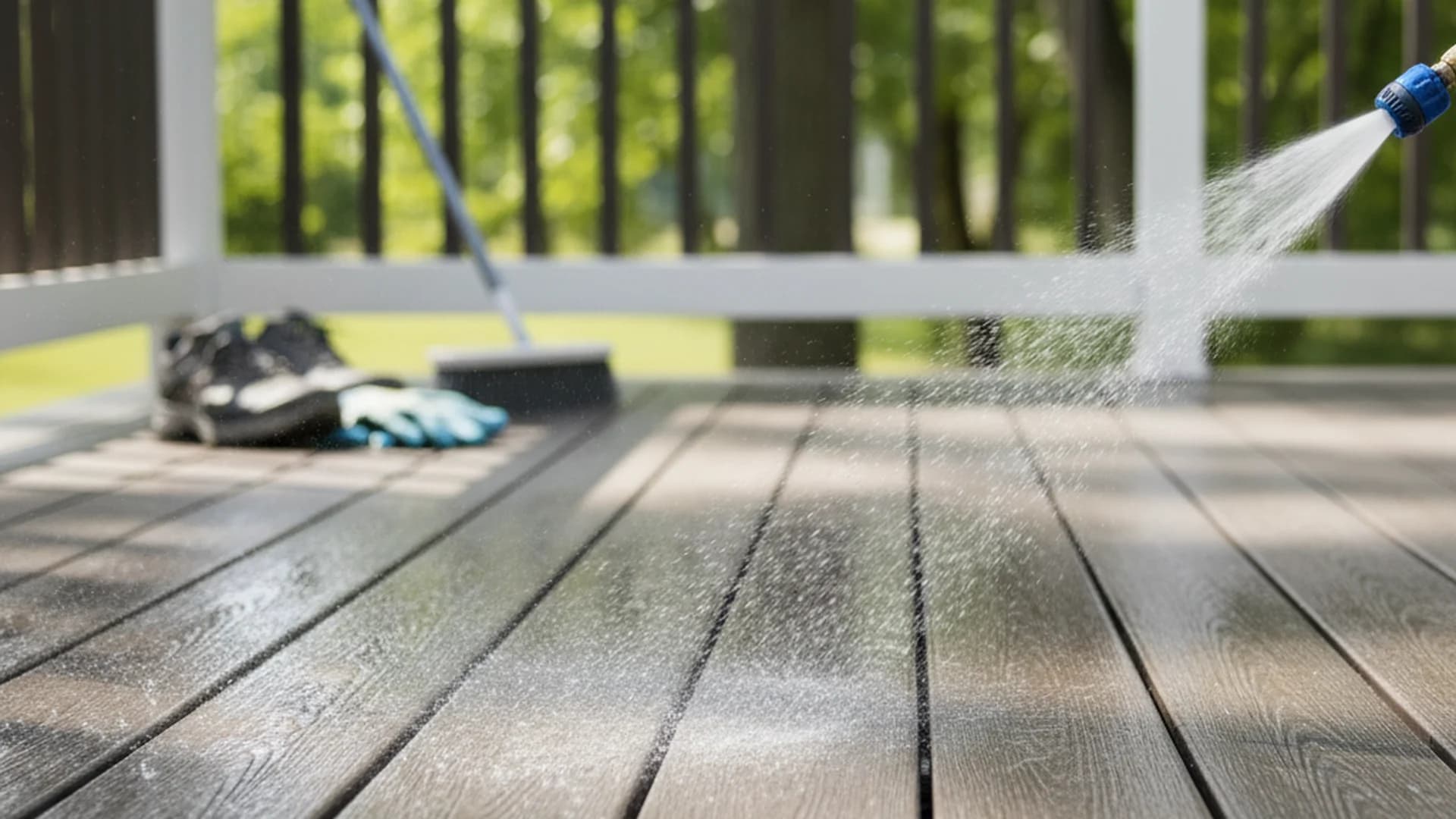
Spray the entire deck with a standard garden hose. This cools the surface (especially important with new "Cool-Touch" boards) and loosens surface-level grime, making the scrubbing phase more effective.
Step 3: Applying the Solution
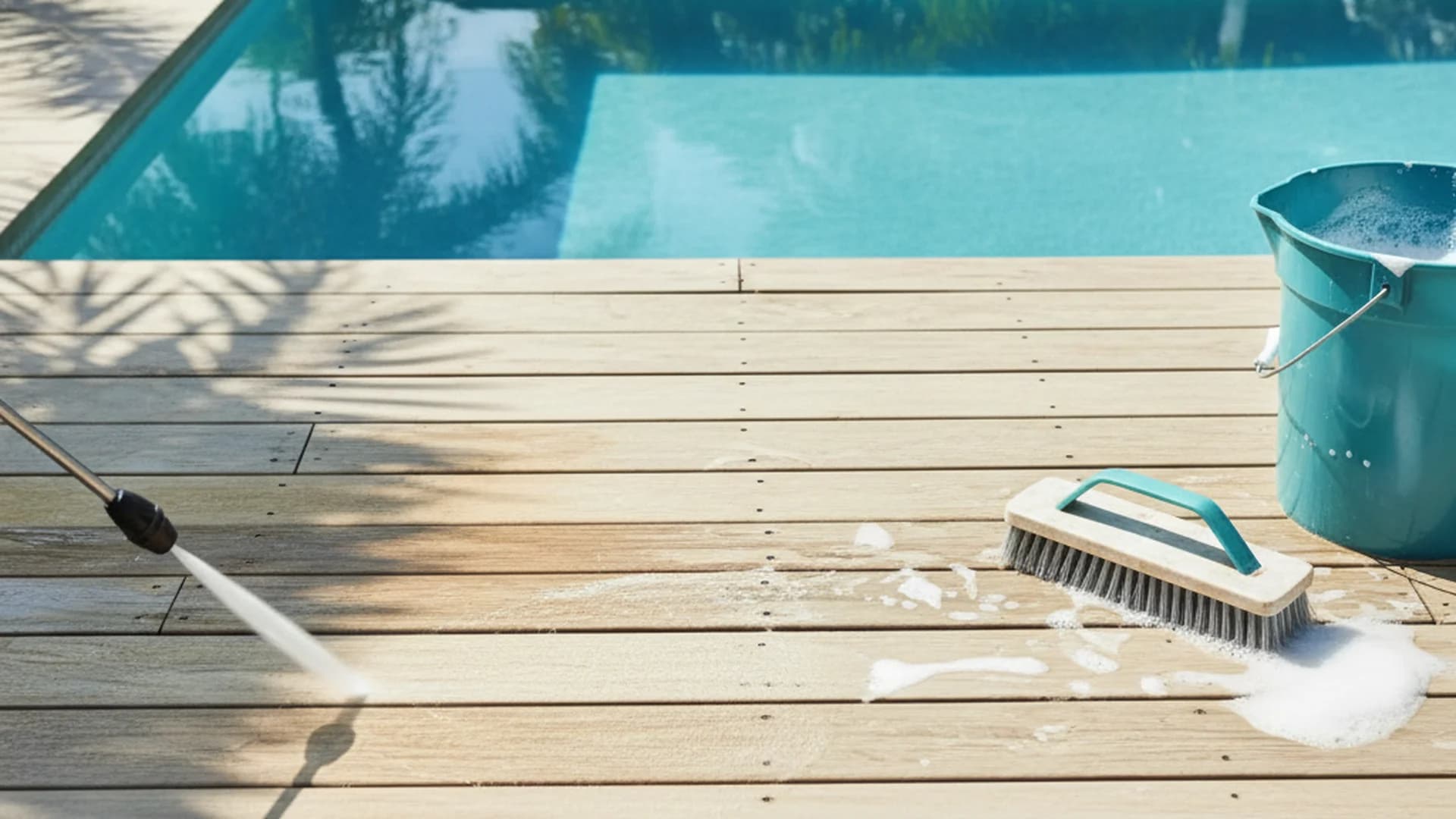
Mix warm water with your mild dish soap in a bucket. If you are dealing with a larger area, you can use a dedicated composite deck cleaner like TimberTech DeckCleaner™.
Warning: Never mix different cleaning chemicals together. Combining bleach-based products with vinegar or ammonia-based soaps can create toxic gases.
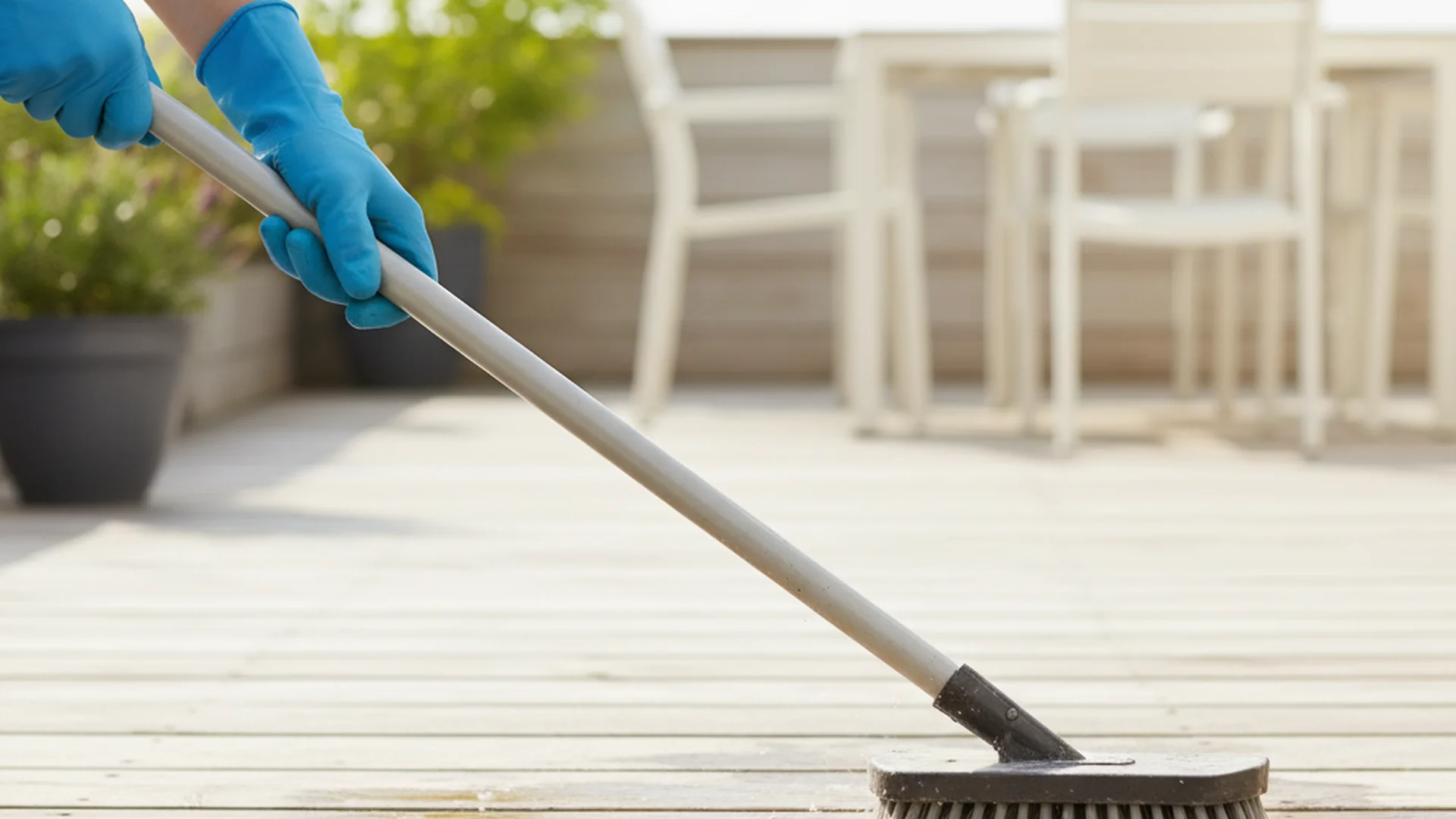
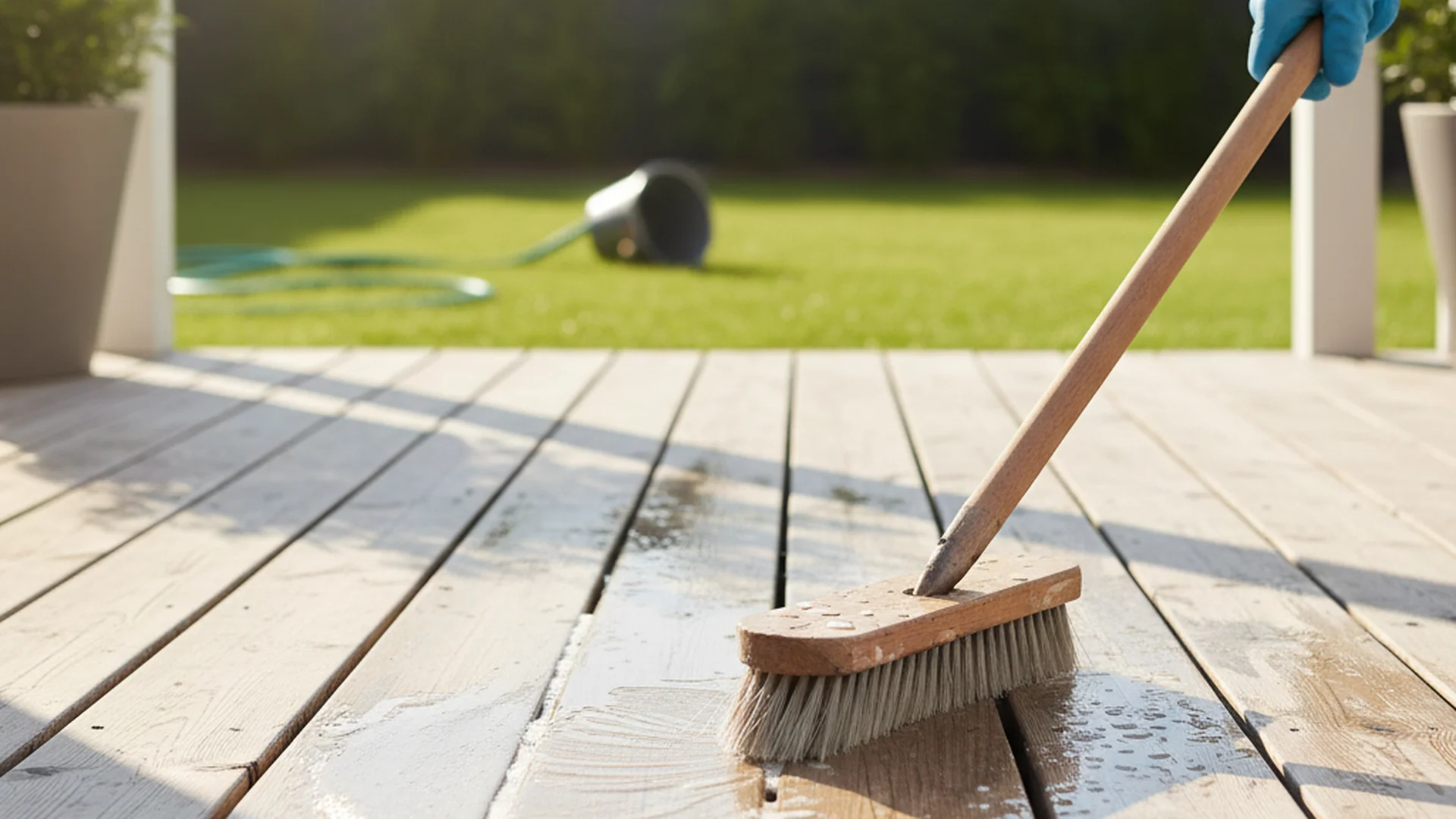
Step 4: The Soft Scrub
Scrub the boards in the direction of the wood grain. This ensures the bristles reach into the embossed texture of the boards.
Example 1: The Pollen Problem. In the spring, a homeowner in Georgia noticed a yellow "haze" on their deck. Rather than using high pressure, they used a soft nylon brush and soapy water. By scrubbing with the grain, they lifted the pollen out of the grooves that a simple rinse would have missed.
Step 5: The Final Rinse
This is the most critical step. You must rinse until the water runs clear and no suds remain. If soap residue dries on the deck, it creates a film that actually attracts dirt faster, leaving your deck looking "cloudy" or "hazy" within days.
Targeted Stain Removal: The BBQ Survival Guide
Accidents happen, especially during the summer grilling season. How you react in the first 48 hours determines if the stain is permanent.
Grease and Oil Stains
If a burger flips off the grill or grease splatters from the smoker, act fast. Capped composites are designed to resist oil, but only for a limited window (usually 7 days). Use a concentrated dab of Dawn dish soap directly on the stain, let it sit for 15 minutes, and then scrub with warm water.
Tannins and Organic Stains
Leaf piles left over the autumn can leave dark "tannin" spots.
Note: For stubborn organic stains from leaves or wood, a cleaner containing oxalic acid is highly effective. Always test a small, inconspicuous area first to ensure it doesn't discolor the polymer cap.
Mold and Mildew
While the boards themselves don't rot, mold can grow on the dirt sitting on the boards. A 1:4 ratio of white vinegar to water is a safe, non-toxic way to kill mold spores without damaging the deck's protective shell.
Winter Care and the "Plastic Shovel" Rule
If you live in a snowy climate, 2025's harsher weather patterns require specific care.
Success: Using calcium chloride or rock salt to melt ice is perfectly safe for most composite brands. Just remember to rinse the salt residue away in the spring to prevent a white "crust" from forming.
Example 2: The Shovel Mistake. A client once used a metal-tipped snow shovel on their new deck. The metal edge caught the "grain" of the composite, peeling back small strips of the polymer cap. These scratches cannot be sanded out. Always use a plastic shovel without a metal wear strip.
Common Mistakes to Avoid
Even seasoned DIYers can make mistakes that void their 25-year warranty. Avoid these at all costs:
- Sanding the Deck: Unlike cedar or pressure-treated pine, you cannot sand composite decking. Most boards have an embossed texture; sanding will create a permanent smooth "bald spot."
- Using Chlorine Bleach: Bleach is too harsh for the recycled plastics in composite. It can wash out the color pigments and make the boards brittle over time.
- Over-Pressurizing: Using a 4,000 PSI commercial power washer can "delaminate" the board's surface.
- Using Wire Brushes: Metal bristles will create micro-scratches that hold onto dirt, making the deck harder to clean in the long run.
2026 Trends: The Future of Deck Maintenance
Looking ahead to 2026, we are seeing the rise of Rice Hull Composites (like ACRE). These materials contain no wood fibers at all and are even more resistant to water. Additionally, "Cool-Touch" technology is becoming standard. These boards use heat-reflective pigments to keep feet cool. When cleaning these, avoid abrasive chemicals that could potentially thin the reflective coating over decades of use.
Example 3: Robotic Maintenance. Some high-end homes are now utilizing "deck-roaming" vacuum robots similar to pool cleaners. While these help with debris, they do not replace the semi-annual deep scrub required to remove biofilm.
Frequently Asked Questions
Can I use a pressure washer on my composite deck?
What is the best way clean composite deck boards that have turned grey?
Is vinegar safe for cleaning composite decking?
How do I remove rust stains from patio furniture?
Conclusion
Investing in a composite deck is a commitment to a beautiful, long-lasting outdoor space. By following the "Pro-Standard" 5-step method and avoiding common pitfalls like metal tools and harsh bleach, you ensure your deck remains the envy of the neighborhood well into the 2030s. Remember, the best way clean composite deck surfaces is with consistency, not intensity. A gentle scrub twice a year will protect your 25-year warranty and keep your boards looking brand new.
Success: Regular maintenance doesn't just keep the deck looking good; it prevents the buildup of organic matter that can eventually damage the wooden frame underneath.
Cleaning that keeps score
Every task earns points, every streak multiplies them, and Premium adds a household leaderboard plus a monthly Dustagorgon to beat.
- Free forever
- 30 badges to earn
- Up to 6 in a household
No card needed. Set up your rooms in a couple of minutes.