In this article
What you’ll learn
- 304 Grade Stainless Steel requires specific pH-neutral cleaning to prevent pitting.
- Monthly deep cleans can extend appliance lifespan by up to 30%.
- Avoid power washers and wire brushes to prevent permanent material damage.
In 2025, the backyard is no longer just a place for a portable grill; it has evolved into a high-tech "staycation" hub. As homeowners invest more in luxury alfresco spaces, learning how to clean outdoor kitchen setups correctly has become essential for protecting these multi-material investments. Whether you have a sleek minimalist setup or a full smart-integrated culinary station, environmental pollutants, salt air, and grease are constant threats. Proper maintenance ensures your high-end appliances perform efficiently and look stunning for years to come.
The Evolution of Outdoor Kitchen Care
We are moving away from the "hose it down" mentality. Modern outdoor kitchens utilize high-grade materials like 304 Grade Stainless Steel, which offers superior rust resistance due to its high chromium and nickel content. However, even this industry-standard material can suffer from "pitting" or surface corrosion if not maintained.
Experts suggest that a consistent maintenance schedule can extend the life of your appliances by 25-30%. With the 2026 trend focusing on IoT-integrated (Internet of Things) appliances, your cleaning routine now involves more than just scrubbing—it involves protecting sensitive sensors and touchscreens.
The Best Way to Clean Outdoor Kitchen Surfaces
When determining the best way clean outdoor kitchen surfaces, you must categorize your materials. A "one-size-fits-all" cleaner does not exist for an outdoor environment.
Stainless Steel Mastery
Stainless steel is the backbone of the modern outdoor kitchen. To maintain its luster, you must understand the "grain."
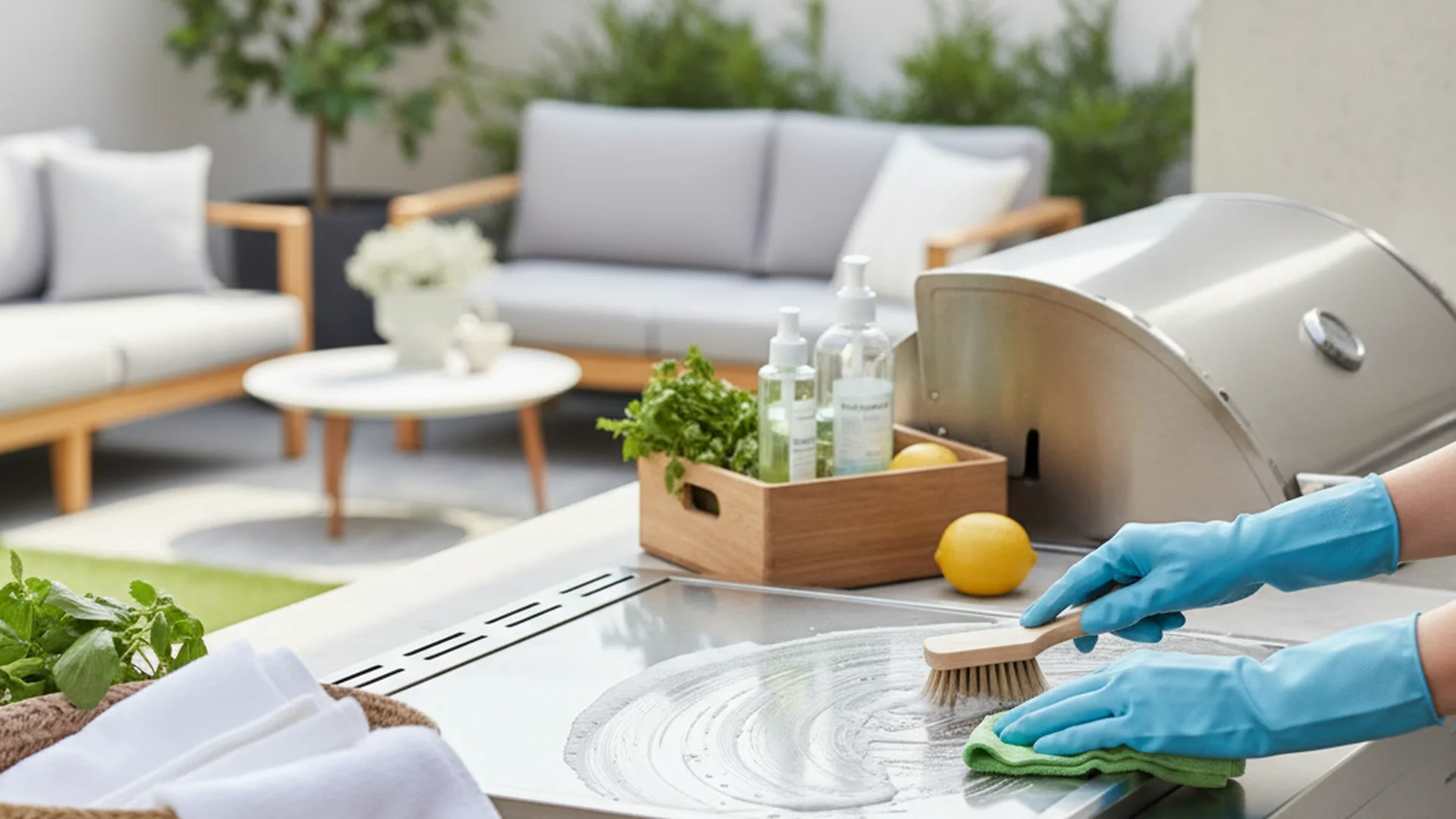
- Routine Wash: Use mild dish soap and warm water with a microfiber cloth.
- Deep Cleaning: For stubborn spots, create a paste of baking soda and water. Apply it gently, let it sit, and rinse thoroughly.
- The Golden Rule: Always wipe with the grain of the metal to avoid micro-scratches.
Tip: Avoid any cleaning products containing chlorides or bleach. These chemicals cause an immediate chemical reaction that leads to irreversible oxidation (rust) on stainless steel.
Natural Stone and Quartz Countertops
Whether you have granite, marble, or the new 2025-generation UV-safe quartz, chemical sensitivity is high.
- Natural Stone: Must be resealed every 6–12 months. This prevents oils and food pigments from penetrating the porous surface.
- UV-Safe Quartz: Unlike indoor versions, 2025-2026 outdoor quartz is engineered to resist yellowing from sunlight. Use only non-abrasive, pH-neutral cleaners to keep the protective coating intact.
Warning: Never use vinegar or lemon-based cleaners on natural stone. The acid will "etch" the surface, leaving dull, permanent spots that look like water rings.
Step-by-Step Deep Cleaning Checklist
To keep your kitchen in peak condition, follow this structured approach once a month during the peak season.
1. The "Warm Grill" Technique
Cleaning a grill is significantly easier when the grates are slightly warm (around 250°F). At this temperature, grease and carbonized food particles are more pliable. Use a nylon-bristled brush or a wooden scraper rather than a wire brush.
2. Refrigeration and Gaskets
Outdoor refrigerators work harder than indoor ones due to ambient temperature fluctuations.
- Wipe the interior with a solution of baking soda and water to kill odors.
- The Pro Move: Apply a very thin layer of petroleum jelly to the rubber door gaskets. This keeps them supple and prevents cracking during extreme heat or cold.
3. Cabinet Ventilation and Pest Control
Outdoor cabinets often fall victim to mold or pests.
- Ensure your "vash-style" vents are clear of debris to allow airflow.
- Wipe down the interior of cabinets monthly to remove crumbs that attract rodents.
Success: Regular maintenance prevents the buildup of "biofilms"—the thin layers of bacteria that can form on outdoor surfaces, leading to odors and food safety issues.
2025-2026 Trends in Outdoor Maintenance
As we look toward 2026, technology is making the "how to clean outdoor kitchen" dilemma much easier to manage.
App-Driven Grease Management
Many 2026 grill models now feature automated grease management systems. These systems track grease accumulation and send an alert to your smartphone when the drip tray is 80% full. This significantly reduces the risk of grease fires, which are the leading cause of outdoor kitchen damage.
Robotic Assistance
Following the success of indoor robot vacuums, we are seeing the rise of specialized outdoor cleaning robots. These devices are designed to traverse patios and can even be programmed to scrub specific surface areas, allowing homeowners to enjoy their space rather than laboring over it.
Eco-Conscious "Green" Cleaning
There is a 35% increase in demand for enzyme-based degreasers. These products use natural proteins to "eat" grease and organic matter. They are biodegradable and safe for the surrounding lawn and garden beds, making them the preferred choice for eco-conscious homeowners in 2025.
Real-World Examples
- The Coastal Homeowner: In environments with high salt air, a homeowner in Florida found that rinsing their 304-grade stainless steel with fresh water every 48 hours prevented the "tea staining" (brown surface rust) common in marine climates.
- The Tech Enthusiast: Using a 2026 Wi-Fi-enabled smoker, a user avoided a major flare-up because the app alerted them to a grease buildup in the secondary tray that wasn't visible from the outside.
- The Seasonal Host: A family in a cold climate successfully "winterized" their kitchen by draining water lines and using breathable covers. They avoided the common mistake of airtight plastic covers, which trap moisture and cause "micro-pitting."
Common Mistakes to Avoid
- Using a Power Washer: It is tempting to blast away dirt, but power washing can destroy stone sealants, dent metal panels, and force water into the delicate electronics of smart appliances.
- The Wire Brush Danger: Metal bristles can break off, stick to the grill grates, and end up in your food. This is a major health hazard. Switch to nylon or wood.
- Cleaning in Direct Sunlight: Never clean your kitchen at high noon. Cleaning products dry too fast in the sun, leaving permanent streaks or "burning" the finish of your high-end appliances. Always aim for the "golden hour" or when the area is shaded.
- Ignoring the Drip Tray: This is the most common cause of outdoor fires. A full tray can ignite during a high-heat sear, potentially destroying the entire kitchen structure.
| Material | Recommended Cleaner | Frequency |
|---|---|---|
| 304 Stainless Steel | pH-Neutral Soap / SS Polish | Weekly Wipe / Monthly Polish |
| Granite/Marble | Stone-Safe Cleaner | Daily Wipe / Annual Seal |
| Grill Grates | Nylon Brush / Steam | Every 5-10 Uses |
| Cabinet Interiors | Mild Degreaser | Every 3 Months |
Note: If you live in a region with hard water, always hand-dry your stainless steel after cleaning to prevent unsightly calcium spots.
Frequently Asked Questions
How often should I deep clean my grill?
Can I use a power washer on my outdoor kitchen?
What is the best way to clean stainless steel without scratching it?
Do outdoor countertops need to be sealed?
How do I prevent mold in outdoor cabinets?
Conclusion
Cleaning an outdoor kitchen in the modern era is about more than aesthetics; it is about protecting a sophisticated investment. By using the right tools—like enzyme-based cleaners and microfiber cloths—and avoiding common pitfalls like wire brushes and bleach, you can ensure your "staycation" space remains a highlight of your home. Remember, consistency is the secret to longevity. A quick weekly wipe-down and a monthly deep clean will keep your 304-grade steel and UV-safe quartz looking brand new for years to come.
Success: By following this 2025-2026 maintenance guide, you can increase your appliance longevity by nearly a third while maintaining a safe, hygienic environment for your family and guests.
Cleaning that keeps score
Every task earns points, every streak multiplies them, and Premium adds a household leaderboard plus a monthly Dustagorgon to beat.
- Free forever
- 30 badges to earn
- Up to 6 in a household
No card needed. Set up your rooms in a couple of minutes.