In this article
What you’ll learn
- Use a material-first approach to avoid damaging high-value outdoor assets.
- Mild dish soap remains the gold standard for most surfaces.
- Avoid pressure washers on wood and wicker to prevent structural damage.
As we move into the 2025–2026 season, the concept of the "outdoor room" has reached new heights. However, a luxury teak set or a modular aluminum sofa is only as good as its maintenance routine. Learning how to clean outdoor furniture properly is no longer just a chore—it is a critical strategy for protecting an investment that can range from $2,000 to over $15,000.
Whether you are dealing with pollen buildup, bird droppings, or the inevitable oxidation of metal frames, knowing the best way how to clean outdoor furniture ensures your patio remains an oasis rather than a maintenance nightmare. In this guide, we will break down the latest expert-recommended techniques, eco-friendly solutions, and material-specific strategies to keep your outdoor space looking brand new.
Why a Material-First Approach is Essential
In my years as a professional cleaning consultant, I have seen thousands of dollars worth of furniture ruined by a "one-size-fits-all" cleaning mentality. Modern outdoor furniture is engineered from a variety of materials, from traditional hardwoods to recycled high-density polyethylene (HDPE). Each requires a specific touch. Using the wrong chemical or tool can lead to splintering wood, frayed wicker, or stripped powder coatings.
Before you grab the garden hose, identify exactly what your furniture is made of. Most sets today utilize a mix of aluminum, sustainable woods like acacia, and performance fabrics like Sunbrella.
How to Clean Wood Outdoor Furniture (Teak, Acacia, and Eucalyptus)
Wood remains the king of the patio, holding roughly 46% of the market share. While beautiful, it is also the most reactive to environmental changes.
The Standard Cleaning Process
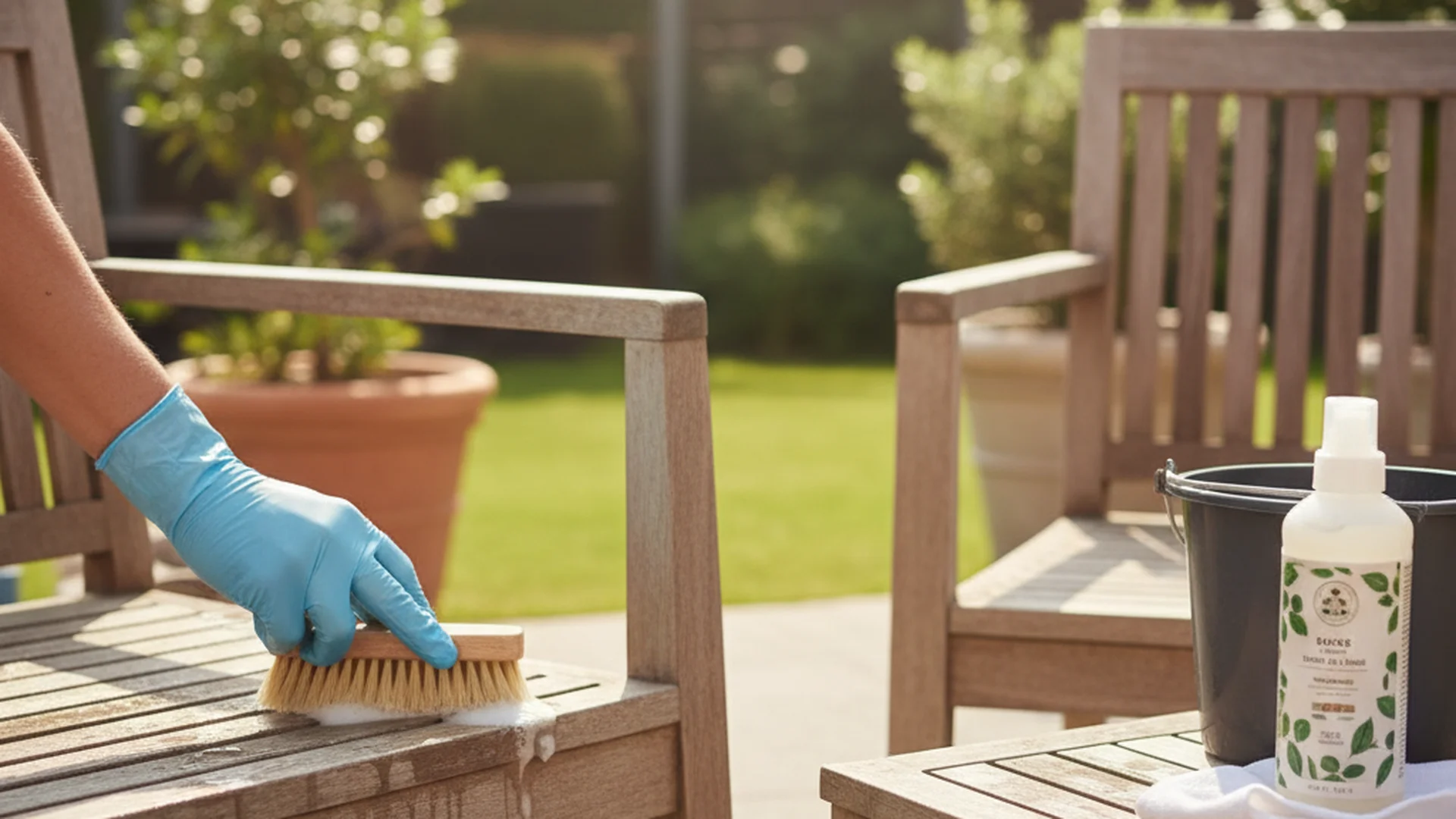
To clean wood furniture, start by removing loose debris with a soft-bristle brush. Mix a solution of one tablespoon of mild dish soap (like Dawn) with a gallon of warm water. Scrub gently in the direction of the wood grain. This is one of the most important how to clean outdoor furniture tips: never scrub across the grain, as this can create micro-tears that trap moisture and lead to rot.
Managing the Patina
Many homeowners love the "silver-gray" patina that teak develops over time. If you prefer the original golden hue, you must apply a UV-protectant sealer or teak oil at least once a year after a deep clean.
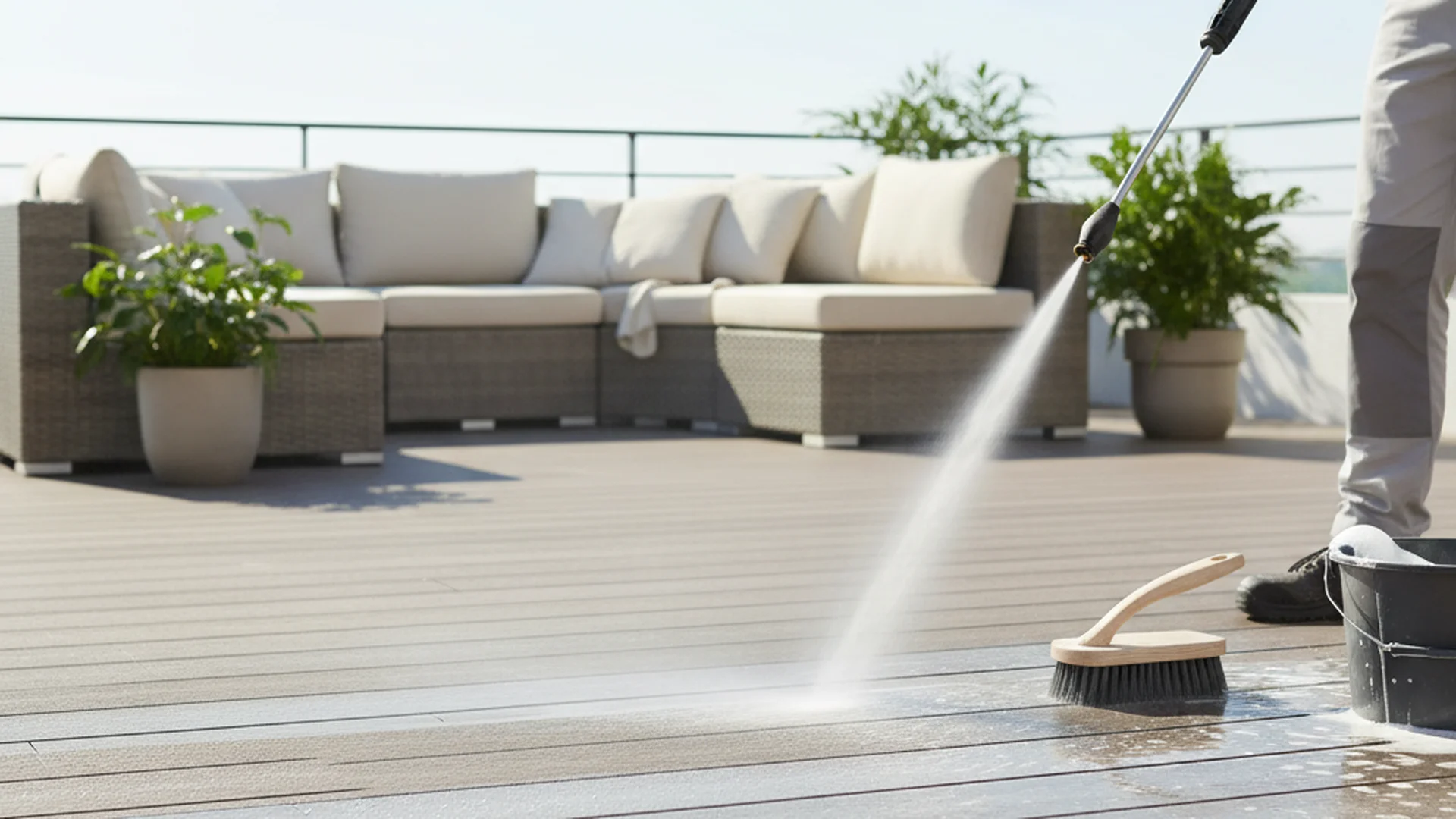
Warning: Never use a pressure washer on wood furniture. Even at low settings, the concentrated stream can splinter the wood fibers, leading to permanent damage and a rough texture that is uncomfortable to sit on.
Real-World Example: Restoring an Acacia Dining Set
A client recently contacted me regarding an acacia wood set that had turned grey and developed black spots. By using a gentle enzyme-based cleaner to break down the mold and scrubbing with the grain, we were able to reveal the rich wood tones underneath without the need for heavy sanding.
Cleaning Metal Furniture: Aluminum and Wrought Iron
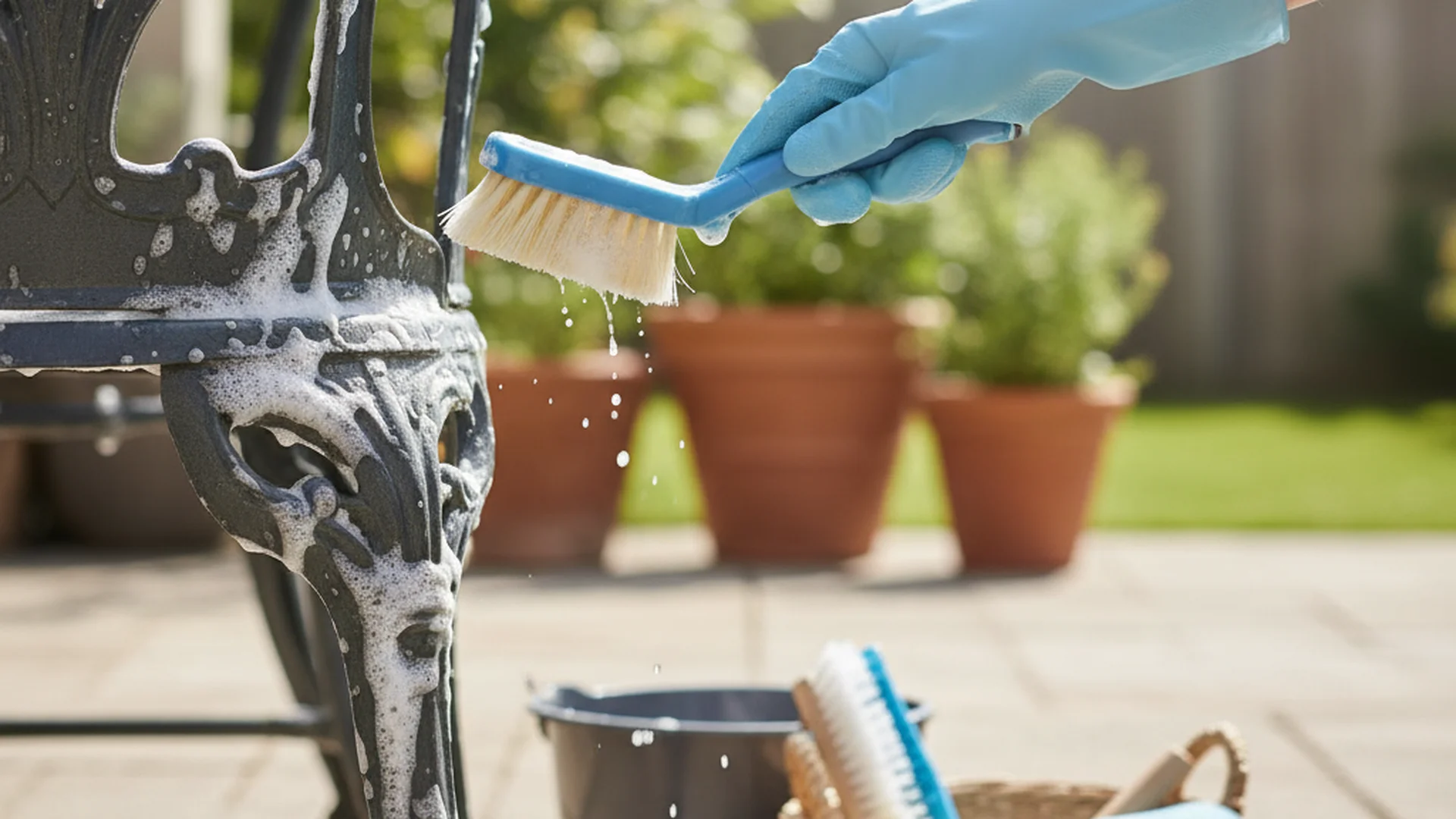
Metal furniture is prized for its durability, but it isn't invincible. The primary enemies are oxidation and trapped moisture.
Aluminum Care
Most modern aluminum furniture is powder-coated. To clean it, use a non-abrasive sponge and soapy water. Avoid steel wool or stiff wire brushes, as these create micro-scratches in the coating. Once these scratches occur, moisture can get underneath, causing the paint to bubble and peel.
The "Weep Hole" Check
One of the most overlooked aspects of metal furniture maintenance is checking the "weep holes." Most hollow metal frames have small holes designed to allow internal condensation to drain.
Tip: Every spring, use a small wire or paperclip to ensure the weep holes in your metal furniture frames are clear. If water stays trapped inside, it can freeze during winter and crack the metal frame from the inside out.
The Secret Weapon: Automotive Wax
For the best way how to clean outdoor furniture made of metal, experts recommend applying a thin coat of high-quality automotive wax to the frames after cleaning. This provides an extra layer of UV protection and makes it harder for dirt and pollen to stick to the surface.
Wicker and Rattan: The "Dry Suds" Method
Natural wicker and synthetic resin wicker (all-weather wicker) require a delicate touch. Because of the complex weave, dirt and dust love to hide in the crevices.
Step 1: Vacuum First
Before getting the furniture wet, use a vacuum cleaner with a brush attachment to pull loose dust out of the weave. If you apply water directly to a dusty wicker chair, you will simply create a muddy paste that settles deeper into the fibers.
Step 2: The Foam Technique
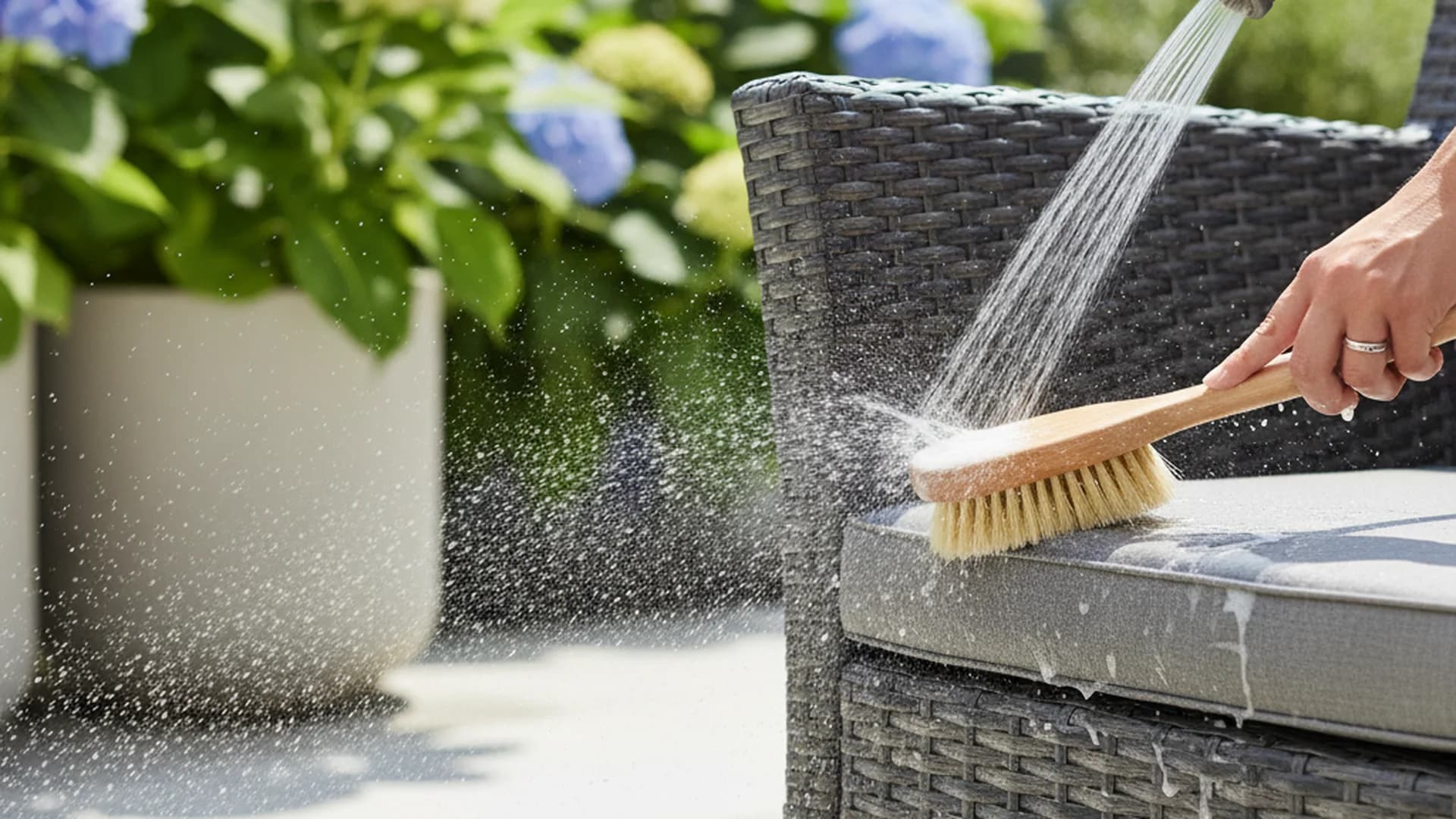
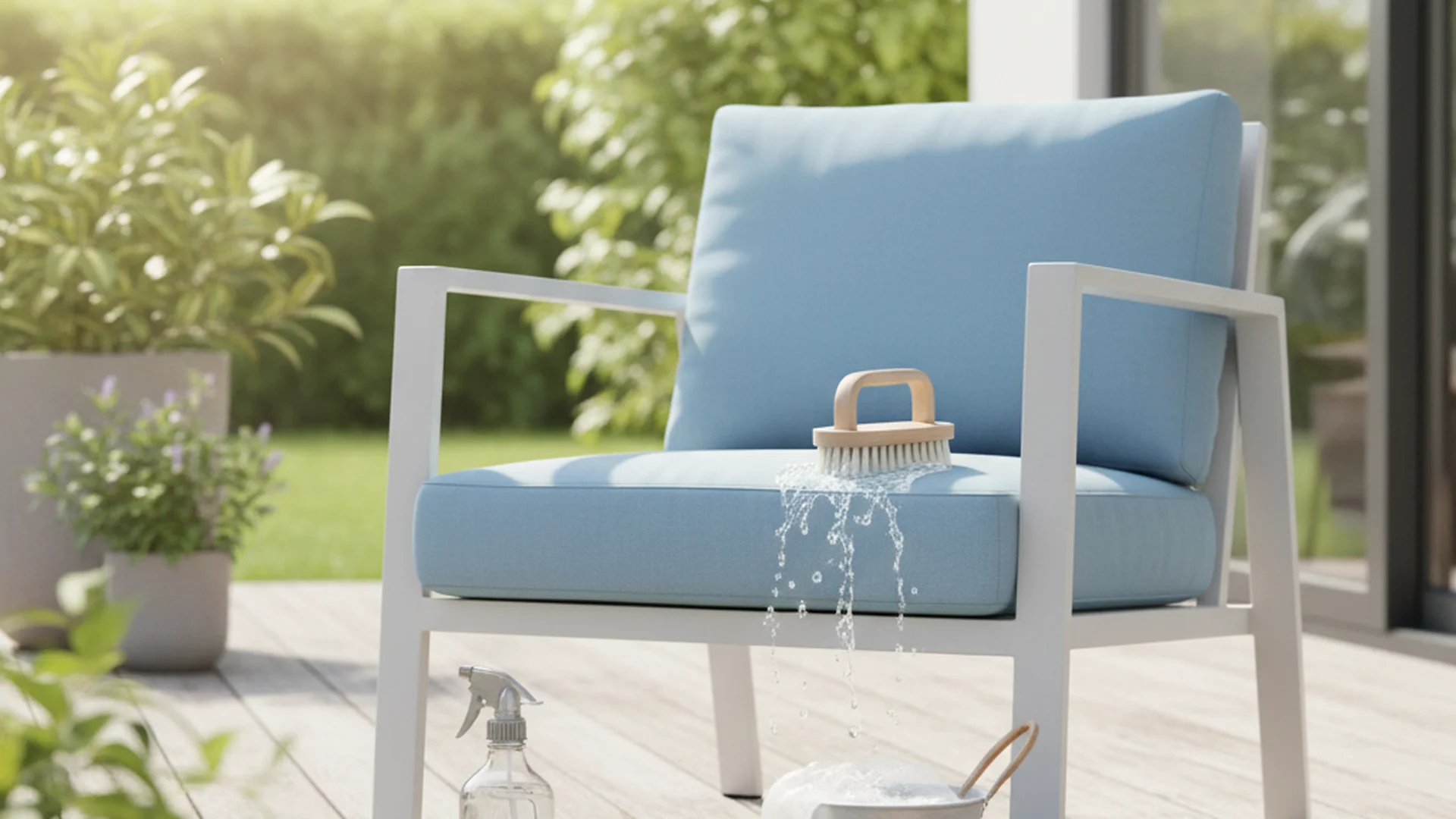
To avoid soaking the material (which can cause natural wicker to sag or rot), use "dry suds." Agitate your soapy water until a thick foam forms on top. Dip your cloth or brush only into the foam and use that to wipe down the wicker.
Note: Synthetic resin wicker (HDPE) is much more resilient than natural rattan and can handle a direct spray from a garden hose, but you should still avoid high-pressure settings.
High-Tech Materials and 2025 Trends
As we look toward 2025 and 2026, we see a massive shift toward "Sustainable Luxury." Search interest for eco-friendly materials has spiked by 187%, leading to the rise of HDPE poly-lumber (often made from recycled milk jugs).
Cleaning Poly-Lumber
This is the one exception to the pressure washer rule. High-quality HDPE poly-lumber can withstand up to 1,500 PSI, making it one of the easiest materials to maintain. It never needs staining or sealing, but it does benefit from a seasonal scrub with an enzyme-based cleaner to remove organic matter like bird droppings or tree sap.
Smart Furniture and Electronics
The rise of modular furniture with integrated LED lighting and USB ports requires "dry cleaning" methods.
Warning: Never spray water directly onto furniture components that house electronics. Instead, use microfiber cloths and specialized electronic-safe wipes to clean around charging ports and light strips.
Professional Tips for Cushions and Fabrics
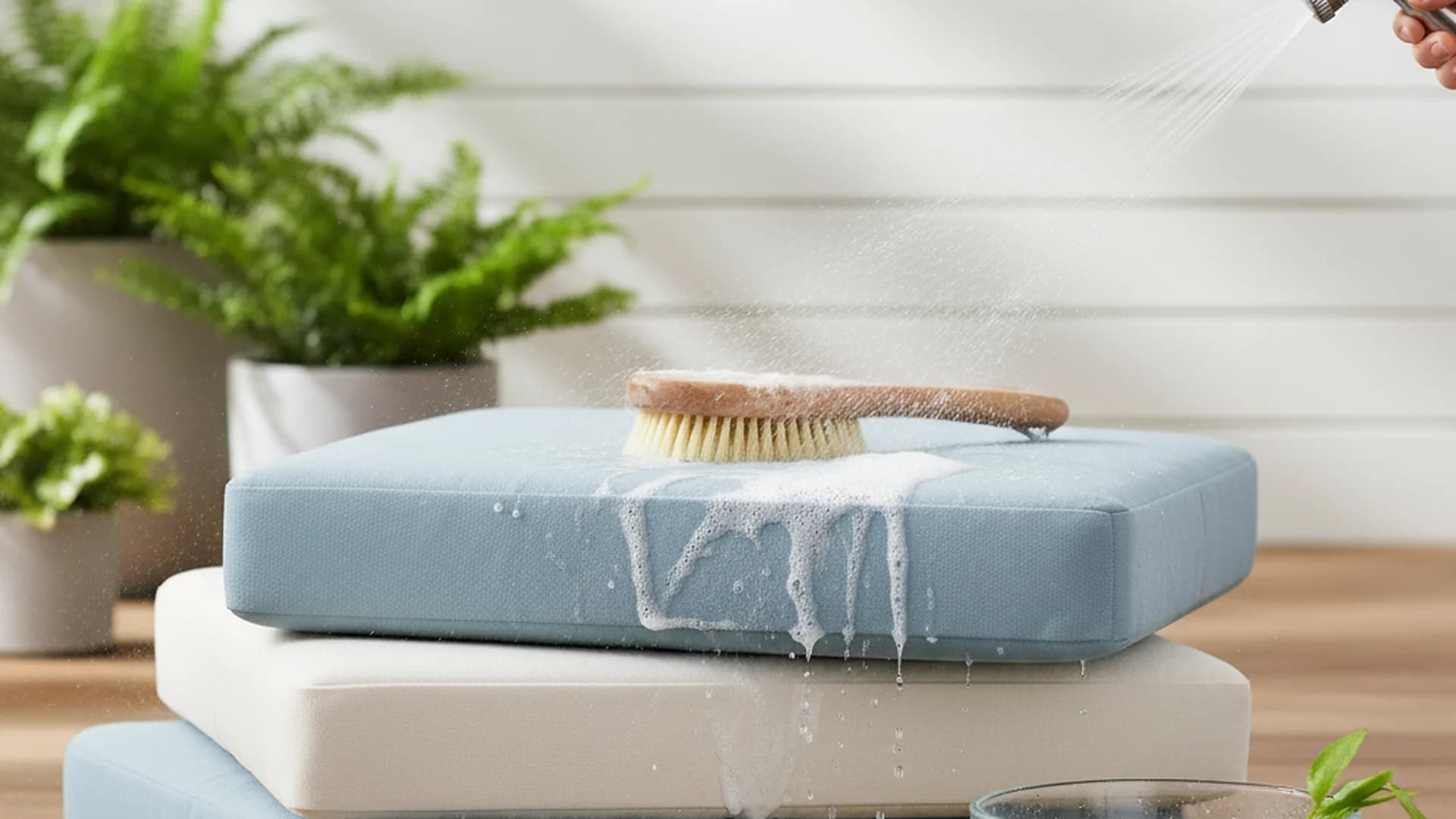
Even the cleanest frame looks bad if the cushions are covered in mildew. Most high-end outdoor fabrics (like Sunbrella) are solution-dyed, meaning the color goes all the way through the fiber.
| Fabric Type | Recommended Cleaner | Bleach Safe? |
|---|---|---|
| Solution-Dyed Acrylic | Mild Soap / Vinegar | Yes (Diluted) |
| Polyester (Printed) | Mild Soap Only | No |
| Olefin | Mild Soap | Yes |
Removing Mildew
If you discover mildew, a solution of 1 cup bleach, 1/4 cup mild soap, and 1 gallon of water is effective for solution-dyed fabrics. However, for a more eco-friendly approach that won't harm your lawn, a 50/50 mix of white vinegar and water is often just as effective at killing mold spores.
Drying Strategy
After cleaning, never leave your cushions flat on the ground.
Success: Stand cushions on their side (on their edge) to dry. This allows water to drain out of the seams and foam much faster, preventing that "musty" smell that occurs when cushions stay damp for too long.
Common Mistakes to Avoid
Even with the best intentions, it’s easy to make a mistake that shortens the lifespan of your furniture. Here are the most frequent blunders I see in the field:
- The Bleach Blunder: Using bleach on colored plastic or non-solution-dyed fabrics. This causes "chalking" on plastic, making it look dull and white, and leads to permanent fading on fabrics.
- Ignoring the Underside: Most people only clean what they see. Mold and spider webs almost always start on the underside of tables and inside the joints of chairs.
- Sun-Drying Pitfall: While the sun is a disinfectant, drying wood furniture in direct, intense sunlight immediately after a deep soak can cause the wood to shrink too fast, leading to cracks. Always air-dry in a shaded, well-ventilated area.
- Storing While Damp: Never put covers on your furniture or move it into a shed if it is even slightly damp. This creates a "greenhouse effect" for mold.
Frequently Asked Questions
Can I use a pressure washer on my patio furniture?
Is Dawn dish soap safe for all materials?
How do I remove bird droppings without staining?
How often should I clean my outdoor furniture?
Conclusion
Mastering how to clean outdoor furniture is about more than just aesthetics; it is about protecting a significant investment in your home's living space. By following a material-specific approach and embracing the eco-friendly, enzyme-based cleaning trends of 2025, you can ensure your outdoor pieces remain beautiful and functional for a decade or more. Remember: start with the mildest method possible, always check your weep holes, and never store your furniture until it is 100% dry.
Success: Regular maintenance not only doubles the lifespan of your furniture but also maintains the resale value of your home by keeping your outdoor "curb appeal" at its peak.
Cleaning that keeps score
Every task earns points, every streak multiplies them, and Premium adds a household leaderboard plus a monthly Dustagorgon to beat.
- Free forever
- 30 badges to earn
- Up to 6 in a household
No card needed. Set up your rooms in a couple of minutes.