In this article
What you’ll learn
- Kitchen windows require degreasing agents like Dawn dish soap to break down atomized oils.
- Never clean in direct sunlight to avoid streaks caused by rapid evaporation.
- Directional wiping (vertical inside, horizontal outside) helps identify exactly where streaks are located.
The kitchen is the heart of the home, but it is also the primary source of airborne grease, steam, and food particles. If you have ever looked at your glass and noticed a stubborn, cloudy film that refuses to budge, you are likely dealing with more than just dust. Learning how to clean kitchen window panes effectively requires a specific strategy to tackle the unique chemical bond between cooking oils and environmental debris. When you master the best way clean kitchen window surfaces, you don't just improve your view—you transform the entire atmosphere of your workspace.
Why Kitchen Windows Require Special Care
Cleaning a kitchen window is fundamentally different from cleaning a bedroom or living room window. In a typical living area, the primary culprit is dust. In a kitchen, every time you sauté, boil, or fry, tiny particles of "atomized" cooking oil are released into the air. These oils settle on the glass and act as an adhesive for dust and flour particles.
Recent data from window maintenance experts suggests that dirty windows can reduce natural light transmission by up to 40%. In a kitchen, where task lighting is critical for safety and precision, this accumulation significantly dims your workspace. Furthermore, maximizing natural light through clean windows can reduce the need for artificial lighting by 30–50% during daylight hours, leading to measurable savings on your utility bills.
Warning: Glass is a porous material. If kitchen grease and hard water minerals are left for too long, they can "etch" into the glass, causing permanent cloudiness that no amount of cleaning can fix.
The Professional Tool Kit
Before you begin, stop reaching for the blue window spray and the paper towels. Professionals avoid these for a reason.
- The Solution: 2 gallons of warm water mixed with 1 teaspoon of Dawn dish soap.
- The Applicator: A microfiber washer or a soft sponge.
- The Scrubber: A white non-abrasive scrub pad (avoid green pads).
- The Squeegee: A professional-grade rubber squeegee.
- The Cloths: Lint-free microfiber towels or an old 100% cotton T-shirt.
Tip: Professional window cleaners often advise against ammonia-based "blue" sprays because they can leave a film that creates a static charge, actually attracting kitchen dust and flour particles back to the glass.
Step-by-Step: The Best Way to Clean Kitchen Windows
Step 1: The Dry Pre-Wash
Never spray liquid directly onto a dusty kitchen window. If your window has a layer of flour dust or outdoor grit, adding liquid immediately creates a "muddy mess" that is difficult to clear and can scratch the glass.
Real-World Example: Imagine someone baking bread near a window. The fine flour settles on the glass. If you spray a liquid cleaner directly onto that flour, it turns into a paste that gets pushed into the corners of the frame, making the job twice as hard. Use a dry microfiber cloth or a soft brush to remove loose debris first.
Step 2: Apply the Grease-Cutting Solution
Dip your applicator into the Dawn and water solution. Dawn is specifically engineered to break down animal and vegetable fats, making it the gold standard for kitchen grease. Apply the solution generously to the glass, working from the top down.
Step 3: Scrub the "Gunk"
For areas near the stove, you may see yellowed spots. Use your white non-abrasive scrub pad to gently agitate these areas.
Note: Never use the green "scouring" side of a sponge or steel wool. This can create micro-scratches that make the glass appear hazy and allow grease to bond even more tightly to the surface in the future.
Step 4: The Squeegee Technique
For a streak-free finish, the squeegee is your best friend. Start at the top corner and pull the squeegee across the glass in a single, smooth motion.
Success: Wipe the squeegee blade with a dry, lint-free cloth after every single stroke. This ensures you aren't redepositing dirty water back onto the clean surface.
Step 5: The Directional Trick
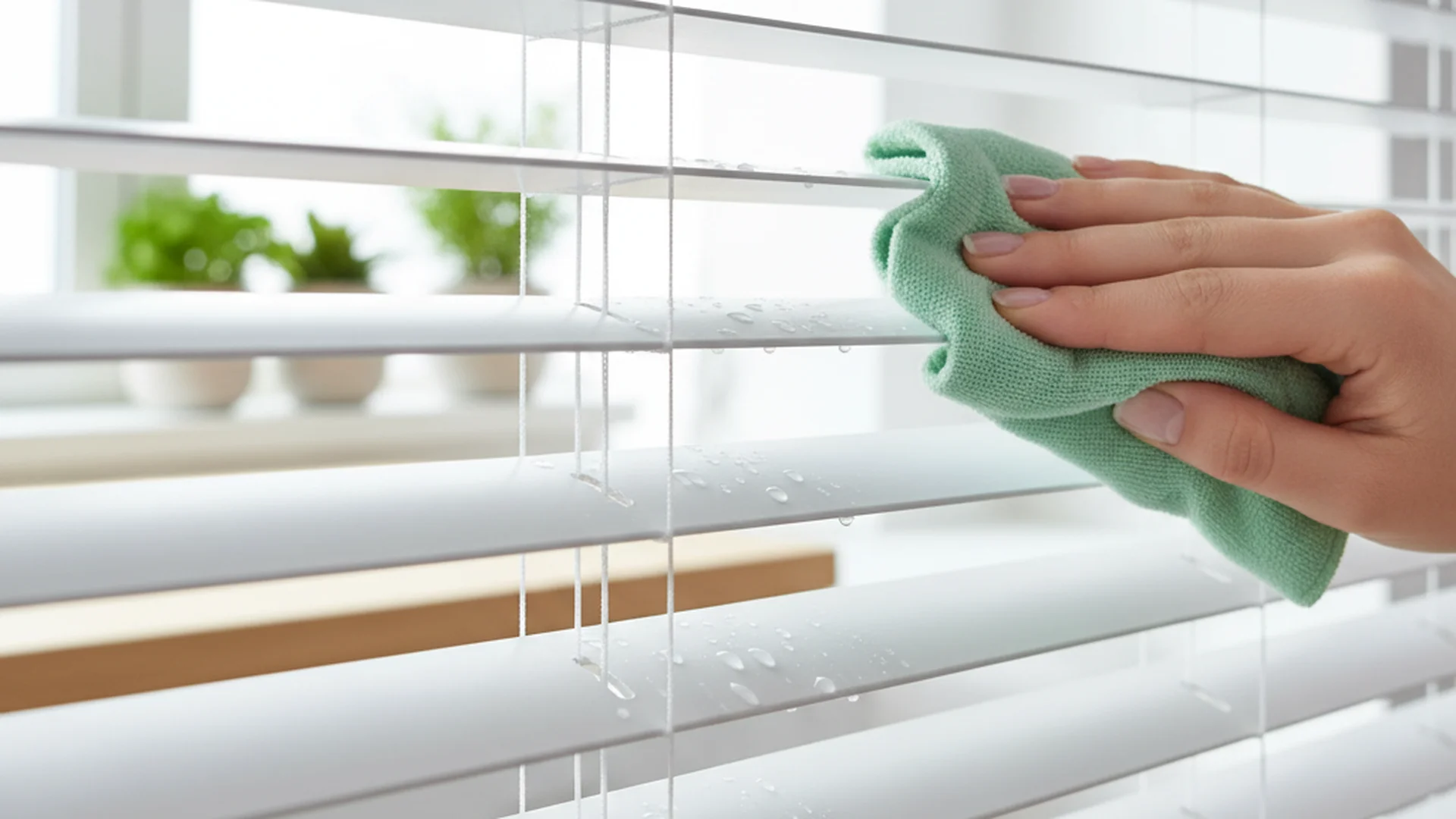
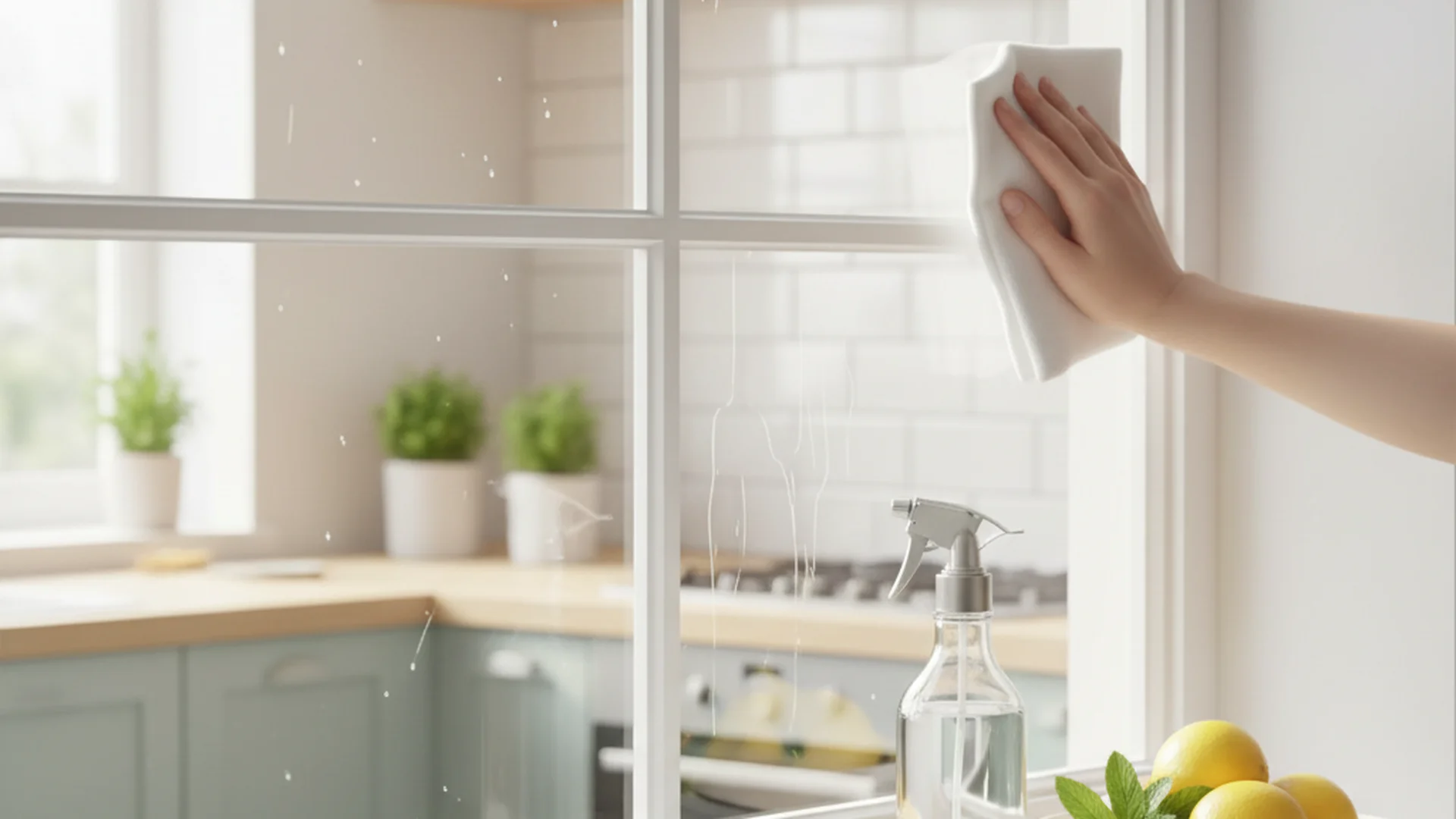
This is the ultimate professional secret: Wipe the interior side of the glass vertically and the exterior side horizontally.
Real-World Example: If you finish cleaning and see a single streak in the afternoon sun, you don't have to guess which side it's on. If the streak is vertical, it’s on the inside. If it’s horizontal, it’s on the outside. This saves you from cleaning the same spot twice.
Cleaning the Window Tracks and Sills
Many homeowners neglect the window "sills" and "weep holes" (the small drainage holes in the frame). If these are clogged with kitchen grease and dust, they can cause water to back up and rot the frame or cause the window to "seize."
- Vacuum: Use a crevice tool to remove dry debris.
- Scrub: Use a toothbrush dipped in a vinegar/water solution to scrub the corners.
- Clear Weep Holes: Ensure the drainage holes are clear of gunk so condensation can escape.
Tip: Always clean windows on a cloudy day or when the window is in the shade. Direct sunlight evaporates the cleaner too quickly, leaving behind streaks and mineral spots before you can squeegee them off.
Modern Trends in Window Cleaning (2025–2026)
The world of domestic efficiency is evolving. If you want to stay ahead of the curve, consider these emerging technologies:
| Technology | Benefit | Best For |
|---|---|---|
| Bio-Enzymatic Cleaners | "Eats" organic grease and food splatters. | Heavy-duty kitchen cleaning. |
| Robotic Window Cleaners | Automated scrubbing with dual-spray tech. | Hard-to-reach windows above sinks. |
| Pure Water Systems | Deionized water acts like a dirt magnet. | Spot-free finish without soap. |
| Anti-Steam DIY Coatings | Prevents fogging from boiling pots. | High-humidity kitchens. |
In 2026, DIY nanocoatings are trending. These hydrophobic treatments prevent steam from cooking pots from fogging up the glass and stop grease from sticking as easily, extending the time between cleanings.
Common Mistakes to Avoid
- Using Newspaper: While an old-school hack, modern newspaper ink is often different than it was decades ago and can leave grey streaks or stains on white window frames.
- Over-Soaping: Misconception: "The more soap, the better." Excessive soap creates a thick residue that is difficult to rinse off and will actually make the windows look "milky" when the sun hits them.
- Using Paper Towels: These leave behind lint and can cause streaks by pushing the dirt around rather than absorbing it.
- Ignoring the Frame: If you only clean the glass, the first rainstorm will wash the dirt from the top frame down over your clean glass. Always wipe the frame first.
Frequently Asked Questions
Why does my kitchen window get "foggy" even after cleaning?
Is vinegar better than Windex for kitchen windows?
How do I clean windows that are hard to reach behind the sink?
Can I use a pressure washer on my kitchen windows?
Conclusion
Maintaining a clear view through your kitchen windows is about more than just aesthetics; it is about maximizing natural light, improving energy efficiency, and preventing permanent damage to the glass. By moving away from ammonia-based sprays and embracing the "Pro Solution" of Dawn and water, you can tackle even the toughest cooking grease with ease.
Success: Regularly cleaning your windows (at least every 6 months) prevents the buildup of grit in window tracks, which is a leading cause of window "seizing" or frame corrosion.
Cleaning that keeps score
Every task earns points, every streak multiplies them, and Premium adds a household leaderboard plus a monthly Dustagorgon to beat.
- Free forever
- 30 badges to earn
- Up to 6 in a household
No card needed. Set up your rooms in a couple of minutes.