In this article
What you’ll learn
- Immediate rinsing is essential to prevent the "Starch Glue" effect.
- A nylon brush clears the perforations far better than a standard sponge.
- Always clean the colander upside down to push debris out of the holes.
Most home cooks treat their colander as an afterthought. You pour your pasta, give the mesh a quick splash of water, and tuck it back into the cupboard. However, learning how to clean colander surfaces properly is one of the most overlooked aspects of kitchen hygiene. The kitchen sink and the tools used in it are reliably among the germiest places in the home. Because colanders feature hundreds of tiny perforations, they provide the perfect environment for E. coli and Salmonella to hide in plain sight.
In this guide, we will explore the science of the "Starch Glue" effect and provide a step-by-step breakdown of the best way clean colander materials of all types, from stainless steel to modern silicone.
Why Your Colander Is Harder to Clean Than You Think
The primary challenge of cleaning a colander isn't just the shape—it’s the chemistry of the food we put in it. When you drain pasta, the water is saturated with starch. As this water evaporates, the starch undergoes a physical change, turning into a powerful adhesive.
If you leave a colander to air-dry for just 30 minutes, this "Starch Glue" becomes five times more difficult to remove manually. This is why a colander that looks clean when wet often reveals white, crusty flakes or a sticky residue once it reaches the cupboard.
Material Matters: Choosing Your Strategy
Not all colanders are created equal. The material dictates which cleaning agents and tools you can safely use.
| Material | Durability | Common Cleaning Issue | Best Tool |
|---|---|---|---|
| Stainless Steel | 20+ Years | Limescale & Mineral Buildup | Nylon Brush |
| Silicone | High | Greasy Film Buildup | High-Quality Detergent |
| Plastic | Low | Bacteria in Micro-scratches | Soft Bristle Brush |
| Fine Mesh | Medium | Trapped Fiber/Starch | Old Toothbrush |
Note: Plastic colanders are the most prone to micro-scratches. Over time, these tiny grooves trap bacteria that a standard sponge cannot reach.
The Step-by-Step Guide to a Spotless Colander
To ensure your kitchen remains hygienic, follow this professional protocol for daily maintenance and deep cleaning.
Step 1: The Golden Rule (Immediate Rinse)
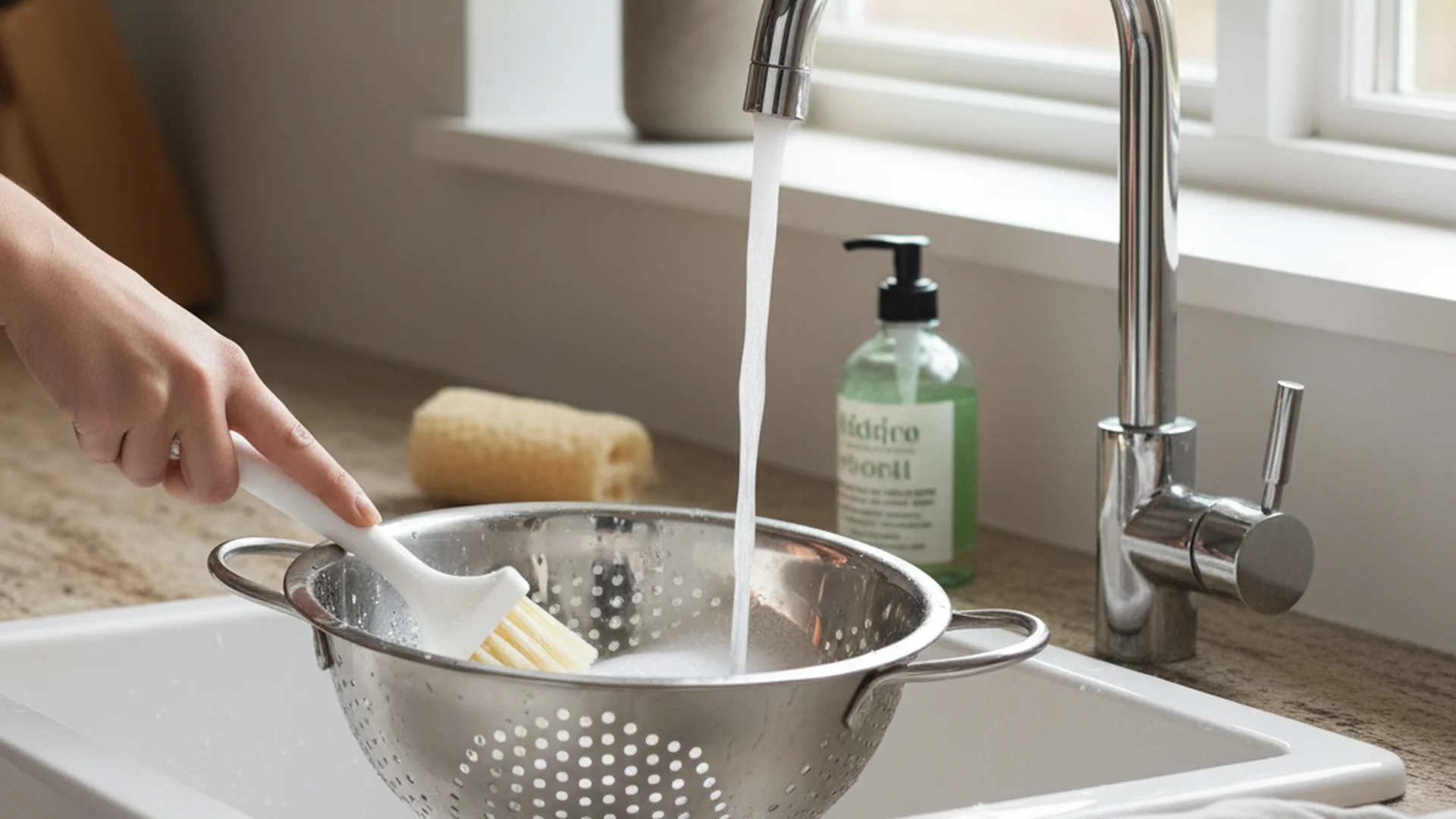
The most effective way to clean a colander is to never let it get dirty in the first place. As soon as you have transferred your food to a bowl or pot, rinse the colander under high-pressure hot water. Do not let it sit in the sink while you eat your meal.
Tip: If you can't scrub it immediately, leave the colander submerged in a bowl of warm, soapy water to keep the starches from hardening.
Step 2: The Upside-Down Technique
When it comes time to scrub, most people instinctively scrub the interior. However, the holes in a colander are often tapered or shaped in a way that traps food when pushed from the inside.
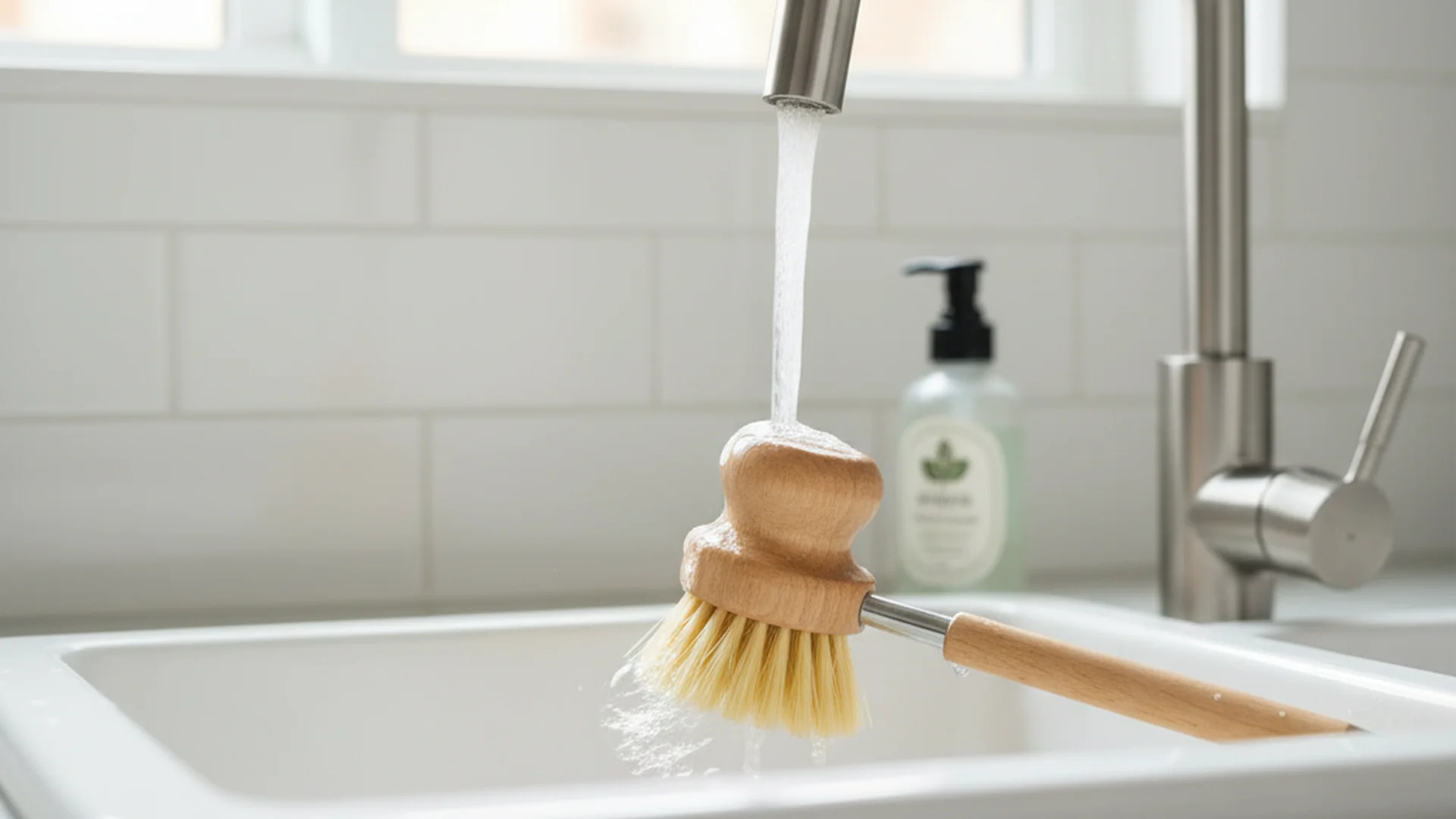
Turn the colander upside down. By scrubbing the exterior, gravity and the pressure of your bristles help pull particles out of the holes rather than jamming them further in. Use a nylon dish brush rather than a sponge; bristles reach into the mesh and clear debris in a way the flat surface of a sponge simply cannot.
Step 3: The Light Test
Once you believe the colander is clean, hold it up to a bright light source or a window. Any "filled" holes will appear as dark spots. If you see persistent blockages, use a wooden toothpick or a specialized fine-mesh brush to clear the individual perforations.
Warning: Never use a wire brush on silicone or plastic. This will create deep scratches that serve as breeding grounds for pathogens. Wire brushes should only be used on heavy-duty stainless steel.
3 Hacks for "Impossible" Stuck-On Food
Sometimes, despite our best efforts, food gets baked on. Here are three professional-grade hacks for those difficult situations.
- The Freezer Method for Cheese: If you’ve drained cheesy pasta and the residue has hardened, place the colander in the freezer for 30 minutes. The cheese becomes brittle and will often pop right out when flicked with a stiff brush.
- The Enzymatic Soak: For stubborn starches, use an enzyme-based dish soap or a dedicated "stuck-on food" remover. These formulas specifically target the proteins and starches that regular soap might miss.
- The Boiling Water Flush: For wooden-handled or fine-mesh strainers, a final rinse with boiling water from a kettle can neutralize remaining pathogens and help dissolve any microscopic grease films.
Success: Using the "Light Test" ensures you never accidentally store a colander with hidden food particles, preventing mold growth in your cabinets.
Common Mistakes to Avoid
Many homeowners inadvertently damage their equipment or leave bacteria behind due to these common misconceptions.
- Relying Solely on the Dishwasher: Many people assume the dishwasher is the best way clean colander tools. However, dishwasher jets often hit the outside of the bowl, leaving "blind spots" on the interior. Furthermore, the high heat of a dishwasher can "bake" trapped pasta bits into a concrete-like state.
- Using the Soft Side of the Sponge: The soft side of a sponge simply glides over the holes. You need the mechanical action of bristles to penetrate the perforations and clear the gaps.
- Forgetting the Rim: Most stainless steel colanders have a "rolled rim" at the top. This is a notorious hiding spot for dirty water and bacteria. Ensure you run your brush along the entire circumference of the rim.
- The Cold Water Mistake: Never soak a starchy colander in cold water. Cold water causes starches to seize and harden, making your job significantly more difficult.
2026 Trends: The Future of Colander Maintenance
As we move into 2026, kitchen technology is evolving to make cleaning easier. One major trend is the rise of ultrasonic kitchen cleaners. Originally used for jewelry, these small countertop baths use high-frequency sound waves to shake loose micro-particles from fine-mesh colanders and coffee filters.
Additionally, we are seeing a shift toward sustainability with Eco-Brushes. Made from bamboo and agave fibers, these tools offer the stiffness required for a deep clean without the environmental impact of plastic bristles. Finally, look out for "Lotus-Effect" colanders—newly released products featuring hydrophobic nanocoatings that prevent starch from adhering to the surface in the first place.
Frequently Asked Questions
Why is my colander still sticky after a dishwasher cycle?
Can I use bleach to disinfect a colander?
How do I clean a fine-mesh strainer without ruining it?
Is silicone better than stainless steel for cleaning?
Conclusion
Maintaining a clean colander is about more than just aesthetics; it’s about food safety. By implementing the "Immediate Rinse" rule and utilizing the "Upside-Down Technique," you can ensure your kitchen tools remain free of the "Starch Glue" effect and harmful bacteria. Whether you stick to traditional stainless steel or upgrade to a 2026 ultrasonic cleaner, the key is consistency and the right tools for the job.
Success: Following these steps will extend the life of your kitchenware and keep your family safe from foodborne illnesses.
Cleaning that keeps score
Every task earns points, every streak multiplies them, and Premium adds a household leaderboard plus a monthly Dustagorgon to beat.
- Free forever
- 30 badges to earn
- Up to 6 in a household
No card needed. Set up your rooms in a couple of minutes.