In this article
What you’ll learn
- Cleaning is a functional care task, not a moral obligation.
- Reducing clutter can lower cortisol levels and improve executive function.
- Use sensory accommodations like noise-canceling headphones to reduce cleaning overwhelm.
For many of us, the phrase "cleaning the house" evokes feelings of dread, exhaustion, or even shame. We’ve been taught to view chores as a moral obligation—something we must do to be considered "good" adults. However, in 2025, the narrative is shifting. We are increasingly recognizing that self care cleaning is not about achieving a magazine-perfect home; it is about curated environment management that supports our mental health. When we approach our living space as a tool for our well-being rather than a source of judgment, the entire process changes from a burden to a form of radical self-kindness.
The Science of the "Messy Mind"
It is no coincidence that you feel more stressed when your kitchen counters are buried under mail and dirty dishes. Our physical environment acts as a mirror and a catalyst for our mental state, and a lot of people notice they feel markedly more anxious in a cluttered space.
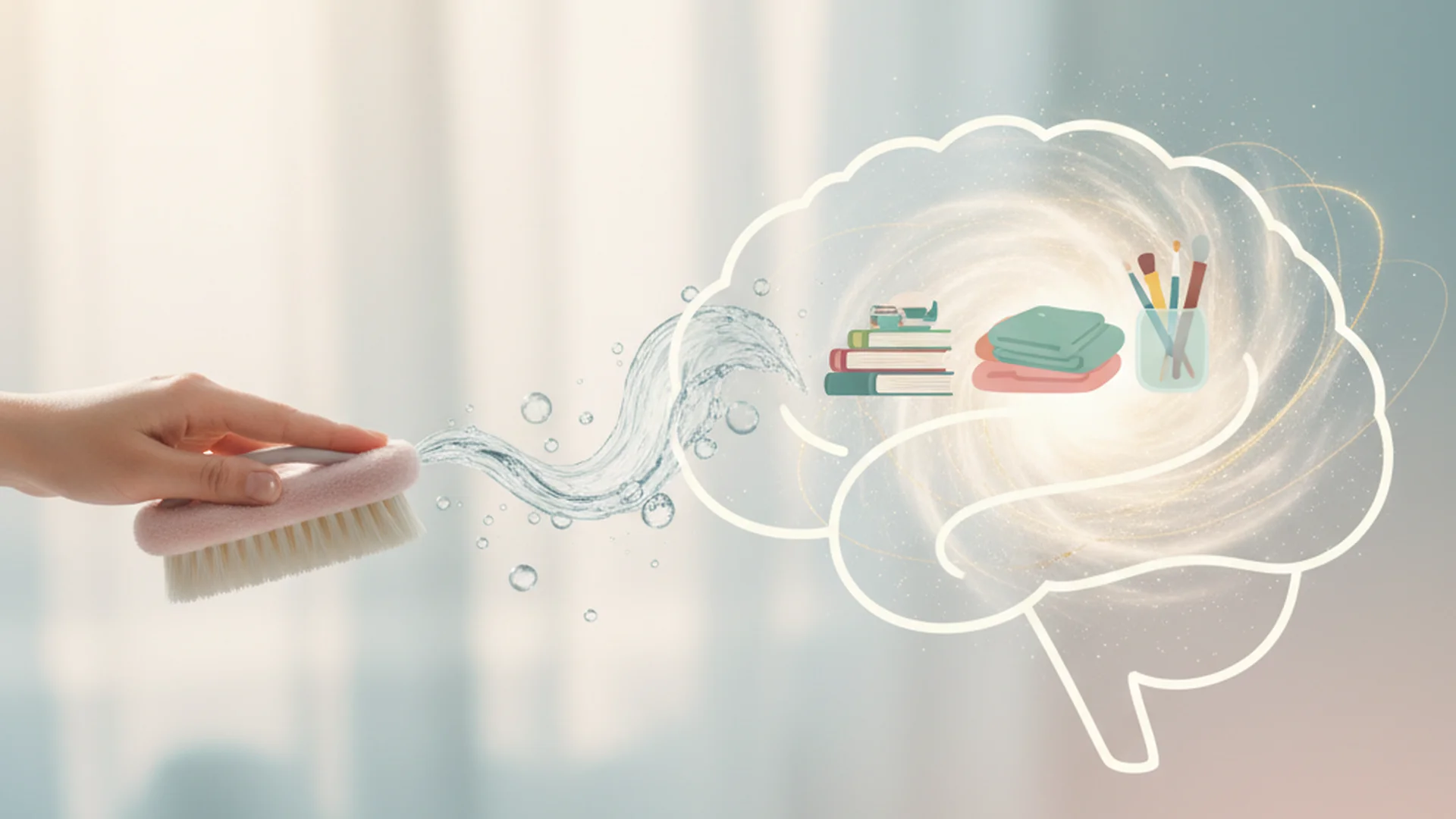
This isn't just "in your head"—it’s in your hormones. A cluttered home has a way of keeping cortisol, the body’s primary stress hormone, elevated. When your brain is constantly scanning a room and seeing "unfinished business," it creates a state of visual noise. This noise drains your cognitive energy and leads to "decisional fatigue," leaving you with less mental bandwidth to handle the actual challenges of your day.
Conversely, plenty of people notice an immediate lift in mood when they are living in a tidy space. This is the foundation of self care cleaning help: creating a space that allows your brain to rest.
Note: Cleaning becomes self-care when it is a proactive "gift to your future self" rather than a chore driven by shame or external pressure.
Why the Neurodiversity Gap Matters
For neurodivergent adults, particularly those with ADHD or Autism, the link between cleaning and self-care is even more critical. Most neurodivergent adults struggle with daily cleaning tasks because of executive function challenges, not because of any lack of effort.
If you have ADHD, the "ping-pong" effect is real. You walk into the kitchen to put away a cup, notice the trash is full, take the trash out, see a weed in the garden, and three hours later, the cup is still on the counter and the kitchen is still messy. Understanding that your brain processes environments differently is the first step in implementing self care cleaning tips that actually work for you.
The "5 Things" Method: A Framework for Overwhelm
One of the most transformative concepts in modern domestic efficiency is the "5 Things" method, popularized by KC Davis. Instead of looking at a room and seeing "a mess," you look for only five categories:
- Trash: Grab a bag and scan only for actual garbage.
- Dishes: Collect all dishes and move them to the sink (don't wash them yet).
- Laundry: Gather all clothes and put them in a hamper.
- Things that have a place: Items you know exactly where they go.
- Things that don’t have a place: Items that need a "home" eventually, but for now, they just go in a single pile or basket.
This method prevents the "ping-pong" effect by giving your brain a narrow filter. It turns a chaotic environment into a manageable list.
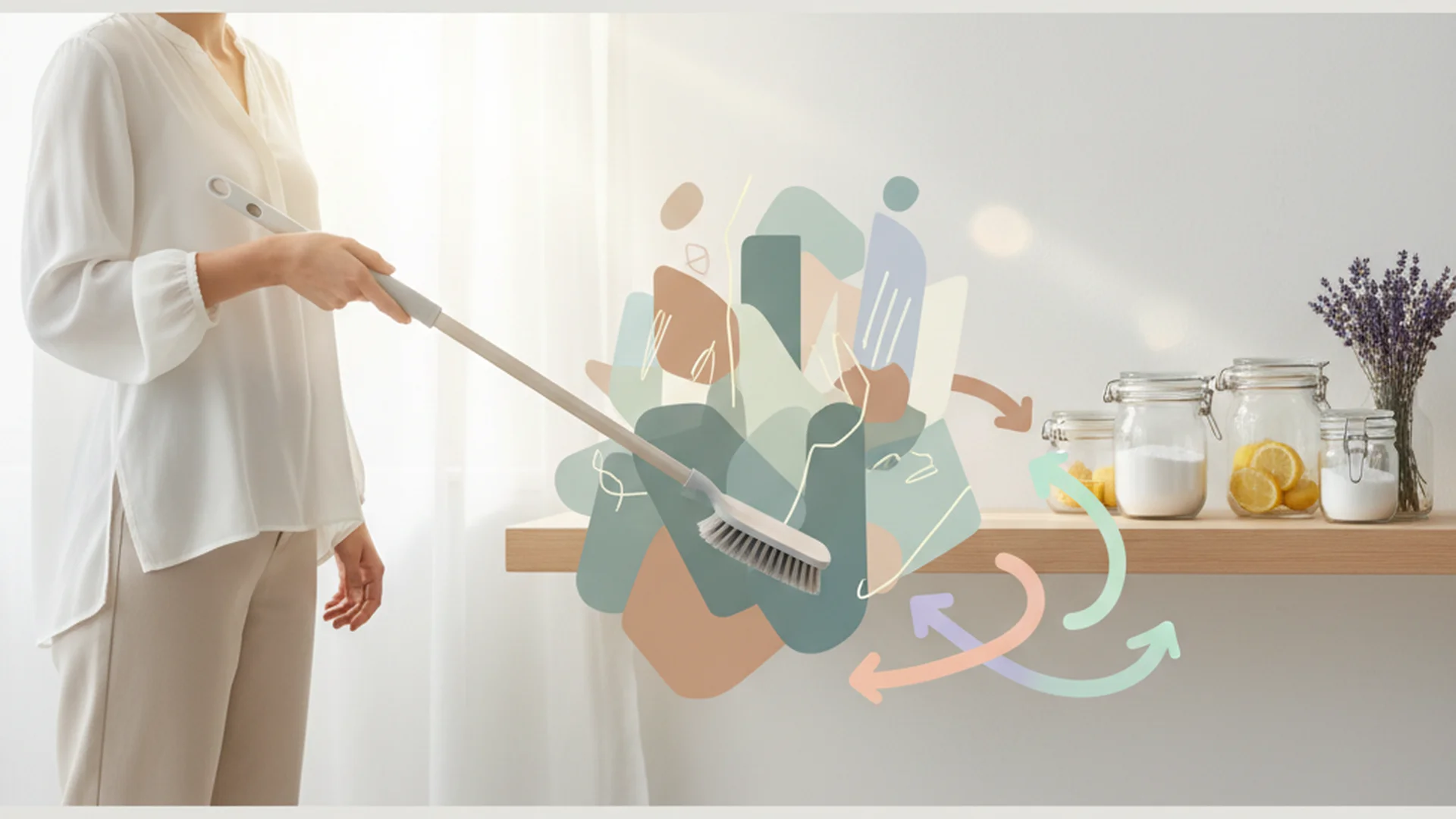
Tip: If a whole room feels like too much, use the "Ski Slope" method. Imagine the room is a mountain and "ski" from one side to the other in a zig-zag, focusing only on the immediate path in front of you.
Sensory Accommodations for Stress-Free Cleaning
For many, the reason cleaning feels like the opposite of self-care is sensory overstimulation. The roar of a vacuum, the smell of harsh chemicals, and the feeling of wet food on a plate can trigger a "fight or flight" response.
To turn cleaning into a self-care ritual, you must accommodate your senses:
- Audio: Wear noise-canceling headphones. Listen to a favorite podcast or a "Clean with Me" vlog to provide "body doubling" (the feeling of working alongside someone else).
- Tactile: Use high-quality rubber gloves if you have aversions to wet or sticky surfaces. This simple barrier can remove the "ick" factor that leads to task avoidance.
- Olfactory: Avoid bleach if the smell causes "brain fog." In 2025, the trend is toward "Scent-scaping"—using citrus scents in the morning for energy and lavender-based cleaners in the evening to signal to your brain that it’s time to wind down.
Success: People who feel in control of their living space are generally far happier with life in general. Control doesn't mean perfection; it means functionality.
Modern Trends in Cleaning (2025–2026)
The world of home maintenance is evolving. We are moving away from the "sterilize everything" mindset of the early 2020s toward a more holistic, tech-integrated approach.
Body Doubling and Virtual Communities
Virtual "co-cleaning" has become a massive trend. Apps like Dubbii and Focusmate allow you to book a session with a partner where you both clean your respective homes while on camera. This accountability is a game-changer for those who struggle with "task initiation."
AI-Driven Housekeeping
New software for 2025, such as the updated Sweepy Pro and Tody editions, now use AI to predict your cleaning cycles. Instead of a static "clean floors every Tuesday" schedule, these apps analyze your lifestyle—like suggesting a floor scrub after a high-activity weekend or a rainy day when the dog tracked in mud—to ensure you aren't overworking yourself on low-impact tasks.
Microbiome-Friendly Cleaning
We are seeing a shift toward probiotic cleaners. Instead of killing 99.9% of bacteria (including the good kind), these cleaners introduce beneficial bacteria to your home’s surfaces. This reduces allergens and promotes a healthier indoor "microbiome," which tends to be gentler on your lungs and your nerves.
| Method | Focus | Best For |
|---|---|---|
| 5 Things | Categorization | High Overwhelm / ADHD |
| Ski Slope | Spatial Progress | Large, Messy Rooms |
| One Small Task | Minimum Viable Action | Depression / Low Energy |
| Scent-scaping | Sensory Zoning | Mood Regulation |
Common Mistakes to Avoid
Even with the best intentions, certain habits can turn your self care cleaning routine into a source of more stress.
The "All-or-Nothing" Mindset
Waiting until you have the energy to "deep clean the whole house" is a recipe for chronic mess. This mindset often leads to a cycle of burnout followed by weeks of neglect. Modern self-care emphasizes "low-demand" tasks. If all you can do today is clear the floor so you don't trip, that is a success.
Using Too Much Product
A common misconception is that "more soap equals cleaner." In reality, using too much detergent or all-purpose cleaner leaves a sticky residue that actually attracts more dirt and dust over time. Follow the "less is more" rule to keep surfaces cleaner for longer.
Confusing Cleaning with Disinfecting
Cleaning removes dirt; disinfecting kills germs. You rarely need to disinfect every surface every day. Over-disinfecting can lead to respiratory irritation and "cleaning fatigue." For daily mental peace, simple cleaning (wiping away the visual clutter) is usually sufficient.
Warning: Never mix bleach with ammonia-based cleaners or vinegar. This creates toxic chloramine gas. Stick to one dedicated multi-purpose cleaner for your daily self-care routine.
Frequently Asked Questions
Is cleaning actually "self-care"?
How do I clean when I’m depressed?
Should I vacuum or dust first?
Why does a messy house make me feel so bad?
Conclusion: Care Tasks are Morally Neutral
The most important takeaway for your self care cleaning journey is this: Having a messy house does not make you a "bad," "lazy," or "failing" person. Your home exists to serve you; you do not exist to serve your home.
By shifting your perspective and viewing cleaning as a functional tool for your mental health, you can reclaim your space. Whether you use AI apps like Tody, practice the 5 Things method, or simply put on a pair of noise-canceling headphones to tackle the laundry, remember that any effort you make is a gift to your future self.
Success: Embracing the idea that "anything worth doing is worth doing poorly" allows you to start cleaning without the weight of perfectionism. A half-clean kitchen still provides more peace than a fully messy one.
Cleaning that keeps score
Every task earns points, every streak multiplies them, and Premium adds a household leaderboard plus a monthly Dustagorgon to beat.
- Free forever
- 30 badges to earn
- Up to 6 in a household
No card needed. Set up your rooms in a couple of minutes.