In this article
What you’ll learn
- Shift your mindset from 'perfection' to 'functionality' to reduce task paralysis.
- Clutter can keep your stress response switched on, making it harder to rest.
- Utilize methods like 'Junebugging' and '5 Things' to manage cognitive load.
For many, the act of picking up a vacuum or facing a stack of dirty dishes isn't just a chore—it’s a trigger. If you find yourself frozen in the middle of a messy room, feeling your heart race while your brain screams that there is too much to do, you aren't alone. Cleaning with anxiety is a complex emotional experience that millions of people navigate daily. In 2025, we have moved past the era of "Pinterest-perfect" homes and into a more compassionate understanding of how our mental health dictates our environment.
The Science of the "Clutter-Anxiety" Loop
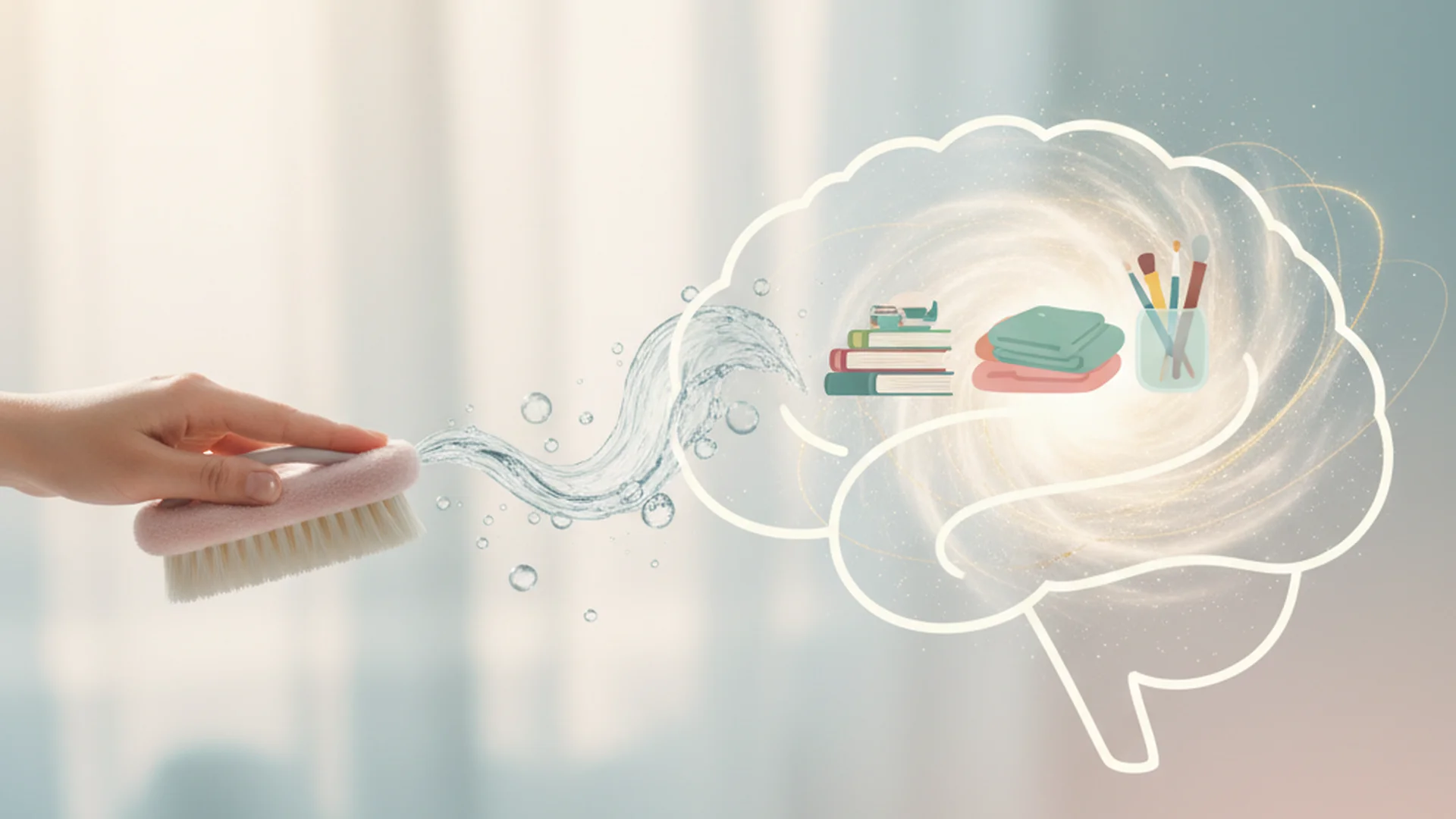
The relationship between your mental state and your living space is not just "in your head"—your body reacts to it too. The link between the environment you live in and the way your nervous system behaves is a real one. Understanding this connection is the first step toward getting the cleaning with anxiety help you need.
The Cortisol Connection
There is a genuine physiological link between household density and stress. People living in cluttered homes often describe a low-level alertness that never quite switches off, as though cortisol—the primary stress hormone—stays elevated all day. In contrast, those who experience their homes as "restful" or "restorative" tend to find that tension naturally unwinds as the day progresses.
When you are cleaning with anxiety, you are often fighting a biological uphill battle. Your brain perceives the clutter as a "threat" or an unfinished task that prevents your nervous system from entering a state of rest.
Cognitive Load and Task Paralysis
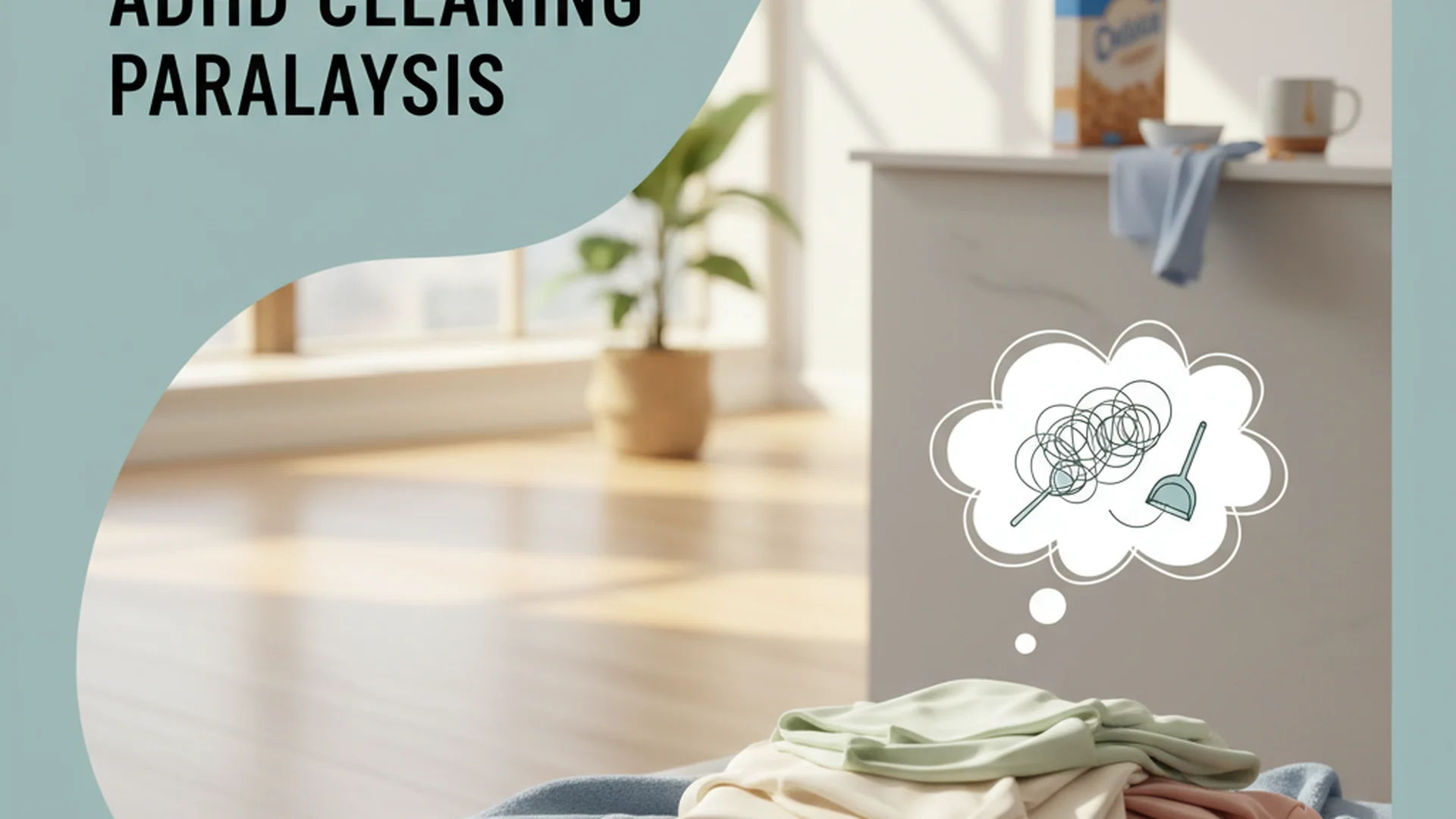
Why does a pile of laundry feel like a mountain? Physical clutter competes for your attention. This creates a high "cognitive load," reducing your brain's ability to focus and process information. For someone already dealing with an anxiety disorder, this sensory competition can lead to "task paralysis"—a state where you are so overwhelmed by the sheer volume of stimuli that you become unable to start any single task.
Note: Feeling overwhelmed by clutter is extremely common, and for a lot of people it is the single biggest source of everyday stress at home.
Proven Strategies for Cleaning with Anxiety
When you’re in the thick of an anxiety spike, "just doing it" is not helpful advice. You need systems that bypass the executive dysfunction centers of the brain. Here are the approaches that hold up best in practice.
The "5 Things" Method
Popularized by KC Davis, author of How to Keep House While Drowning, this method is a lifeline for those experiencing task paralysis. Instead of seeing a "messy room," you look only for these five categories in order:
- Trash: Grab a bag and move through the room only picking up garbage.
- Laundry: Gather all clothes and move them to the laundry area.
- Dishes: Collect all cups, plates, and silverware.
- Things that have a place: Put away items that already have a designated spot.
- Things that don't have a place: Pile these in one spot to deal with later when you have more "brain fuel."
Tip: By focusing on only one category at a time, you stop your brain from trying to solve 100 problems at once.
Junebugging: Finding Your Anchor
"Junebugging" is a technique named after the way a June bug hits a screen door repeatedly. In this method, you pick one "anchor point"—like the kitchen sink. Your goal is to get that sink clean. You might get distracted and walk a stray toy to the playroom, but like a June bug, you always return to your anchor point until it is 100% finished.
The 10-Minute Sprint
Anxiety often feeds on the idea that a task will last forever. Set a physical timer for 10 minutes. Tell yourself that once the timer beeps, you have full permission to stop, regardless of how much is left. Often, the hardest part of cleaning with anxiety is simply breaking the "stationary" seal.
| Method | Best For | Mental Energy Required |
|---|---|---|
| 5 Things | Total Overwhelm | Low |
| Junebugging | Distractibility/ADHD | Medium |
| 10-Min Sprint | Lack of Motivation | Low |
| Closing Duties | Preventing Morning Anxiety | Medium |
2025–2026 Trends: Modern Solutions for Anxiety-Driven Cleaning
The way we approach home maintenance has shifted significantly over the last year. We are moving away from "perfection" and toward "sustainability."
Body Doubling 2.0
One of the most effective cleaning with anxiety tips to emerge recently is "Body Doubling 2.0." This has evolved from simple YouTube videos into live, interactive Discord or TikTok sessions. Cleaning "together" with thousands of others in real-time provides a sense of community and accountability that combats the isolation often felt during an anxiety episode.
Dopamine Pairing
A 2026 trend gaining traction is "Dopamine Pairing." This involves pairing a dreaded cleaning task with a high-dopamine activity that you are only allowed to do while cleaning.
- Example: You can only listen to your favorite "true crime" podcast while folding laundry.
- Example: You can only watch that new reality show while you are on the treadmill or organizing the pantry.
Success: Finishing a task brings most people a direct sense of accomplishment—a genuine "clean-high"—which triggers a natural dopamine release.
Vagus Nerve Activation
New wellness trends suggest incorporating somatic exercises while cleaning. The vagus nerve is the "on-off" switch for your nervous system. By humming, deep belly breathing, or even splashing cold water on your face between tasks, you can keep your body in a "rest and digest" state rather than "fight or flight."
Sensory Regulation: Reducing the "Sensory Ick"
For many people, the anxiety of cleaning is actually a sensory processing issue. If the smell of chemicals, the feeling of wet food, or the sound of the vacuum makes your skin crawl, your anxiety will naturally skyrocket.
- Wear Gloves: Use high-quality, lined rubber gloves. This creates a physical barrier between you and the "ick" of dirty dishes or cleaning agents.
- Noise-Canceling Headphones: Block out the overstimulating sounds of appliances. Replace them with calming lo-fi music or a familiar audiobook.
- Aromatherapy-Based Cleaners: Move away from harsh bleach smells which can trigger a "danger" response in the brain. Opt for lavender, citrus, or eucalyptus-scented non-toxic cleaners to soothe the nervous system.
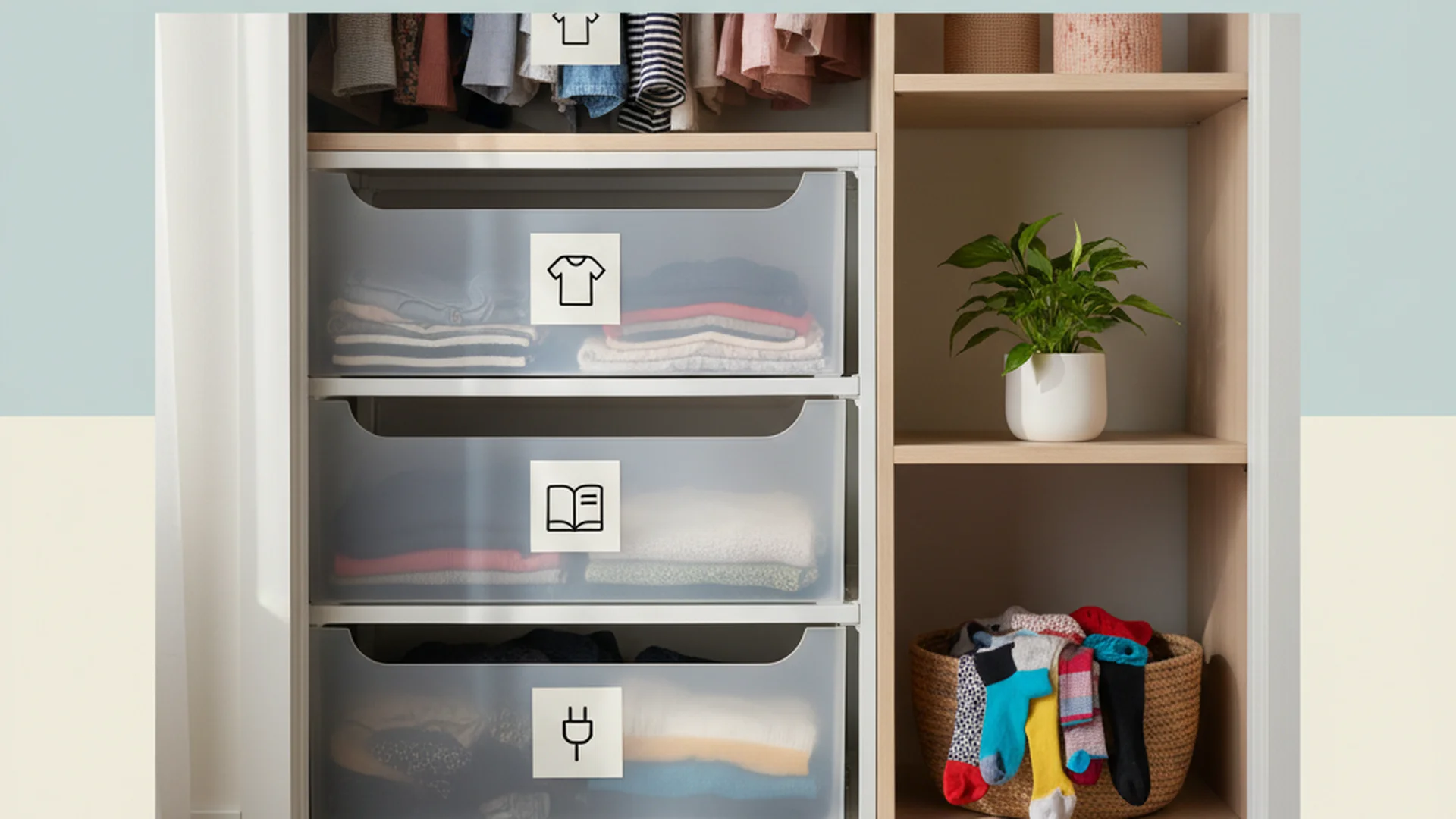
Warning: Avoid "aesthetic" cleaning trends that involve restocking hundreds of tiny clear bins if you are prone to clutter-sensitivity. This can actually increase anxiety by creating more "micro-tasks" in the long run.
Common Mistakes to Avoid
When you are cleaning with anxiety, your brain will often try to trick you into habits that actually make the situation worse.
1. The "All-or-Nothing" Mentality
This is the belief that if you cannot deep-clean the entire house to a "white-glove" standard, there is no point in doing anything at all. In reality, washing one single plate is 100% more effective than washing zero plates. Embracing "low-demand living" means accepting that "done" is better than "perfect."
2. Viewing Messiness as a Moral Failure
Many people with anxiety feel that a messy house means they are a "bad" person, parent, or partner. Modern psychology emphasizes that messiness is often a symptom of executive dysfunction, burnout, or a high-stress season of life—it is not a reflection of your character.
3. Using Cleaning as an Avoidance Tactic
While "stress cleaning" can provide a temporary sense of control, be careful not to use it as a way to avoid deeper emotional issues or necessary life tasks. If you find yourself scrubbing baseboards with a toothbrush to avoid a difficult conversation or a work deadline, your cleaning has become a "procrastivity" tool.
Note: Cleaning is a functional tool for living, not a substitute for therapy or professional mental health support.
Frequently Asked Questions
Why does cleaning make me feel so anxious?
Is my cleaning an anxiety symptom or OCD?
What are DOOM piles?
How can I stop the cycle of "stress-cleaning" and then crashing?
Conclusion: Compassion Over Perfection
Cleaning with anxiety is a journey of finding what works for your brain, not what looks good on a social media feed. By shifting your goal from "Pinterest-perfect" to "functional for my life," you remove the moral weight of chores. Remember: your home exists to serve you; you do not exist to serve your home.
Whether you use the 5 Things method or find a body-doubling partner on TikTok, the goal is to create a space where your nervous system can finally rest. You deserve a home that feels like a sanctuary, not a source of shame.
Success: By implementing just one of these strategies—like the 10-minute sprint—you are actively retraining your brain to view cleaning as a manageable, supportive activity rather than a threat.
Cleaning that keeps score
Every task earns points, every streak multiplies them, and Premium adds a household leaderboard plus a monthly Dustagorgon to beat.
- Free forever
- 30 badges to earn
- Up to 6 in a household
No card needed. Set up your rooms in a couple of minutes.