In this article
What you’ll learn
- Break kitchen tasks into five specific categories to bypass ADHD paralysis.
- Switch from recipe-based meal prep to component prepping to avoid "boredom takeout."
- Use visual organization and sensory accommodations to reduce the cognitive load of cleaning.
For many of us, the kitchen is the heart of the home, but for those with ADHD, it can often feel like the front lines of a losing battle. You walk in intending to cook a healthy dinner, but the sight of a crusty pan in the sink and a counter cluttered with mail triggers a sudden wave of "ADHD Paralysis." Before you know it, you’re standing in the dark, scrolling on your phone, and ordering pizza for the third time this week. Understanding adhd meal prep cleaning isn't just about learning "hacks"; it’s about redesigning your environment to work with your brain’s unique wiring rather than fighting against it.
Managing a kitchen requires a high level of executive function—the mental skills that help us plan, focus, and multitask. When those skills are impacted by ADHD, tasks like washing dishes or chopping vegetables feel physically painful to initiate. However, by implementing specific ADHD meal prep cleaning tips, you can bridge the "completion gap" and create a system that feeds you without draining your mental battery.
The Neurological Root of Kitchen Struggles
If you struggle to keep your kitchen clean or prep meals consistently, it is not a character flaw. It is a biological reality. Research into the ADHD brain shows that these struggles are rooted in executive dysfunction, specifically affecting the prefrontal cortex.
This impact manifests in three primary ways in the kitchen:
- Task Initiation: The "wall of awful" that makes starting the dishes feel impossible.
- Working Memory: Forgetting that you bought spinach the moment it enters the "death drawer" (the crisper).
- Emotional Regulation: Becoming so overwhelmed by a messy counter that you experience a sensory meltdown.
Furthermore, a large-scale study involving 15,000 children found that diets high in processed foods are associated with a 56% increase in the odds of heightened ADHD symptoms. This creates a vicious cycle: the ADHD brain makes it hard to cook whole foods, and the resulting processed diet makes the ADHD symptoms harder to manage.
Note: ADHD kitchen struggles are often tied to "object permanence." If you can’t see the ingredients or the cleaning supplies, your brain effectively deletes them from its active memory.
Transforming Your Approach to Kitchen Cleaning
Standard cleaning advice usually tells you to "just do it" or "clean as you go." For an ADHD brain, this is often unhelpful. Instead, we need structured, low-demand systems.
The "Five Things" Method
Popularized by KC Davis, this method is a game-changer for adhd meal prep cleaning help. Instead of seeing a "messy kitchen," you look for only five categories:
- Trash: Walk around with a bag and grab everything that is garbage.
- Dishes: Move all dishes to the sink or dishwasher. Don't wash them yet; just move them.
- Laundry: Collect dish towels or stray napkins.
- Things that have a place: Move items that belong in the kitchen back to their spots.
- Things that don’t have a place: Put these in a single basket to deal with later.
Closing Duties, Not Cleaning
In 2025 and 2026, the trend has shifted toward "functional over aesthetic." Stop trying to make your kitchen look like a magazine. Instead, focus on "Closing Duties." Like a restaurant closer, do the bare minimum required to make tomorrow morning successful. This usually means running the dishwasher and clearing one small "landing zone" on the counter.
Tip: Use sensory accommodations. If you hate the feeling of wet food, wear high-quality dish gloves. If the kitchen light is too "loud," use a dimmable lamp or a sunset lamp to create a calmer environment while you work.
| Task Category | ADHD Challenge | Strategy |
|---|---|---|
| Dishes | Sensory Issues | Wear gloves/Use podcasts |
| Clearing Counters | Decision Fatigue | The "Five Things" Method |
| Floor Cleaning | Task Initiation | Use a robot vacuum or "10-min timer" |
Revolutionizing ADHD Meal Prep
The traditional "Sunday Meal Prep" where you spend four hours cooking five identical meals is often a recipe for failure for the ADHD brain. By Tuesday, that chicken and broccoli feels "borerline offensive" to your sensory needs, leading you to seek dopamine through takeout.
Component Prepping vs. Meal Prepping
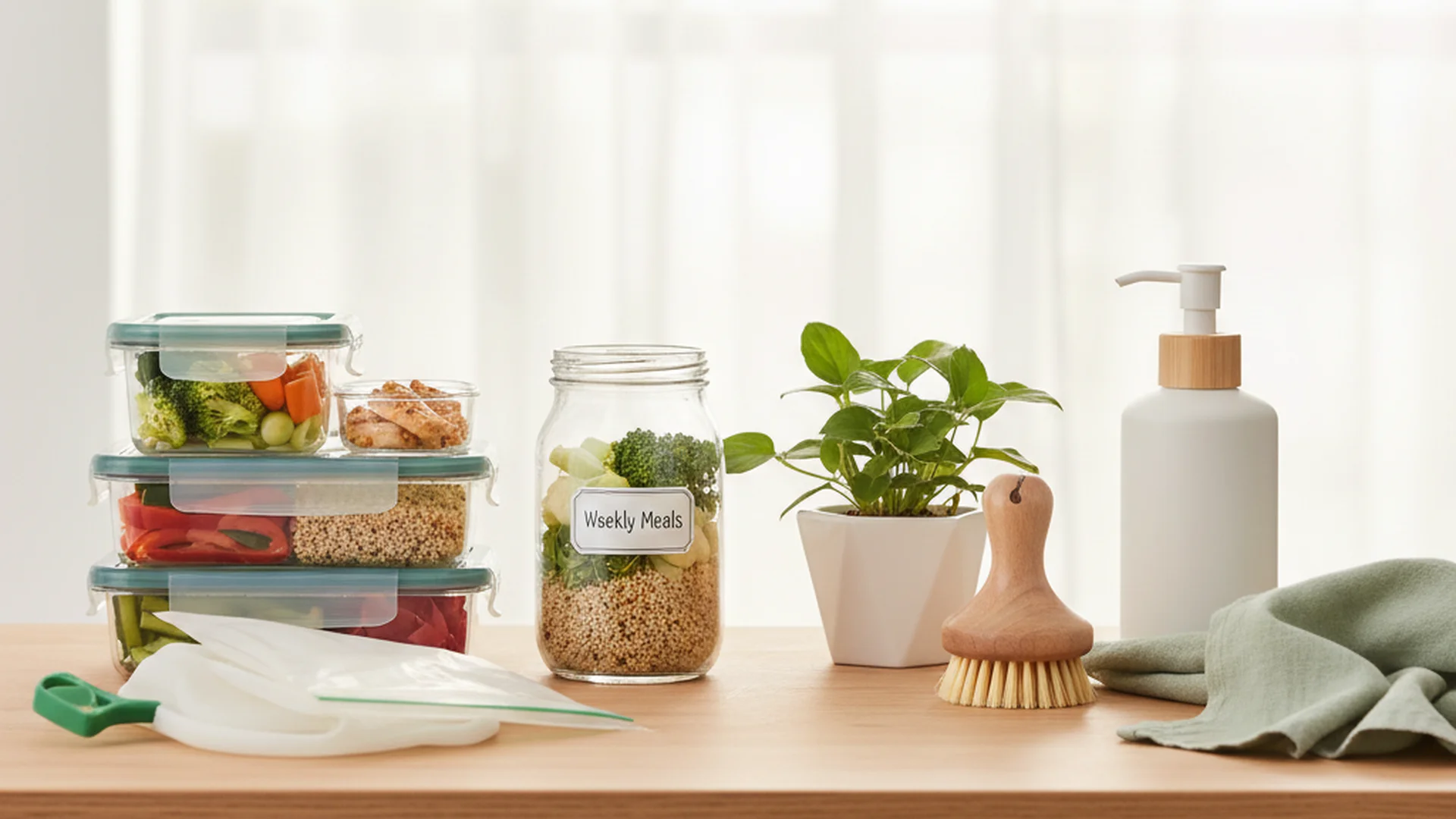
Instead of full recipes, try component prepping. Roast a tray of chicken, boil a pot of rice, and wash some berries. This allows for "assembly-style" meals. On Tuesday, if you want a burrito bowl, you have the chicken and rice. If you want a salad, you have the chicken. This provides the novelty the ADHD brain craves.
The "Garbage Bowl" Strategy
While prepping, keep a large bowl on the counter for all food scraps and packaging. This prevents "task-switching." Every time you walk to the trash can, you risk getting distracted by something else. The garbage bowl keeps you anchored to one spot until the task is done.
Micro-Prepping
Don't wait for a dedicated "prep day." Try 5-10 minute bursts. Chop an onion while your coffee brews. Wash the fruit while you wait for the microwave. These "micro-wins" reduce the total workload without triggering the "big task" anxiety.
Success: Breaking household chores into smaller, timed steps has been shown to increase task completion rates for individuals with ADHD by approximately 42%.
2025 Trends: The Low-Demand Kitchen
As we move into 2026, the ADHD community is embracing a "low-demand lifestyle." This means removing the shame from tools that make life easier.
Visual Fridges and "Eat Me First" Bins
To combat the "out of sight, out of mind" reality, many are moving produce out of the crisper drawers and onto the fridge door. Use clear acrylic bins and label them with dry-erase markers. An "Eat Me First" bin for items nearing their expiration date can significantly reduce food waste.
AI-Enhanced Planning
If you are staring at a random assortment of ingredients, use AI. Tools like ChatGPT or specialized cooking apps can now take a photo of your fridge and generate a recipe instantly. This bypasses the "decision fatigue" that often prevents us from starting a meal.
Warning: Avoid "romanticizing" your future self at the grocery store. If you are exhausted every Tuesday night, do not buy ingredients for a complex 5-step risotto. Buy the frozen version or the pre-chopped vegetables. The "ADHD Tax" of paying more for pre-cut food is often cheaper than the cost of throwing away rotten, whole vegetables.
Common Mistakes to Avoid
- All-or-Nothing Thinking: Believing that if you can't deep clean the whole kitchen, there is no point in doing any dishes. Remember: "Anything worth doing is worth doing poorly." Doing three plates is better than doing zero.
- The "Laziness" Myth: Labeling your executive dysfunction as laziness. This creates shame, and shame is the ultimate "dopamine killer," making it even harder to start the next task.
- Waiting for Motivation: You will likely never "feel" like cleaning the kitchen. Instead, use the INCUP Model (Interest, Novelty, Challenge, Urgency, Passion) to spark engagement. Turn on a high-energy podcast (Interest) or set a 10-minute timer to "race" the clock (Challenge/Urgency).
- Over-Buying Fresh Produce: This leads to the "guilt cycle" when food rots. Opt for frozen vegetables, which are nutritionally similar and won't go bad if you have a "low-energy" week.
Real-World Examples of ADHD Kitchen Wins
- The "Body Doubling" Call: Sarah, a graphic designer with ADHD, struggled with adhd meal prep cleaning tips until she started "Body Doubling." She now calls her sister every Sunday evening. They both put their phones on speaker and clean their respective kitchens simultaneously. The social presence helps Sarah stay on task.
- The Snack Plate Dinner: Instead of cooking, Mark keeps "snack plate" ingredients ready—cheese, crackers, pre-washed grapes, and nuts. On nights when the stove feels like a mountain, the snack plate provides a balanced meal with zero "prep cleaning" required.
- The "One-Touch" Rule: To keep counters clear, Julia implemented a rule: if she picks up a piece of mail or a spice jar, she must put it in its "final home" rather than a "temporary spot." This prevents the "clutter piles" that lead to sensory overload.
Frequently Asked Questions
Why do I feel paralyzed when I walk into a messy kitchen?
Why can’t I stick to a traditional Sunday meal prep routine?
How do I stop my vegetables from rotting in the fridge?
What should I do if I planned a meal but my brain 'rejects' it at dinner time?
Conclusion
Mastering adhd meal prep cleaning is not about reaching perfection; it’s about creating a kitchen that serves you. By understanding that your struggles are rooted in executive dysfunction, you can stop the cycle of shame and start implementing strategies like component prepping, the "five things" cleaning method, and sensory accommodations.
Whether you use paper plates during a stressful week or set a timer to "game-ify" your dishwashing, the goal is the same: a functional home where you can nourish yourself without the overwhelm. Start small—perhaps just by clearing one "landing zone" on your counter tonight—and watch how these micro-wins build into a more manageable lifestyle.
Success: Implementing just one of these strategies this week can reduce your kitchen-related stress by nearly a third. Don't aim for a "clean" kitchen; aim for a "functional" one.
Cleaning that keeps score
Every task earns points, every streak multiplies them, and Premium adds a household leaderboard plus a monthly Dustagorgon to beat.
- Free forever
- 30 badges to earn
- Up to 6 in a household
No card needed. Set up your rooms in a couple of minutes.