In this article
What you’ll learn
- Care tasks are morally neutral; a messy house is not a character flaw.
- Breaking tasks into micro-steps increases completion rates by 42%.
- Use "Junebugging" and "Body Doubling" to overcome task paralysis.
For many, a clean home is a matter of discipline. But for those of us with neurodivergent brains, following a traditional adhd cleaning schedule feels less like a household chore and more like trying to solve a Rubik's Cube while wearing oven mitts. You know the dishes need doing, you can see the pile of laundry on "The Chair," and yet, you find yourself staring at the wall, unable to move. This isn't laziness; it’s executive dysfunction.
The ADHD brain doesn't see "cleaning the kitchen" as one task. It sees forty-seven separate decisions: Where does this lid go? Should I soak this pan? Is the sponge too gross to touch? When the brain is overwhelmed by these micro-decisions, it simply shuts down. To build a sustainable routine, we have to stop trying to "fix" our brains and start building systems that actually accommodate them.
The Science of the "ADHD Tax" and Executive Dysfunction
Before we dive into the schedule, it’s vital to understand why cleaning is so uniquely difficult for the ADHD brain. Research indicates that individuals with ADHD often pay a steep "ADHD tax"—the literal and metaphorical costs of disorganization. This includes late fees on bills lost in paper piles or the cost of repurchasing a hammer because you can't find the three you already own.
The core of the issue is Executive Function. This is the brain’s "air traffic control" system. It handles task initiation (starting), sequencing (doing things in order), and working memory (remembering why you walked into the room). When these functions are impaired, a messy room becomes a "Wall of Awful"—a barrier of shame and overwhelm that feels physically impossible to scale.
Note: Research from Seattle Green Cleaning Fairy metrics shows that breaking household chores into smaller, timed steps increases completion rates by 42% for people with ADHD compared to vague, open-ended tasks.
The Philosophy: Care Tasks are Morally Neutral
One of the most transformative shifts in ADHD home management in 2025 is the concept of "Morally Neutral Care," popularized by KC Davis of Struggle Care. For decades, society has taught us that being "clean" is a sign of being a "good, put-together person." Consequently, a sink full of dishes becomes a source of deep personal shame.
When you are fueled by shame, you are in a "fight, flight, or freeze" state. You cannot effectively clean while your brain is in survival mode. The goal of an adhd cleaning schedule tips guide shouldn't be to make your home look like a Pinterest board; it should be to make your home functional for you. Your home exists to serve you; you do not exist to serve your home.
Tip: If you can't do the dishes, just washing one favorite mug so you can have coffee in the morning is a win. Functional beats perfect every time.
Pro-Level ADHD Cleaning Strategies
If "cleaning by room" leaves you distracted and "cleaning by task" feels too big, try these community-vetted methods that are frequently discussed on adhd cleaning schedule reddit threads.
The "Five Things" Method
KC Davis suggests that there are only five things in any messy room. When you feel overwhelmed, stop looking at the "mess" and only look for these five categories:
- Trash: Bag it up and get it out.
- Laundry: Put it in a basket (don't worry about washing it yet).
- Dishes: Move them to the kitchen counter.
- Things that have a place: Put them in their "homes."
- Things that don’t have a place: Pile them in one corner to deal with later.
Junebugging
Have you ever seen a June bug hit a window screen? It keeps coming back to the same center point. In cleaning, "Junebugging" means picking one "anchor point" (like the kitchen sink). You start cleaning the sink. You realize a spice jar belongs in the pantry, so you walk to the pantry. Instead of staying in the pantry to organize the cans (a "side-quest"), you immediately return to your anchor point—the sink.
Dopamine Stacking
The ADHD brain is chronically under-stimulated. Cleaning is boring, which means it provides zero dopamine. To combat this, "stack" your cleaning with a high-dopamine activity.
- Example: Only allow yourself to listen to your favorite "true crime" podcast while you are folding laundry.
- Example: Use a "Clean With Me" video on YouTube as a form of virtual body doubling.
Success: Using "Body Doubling"—working alongside someone else, even virtually—can stimulate the brain's focus centers and make task initiation significantly easier.
The 2025 ADHD Cleaning Toolkit: High-Tech and Low-Demand
As we move through 2025 and into 2026, the way we handle ADHD symptoms is shifting toward "low-demand living" and leveraging AI tools.
AI-Generated Micro-Schedules
One of the biggest trends this year is "Goblin-ifying" tasks. Using AI tools like ChatGPT or Goblin.tools, you can take a prompt like "Clean the bathroom" and ask it to break it down into 20 tiny steps.
- Step 1: Walk to the bathroom.
- Step 2: Pick up the towel.
- Step 3: Put the towel in the hamper. This removes the "sequencing" burden from your brain.
The "Closing Shift" Concept
Borrowed from the restaurant industry, the "Closing Shift" is a 15-minute reset at night. You aren't "cleaning"; you are "setting up the morning version of yourself for success."
- Real-World Example: Emma (our author) clears the coffee table and sets the coffee maker timer. That’s it. It’s not a deep clean, but it prevents the "morning overwhelm" that often leads to a derailed day.
| Tool/Method | How it Helps | ADHD Benefit |
|---|---|---|
| Robot Vacuum | Automation | Removes "invisible" daily tasks |
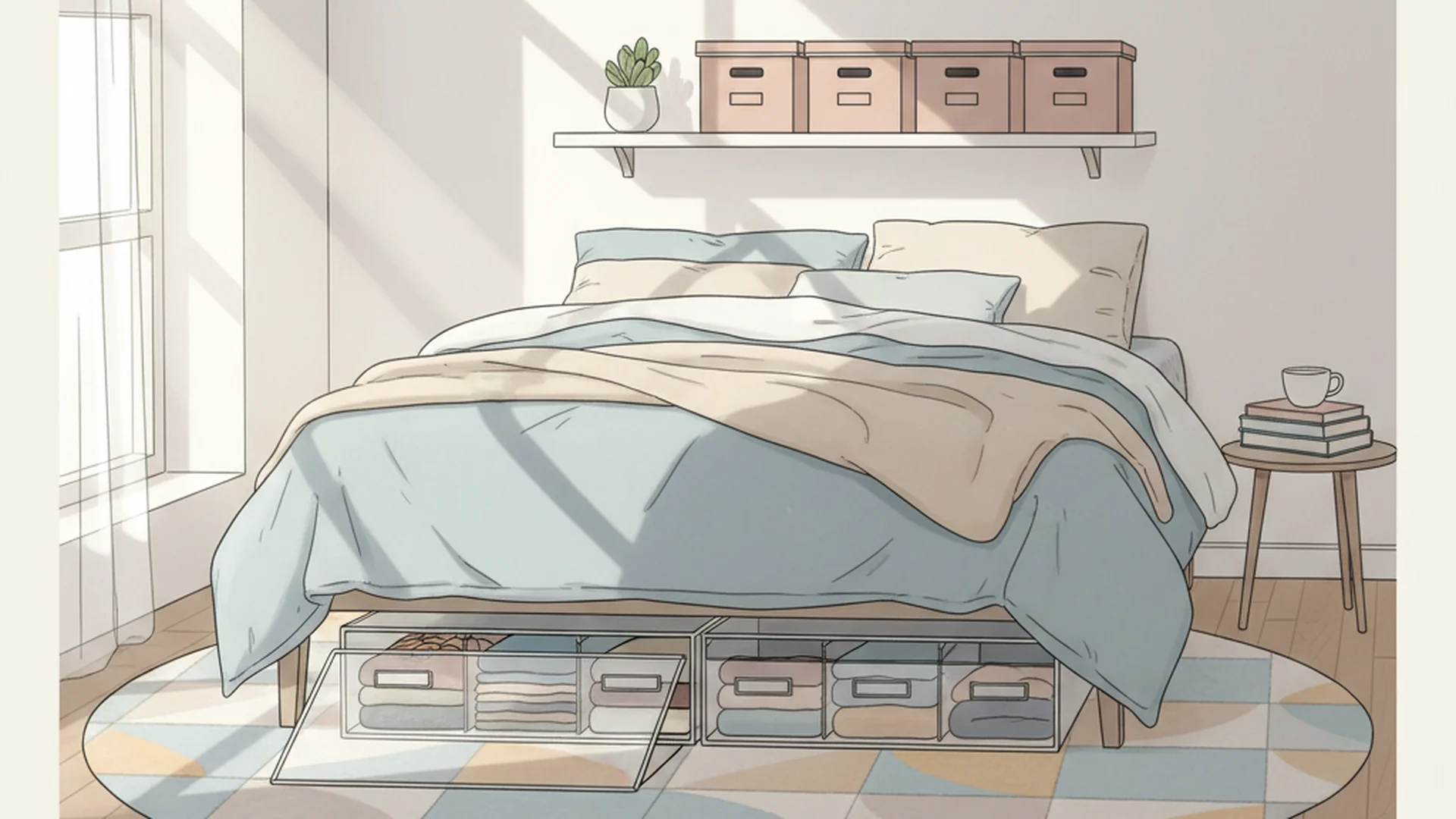
| Clear Bins | Visibility | Prevents "Out of sight, out of mind" |
| AI Schedulers | Sequencing | Breaks down executive "freezing" |
| Doom Boxes | Containment | Stops clutter from spreading |
Warning: Avoid "The Marathon Clean." Spending 8 hours cleaning on a Saturday usually leads to a "burnout-shame cycle" where you don't clean again for a month.
A Sample Low-Demand ADHD Cleaning Schedule
This schedule is designed as a menu, not a mandate. If you miss a day, you haven't failed; you just pick up where you can.
Daily: The "Functionality" Check
- The 10-Minute Tidy: Set a timer. Pick up trash and dishes. When the timer pings, you are done.
- The Closing Shift: Clear one surface (like the kitchen island) so you have space to make breakfast.
- Point-of-Performance Maintenance: If you’re already standing by the microwave and see a spill, wipe it now.
Weekly: The "Main Hits"
- Laundry Day (The One-Basket Rule): Don't try to do all the laundry. Do one basket from start to finish (including putting it away).
- Floor Sweep: Use a robot vacuum or a quick cordless vac run. Don't worry about the corners.
- Fridge Purge: Do this the day before grocery shopping. Toss anything fuzzy.
Monthly: The "Reset"
- The "Side-Quest" List: Throughout the month, write down things you want to organize (like the junk drawer). Spend one hour on one item from this list.
- Bedding: Wash the sheets. If you don't have the energy to put them back on, just sleep with a blanket tonight. It’s okay.
Tip: Store your cleaning supplies where you actually use them. Keep a spray bottle and cloth in every bathroom so you don't have to go find them when you have a 30-second burst of energy.
Common Mistakes to Avoid
- The "Should" Trap: Storing things where they "should" go instead of where you use them. If you always take your socks off by the sofa, put a small laundry basket by the sofa.
- Waiting for Motivation: Motivation is a feeling; ADHD brains need stimulation or urgency. Don't wait to "feel like" cleaning. Use a timer or a body double to create the necessary "artificial" urgency.
- Over-Complicating the System: Buying 50 matching containers before you’ve decluttered is "procrasticleaning." Keep it simple. Use open bins where you can see what’s inside.
- All-or-Nothing Thinking: Thinking "I can't clean the whole kitchen, so why bother starting?" Remember: washing three forks is better than washing zero forks.
Frequently Asked Questions
How do I start when everything is a mess?
Should I clean by room or by task?
How do I stop "side-questing"?
Why do I only clean when someone is coming over?
What is a "Doom Box"?
Conclusion
Creating an adhd cleaning schedule isn't about achieving a spotless home; it's about creating a space that supports your mental health. By embracing "low-demand" living, using tools like the "Five Things" method, and letting go of the shame associated with "The Chair," you can find a rhythm that works for your unique brain.
Remember: Your worth is not measured by the state of your kitchen counters. Some days you will have the "zoomies" and clean everything; other days, you will only have the energy to throw away one piece of trash. Both days are okay. Done is better than perfect, and functional is better than finished.
Success: Small, consistent actions are the enemy of the ADHD Tax. Every time you "reset" a space for your future self, you are practicing self-care.
Cleaning that keeps score
Every task earns points, every streak multiplies them, and Premium adds a household leaderboard plus a monthly Dustagorgon to beat.
- Free forever
- 30 badges to earn
- Up to 6 in a household
No card needed. Set up your rooms in a couple of minutes.