In this article
What you’ll learn
- Focus on functional cleaning rather than aesthetic perfection to reduce stress.
- Use the '5 Things Method' to break down overwhelming rooms into manageable categories.
- Incorporate 'Body Doubling' and 'Junebugging' to maintain momentum and focus.
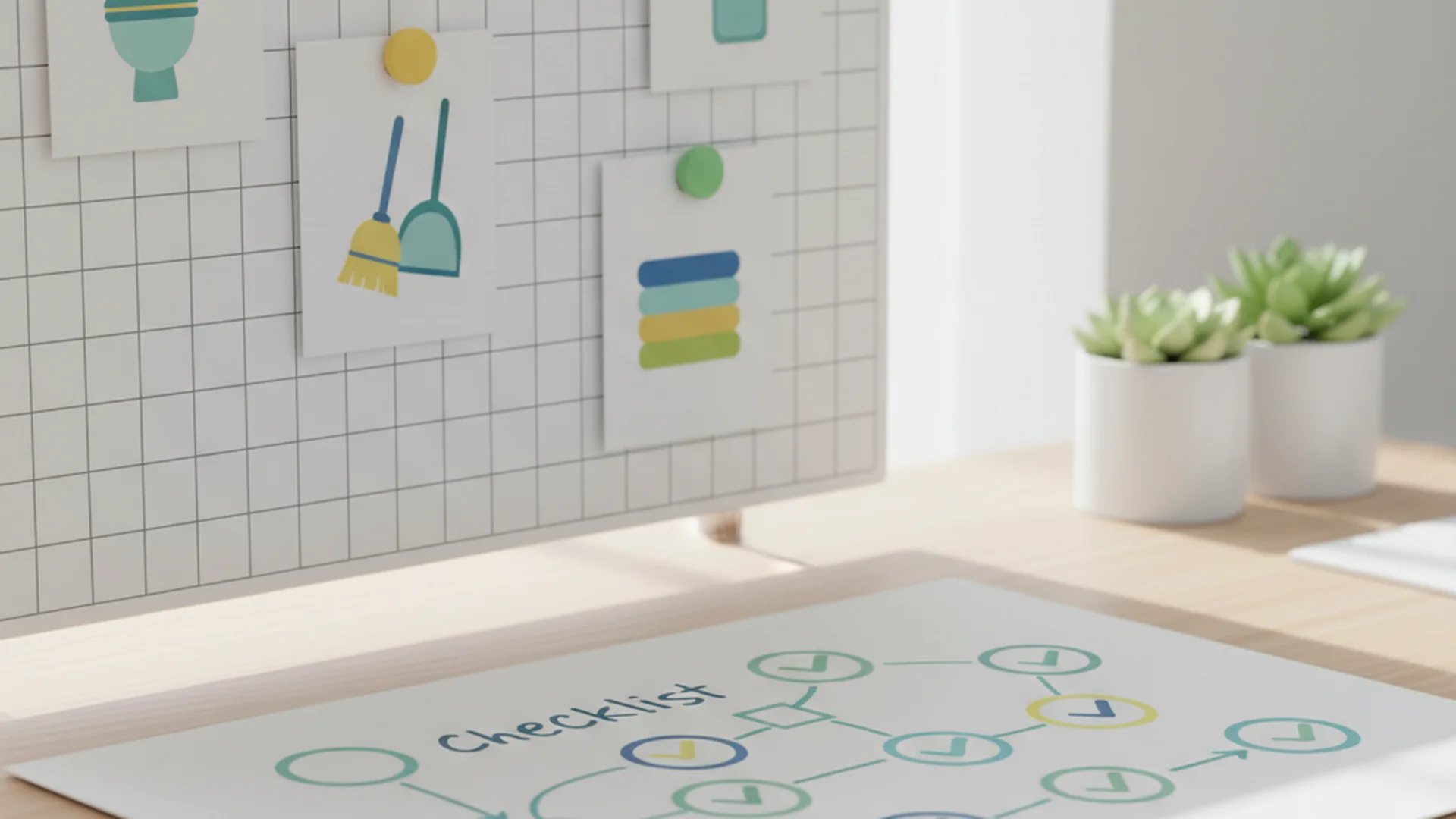
If you have ADHD, looking at a messy room isn’t just a visual annoyance—it can feel like a physical weight. You might stand in the middle of your kitchen, seeing the dishes, the mail, the crumbs, and the "doom boxes," and feel completely paralyzed. This is why a standard to-do list rarely works for neurodivergent brains. To actually get things done, you need a specialized adhd cleaning checklist that accounts for executive dysfunction, dopamine needs, and the unique way your brain processes "clutter."
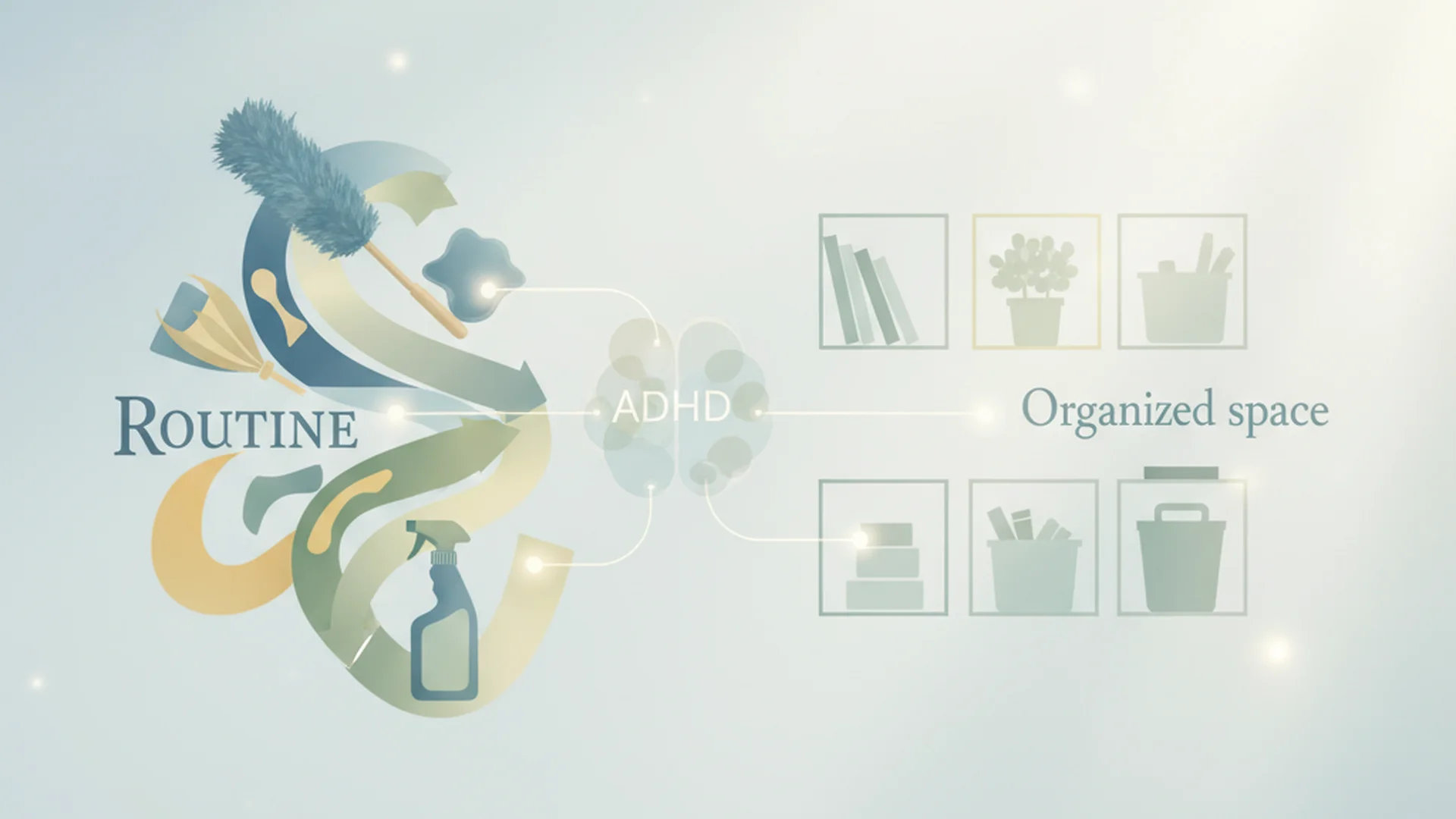
Cleaning with ADHD isn't about lacking discipline; it's about managing a brain that struggles with task initiation and prioritization. When every object in a room "screams" for your attention at the same volume, your brain often decides to shut down instead of starting. By reframing cleaning as "care tasks" rather than moral obligations, we can break the shame cycle and create a home that functions for you, not against you.
Why Cleaning is Hard with ADHD
Before we dive into the checklist, it is essential to understand the "why" behind the struggle. Every visible object in a cluttered room competes for your attention at once. For an ADHD brain, this means clutter genuinely reduces your ability to focus on any single task. It’s not just "mess"; it’s a constant drain on your cognitive resources.
On top of that, living in a home you think of as cluttered keeps you in a low-level state of stress all day. For those with ADHD, this stress often leads to "task paralysis." You want to clean, you know you should clean, but the executive function required to decide whether to pick up a sock or a plate first is too high.
Note: ADHD is primarily a disorder of executive function. "Cleaning a room" is not one task, but a complex series of 50+ decisions that can paralyze the brain.
The "5 Things Method": Your Secret Weapon
One of the most effective adhd cleaning checklist tips comes from author KC Davis. She suggests that in any messy room, there are actually only five things:
- Trash
- Dishes
- Laundry
- Things that have a place
- Things that do not have a place
When you look at a room through this lens, the "invisible" weight of the mess disappears. You aren't "cleaning the living room"; you are simply looking for trash. Once the trash is gone, you are only looking for dishes. This eliminates the need for constant decision-making and allows you to move through the space with a clear, singular objective.
Tip: Use a single category at a time. Do not let yourself pick up a "thing that has a place" while you are currently on the "trash" step.
The Ultimate ADHD Cleaning Checklist
This checklist is designed to be "low-demand." You don't have to do everything every day. Pick the version that matches your current energy level.
Daily "Functional" Checklist (The Bare Minimum)
This list is for those days when your executive function is low, but you want to keep the house from spiraling.
- Clear the "Launchpad": Clear the space where you keep your keys, bag, and shoes for tomorrow. This prevents "morning panic."
- The 10-Minute "Toss": Set a timer for 10 minutes. Walk through the house with a trash bag and grab only obvious garbage.
- One Load of Laundry: Start the wash, but—and this is vital—set a phone alarm for the dryer immediately so you don't forget it in the machine.
- "Sink Zero": Don't worry about scrubbing the sink or the counters. Just get the dirty dishes into the dishwasher so the counters are clear.
Weekly Maintenance (Room-by-Room)
Instead of a "marathon" cleaning day, try to tackle one room's maintenance each day.
| Room | Tasks | ADHD Hack |
|---|---|---|
| Kitchen | Wipe high-touch surfaces, clear fridge of old food. | Use "Body Doubling" (call a friend while you do it). |
| Bathroom | Quick toilet scrub, wipe the mirror, change towels. | Keep all supplies in the bathroom cabinet. |
| Living Room | Reset the "Doom Boxes" (15 mins max), fluff pillows. | Set a "finish" playlist; stop when the music stops. |
| Bedroom | Change sheets, put away the "chair" laundry. | Don't fold! Use bins for socks/underwear. |
Success: Completing even one item on this list is a win. Functional is better than perfect!
Advanced Strategies for 2025 and Beyond
As we move into 2025 and 2026, the community on adhd cleaning checklist reddit threads has pioneered new ways to stay engaged with household chores.
Junebugging
Imagine a June bug on a screen door. It might wander off, but it always comes back to the light. Pick one "anchor point" (like the kitchen island). Clean it. If you wander off to the bedroom to put a book away, that's fine—but immediately return to your anchor point once that sub-task is done.
Body Doubling
This is the practice of working in the presence of another person. It provides "soft accountability." You can use apps, "Clean with Me" YouTube videos, or simply FaceTime a friend while you both fold laundry. The presence of another person helps keep the ADHD brain from drifting into a "side quest."
Dopamining (Dopamine-Cleaning)
Since the ADHD brain thrives on novelty, gamify your checklist. Write tasks on popsicle sticks and pull them from a jar, or use a "Cleaning Bingo" card. The "mystery" of what task comes next can provide the small hit of dopamine needed to start.
Warning: Avoid "side quests." If you start cleaning the kitchen and find yourself alphabetizing the spice rack, stop. That is organizing, not cleaning!
Real-World Examples of ADHD Cleaning Hacks
Example 1: The "Point of Performance" Strategy Sarah, a busy professional with ADHD, struggled to keep the shower clean. Instead of waiting for a deep-clean day, she kept a dish wand filled with soap and vinegar inside the shower. Now, she scrubs one wall while her hair conditioner sets. She moved the cleaning supply to the "point of performance."
Example 2: The Doom Box Reset Mark noticed he kept "piling" things on the dining table. He embraced the "Doom Box" (Didn't Organize, Only Moved). He now has one designated bin. Everything from the table goes into the bin. Once a week, he sets a timer for 15 minutes to empty just that one bin. It keeps the surfaces clear without the pressure of finding a "perfect" home for every item immediately.
Example 3: Visual Overstimulation Fix Elena found that looking at her whole kitchen made her want to cry. She started using her phone camera to take a picture of a 2x2 foot section of the counter. She focused only on making that tiny section match the "clean" version in her head, ignoring everything outside the camera frame.
Common Mistakes to Avoid
- The "Motivation Myth": Waiting until you "feel like" cleaning. ADHD brains rarely feel like doing mundane tasks. Focus on momentum instead. Tell yourself you will only do it for two minutes. Often, starting is the hardest part.
- The Marathon Mistake: Trying to clean the entire house in eight hours on a Saturday. This almost always leads to "ADHD Burnout." You end up with a half-cleaned house and a week of exhaustion. Stick to "sprinter" sessions.
- The Perfection Trap: Thinking that if you can't scrub the baseboards, there is no point in sweeping. In 2026, our mantra is: "Anything worth doing is worth doing poorly." A 30-second wipe-down is better than zero seconds of cleaning.
- Organizing Instead of Tidying: Tidying is putting things back where they belong. Cleaning is removing dirt. Organizing is creating new systems. Do not try to create a new filing system while you are trying to clear the mail off the counter.
Frequently Asked Questions
Why can I clean other people's houses but not my own?
What are 'Doom Boxes' and are they bad?
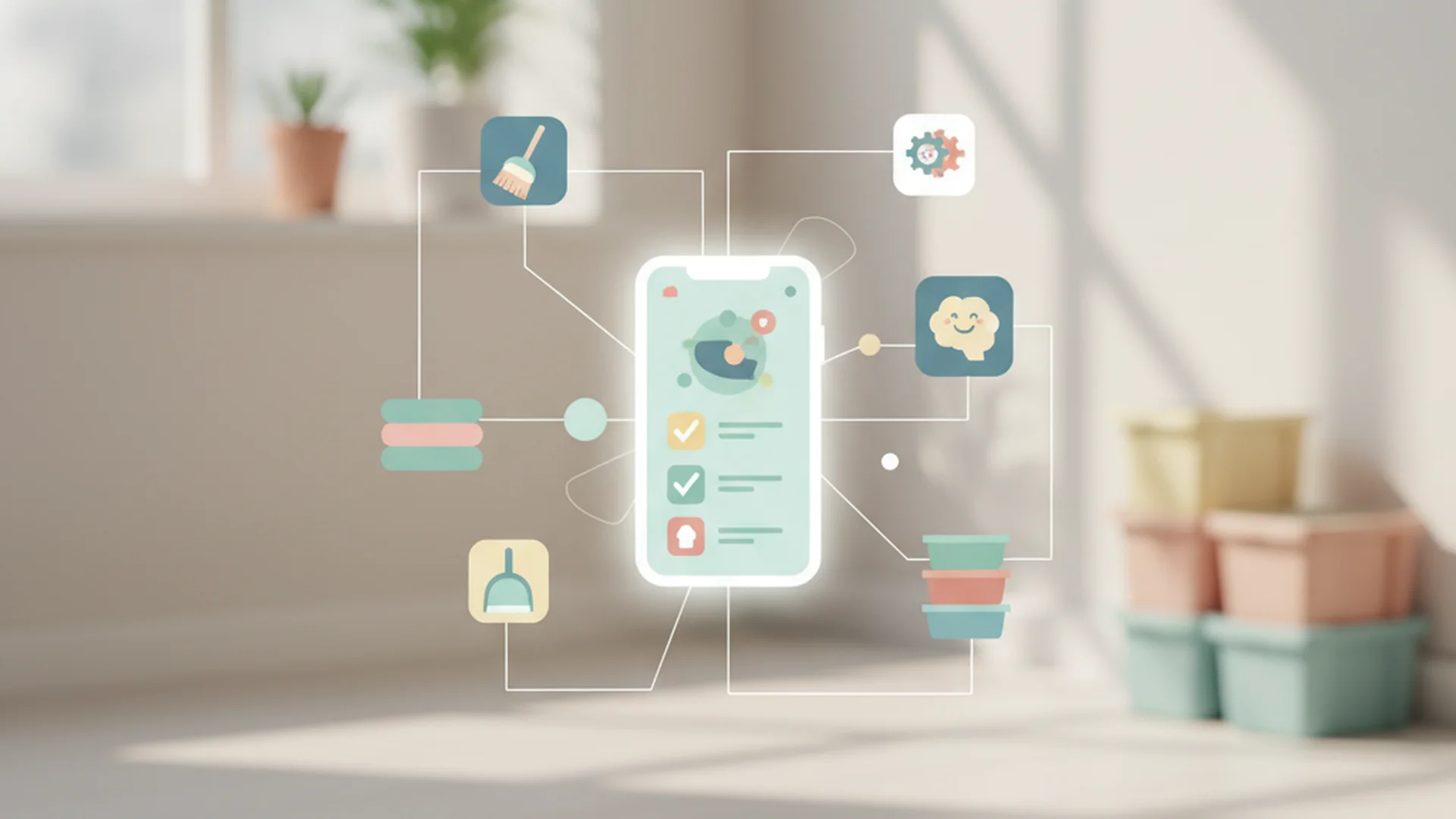
Should I use a digital or paper checklist?
How do I stop "side-questing" while cleaning?
Conclusion
Living with ADHD means your brain works differently, and your adhd cleaning checklist should reflect that. By moving away from the "all-or-nothing" mentality and embracing functional, low-demand routines, you can create a space that supports your mental health. Remember, your home exists to serve you; you do not exist to serve your home.
Whether you are using the 5 Things Method or setting a timer for a 10-minute "dopamine hit" session, the goal is progress, not perfection. Start small, be kind to yourself, and watch how much easier "care tasks" become when you remove the weight of expectation.
Success: You've taken the first step toward a more manageable home by learning how your brain works. Pick one item from the "Daily Checklist" and do it right now—it only takes two minutes!
Cleaning that keeps score
Every task earns points, every streak multiplies them, and Premium adds a household leaderboard plus a monthly Dustagorgon to beat.
- Free forever
- 30 badges to earn
- Up to 6 in a household
No card needed. Set up your rooms in a couple of minutes.