In this article
What you’ll learn
- Hating cleaning is a common experience shared by millions and is often linked to brain chemistry.
- Cleaning is a morally neutral task; a messy house does not define your character.
- Modern trends in 2026 focus on "function over perfection" and automated "invisible cleaning."
If the sight of a overflowing laundry basket or a sink full of dishes fills you with a sense of deep-seated dread, you are far from alone. In fact, it is completely normal to hate cleaning. While society has long preached that "cleanliness is next to godliness," the reality for many is that household chores are physically demanding, repetitive, and offer very little in the way of long-term satisfaction.
As we move further into 2026, the cultural conversation around housekeeping is shifting. We are finally moving away from the pressure of museum-perfect homes and toward a philosophy of "function over perfection." If you've been asking for a normal to hate cleaning answer, the truth is that your brain is likely wired to prioritize high-stimulation tasks over the low-dopamine grind of tidying up.
The Reality of Cleaning Aversion
Why do so many of us struggle with tasks that seem so basic? Statistics show that cleaning isn't just a minor annoyance; for many, it is a significant source of stress. Recent 2025 surveys indicate that the average person spends nearly three hours procrastinating on cleaning—time that actually exceeds the two hours typically required to do the work. This "procrastination paralysis" highlights that the mental hurdle is often much larger than the physical task itself.
The Bathroom Barrier
Globally, cleaning the bathroom remains the most hated chore. Approximately 50% of the population ranks it as their least favorite task. It’s easy to see why: it involves harsh chemicals, awkward physical positions, and contact with germs.
The Generational Shift
We are also seeing a massive shift in how different generations view their homes. About 45% of Gen Z and Millennials report feeling intense embarrassment if a guest sees their home uncleaned. However, 39% of Gen Z admit they only clean when they are expecting visitors. This "crisis cleaning" cycle contributes to the feeling that cleaning is a performative burden rather than a way to care for oneself.
Note: The "Gender Gap" remains a reality even in 2026. Reports indicate women still perform an average of 2.6 hours of household work per day, compared to 2.0 hours for men. This imbalance often fuels resentment and makes the act of cleaning feel even more draining.
Why Your Brain Hates Tidying Up
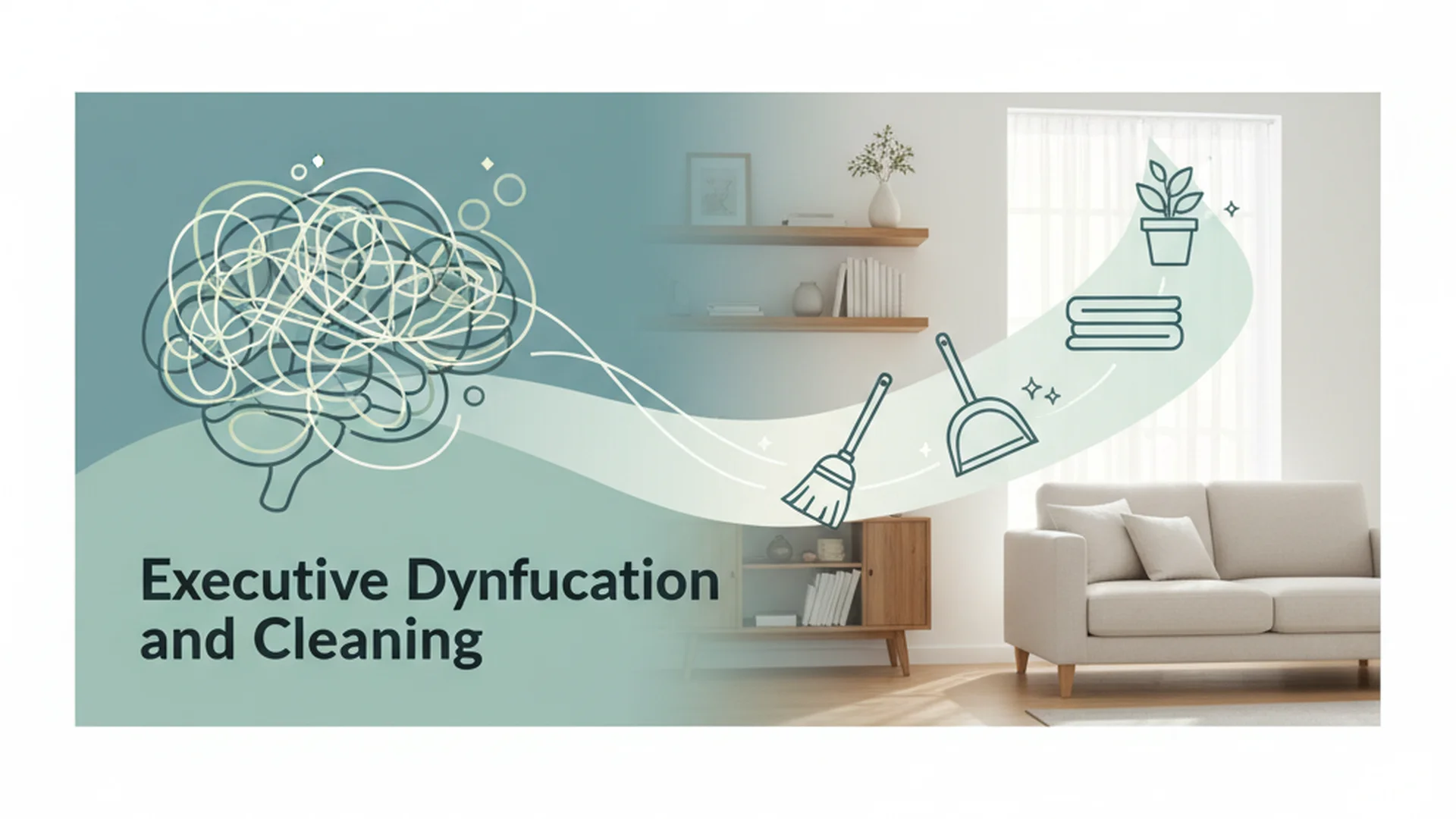
If you find yourself physically unable to start a task, it’s rarely about laziness. More often, it’s about Executive Dysfunction. This is a psychological term for the brain's struggle with "task initiation" (knowing how to start) or "sequencing" (ordering the steps of a complex task).
The Dopamine Deficit
For those with ADHD or similar neurodivergent traits, cleaning is particularly difficult because it lacks immediate stimulation. An ADHD brain craves dopamine, and folding a mountain of laundry provides almost none. This can make a simple task feel physically painful or impossibly boring.
The Delayed Gratification Problem
Cleaning is a task with high "reset" frequency. You clean the kitchen, you cook a meal, and the kitchen is dirty again. This lack of permanent progress makes the brain feel like the effort is wasted, leading to a "why bother?" mentality.
Tip: If you struggle with task initiation, try "Body Doubling." This involves cleaning while on a phone call or having someone else in the room (even if they are just reading). The social presence provides the external stimulation your brain needs to stay on track.
Best Practices for the Cleaning-Averse
As a home organization expert, I recommend moving away from "all-or-nothing" thinking. In 2026, the trend is toward "Struggle Care"—a movement that gives you permission to meet your basic needs without the guilt of high-maintenance standards.
| Strategy | Focus | Best For |
|---|---|---|
| Five Things Method | Categorization | Overwhelming Messes |
| Closing Shift | 15-minute Reset | Maintaining Daily Flow |
| Invisible Cleaning | Automation | Reducing Manual Labor |
| Body Doubling | Social Accountability | Task Initiation Issues |
The Five Things Tidying Method
Popularized by KC Davis, this method suggests that every messy room only contains five categories of things:
- Trash
- Dishes
- Laundry
- Things that have a place
- Things that don't have a place
By focusing on only one category at a time, you stop your brain from "spinning in circles" and trying to do everything at once.
The Rise of "Invisible Cleaning"
By 2026, technology has caught up with our desire to avoid chores. AI-powered robot vacuums now feature LiDAR 3D mapping and self-maintaining docks. These systems can reduce manual floor care by up to 60%. Embracing automation isn't "cheating"—it’s a smart way to manage your energy.
Success: One client reduced her weekly cleaning stress by 80% simply by switching to paper plates during a high-stress work month and investing in a self-emptying vacuum. This is "Struggle Care" in action.
Common Mistakes to Avoid
When you hate cleaning, you often fall into traps that make the situation worse. Avoiding these mental pitfalls can change your relationship with your home.
1. The "All-or-Nothing" Fallacy
Many people think that if they can't deep-clean the whole house, there’s no point in doing anything. The Correction: Remember that "anything worth doing is worth doing poorly." Doing five minutes of dishes is objectively better than doing zero minutes.
2. Moralizing the Mess
We often believe that "good, successful people" have clean houses, and "lazy people" have messy ones. The Correction: Cleaning is a care task, and care tasks are morally neutral. Your worth as a human being is not tied to the state of your baseboards.
3. Waiting for Motivation
Motivation is a feeling that usually follows action, not the other way around. The Correction: Use the "Five-Minute Rule." Commit to cleaning for just five minutes. If you want to stop after five minutes, you have permission to do so. Often, the momentum will carry you through.
Warning: Be careful of "Visible-Only Cleaning." While it's tempting to only clean what guests can see, micro-dust and allergens accumulate in hidden areas, which can eventually impact your sleep quality and respiratory health.
Frequently Asked Questions
Is it normal to hate cleaning?
Why do I find cleaning so overwhelming?
Does hating cleaning mean I’m lazy?
Why is cleaning harder for people with ADHD or Depression?
What is the "Closing Shift" concept?
Conclusion
At the end of the day, your home exists to serve you—you do not exist to serve your home. It is completely normal to hate cleaning, especially in a world that demands so much of our time and mental energy. By reframing chores as "care tasks" and utilizing strategies like the Five Things Method or smart home automation, you can maintain a functional space without the weight of shame.
If you are struggling today, give yourself permission to do the bare minimum. A "functional lived-in aesthetic" is not only a trend for 2026; it is a sustainable way to live.
Success: Embracing a "function over perfection" mindset allows you to spend your limited energy on the things that actually matter to you, rather than chasing an impossible standard of cleanliness.
Cleaning that keeps score
Every task earns points, every streak multiplies them, and Premium adds a household leaderboard plus a monthly Dustagorgon to beat.
- Free forever
- 30 badges to earn
- Up to 6 in a household
No card needed. Set up your rooms in a couple of minutes.