In this article
What you’ll learn
- View cleaning as a morally neutral "care task" to reduce shame
- Use the "5 Things" method to break down overwhelming rooms
- Leverage AI tools like Goblin.tools to bypass executive dysfunction
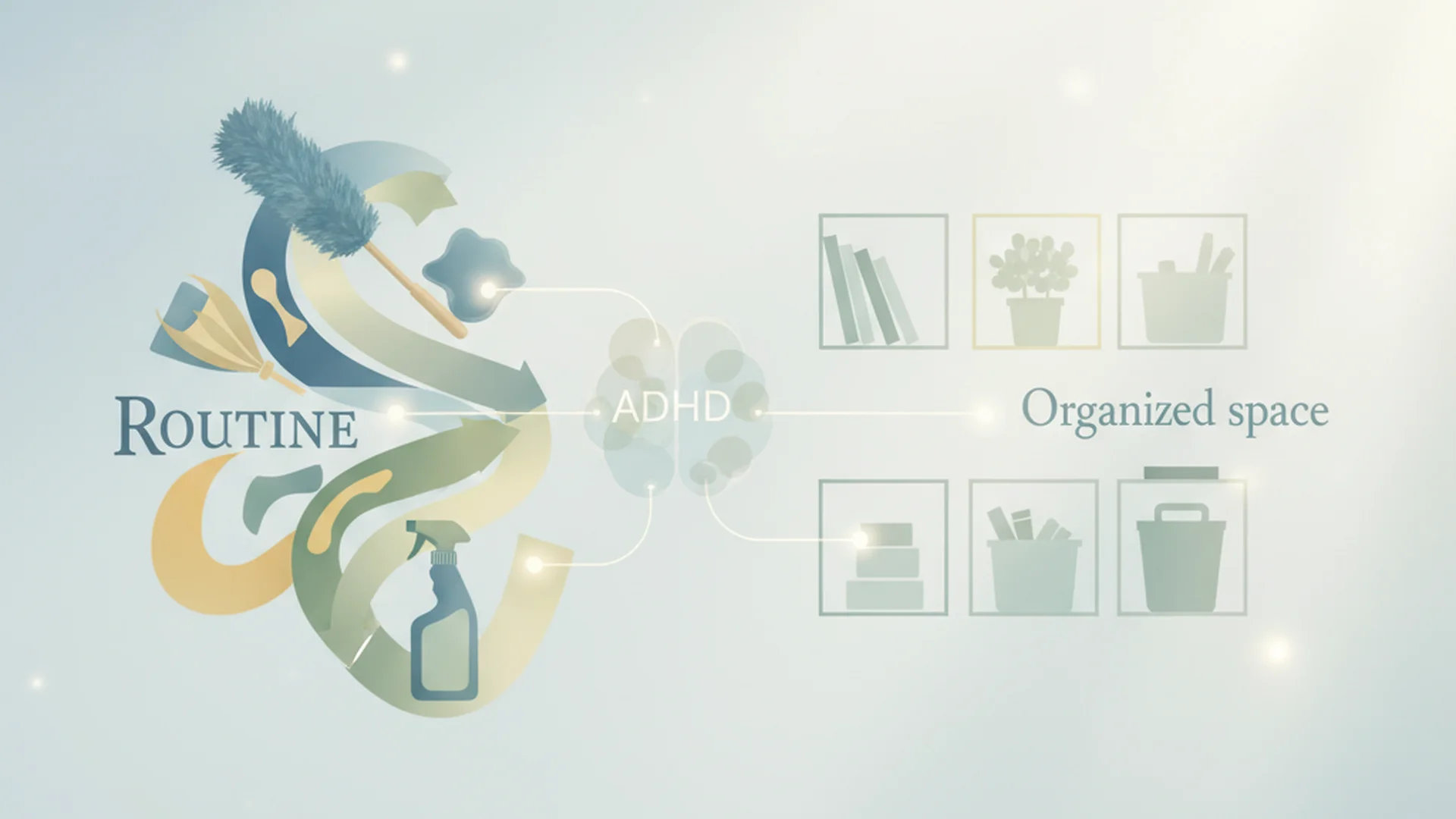
For many adults, a messy house is a source of mild annoyance. For those with ADHD, it is often a source of deep-seated shame, chronic stress, and paralysis. If you have ever stood in the middle of a cluttered room, feeling physically unable to move because your brain cannot decide whether to pick up a sock or a coffee mug first, you are not alone. Finding effective adhd cleaning tips isn't just about learning how to scrub a floor; it’s about understanding how to work with a brain that processes the world differently.
Adults with ADHD find executive function far harder going than their neurotypical peers do. This isn't a lack of willpower; it is a neurological gap in task initiation, planning, and organization. ADHD is common, and running a household is one of the places where that gap bites hardest—which is why the traditional "just do it" advice is fundamentally broken for the neurodivergent community.
Why Your Brain Struggles with Traditional Cleaning
Before diving into the practical adhd cleaning tips tips found in communities like adhd cleaning tips reddit, it is essential to understand the "ADHD Tax." Cleaning requires a high level of executive function (EF). You must see a mess, categorize it, prioritize the steps, maintain focus despite distractions, and see it through to completion. For an ADHD brain, every single one of those steps is a potential "glitch" point.
The Executive Function Gap
That gap in executive function means the "mental energy" required for a neurotypical person to wash a dish might be a 2 out of 10, whereas for someone with ADHD, it feels like an 8. This leads to what is commonly called "ADHD Paralysis." When the brain is overwhelmed by the volume of sensory input (the mess) and the complexity of the task (where to start), it simply shuts down to protect itself.
The Myth of Moral Obligation
One of the most transformative shifts in ADHD home management comes from expert KC Davis, author of How to Keep House While Drowning. She posits that cleaning and hygiene are "Care Tasks" and are morally neutral. Having a dirty kitchen does not make you a "bad" person, a "lazy" spouse, or a "failed" adult. It simply means you have a space that is currently non-functional. Removing the shame is often the first step toward finding the energy to clean.
Note: Care tasks exist to serve you; you do not exist to serve your care tasks. If your home isn't "Instagram-ready" but you can still cook a meal and find clean clothes, you are winning.
Core Frameworks: The Gold Standard ADHD Cleaning Tips
If lists and planners have failed you in the past, it’s likely because they were designed for linear brains. The following methods are specifically designed to accommodate the "ping-pong" nature of ADHD thought patterns.
The "5 Things" Method
Developed by KC Davis, this is perhaps the most famous of all adhd cleaning tips. It suggests that in any messy room, there are only actually five things:
- Trash: Grab a bag and move through the room picking up only trash. Do not look at anything else.
- Dishes: Collect all dishes and move them to the kitchen. Do not wash them yet; just get them there.
- Laundry: Gather all clothes and put them in a hamper or a pile.
- Things that have a place: Move these items to the general vicinity of where they belong.
- Things that don't have a place: Put these in a "Doom Box" or a designated pile to be handled later.
By categorizing the mess into just five categories, you stop the brain from seeing 500 individual items and start seeing five manageable tasks.
Junebugging (The Anchor Point Technique)
"Junebugging" is a technique frequently discussed on adhd cleaning tips reddit. Think of a June bug hitting a screen door—it keeps coming back to the center.
- Pick one "anchor point" (e.g., the kitchen sink).
- Start cleaning the sink.
- If you notice a stray toy and walk it to the playroom, that’s fine. But as soon as the toy is down, you "Junebug" back to the sink.
- You are allowed to wander, provided you always return to your anchor until it is 100% complete.
Point of Performance
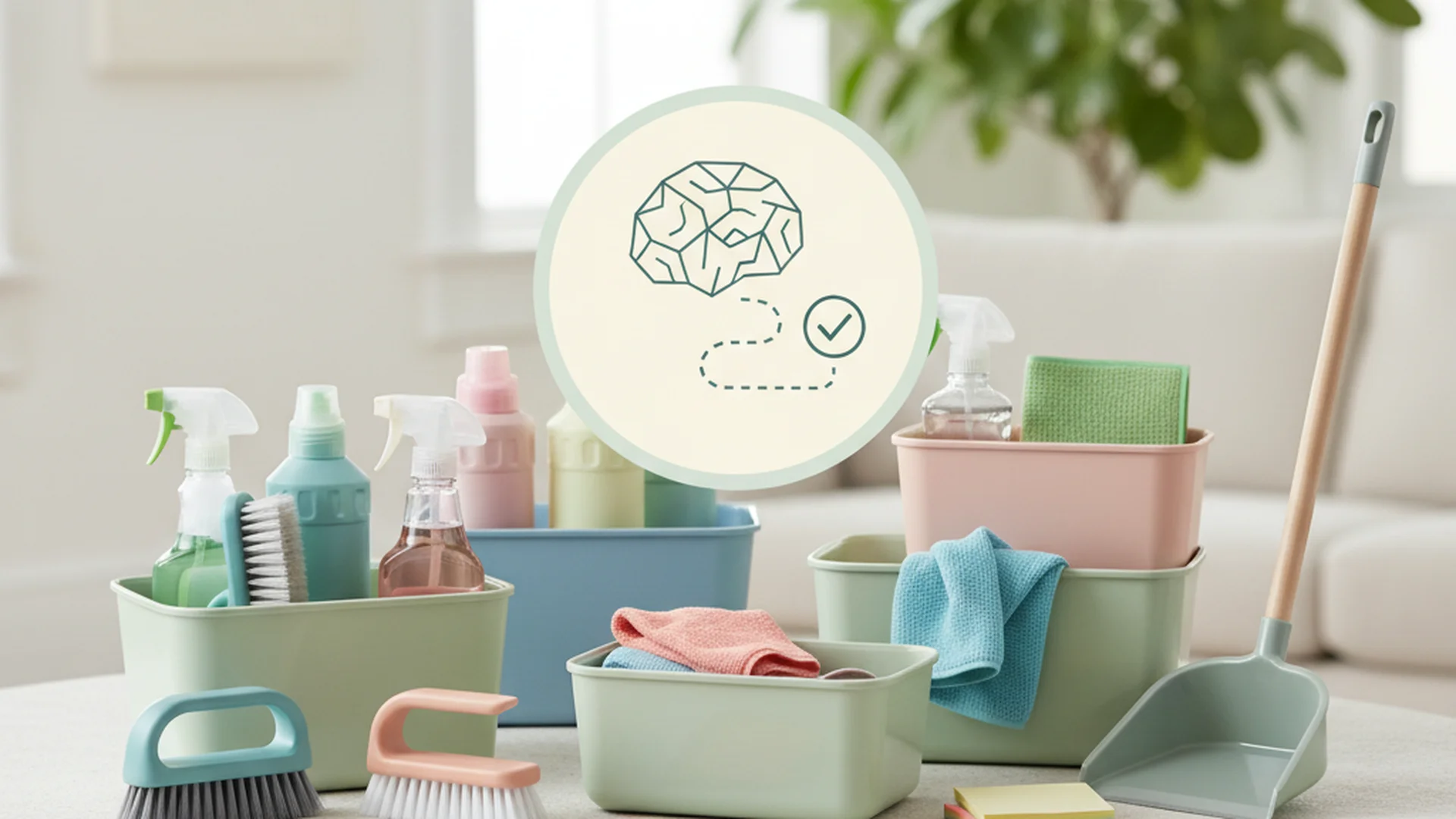
This strategy involves moving your supplies to where the work actually happens. If you find it impossible to walk to the hallway closet to get the Windex to clean the bathroom mirror, keep a bottle of Windex inside the bathroom cabinet. If you always forget to take your meds, keep them next to the coffee maker. By reducing the "friction" of the task, you make it easier for your brain to initiate.
| Strategy | Best For | Brain Benefit |
|---|---|---|
| 5 Things | Total room overhaul | Reduces overwhelm/categorizes mess |
| Junebugging | Maintaining focus | Allows for "side-quests" without losing the plot |
| Doom Boxes | Rapid decluttering | Clears visual noise immediately |
| Shoes On | Task initiation | Signals "work mode" to the brain |
2025 Tech and Trends: Gamifying the Mess
The landscape of cleaning has changed significantly in 2025-2026. We now have access to tools that act as an "external frontal lobe," doing the heavy lifting of planning for us.
AI Executive Function Partners
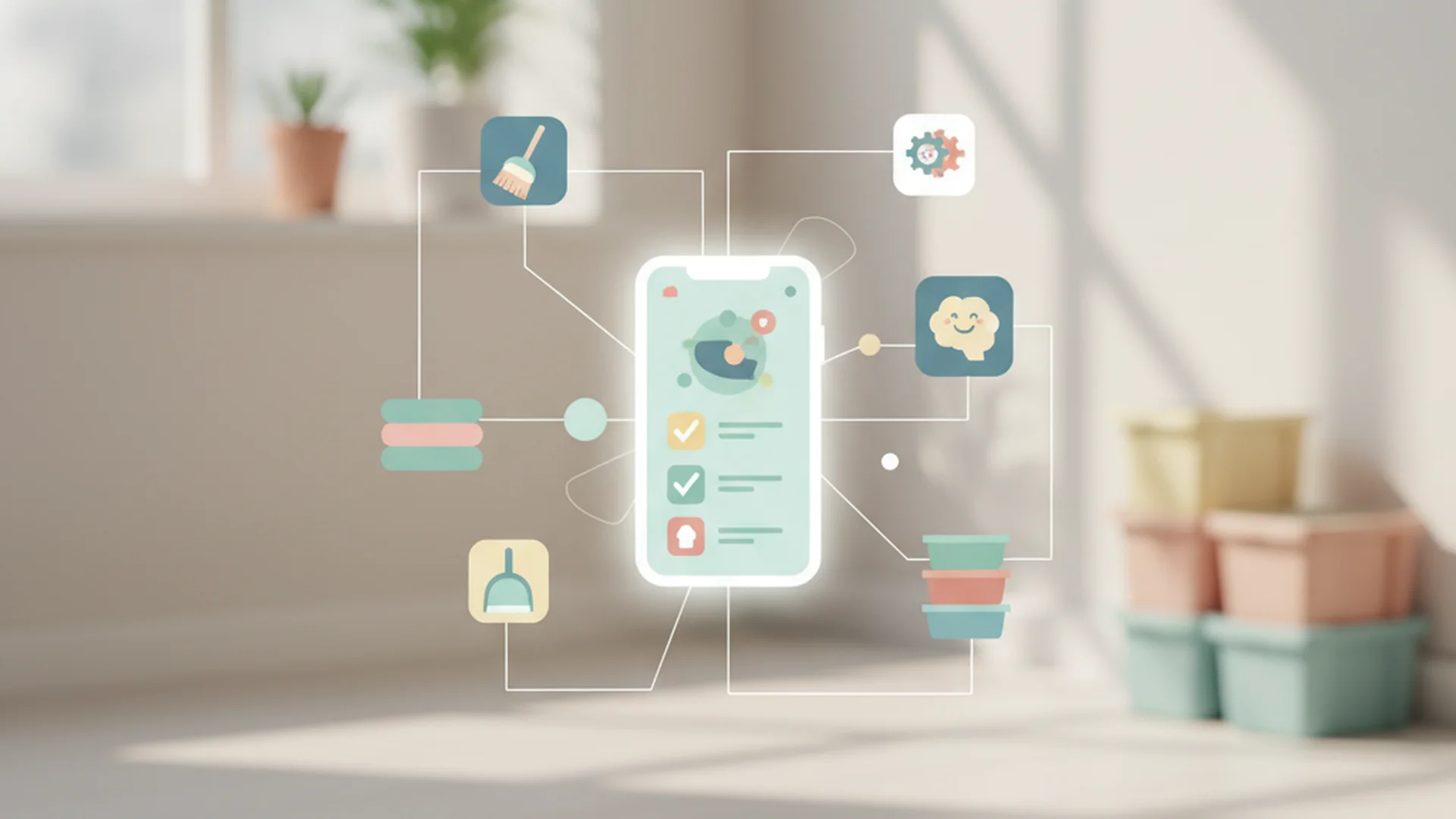
Tools like Goblin.tools (specifically the "Magic To-Do" feature) are game-changers. You can type in a vague, terrifying task like "Clean the Kitchen," and the AI will break it down into tiny, dopamine-inducing steps like "Put three forks in the dishwasher" or "Wipe one counter." This removes the "planning" hurdle that often causes paralysis.
Virtual Body Doubling 2.0
"Body doubling" is the practice of working alongside someone else to stay focused. In 2025, apps like dubbii and platforms like Focusmate have evolved. You can now access asynchronous "clean with me" videos where creators perform the same tasks in real-time. Knowing someone else is "doing the work" with you can provide the social pressure needed to stay on task.
The "Dopamine Menu" (Dopamenu)
Since ADHD is essentially a dopamine deficiency, cleaning often feels physically painful because it is under-stimulating. A "Dopamine Menu" helps you stay "fed" while you work:
- Starters: 5-minute activities to get you going (e.g., putting on a high-energy playlist).
- Mains: The cleaning tasks themselves.
- Sides: Things you do while cleaning (e.g., listening to a specific "cleaning only" podcast).
- Desserts: Rewards for finishing (e.g., 15 minutes of gaming).
Tip: Wear "work shoes" (sneakers) while cleaning. Many in the ADHD community find that keeping shoes on prevents them from accidentally lounging on the couch and losing momentum.
Common Mistakes to Avoid
Even with the best adhd cleaning tips, it is easy to fall into "traps" that lead to burnout.
The "Marathon" Fallacy
Waiting for a "big burst of energy" to clean the entire house is a recipe for failure. This energy usually comes from a place of panic or hyperfocus, which inevitably leads to a "crash" and several days of being unable to do anything.
- The Fix: Aim for "little and often." Set a timer for 10 minutes. When it goes off, you are allowed to stop.
The "Clean as You Go" Myth
Neurotypical advice often suggests "cleaning as you go" while cooking or working. For ADHD brains, this is a form of constant task-switching. Every time you stop chopping an onion to wash a knife, you risk losing the "thread" of the recipe.
- The Fix: Batch your cleaning. Finish the cooking, eat the meal, and then enter "cleaning mode."
Moralizing the Mess
Viewing a pile of laundry as a personal moral failure drains the emotional battery you need to actually do the laundry.
- The Fix: Use neutral language. Instead of "I’m so lazy for leaving these clothes," say "The laundry system isn't working for me right now; how can I make it easier?"
Warning: Avoid "side-questing" into deep-organizing. If you are supposed to be washing dishes, do not start color-coding your spice rack just because you found a stray cumin bottle.
Real-World Examples of ADHD Cleaning Success
Example 1: The "21 Savage" Sprint Sarah, a freelance designer with ADHD, uses the "21 Savage" hack. When her office gets overwhelming, she sets a timer for 10 minutes and tries to find exactly 21 items to either throw away, put in the laundry, or return to another room. The gamification makes it a "sprint" rather than a "marathon," and she usually finds she has the momentum to keep going after the 10 minutes are up.
Example 2: The Doom Box Method Mark struggled with "visual noise." If his coffee table had mail, remotes, and snacks on it, he couldn't relax. Instead of spending an hour sorting the mail (which led to him getting distracted by a bill and ending up on a phone call), he began using a "Doom Box." He sweeps everything into the box, wipes the table, and enjoys the clean surface. He schedules "Box Sunday" once a month to sort the contents when he has the mental bandwidth.
Example 3: AI-Assisted Bathroom Cleaning Elena uses ChatGPT to manage her deep-cleaning. She tells the AI: "I have ADHD and need to clean my bathroom. Give me a list of 10 steps that take less than 5 minutes each." The AI generates a list like "1. Put towels in the wash. 2. Spray the shower. 3. Mirror." Elena checks them off one by one, gaining a hit of dopamine with every checkbox.
Frequently Asked Questions
How often is "normal" for cleaning?
Should I clean by room or by task?
How do I stop "side-questing"?
What do I do when I'm paralyzed by the mess?
Conclusion: Functional Over Perfect
The ultimate goal of these adhd cleaning tips is not to have a house that looks like a magazine spread. The goal is to create a space that supports your life rather than draining your energy. By implementing the "5 Things" method, using AI tools to break down tasks, and removing the moral weight from your chores, you can build a home management system that actually works for your neurodivergent brain.
Remember: Your home is there to serve you. If a "Doom Box" makes you feel better and a "Dopamine Menu" gets the dishes done, then you are doing it right.
Success: By focusing on functionality rather than perfection, you can reduce home-related anxiety and reclaim your time for the things you actually enjoy.
Cleaning that keeps score
Every task earns points, every streak multiplies them, and Premium adds a household leaderboard plus a monthly Dustagorgon to beat.
- Free forever
- 30 badges to earn
- Up to 6 in a household
No card needed. Set up your rooms in a couple of minutes.