In this article
What you’ll learn
- Focus on 'functional' cleaning rather than aesthetic perfection.
- Use the Five Things Method to break down overwhelming messes.
- Prioritize 'Point of Performance' storage to lower activation energy.
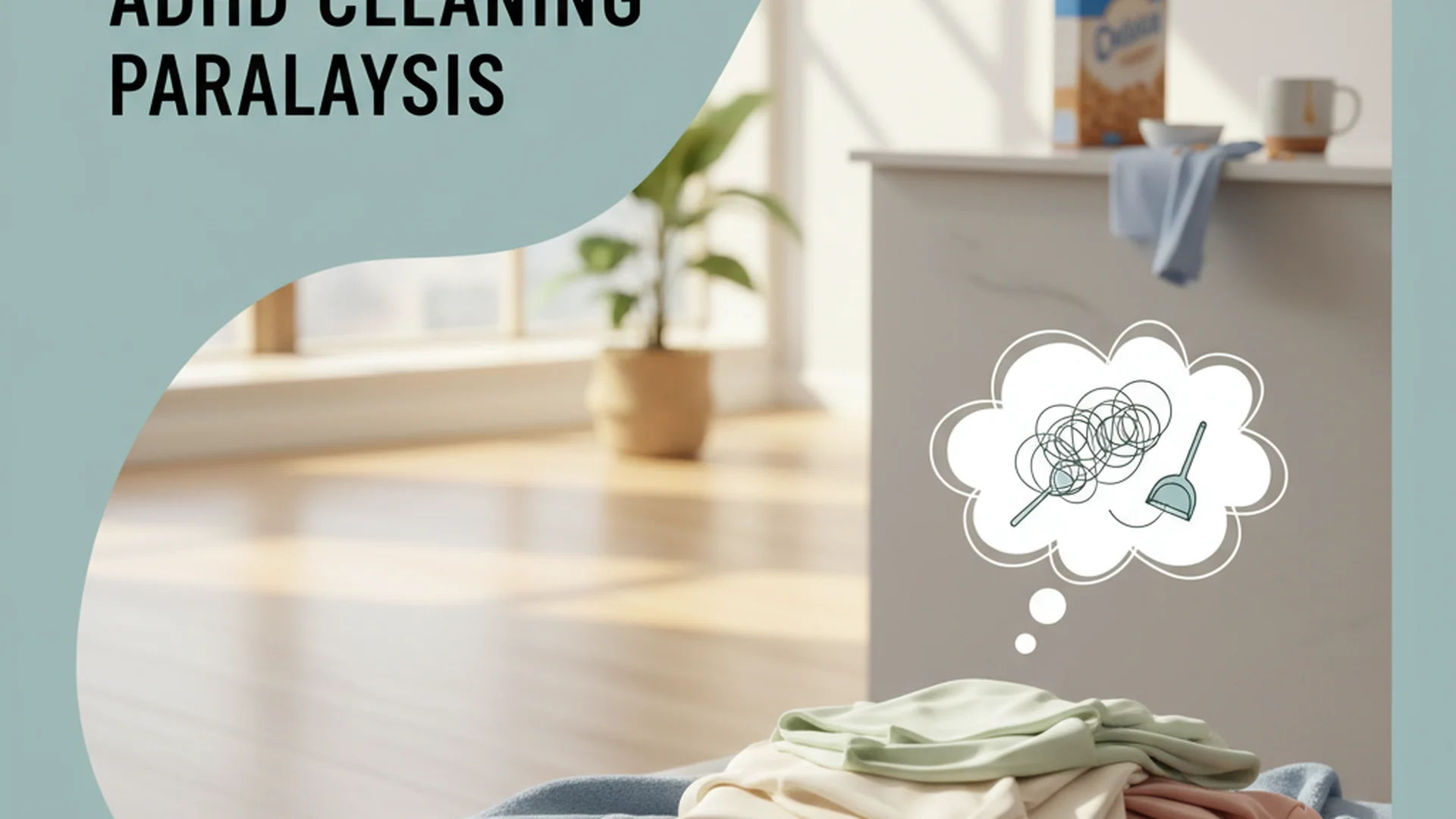
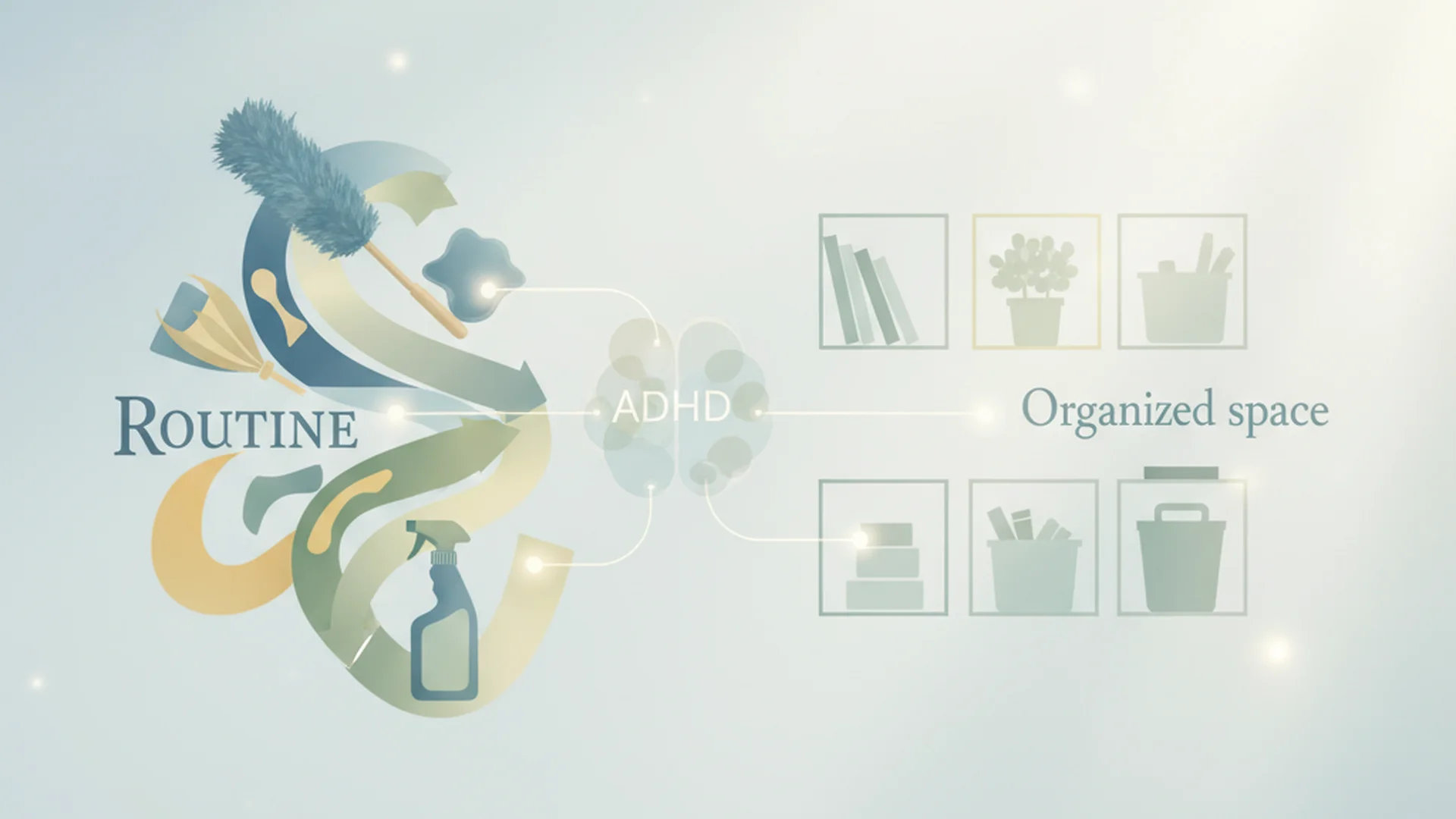
If you have ever stood in the middle of a messy living room, feeling physically unable to move because you don’t know whether to pick up the stray sock, the empty soda can, or the stack of mail first, you aren't lazy. You are likely experiencing "ADHD paralysis." Establishing a functional cleaning routine adhd adults can actually stick to requires a total paradigm shift. Instead of fighting against your brain’s natural wiring, you must build a system that accommodates executive dysfunction, working memory gaps, and the need for immediate dopamine rewards.
The Science of Why Cleaning is Hard for ADHD Brains
Before we dive into the tactics, it is vital to address the "why." ADHD isn't just about being distracted; it’s a physiological impairment of the frontal lobe. This area of the brain governs executive functions—the mental skills that help us plan, organize, and initiate tasks.
When an neurotypical person sees a dirty kitchen, they see a single task: "Clean the kitchen." When an ADHD adult looks at that same kitchen, their brain sees 47 individual, unrelated steps. "Where is the sponge? Is the dishwasher full? I need to find the trash bags. Oh, look, a bill I forgot to pay." This cognitive overload triggers the production of cortisol, the stress hormone. Research shows that adults who perceive their homes as cluttered maintain higher cortisol levels throughout the day, creating a cycle of stress that makes starting even harder.
Note: Messiness is a symptom of executive dysfunction, not a character flaw. Approaching your home with self-compassion is the first step toward a cleaner environment.
The Quick Win: The 5-Minute Trash Sweep
If you are currently feeling paralyzed by a mess, stop reading after this paragraph and set a timer for five minutes. Take a trash bag and walk through your space, looking only for trash. Don't worry about the laundry. Don't worry about the dishes. Just find the wrappers, the junk mail, and the scraps. This "Quick Win" builds immediate momentum and clears the visual field, making the next steps feel significantly less daunting.
The Five Things Method: A Neurodivergent Game Changer
Popularized by KC Davis, the "Five Things Method" is perhaps the most effective cleaning routine adhd adults tips proponents recommend. The goal is to categorize the chaos into only five manageable groups. By ignoring everything else, you stop the "cleaning in circles" trap.
1. Trash
As mentioned above, start with what can be thrown away. It provides the most immediate visual impact.
2. Laundry
Gather all clothes. Do not worry about sorting them yet. Just get them into a basket or to the laundry room.
3. Dishes
Collect every glass, plate, and utensil and move them to the kitchen counter. You don’t have to wash them yet; just clear the other surfaces.
4. Things That Have a Place
These are the "easy" items—the TV remote, your shoes, the book on the coffee table. Move them to their designated spots.
5. Things That Don’t Have a Place
This is where ADHD adults usually get stuck. If an item doesn't have a specific home, put it into a single basket or pile. Do not try to find a home for it now; that requires decision-making energy you need to save for the actual cleaning.
Tip: Use a "Doom Box" (Don't Organize, Only Move) for category five. It clears the surface so you can function, and you can schedule a specific time later to find "homes" for those items.
Strategies to Maintain Momentum
Once you have started, the challenge is staying focused. ADHD adults often lose their cleaning supplies or get distracted by an old photo they found under the couch.
Body Doubling
One of the most effective tools is "body doubling." This simply means having another person present while you work. They don't have to help; they just have to be there. This acts as a "social anchor," keeping your brain tethered to the task at hand. If you live alone, you can use "Clean With Me" videos on YouTube or apps like Focusmate or Dubbii to find virtual body doubles.
Point of Performance Storage
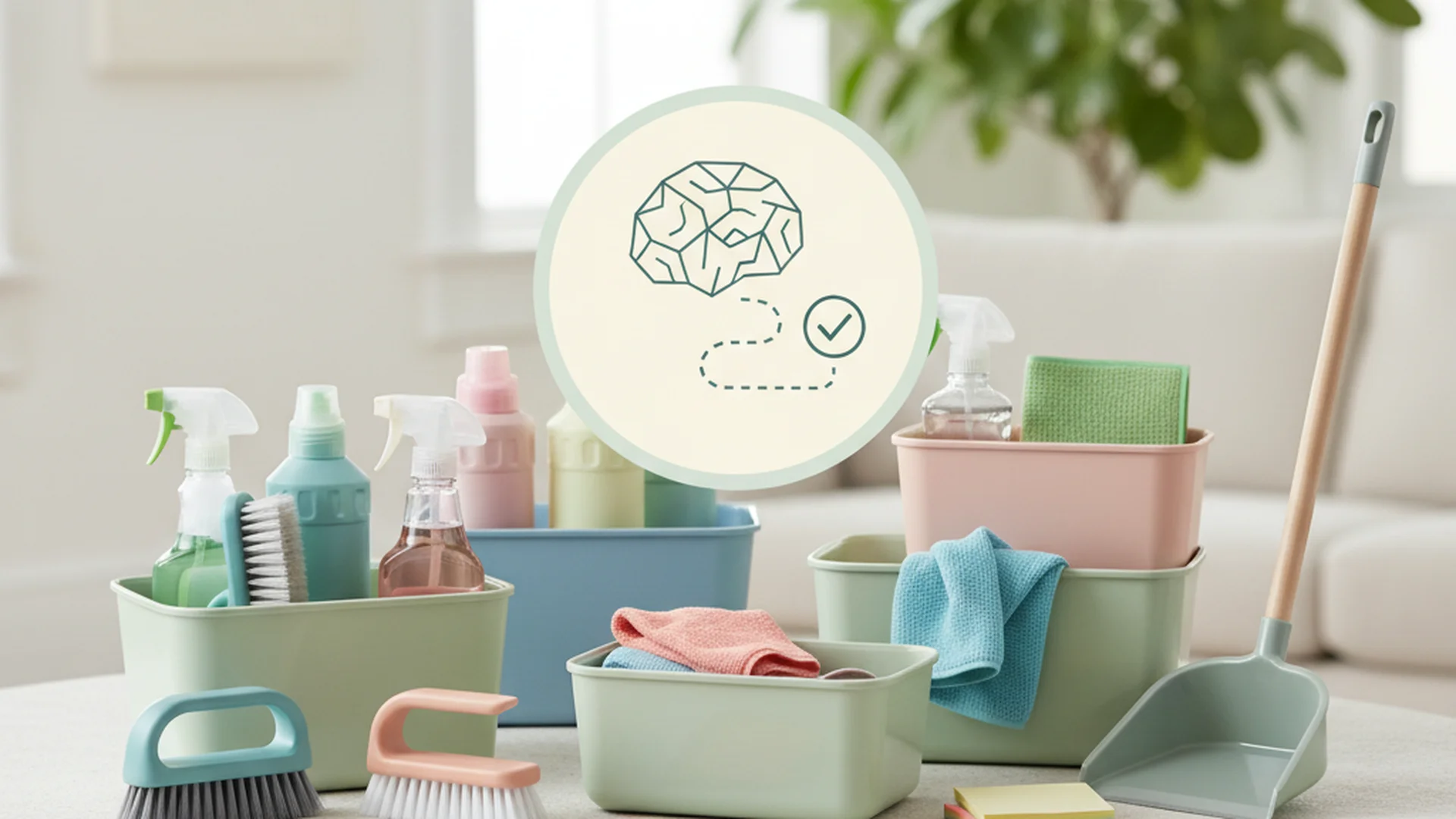
In the world of domestic efficiency, we talk about the "Point of Performance." This means storing your cleaning supplies exactly where you use them.
- Real-World Example: Elena struggled to keep her bathroom clean because the cleaning spray was in the kitchen. She bought a second set of supplies and kept them under the bathroom sink. Now, when she sees a smudge while brushing her teeth, the barrier to cleaning it is zero.
The 20% Rule
Expert organizer Lisa Woodruff suggests the 20% rule: only attempt to declutter or clean 20% of a space at one time. If you try to do the whole room, you will hit "decision fatigue" within an hour and leave the room in a "tornado state" (everything pulled out and nothing put back).
Warning: Never start a deep clean of a closet or cabinet unless you have at least two hours of guaranteed high energy. "Pulling everything out" is the fastest way to trigger a cleaning meltdown.
Rhythms vs. Routines: Why Your Schedule Fails
Many cleaning routine adhd adults reddit threads discuss the frustration of "failing" a schedule. Most ADHD adults struggle with strict, time-based routines (e.g., "Monday is Laundry Day"). If Monday is a high-stress work day or a low-energy day, the laundry doesn't get done, the schedule is "broken," and the individual often gives up entirely.
Instead, transition to Rhythms. A rhythm is a sequence of events that happens when the trigger occurs.
- The Kitchen Reset: This isn't a "deep clean." It is a nightly sequence: Load dishwasher, wipe counters, clear the sink. This is a gift to your "tomorrow self" so you don't start the next day in a state of stress.
- The Transition Sweep: Spend 10 minutes Tidying when you get home from work before you sit on the couch. Once the ADHD brain hits the couch, the "activation energy" required to get back up is nearly impossible to find.
| Feature | Standard Routine | ADHD-Friendly Rhythm |
|---|---|---|
| Structure | Time-based (9:00 AM) | Trigger-based (After coffee) |
| Flexibility | Rigid | High (Accounts for energy levels) |
| Goal | Perfection/Checklist | Functionality/Flow |
| Motivation | Guilt/Shoulds | Dopamine/Ease |
Gamification and Modern Tools
By 2025, the integration of AI and gamification has revolutionized how neurodivergent adults handle chores.
- AI-Generated Flexibility: You can now use tools like ChatGPT to say: "I have 20 minutes, very low energy, and my kitchen is a wreck. Give me a 3-step plan." This removes the "planning" burden from your executive function.
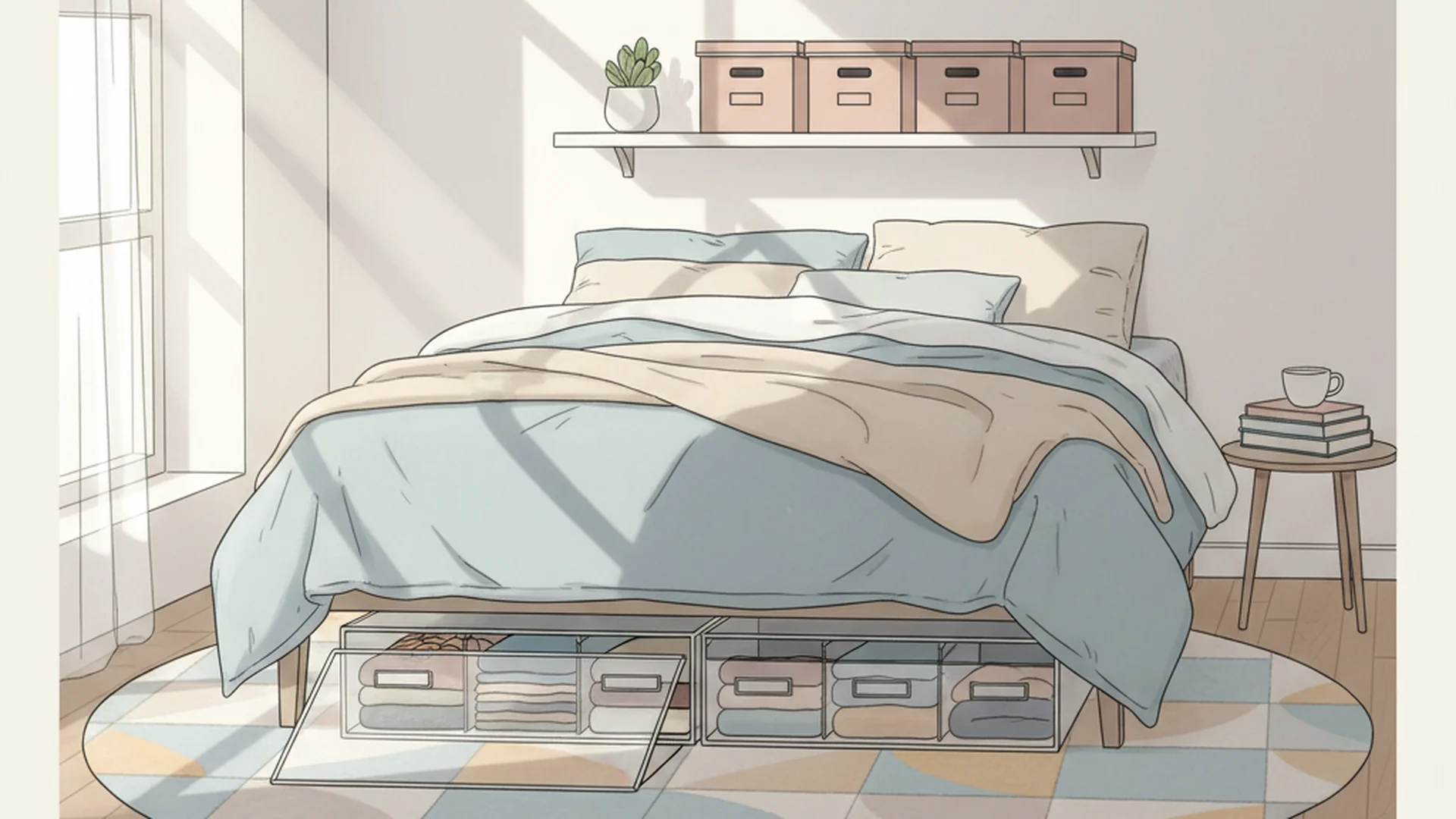
- Visual Cues over Hidden Storage: The "Out of sight, out of mind" rule is very real for ADHD. If you put your cleaning supplies in an opaque bin inside a dark closet, they effectively cease to exist. Use clear bins, open shelving, and labels to keep your tools in your visual field.
- Dopamine Decor: Make cleaning more "stimulating." Wear fun aprons, use high-quality cleaners that smell like your favorite scent, or listen to a specific "cleaning-only" podcast or high-tempo playlist.
Success: Turning cleaning into a "game" with a visual timer (like a Time Timer) can help bypass the brain's resistance to "boring" tasks.
Common Mistakes to Avoid
Understanding what not to do is just as important as the routine itself.
- Mistake: Putting things "where they make sense." Instead, put things where it makes sense to look for them. If you always look for your keys on the kitchen counter, put a bowl there. Don't force yourself to use a key hook by the door if your brain doesn't naturally go there.
- Mistake: Waiting for "Motivation." Motivation is a feeling; discipline is a habit, but for ADHD, momentum is the engine. Don't wait to feel like cleaning. Start with one small, physical movement (like picking up one sock).
- Mistake: The "All-or-Nothing" Mentality. If you can't wash all the dishes, wash three. A partially clean sink is objectively better than a completely dirty one.
Frequently Asked Questions
Should I clean by room or by task?
How often is "normal" for cleaning things like baseboards or fans?
Why do I lose my cleaning supplies while I’m cleaning?
How do I stop the "Doom Box" from taking over my life?
Conclusion
Creating a cleaning routine adhd adults can actually follow isn't about trying harder; it's about trying differently. By moving away from shame-based cleaning and toward a system that respects your brain's unique wiring—using the Five Things Method, body doubling, and point-of-performance storage—you can create a home that supports you rather than stresses you out. Remember, your home exists to serve you; you do not exist to serve your home.
Success: Implementing just one of these strategies today—like the 5-minute trash sweep—can break the cycle of paralysis and start your journey toward a more functional living space.
Cleaning that keeps score
Every task earns points, every streak multiplies them, and Premium adds a household leaderboard plus a monthly Dustagorgon to beat.
- Free forever
- 30 badges to earn
- Up to 6 in a household
No card needed. Set up your rooms in a couple of minutes.