In this article
What you’ll learn
- ADHD-specific apps act as a 'cognitive prosthesis' for executive dysfunction.
- Gamification and visual cues are essential for maintaining dopamine levels.
- AI tools like Goblin.tools can break down paralyzing tasks into tiny steps.
For many, a messy home is just a weekend project. But for those of us living with ADHD, a sink full of dishes or a cluttered living room can feel like an insurmountable mountain. This isn't a lack of willpower; it is a direct result of executive dysfunction. Finding the right cleaning apps for ADHD can be the difference between a spiral of "task paralysis" and a home that finally feels manageable.
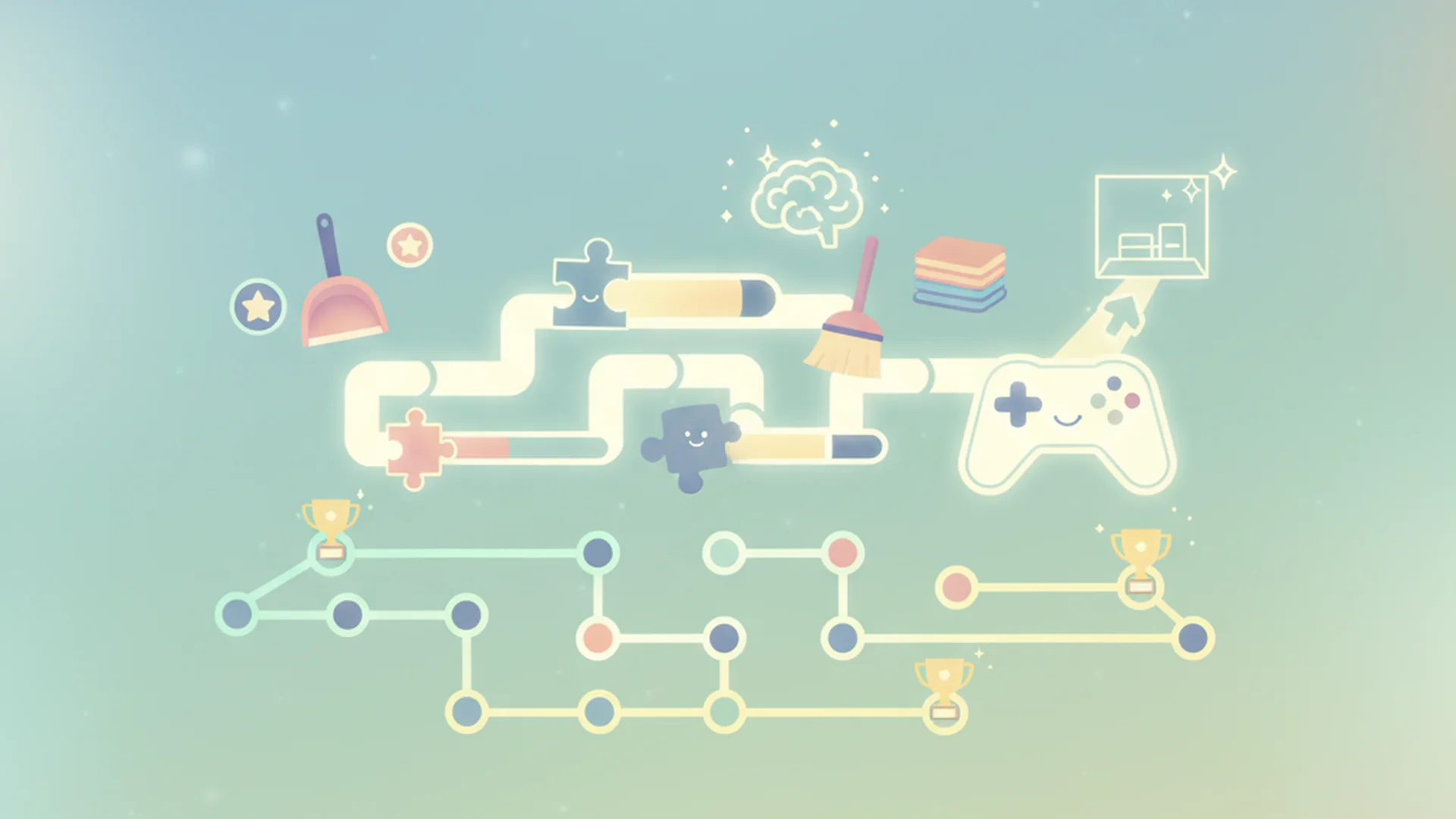
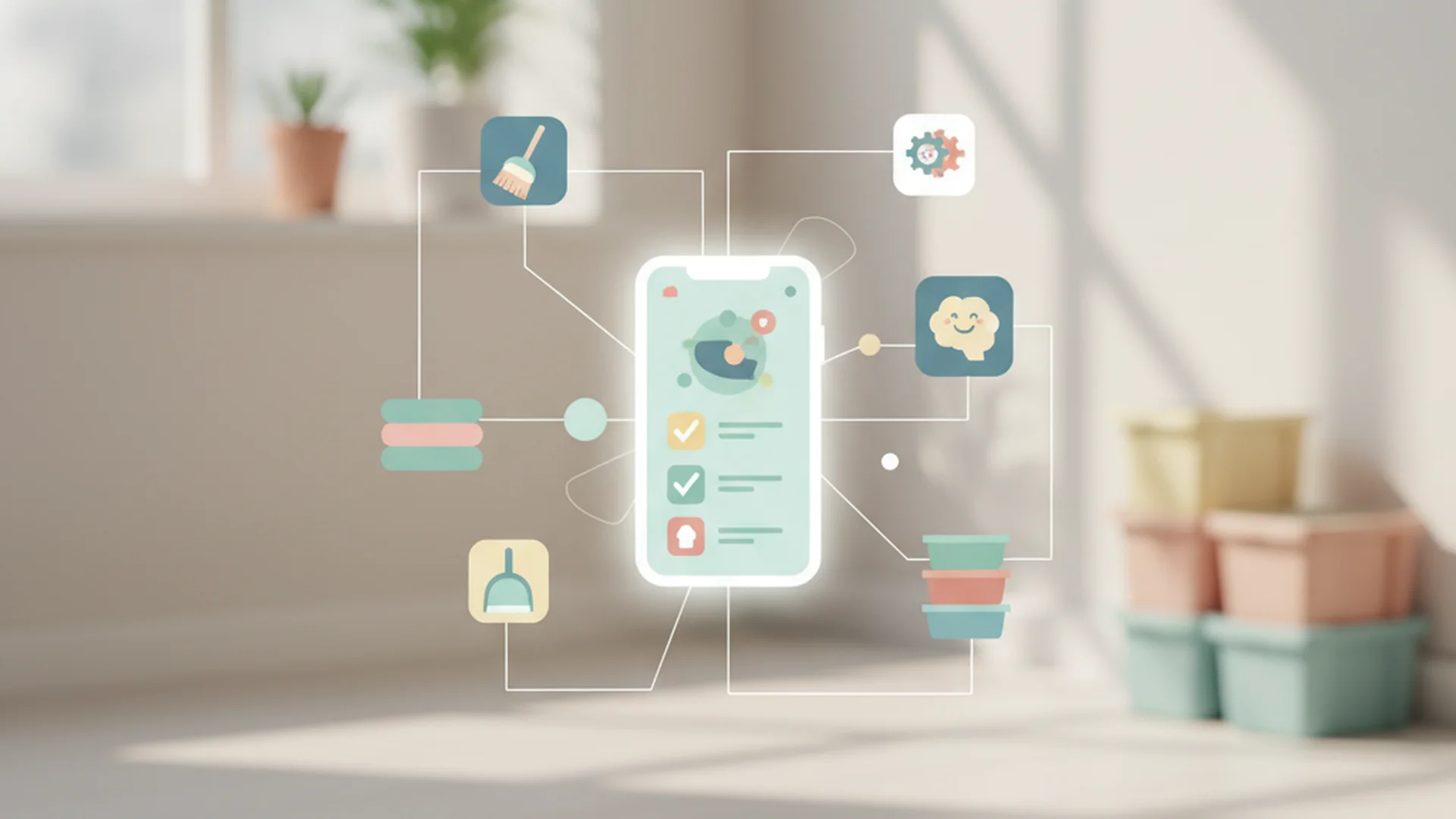
When your brain’s internal "project manager" goes on strike, external structures are required to bridge the gap. In 2025, the landscape of digital tools has shifted from simple checklists to sophisticated AI assistants and dopamine-driven games designed specifically for neurodivergent minds.
The Science: Why ADHD Makes Cleaning So Hard
Understanding why cleaning is difficult is the first step toward fixing it. According to the ADHD Evidence Project (2025), apps serve as a "cognitive prosthesis." This means the app does the heavy lifting for the parts of your brain that struggle with:
- Task Initiation: The "starting" energy required to move from the couch to the kitchen.
- Prioritization: Deciding if the laundry is more important than the mail pile.
- Working Memory: Remembering where you put the glass cleaner mid-task.
- Time Blindness: Not realizing it has been three weeks since you last mopped.
Research from CHADD confirms that the "chore gap" is real. ADHD brains seek dopamine, and since cleaning is often repetitive and under-stimulating, the brain naturally avoids it. The best apps for ADHD cleaning don't just give you a list; they provide the dopamine or the structure needed to keep moving.
Note: If you find yourself "app-hopping" every few months, don't worry. This is a common ADHD trait. The novelty of a new app can provide the necessary dopamine hit to restart your habits.
The Top Dedicated Cleaning Apps for ADHD
If you want an app that understands "cleaning" as its primary language, these are the heavy hitters for 2025.
1. Sweepy: The Visual Master
Sweepy remains a gold standard in the ADHD community. Instead of a deadline that screams "LATE," Sweepy uses a "cleanliness gauge."
- How it works: You assign a "cleanliness level" to each room. As days pass, a bar moves from green to red.
- ADHD Benefit: It combats time blindness. You don't have to remember when you last cleaned the bathroom; the red bar tells you it’s time.
2. Tody: The Prioritization Pro
Tody takes the "to-do" list and turns it into a bar-chart system. It focuses on the urgency of the task rather than just the date.
- How it works: Tasks are sorted by how "overdue" they are based on your custom frequency.
- ADHD Benefit: It removes the "choice paralysis" of deciding what to do. You simply look for the most urgent bar and start there.
3. RoutineFlow: The Momentum Builder
RoutineFlow is a visual routine builder that has gained massive popularity in late 2024 and early 2025.
- How it works: It uses a "flow" system. Once you start a routine, it shows you one task at a time with a countdown timer.
- ADHD Benefit: It uses AI to auto-generate routines based on your home’s layout, reducing the "productive procrastination" of setup.
| App Name | Best For | Pricing Model |
|---|---|---|
| Sweepy | Visual users | Free / Subscription |
| Tody | Customization | One-time purchase (iOS) |
| RoutineFlow | Routine building | Subscription |
Tip: When using these apps, set a "Done is better than perfect" threshold. If the app says to mop, but you only have the energy to swiffer the high-traffic areas, mark it as done anyway.
AI-Powered Breakdown Tools: Fighting Task Paralysis
Sometimes, the word "Clean Kitchen" is too big. Your brain sees that one task as 400 tiny tasks, and it shuts down. This is where AI tools excel.
Goblin.tools (Magic ToDo)
This is a favorite among cleaning apps ADHD reddit communities. It features a "spiciness" level (represented by a chili pepper) that determines how much the AI breaks down a task.
- Example: If you type "Clean the kitchen" and set it to high spiciness, the AI will break it into: "Pick up one fork," "Place fork in sink," "Clear one square foot of counter space."
- Success: Users report that these tiny, non-intimidating steps are the only way they can overcome the "wall of awful" associated with deep cleaning.
Inflow
While primarily an ADHD coaching app, Inflow's "Magic Breakdown" tool is a powerhouse for chores. It focuses on the psychological barriers of the task, helping you identify why you are stuck before giving you the steps to move forward.
Warning: Be careful of "Over-Optimization." ADHD brains often spend three hours setting up the "perfect" app instead of actually cleaning for 15 minutes. Set a 20-minute timer for app setup, then stop.
Gamification and Social Tools
If cleaning feels boring, you need to make it a game. Gamification is one of the most effective cleaning apps adhd tips because it provides an immediate reward.
Finch: Self-Care through Chores
Finch is a self-care app where you raise a virtual pet bird. You earn "energy" to send your bird on adventures by completing real-life tasks.
- Reddit Insight: Many users on r/ADHD mention they only do their laundry because they want to buy a new hat for their virtual bird.
Habitica: The RPG of Life
Habitica turns your life into a Role-Playing Game (RPG). Your cleaning tasks become "monsters" to defeat.
- How it works: Complete a task, gain XP. Fail a task, lose health. You can join "parties" with friends to hold each other accountable.
Dubbii: Body Doubling on Demand
Body doubling is the practice of working alongside someone else to stay focused. Dubbii provides pre-recorded videos of people cleaning along with you.
- Why it works: It uses "social mirroring." When your brain sees someone else being productive, it is easier to stay on task.
New Trends for 2025-2026
The next generation of ADHD support is moving toward context-aware assistance.
- AI Room Scanning: New apps like Clean AI (releasing late 2025) allow you to point your camera at a room. The AI identifies clutter and creates a 5-minute "attack plan" specifically for that mess.
- Energy-Adaptive Scheduling: Apps like Daily Routine AI now allow you to tag your current energy level. If you are "Low Energy," the app will hide tasks like "vacuuming" and only suggest "wipe the mirror" or "sort one mail pile."
- Minimalist Dashboards: There is a shift toward "low-friction" tools like Twos or Zendays that focus on one task at a time to reduce the cognitive load of seeing a long list.
Note: Energy-adaptive scheduling is a game-changer for preventing burnout. It honors the "fluctuating capacity" that comes with ADHD.
Common Mistakes to Avoid
Even with the best app, ADHD brains can hit roadblocks. Here is what to watch out for:
- The "App Rebellion": This is when you start to feel "nagged" by your phone and eventually ignore all notifications. To fix this, use "gentle" notifications or apps like Finch that use positive reinforcement rather than shame.
- Loading Too Many Tasks: The fastest way to fail is to put 30 tasks in your app for Monday. Limit your "Active Tasks" to no more than three per day.
- The Novelty Wear-Off: Don't feel guilty if an app stops working after three months. Switch to a new one. The new interface will provide a fresh hit of dopamine.
- Chasing Perfection: ADHD cleaning often falls into the trap of "If I can't do it perfectly, I won't do it at all." Use apps to track "maintenance" rather than "perfection."
Frequently Asked Questions
Why can I clean other people's houses but not my own?
Are there free ADHD cleaning apps?
How do I stop the app from being overwhelming?
What is the "Shoes On" rule?
Conclusion
The "best" cleaning app for ADHD isn't the one with the most features; it’s the one that you actually enjoy opening. Whether you need the gamified world of Habitica, the visual gauges of Sweepy, or the AI-powered breakdowns of Goblin.tools, the goal is to reduce the friction between thinking about cleaning and actually doing it.
Remember, your worth is not tied to the cleanliness of your home. Use these tools as a way to make your life easier, not as another stick to beat yourself with. Start small, embrace the novelty, and give yourself permission to be "good enough."
Success: By implementing just one of these apps and using the "micro-tasking" method, most users report a 40% reduction in household-related anxiety within the first two weeks.
Cleaning that keeps score
Every task earns points, every streak multiplies them, and Premium adds a household leaderboard plus a monthly Dustagorgon to beat.
- Free forever
- 30 badges to earn
- Up to 6 in a household
No card needed. Set up your rooms in a couple of minutes.