In this article
What you’ll learn
- Focus on functional organization rather than moralized perfection.
- Utilize AI tools and "body doubling" to overcome task initiation barriers.
- Reduce visual clutter to lower cortisol levels and improve cognitive focus.
If you have ever stood in the middle of a messy living room, feeling completely paralyzed by the sheer volume of "stuff" and not knowing where to start, you aren't lazy—you’re likely experiencing executive dysfunction. For those of us with neurodivergent brains, finding effective adhd cleaning hacks isn't just about being tidy; it’s about reclaiming mental bandwidth. A cluttered environment keeps you in a low-grade fight-or-flight state, which makes it even harder for the ADHD brain to focus.
As a professional cleaning consultant, I have seen how traditional advice like "clean as you go" or "just do a little every day" often fails the neurodivergent community. To truly manage a home with ADHD, we need systems that work with our brain’s unique wiring, not against it.
The Science: Why Cleaning Feels Impossible
Before we dive into the specific adhd cleaning hacks tips that will change your life, it is crucial to understand the "why" behind the struggle. ADHD is not a "tidiness" issue; it is a failure of executive functions—specifically task initiation, working memory, and sequencing.
Ask almost any parent of a child with ADHD and they will tell you chores are a daily battleground. This is because cleaning a room isn't just one task; it's a hundred tiny decisions. "Should I put this book on the shelf or in the donation bin?" "Do I have enough detergent to start the laundry now?"
There is also the matter of visual load: every object in your line of sight competes for attention. In plain English, your messy coffee table is quietly stealing your brainpower. For an ADHD brain already struggling with focus, visual clutter acts as constant "background noise," further impairing the prefrontal cortex.
Foundational ADHD Cleaning Hacks
The most effective strategies are those that lower the "cost of entry" for a task. If a chore feels like a mountain, we won't even start. If it feels like a molehill, we might just tackle it.
The "Five Things" Method
Popularized by KC Davis, the author of How to Keep House While Drowning, this method is a cornerstone of adhd cleaning hacks reddit communities. Instead of seeing a "messy room," you only look for five specific categories:
- Trash: Grab a bag and only pick up things that go in the bin.
- Laundry: Collect all clothes, towels, and linens.
- Dishes: Move all cups and plates to the kitchen.
- Things that have a place: Items that you know exactly where they go.
- Things that don't have a place: Group these in a single pile (or "doom box") to deal with later.
Tip: Don't try to organize the "things that don't have a place" while you are in cleaning mode. That is a different brain state. Just group them for now.
Junebugging
Have you ever started cleaning the kitchen, noticed a stray sock, walked it to the bedroom, then started organizing your shoe rack, and an hour later the kitchen is still a mess? This is called "wandering," and Junebugging is the cure.
Pick an "anchor" task (e.g., the kitchen sink). You are allowed to wander off to put things away, but like a June bug hitting a screen, you must always return to your anchor. This accommodates the ADHD tendency to wander while ensuring one area actually reaches completion.
Body Doubling
Body doubling is a productivity strategy where you perform a task in the presence of another person. They don't have to help you clean; they just have to be there. This acts as a "social anchor." You can use apps like Focusmate, join a Discord group for ADHD cleaning hacks, or simply FaceTime a friend while you fold laundry.
Success: Many people find that simply having a "witness" to their chores prevents the "scrolling trap" and keeps them focused on the task at hand.
Real-World Example: The Laundry Loop
Case Study: Sarah, a graphic designer with ADHD, found laundry impossible. She would wash the clothes, forget them in the machine until they smelled, re-wash them, then leave them in a basket for three weeks. By switching to a "one-step" system—replacing all bedroom hangers with hooks and keeping a laundry basket in the bathroom where she actually takes off her clothes—she reduced the "initiation steps" from eight down to three. She now successfully completes two loads a week.
2025–2026 Trends: The High-Tech ADHD Home
As we move into 2026, the intersection of technology and neurodivergence is creating some of the most exciting adhd cleaning hacks tips available.
AI-Powered Micro-Tasking
Tools like Goblin Tools (Magic ToDo) use AI to break a vague goal like "Clean the Kitchen" into tiny, non-intimidating steps. For an ADHD brain, "Clean the kitchen" is too big. But "Pick up 3 spoons," "Wipe one square foot of counter," and "Open the dishwasher" are manageable.
The "Dopamine Menu" (Dopamenu)
This trend involves creating a physical "menu" of activities to keep your brain stimulated while performing low-stimulation chores.
- Sides: Things to do while cleaning (podcasts, "tavern girl" roleplay music, or audiobooks).
- Starters: 2-minute "win" tasks (emptying the small trash can).
- Mains: High-energy tasks (vacuuming or scrubbing the tub).
| Tool/Method | 2026 Trend Factor | ADHD Benefit |
|---|---|---|
| AI Task Breakdowns | High | Reduces "Where do I start?" paralysis |
| Robot Vacuums | Essential | Removes the need for task initiation |
| Sensory-Aware Lighting | Emerging | Reduces overwhelm during evening chores |
Functional Organization vs. Perfectionism
One of the biggest hurdles for the ADHD brain is the "all or nothing" mentality. We often think if we can't have a Pinterest-perfect home, there is no point in trying. This is a trap.
Eliminate the "Hanger Barrier"
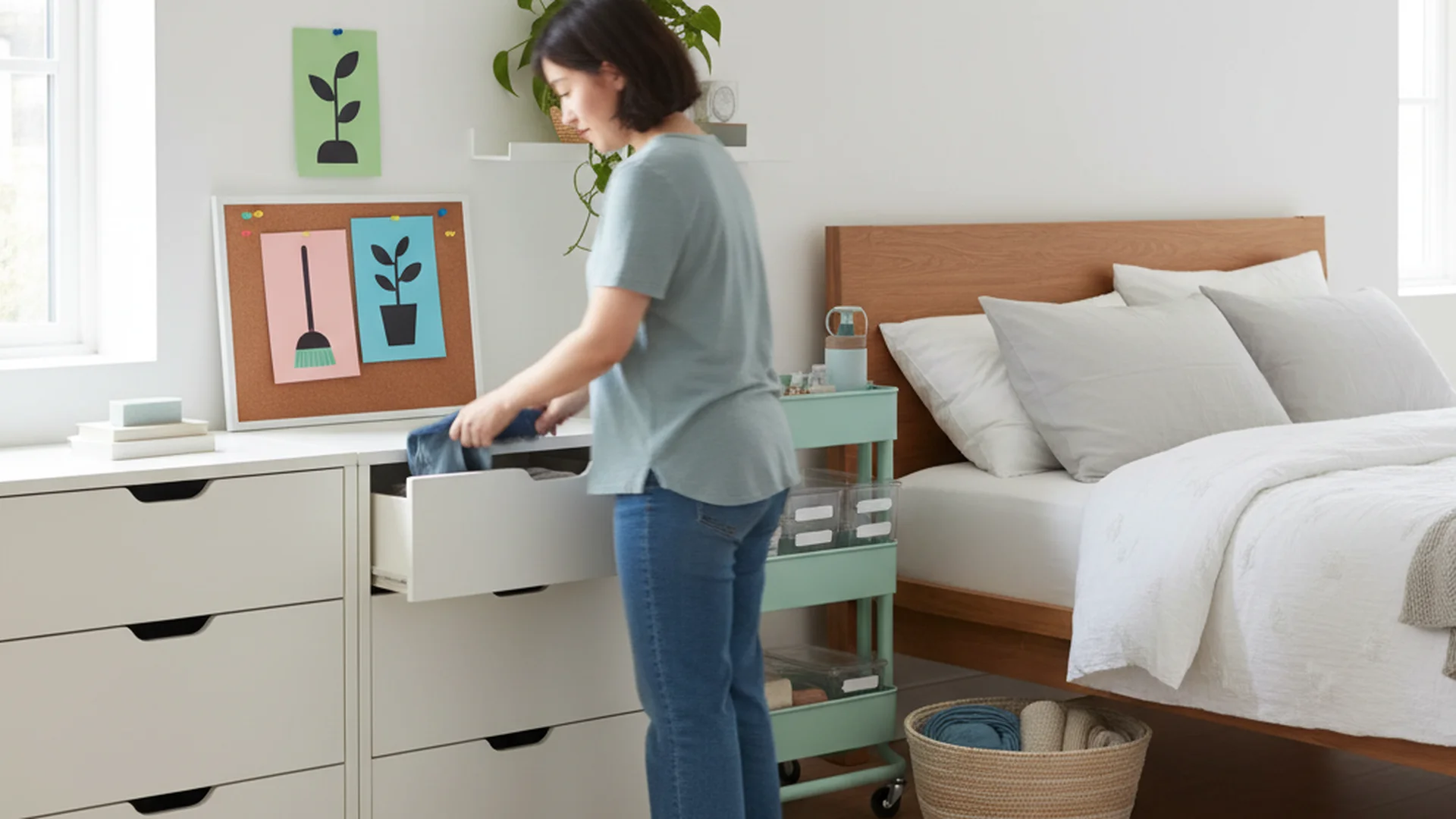
If hanging up clothes feels like a 10-step process (find hanger, orient clothes, slide on, find space in closet), you won't do it. Use hooks. A hook reduces the process to one step: "Put it on the hook." This is functional organization—it’s not "neat" by traditional standards, but the clothes are off the floor.
Keep Supplies at the "Point of Use"
The "transition cost" of walking to a utility closet to get a spray bottle is often enough to kill the motivation to wipe a counter.
Tip: Keep a set of cleaning wipes in every bathroom and under the kitchen sink. When you see a mess, you can clean it immediately without moving to a different room.
Common Mistakes to Avoid
Even with the best intentions, certain "standard" cleaning advice can actually be counterproductive for ADHD.
1. The "Clean as You Go" Trap
For neurotypical people, cleaning while cooking is a time-saver. For ADHD, it is a distraction trap. Attempting to "clean as you go" can lead to forgetting the stove is on or getting lost in a deep-cleaning rabbit hole while your pasta boils over.
- The Fix: Use a "scrap bowl" for trash while cooking and save all cleaning for a dedicated "cleaning mode" later.
2. The Minimalism Fallacy
People often assume "less stuff" is the only cure. However, extreme minimalism can be under-stimulating and lead to "object permanence" issues. If you store your blender in a deep cupboard to keep the counters "clear," you might forget you own a blender.
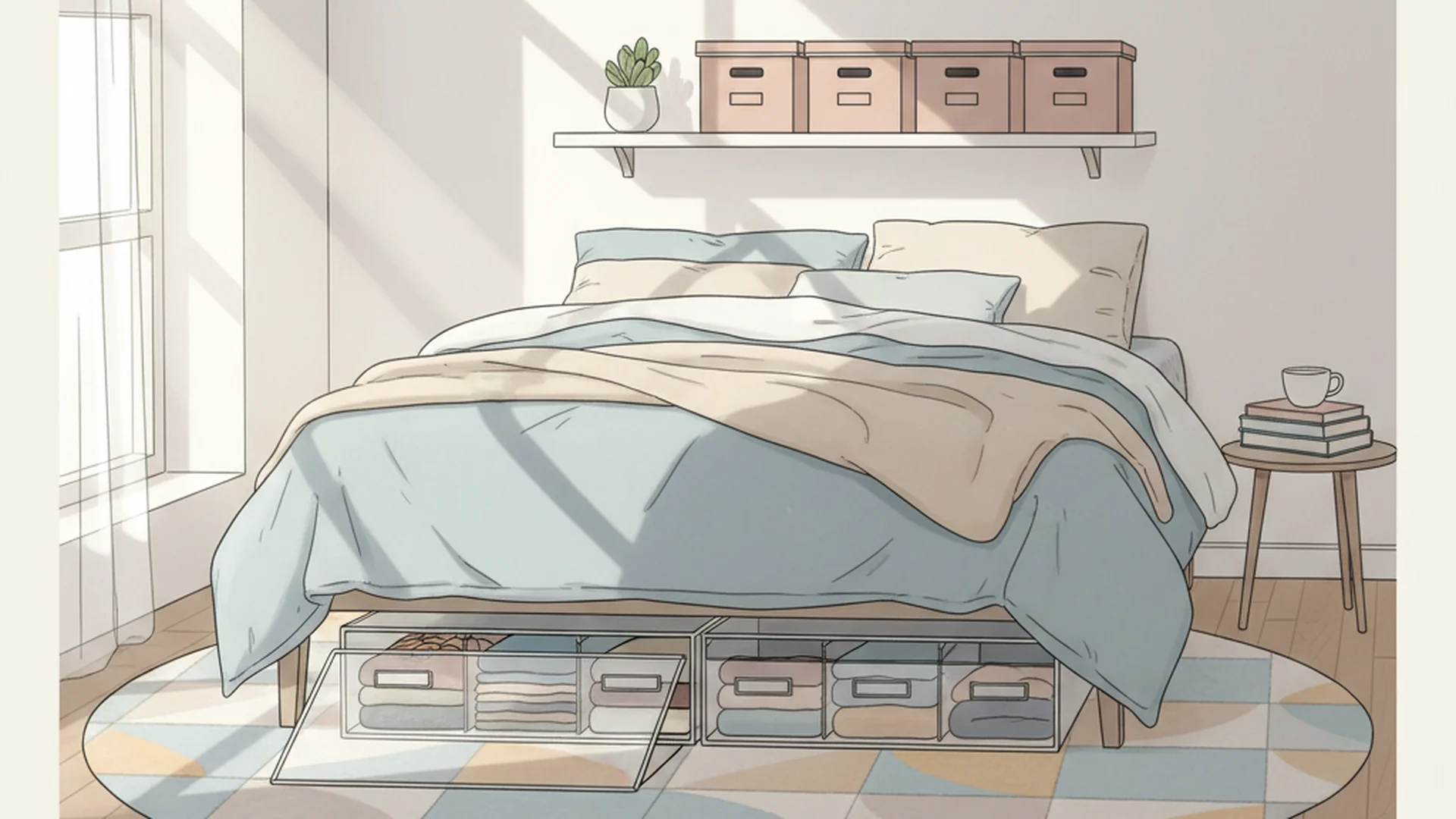
- The Fix: Use clear bins and open shelving. If you can see your items, they exist in your working memory.
3. Moralizing the Mess
Viewing a messy house as a character flaw is the quickest way to stay stuck. As expert KC Davis says, "Care tasks are functional, not moral." A clean house doesn't make you a better person; it just makes the house easier to live in.
Warning: Avoid "organizational shopping." Buying 20 new bins won't fix executive dysfunction; it often just adds 20 more items to your "things that don't have a place" pile.
Frequently Asked Questions
Why can I start a project but never finish the cleaning part?
How do I deal with 'Doom Piles'?
Why is laundry the hardest chore for ADHD?
What is the best way to start when I am overwhelmed?
Conclusion
Managing a home with ADHD requires a shift in perspective. We must stop trying to use systems designed for neurotypical brains and start embracing adhd cleaning hacks that respect our unique cognitive needs. Whether it is using "Junebugging" to manage your wandering attention or leaning on AI micro-tasking to break down the overwhelm, the goal is progress, not perfection.
Remember, your home exists to serve you; you do not exist to serve your home. By lowering the sensory input of clutter and reducing the cognitive load of chores, you create a space where your ADHD brain can actually rest.
Success: By implementing just two or three of these hacks, you can reduce household-related stress and lower your daily cortisol levels significantly.
Cleaning that keeps score
Every task earns points, every streak multiplies them, and Premium adds a household leaderboard plus a monthly Dustagorgon to beat.
- Free forever
- 30 badges to earn
- Up to 6 in a household
No card needed. Set up your rooms in a couple of minutes.