In this article
What you’ll learn
- Implement a 10-minute nightly reset to prevent clutter creep.
- Use the top-to-bottom cleaning method to maximize efficiency.
- Adopt probiotic and sustainable cleaning products for long-term hygiene.
Learning how to maintain clean house standards is often more about the systems you put in place than the hours you spend scrubbing. In 2025, our homes have become multi-functional hubs for work, fitness, and relaxation, making cleanliness more critical than ever. For a great many people, a clean and organized home is the thing that sets the tone for everything else in their year. For many, a clutter-free environment isn't just a luxury—it is a prerequisite for personal success and mental well-being.
As a home organization expert, I have seen how the right habits can transform a chaotic living space into a sanctuary. This how to maintain clean house guide will walk you through the essential strategies, modern technologies, and sustainable practices you need to keep your home pristine with minimal effort.
The Psychology and Data of a Clean Home
Before diving into the "how-to," it is important to understand why maintenance is a better strategy than occasional deep cleaning. Most of us lose a surprising number of hours each week to cleaning. Those who rely on daily maintenance systems, though, tend to find the whole business far less stressful.
The "Clutter-Success" link is a real phenomenon. When your physical environment is cluttered, your brain's ability to focus is compromised. By following a consistent how to maintain clean house guide, you aren't just cleaning surfaces; you are clearing your mental bandwidth.
Note: Modern households are increasingly leaning on professional help, and the cleaning services industry has grown steadily as a result. However, even with professional help, daily maintenance habits are what keep a home truly functional.
Core Principles: How to Maintain Clean House Tips
To maintain a home that feels "walk-in ready" at all times, you must shift your perspective from "cleaning sessions" to "cleaning habits." Here are the foundational principles used by professionals.
1. The 10-Minute Nightly Reset
Often called the "closing shift" for your home, this is perhaps the single most effective habit you can adopt. Before heading to bed, spend exactly ten minutes returning items to their designated "homes."
- Clear the kitchen counters.
- Fold the living room throw blankets.
- Ensure the sink is empty of dishes.
- Reset the entryway by organizing shoes and bags.
Success: Performing a nightly reset takes a real bite out of morning anxiety, allowing you to start your day in a proactive rather than reactive state.
2. The "One-In, One-Out" Rule
Clutter is the primary enemy of cleanliness. To maintain long-term organization, adopt the rule that for every new item brought into the home—be it a new pair of shoes, a kitchen gadget, or a toy—one old item must be donated or discarded. This prevents "clutter creep" and ensures your storage spaces never reach a breaking point.
3. Top-to-Bottom, Left-to-Right
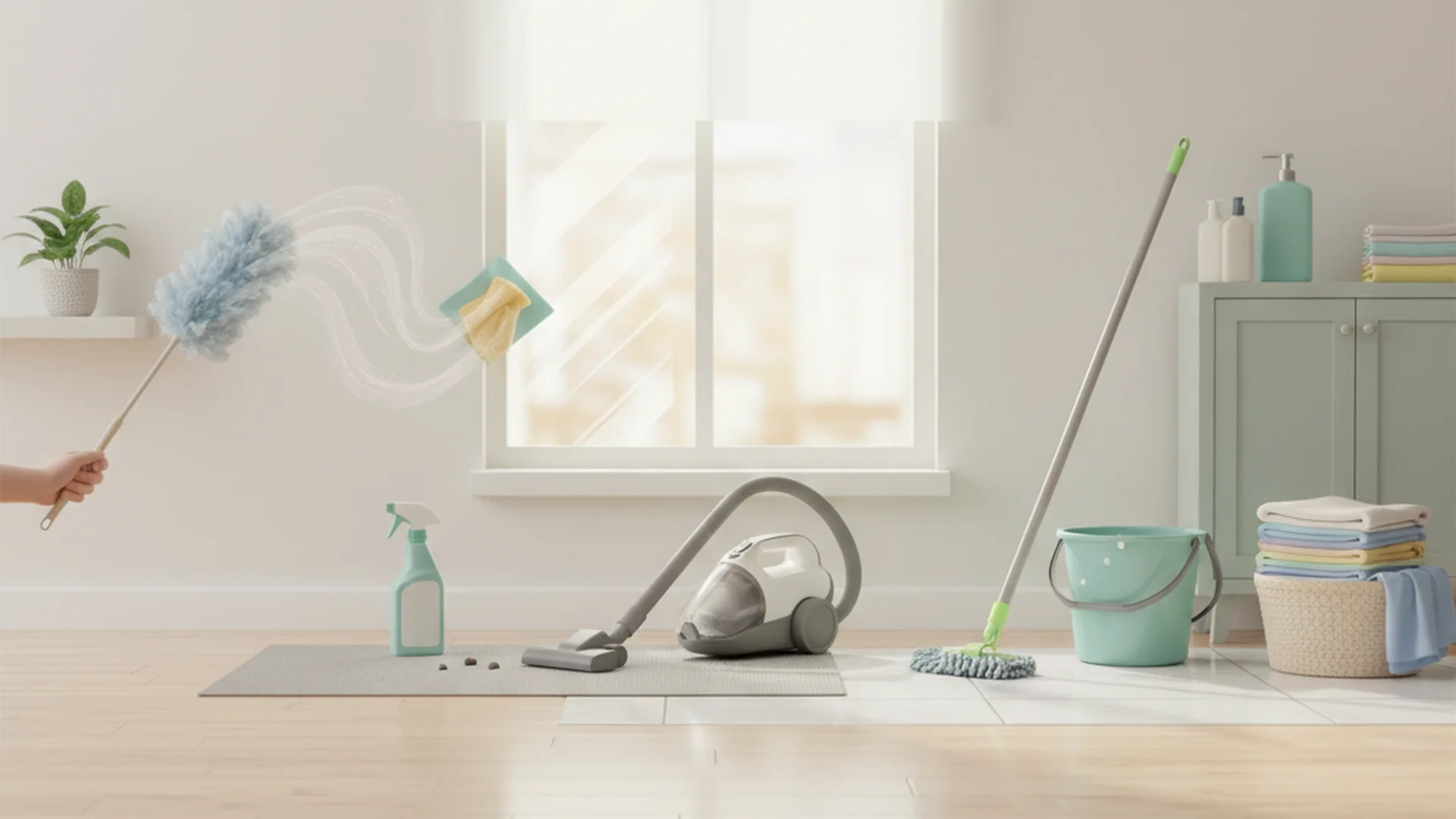
When you do engage in weekly cleaning, always work from the highest point in the room to the lowest. Start with ceiling fans and light fixtures, move to shelves and countertops, and finish with the floors. This ensures that any dust or debris disturbed during the process falls onto uncleaned surfaces.
Tip: Always dust before you vacuum. Dust particles travel through the air and settle on lower surfaces; vacuuming should always be your final step.
Embracing 2025-2026 Cleaning Trends
The way we maintain our homes is evolving. We are moving away from harsh chemicals and manual labor toward "Smart Hygiene" and biological solutions.
Probiotic Cleaning
A major trend for 2025 is "microbiome-friendly" cleaning. Unlike traditional disinfectants that kill 99% of all bacteria (including the good kind), probiotic cleaners use live beneficial bacteria. These microscopic workers continue cleaning surfaces for up to 72 hours after application by eating away at organic grime and odors.
AI and Smart Sensors
If you want to know how to maintain clean house standards with technology, look toward AI integration. Robot vacuums are already a fixture in a great many homes, and 2026 models are introducing indoor air quality (IAQ) sensors. These devices can detect when dust or mold spores increase and automatically trigger air purifiers or alert you that a specific room needs attention.
Sustainable Concentrates
The move toward "waterless" cleaning is no longer a niche. Sustainable cleaning products are steadily claiming the shelf space once held by heavy plastic jugs. Switching to tablets and powders that dissolve in reusable glass bottles reduces plastic waste and saves storage space in your cabinets.
| Tool/Method | 2025 Benefit | Sustainability Rating |
|---|---|---|
| Microfiber Cloths | Traps 99% of bacteria with water | High (Reusable) |
| Probiotic Sprays | Continuous cleaning for 72 hours | High (Bio-based) |
| Robot Vacuums | Automated daily floor maintenance | Medium (Electronic) |
| Glass Concentrates | Eliminates single-use plastic | High (Zero-waste) |
Room-by-Room Maintenance Guide
Maintaining a clean house is easier when you break the home down into manageable zones.
The Kitchen: The High-Traffic Hub
The kitchen requires the most frequent attention. To maintain it:
- Daily: Wipe down counters and the stovetop after every meal.
- Weekly: Clean the interior of the microwave and sanitize the sink.
- Monthly: Perform a "mini deep clean" by scrubbing grout and cleaning behind small appliances.
Warning: Never mix bleach with ammonia or vinegar. This creates toxic chloramine or chlorine gas, a dangerous mistake often popularized by "cleaning hacks" on social media.
The Living Room: Clutter Control
Living rooms often become "catch-all" spaces.
- The Example of the "Basket Method": Keep a decorative basket in the living room. If you find items that don't belong there, toss them in the basket. At the end of the day, take the basket on a "tour" of the house to return items to their proper rooms.
The Bathroom: Preventing Buildup
Moisture is the biggest challenge in the bathroom.
- The Example of the "Squeegee Habit": After every shower, use a squegee on the glass doors and tiles. This 30-second task prevents 90% of soap scum and hard water buildup, reducing the need for heavy scrubbing later.
Common Mistakes to Avoid
Even with the best how to maintain clean house tips, certain mistakes can sabotage your efforts.
- Using Dirty Tools: Cleaning with a dirty sponge or a vacuum with a full bag simply redistributes bacteria and dust. Sanitize sponges weekly and empty vacuum canisters after every use.
- Overusing Product: A common misconception is that "more soap equals more clean." In reality, overusing detergent leaves a sticky residue that attracts more dust, making your surfaces get dirty faster.
- Cleaning Windows on Sunny Days: The heat from the sun causes cleaning solution to evaporate too quickly, leading to permanent streaks. Always wait for a cloudy day to clean your windows.
- Neglecting the "Big Reset": While daily maintenance is key, neglecting a seasonal deep clean (every 3 months) allows dust to accumulate in hidden areas like baseboards and behind the refrigerator.
Note: Vinegar is a great natural cleaner for grease, but it can permanently damage natural stone like marble or granite. Always check the material of your countertops before applying acidic cleaners.
Frequently Asked Questions
Should I vacuum or dust first?
Is vinegar a good disinfectant for everything?
How often should I deep clean?
What is the most efficient way to clean a whole house?
How do I stop clutter from coming back?
Conclusion
Maintaining a clean house doesn't require a Herculean effort; it requires a shift in strategy. By implementing the 10-minute nightly reset, following the top-to-bottom rule, and staying updated with 2025's probiotic and "smart" cleaning trends, you can keep your home in a perpetual state of readiness. Remember that a clean home is a foundation for a productive, low-stress life. Start small, be consistent, and watch as your home transforms into the sanctuary you deserve.
Success: By adopting these expert systems, you can reduce your deep-cleaning time by up to 50% while enjoying a consistently spotless living environment.
Cleaning that keeps score
Every task earns points, every streak multiplies them, and Premium adds a household leaderboard plus a monthly Dustagorgon to beat.
- Free forever
- 30 badges to earn
- Up to 6 in a household
No card needed. Set up your rooms in a couple of minutes.