In this article
What you’ll learn
- Always clean from the top of the room to the bottom to avoid re-cleaning floors.
- Pre-treating surfaces in the kitchen and bathroom can save 15-20 minutes of scrubbing.
- Cleaning task-by-task is more efficient than room-by-room for most households.
Cleaning your home can often feel like a never-ending cycle of moving dust from one surface to another. If you have ever finished mopping only to notice crumbs falling from the counter you just wiped, you are likely struggling with the sequence of your chores. Understanding what order to clean house is the secret weapon of professional cleaners. By following a strategic flow, you can reduce your cleaning time, improve indoor air quality, and ensure that your home isn't just "surface clean," but truly hygienic from top to bottom.
Why the Sequence of Cleaning Matters
Most of us were never formally taught how to clean; we simply picked up habits from our parents or roommates. So we pour hours into it every week and still end up wondering whether we did it thoroughly enough.
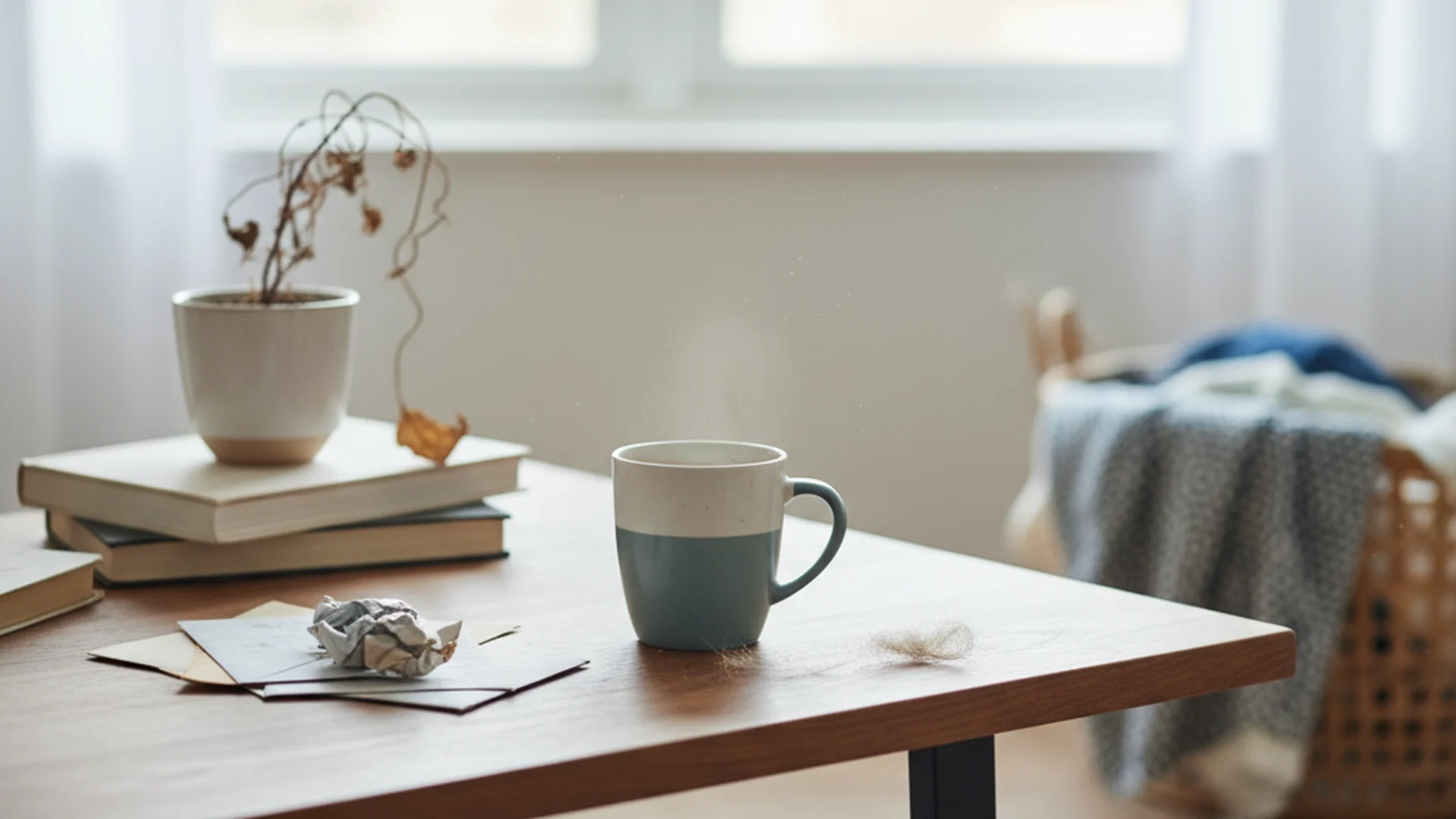
The order in which you tackle your home directly impacts the results. Indoor air can carry far more dust and pollutants than the air outside. If you clean in the wrong order—such as vacuuming before dusting—you kick up pollutants that settle back onto your "clean" surfaces. Establishing a professional what order to clean house guide isn't just about aesthetics; it’s a health safety ritual.
The Professional "Golden Sequence"
Before we dive into the step-by-step checklist, it is essential to understand the three core rules that professional cleaners use to maintain speed and quality. These rules form the foundation of any efficient cleaning routine.
1. Top-to-Bottom
This is the most critical rule in any what order to clean house tips list. Gravity is your friend—or your enemy, depending on how you use it. Start with ceiling fans, light fixtures, and the tops of cabinets. Any dust or debris knocked loose will fall to the floor, which you will clean last. If you reverse this, you’ll find yourself mopping the same floor twice.
2. Back-to-Front
Always start cleaning at the farthest point from the room's entrance (or the house's exit) and work your way toward the door. This is particularly important for wet cleaning.
Success: By cleaning back-to-front, you ensure you never "trap" yourself in a corner or have to walk across a freshly mopped floor to exit the room.
3. Left-to-Right
To ensure you don't miss a single square inch, pick a starting point at the door and move in a consistent circle (clockwise or counter-clockwise) around the room. This prevents the "zig-zag" method where people bounce between a table, a shelf, and a window, often missing the corners in between.
The 4-Step Methodology for Every Room
Regardless of which room you are in, professionals suggest following these four phases to maintain a "flow" and minimize tool switching.
- Declutter: You cannot clean a surface you cannot see. Spend the first 10 minutes of your session moving shoes, mail, toys, and dishes to their proper places.
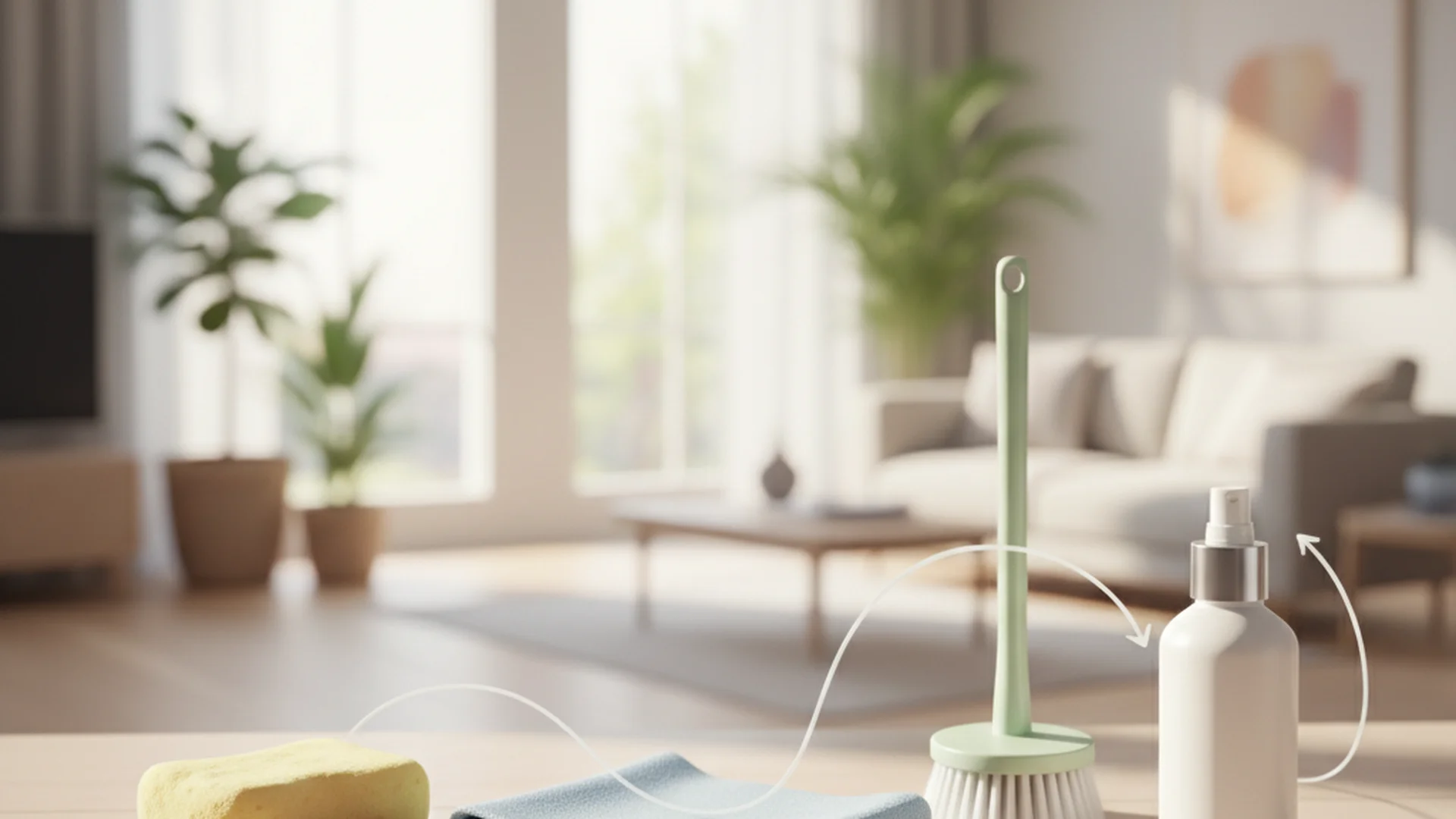
- Pre-treat: This is the ultimate time-saver. Spray your cleaning solutions on heavy-grime areas like showers, bathtubs, and stovetops. Let them sit for 10–15 minutes while you perform other tasks.
- Dry Clean: This involves dusting, cobweb removal, and sweeping.
- Wet Clean: This is the final stage where you wipe down surfaces with damp cloths and finish with mopping.
Tip: When dusting, use a damp microfiber cloth rather than a dry one. A dry cloth often just displaces dust into the air, while moisture "grabs" the particles.
Task-by-Task vs. Room-by-Room
A common debate in the world of home maintenance is whether it is better to clean one room entirely before moving to the next, or to perform one task (like vacuuming) across the entire house.
Professional cleaners almost always recommend task-by-task. Why? Because it keeps you in a specific "mode." If you are vacuuming, you stay in the vacuuming mindset and don't have to stop, put the vacuum away, grab a glass cleaner, and switch gears. This "flow" minimizes the transition time and keeps your heart rate steady, making the chore feel more like a workout and less like a burden.
| Cleaning Style | Pros | Cons |
|---|---|---|
| Task-by-Task | Higher efficiency, less tool switching, better "flow." | Can feel like the house is "messy" everywhere until the very end. |
| Room-by-Room | Immediate sense of accomplishment for one area. | Constant stopping and starting; higher risk of cross-contamination. |
The Step-by-Step Guide: What Order to Clean House
If you are ready to tackle your home like a pro, follow this specific sequence. This guide assumes a whole-house deep clean.
Step 1: The Whole-House Declutter
Before you pick up a single spray bottle, walk through every room with a laundry basket. Pick up anything that doesn't belong and put it away. Clearing the "slate" allows you to move quickly through the actual cleaning phases.
Step 2: Pre-Treat the "Problem Areas"
Go straight to the kitchen and the bathrooms. Spray the shower walls, the tub, the toilet bowl, and the kitchen stovetop with your preferred cleaners.
Warning: Never mix different cleaning chemicals, such as bleach and ammonia. This can create toxic fumes that are extremely dangerous in enclosed spaces like bathrooms.
Step 3: High-Level Dusting
Starting in the bedroom and moving toward the living areas, dust the highest points first.
- Ceiling fans and light fixtures.
- The tops of window frames and door casings.
- High shelves and the tops of the refrigerator.
Step 4: Mid-Level Surfaces and Appliances
Now that the dust has fallen, move to your waist-level surfaces.
- Wipe down coffee tables, nightstands, and desks.
- In the kitchen, wipe down the exterior of small appliances like toasters and blenders.
- Real-World Example: If you are cleaning a home office, start with the top of the monitor, move to the desk surface, and finish by wiping the chair legs.
Step 5: High-Touch Points
In 2025, cleaning is viewed as a "health safety" ritual. Do not forget the "germiest" spots that aren't always visible.
- Doorknobs and cabinet pulls.
- Light switches.
- Remote controls and keyboards.
Step 6: The "Frog" - Bathrooms and Kitchen
"Eat the frog" is a productivity term that means doing the hardest task first. Since you already pre-treated the bathroom and kitchen, the grime should be loosened.
- The Bathroom: Focus on the toothbrush holder. It is one of the germiest spots in the room, and it frequently harbors bacteria and mold.
- The Kitchen: Scrub the sink last. The kitchen sink often has more bacteria than a toilet seat, so give it a thorough scrub with an antibacterial agent.
Step 7: The Grand Finale - Floors
Only when every other surface is wiped and the dust has settled should you touch the floors.
- Vacuum: Use a HEPA-filter vacuum if possible to capture the fine dust you knocked down from the ceiling fans.
- Mop: Use the back-to-front rule. Start at the corner furthest from the door and mop your way out of the room.
Note: If you have an AI-powered robot mop, this is the time to activate it. While the robot handles the open floor space, you can use a hand-mop or cloth to get into the tight corners and baseboards.
Modern Trends in Cleaning (2025-2026)
The way we clean is evolving. As we move into 2026, several trends are changing the "standard" order and method of cleaning.
- Probiotic Cleaning: Many consumers now prioritize non-toxic, antibacterial properties. Probiotic cleaners are a major trend; they leave "good bacteria" on surfaces to naturally compete with pathogens, which can keep a surface cleaner for a longer period of time.
- Scent as Wellness: Cleaning is no longer just about removing dirt; it’s about mental health. Popular products now feature "functional fragrances" like eucalyptus for respiratory support or lavender for stress reduction, replacing the traditional harsh smell of bleach.
- Concentrated Formats: To reduce plastic waste, there is a massive shift toward dissolvable tablets. You keep one high-quality glass bottle and simply drop in a tablet with water, which is just as effective as traditional pre-mixed sprays.
Common Mistakes to Avoid
Even with a great plan, a few common errors can ruin your efficiency.
- Cleaning Windows on a Sunny Day: This is a classic mistake. Direct sunlight dries the cleaning solution before you can wipe it away, leading to stubborn streaks. Save your window cleaning for an overcast day.
- Using One Rag for the Whole House: This leads to cross-contamination. You do not want to use the same cloth on your toilet and then move it to your kitchen counter. Use a color-coded microfiber system: Blue for glass, Red for bathrooms, and Yellow for the kitchen.
- Spraying Directly on Surfaces: Many people spray a table directly, but this can leave a sticky residue that actually attracts more dust. Better approach: Spray your cloth first, then wipe the surface.
- Ignoring the Vacuum Filter: If your vacuum smells like "dog" or "dust," it is likely blowing allergens back into the air. Clean or replace your filters every 3-6 months to maintain air quality.
Warning: Using a dirty sponge or cloth can actually spread more bacteria than it removes. Microwaving a damp sponge for 60 seconds can kill many germs, but replacing them regularly is safer.
Frequently Asked Questions
Should I vacuum or dust first?
Is it better to clean the bathroom first or last?
How do I stop my windows from streaking?
Do I really need to pre-treat surfaces?
How often should I deep clean vs. surface clean?
Conclusion
Mastering the what order to clean house sequence is the most effective way to reclaim your weekend. By adopting the professional habits of top-to-bottom, back-to-front cleaning and utilizing a task-based approach, you can transform a grueling day of chores into a streamlined, two-hour session. Remember to embrace the 2025 trends of probiotic cleaners and functional scents to make your home not just a clean space, but a sanctuary for wellness.
Success: Consistent application of these rules will reduce the allergens in your home and extend the life of your furniture and flooring.
Cleaning that keeps score
Every task earns points, every streak multiplies them, and Premium adds a household leaderboard plus a monthly Dustagorgon to beat.
- Free forever
- 30 badges to earn
- Up to 6 in a household
No card needed. Set up your rooms in a couple of minutes.