In this article
What you’ll learn
- Implement a 'Clean Paw Protocol' to stop dirt at the door.
- Use H13 HEPA filtration to manage airborne dander and allergens.
- Avoid ammonia-based cleaners which can encourage pet re-marking.
Living with furry companions is one of life’s greatest joys, but any owner will tell you that the battle against fur, mud, and dander is constant. If you are wondering how to keep house clean with pets without losing your sanity or spending every waking hour with a vacuum in hand, you are in the right place. Most U.S. households share their space with animals, and the technology available to help us maintain hygiene has never been more advanced. This guide will walk you through the systems, tools, and habits necessary to maintain a pristine home while enjoying the company of your four-legged friends.
The Reality of the "Cleaning Gap"
Maintaining a home with pets requires a different strategy than a pet-free household. Pet owners tend to spend noticeably more time on cleaning chores each week than those without animals. This "cleaning gap" is largely due to three factors: shed fur, tracked-in environmental bacteria, and biological odors.
A single dog or cat can shed up to 2.0 grams of dander per week. While that sounds small, dander is microscopic and extremely light, meaning it can stay airborne for hours before settling into your carpets and upholstery. Furthermore, a quick 20-minute walk can result in your dog’s paws carrying up to 10 million bacteria into your living room. To bridge this gap, we must move away from "reactive cleaning" (cleaning up the mess after it happens) and toward "preventative cleaning."
Phase 1: The Preventative Path
The most efficient way to keep a house clean with pets is to stop the mess from entering the main living areas in the first place. This involves two critical areas: grooming and the entryway.
Source Control: Professional Grooming at Home
If the fur never hits the floor, you don't have to vacuum it. Expert groomers in 2026 recommend a "5-minute daily brush-out." This isn't a deep groom, but a quick pass with a de-shedding tool.
- Undercoat Management: Use tools equipped with edge-guards. These allow you to reach the shedding undercoat without irritating the pet's skin.
- The "Grooming Zone": Always groom your pet in a designated area with hard flooring (like a laundry room or mudroom) to make the cleanup of the loose fur instant.
The "Clean Paw" Protocol
The "Clean Paw" protocol is a system designed to stop the 10 million bacteria and pounds of mud from migrating from the sidewalk to your sofa.
Tip: Keep a "Paw Station" at your primary entrance. This should include a silicone "mud-buster" (a portable paw cleaner), a high-absorbency microfiber towel, and a spray bottle of pet-safe sanitizing foam.
Real-World Example: Consider Sarah, a Golden Retriever owner in a rainy city. Before implementing a Paw Station, she spent 20 minutes mopping her hallway every evening. After setting up a dedicated silicone paw washer at the door, she reduced her hallway cleaning to a once-a-week deep clean, saving over 2 hours of labor per week.
Phase 2: Strategic Home Design and "Barkitecture"
In 2025 and 2026, we are seeing a massive trend in "Barkitecture"—designing homes specifically with pet maintenance in mind. If you are looking for long-term keep house clean with pets tips, your choice of finishes is paramount.
Paint and Walls
Dogs often rub their bodies against walls, leaving "grime lines" of natural oils and dirt. Cats may spray or rub their cheeks against corners.
- The Solution: Use semi-gloss or satin finishes on all walls. These finishes are much more durable and allow you to wipe away "nose prints" and drool with a damp cloth without stripping the paint. Avoid matte finishes, which trap oils and require repainting to clean.
Fabric Selection
Your furniture is a magnet for pet hair and odors.
- Performance Fabrics: Look for "Crypton" or high-end performance velvet. These materials are engineered to be moisture-resistant and claw-durable.
- Washable Rugs: In 2026, the standard for pet homes is the two-piece washable rug system. These allow you to peel the top layer off and throw it in the laundry once a week, effectively removing trapped dander that a vacuum might miss.
Note: When selecting fabrics, try to match the color of the fabric to your pet’s fur. While it doesn't make the house "cleaner," it significantly reduces the visual stress of seeing shed hair between cleaning sessions.
Phase 3: High-Tech Cleaning Solutions for 2026
The technology for maintaining a clean home has evolved significantly in the last 18 months. Manual scrubbing is becoming a thing of the past thanks to AI and probiotic chemistry.
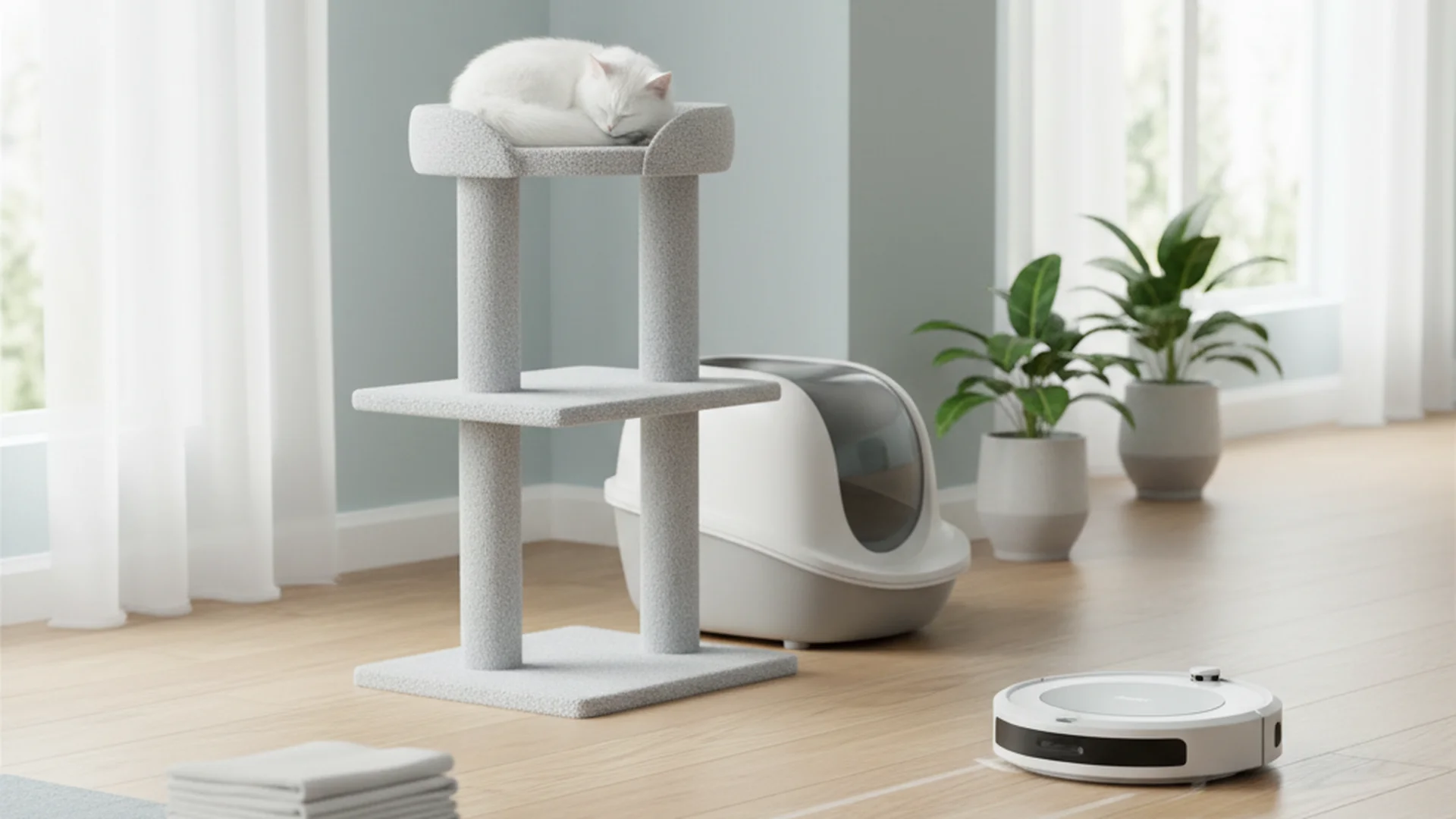
AI-Enhanced Robot Vacuums
The latest generation of robot vacuums features "Pet Mess Avoidance 3.0." Using advanced AI cameras, these units can identify "solid or liquid pet accidents" with 99% accuracy.
Warning: Older robot vacuums without AI obstacle detection can lead to the "poop-pocalypse," where the vacuum drags a pet accident across every inch of your flooring. Ensure your vacuum is rated for pet mess avoidance.
Probiotic Cleaning Agents
Traditional cleaners use harsh chemicals to kill bacteria. However, 2026 has seen a shift toward probiotic cleaners. These solutions leave "good bacteria" on your floors and furniture.
- The Benefit: These probiotics actively "eat" organic matter like urine, saliva, and skin cells for up to 7 days after application. This provides a continuous cleaning effect that keeps odors at bay long after you’ve finished mopping.
Smart Air Filtration
Because dander is the primary cause of "pet smell," air filtration is non-negotiable.
- H13 HEPA: Ensure your purifiers and vacuums are H13 HEPA rated. This captures 99.97% of particles as small as 0.3 microns.
- Smart Integration: New 2026 air purifiers can sync with smart pet collars. When the pet enters a high-traffic room like the living room, the purifier automatically ramps up its fan speed to capture dander as it is shed.
Phase 4: Common Mistakes to Avoid
Even the most dedicated cleaners can make mistakes that actually make the house smell worse or encourage pets to create more mess.
1. Using Ammonia-Based Cleaners
Ammonia is a common ingredient in glass and floor cleaners. However, to a dog or cat, ammonia smells remarkably like urine.
- The Mistake: Cleaning a urine accident with ammonia.
- The Result: The pet smells the ammonia and thinks, "This is where I go to the bathroom," leading them to re-mark the same spot. Always use enzymatic or probiotic cleaners for biological accidents.
2. Steam Cleaning Urine Stains
It seems intuitive to use heat to sanitize a carpet stain, but this is a major error.
- The Mistake: Using a steam cleaner on a fresh or dried urine spot.
- The Result: The intense heat permanently "sets" the proteins in the urine into the carpet fibers. Once set, the smell becomes nearly impossible to remove, even with professional help. Use cold water and enzyme-based extractors instead.
3. Neglecting Vertical Surfaces
Most people focus on the floors, but pets live in a 3D space.
- The Mistake: Forgetting door frames, baseboards, and the sides of the couch.
- The Result: "Grime lines" build up over months. These oils go rancid over time, contributing to that "doggy smell" that lingers even if the floors are clean.
Success: Wiping down the bottom 24 inches of your door frames once a week makes a noticeable difference to how the whole house smells.
Recommended Cleaning Schedule
| Task | Frequency | Why? |
|---|---|---|
| 5-Minute Grooming | Daily | Prevents fur from reaching the floor. |
| Paw Cleaning | After Every Walk | Stops 10M+ bacteria from entering. |
| Vacuuming (High Traffic) | Daily (Robot) | Manages dander before it settles. |
| Washing Pet Bedding | Weekly | Bedding is the primary source of odors. |
| Wiping Baseboards | Bi-Weekly | Removes body oils and "grime lines." |
| Deep Carpet Clean | Every 6 Months | Removes deep-set dander and allergens. |
Frequently Asked Questions
How do I get rid of the "dog smell" in my couch?
Is it possible to have a clean house and a shedding dog?
What are the best pet-safe cleaning products that actually work?
How often should I wash my pet’s bedding?
How do I prevent mud from being tracked through the house?
Conclusion
Learning how to keep house clean with pets is not about achieving perfection; it’s about creating a sustainable system that balances hygiene with the joy of animal companionship. By utilizing the latest AI cleaning technology, embracing "Barkitecture" design principles, and sticking to a "Source Control" grooming routine, you can maintain a home that is both welcoming to guests and a sanctuary for your pets.
Remember, the key to a clean pet home is consistency. Small, daily actions—like a five-minute brush-out or a quick paw wipe—prevent the massive, overwhelming weekend cleaning marathons.
Success: By automating your floor care with a modern AI robot vacuum and implementing a weekly bedding wash, you can reduce your manual cleaning time by up to 70%.
Cleaning that keeps score
Every task earns points, every streak multiplies them, and Premium adds a household leaderboard plus a monthly Dustagorgon to beat.
- Free forever
- 30 badges to earn
- Up to 6 in a household
No card needed. Set up your rooms in a couple of minutes.