In this article
What you’ll learn
- Always remove visible trash first to create an immediate visual win.
- Decluttering must precede cleaning; you cannot organize your way out of excess items.
- Utilize the 'Functional Flow' method to regulate your nervous system while working.
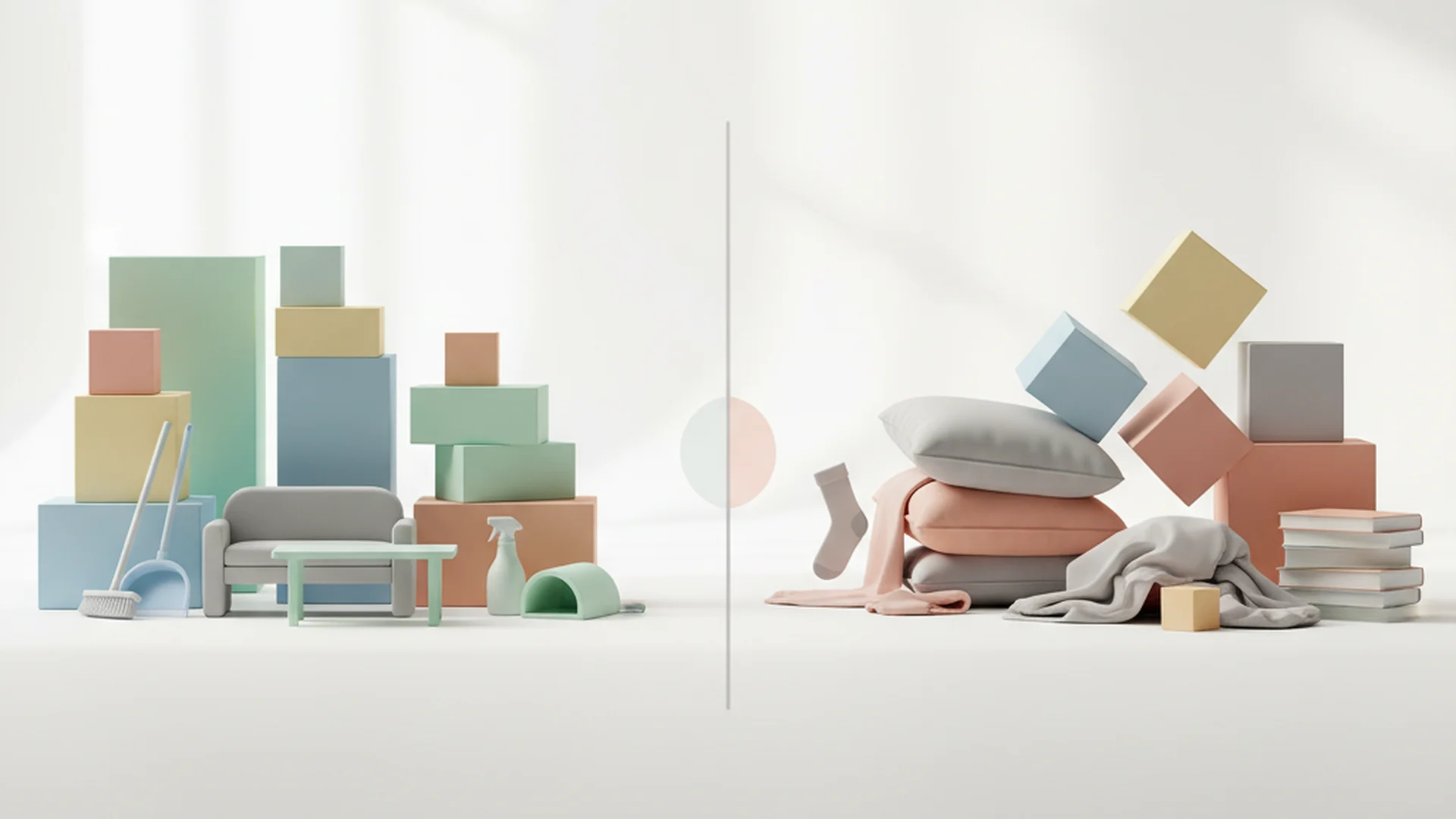
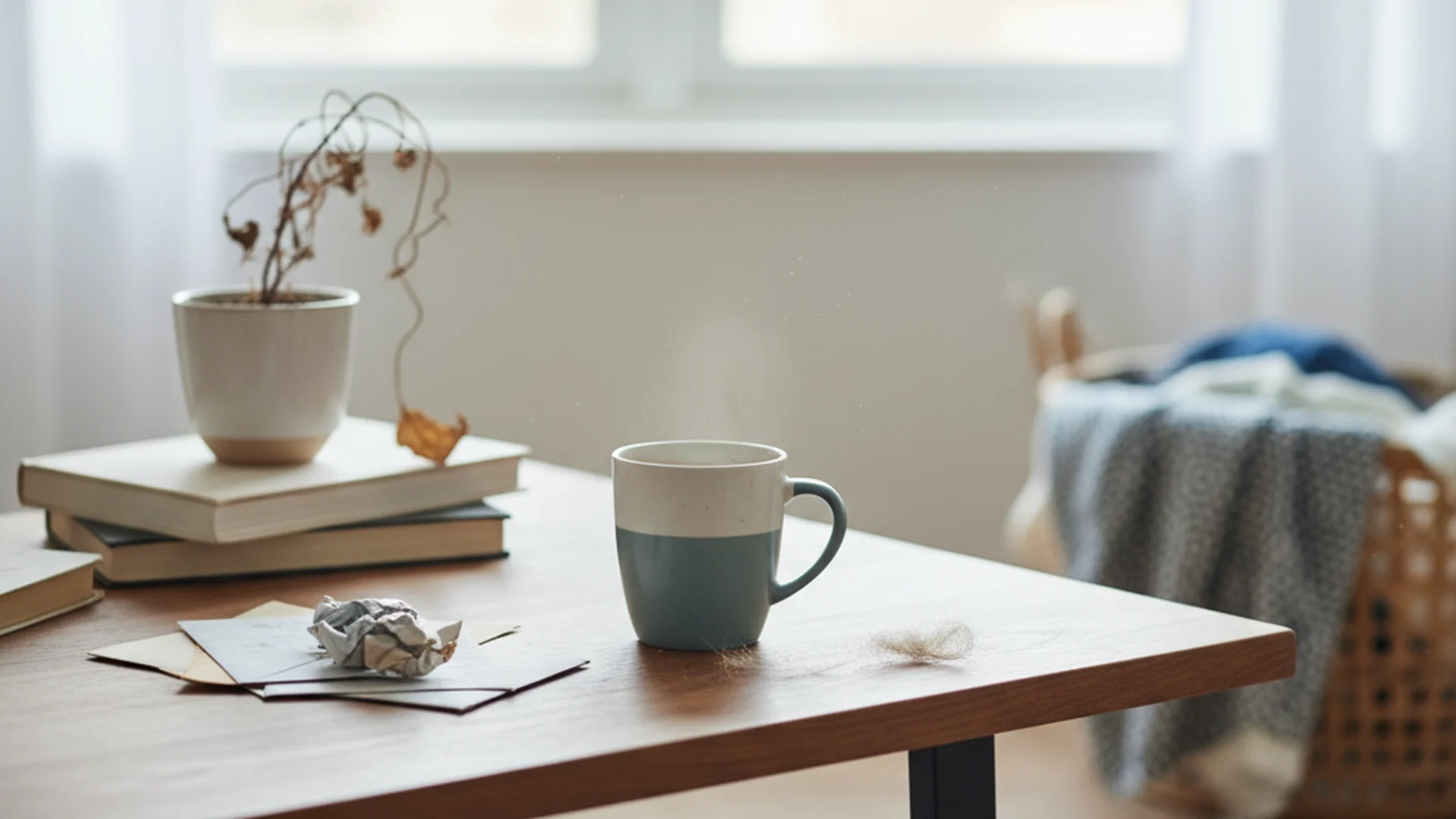
Walking into a room filled with piles of laundry, stacks of mail, and scattered toys can feel like hitting a physical wall. If you are currently standing in the middle of a room wondering where to start cleaning messy house, you aren't just dealing with "stuff"—you are dealing with a biological stress response. For many homeowners, the sheer volume of a mess creates a state of paralysis known as "clutter overwhelm."
As a professional cleaning consultant, I have seen every level of chaos, from post-holiday disarray to deep-seated hoarding situations. The most important thing to understand is that cleaning a severely messy house is not a test of your character; it is a logistical challenge that requires a strategic roadmap. By shifting your focus from "finishing" to "starting," you can break the cycle of stress and reclaim your living space.
The Science of the Mess: Why You Feel Paralyzed
Before we grab a trash bag, it is vital to understand why the mess feels so heavy. Clutter is a genuine health burden, and most people will tell you it is a real source of household stress. Plenty of people who describe their homes as "cluttered" or full of "unfinished projects" also describe feeling wound up and on edge for most of the day.
When your brain’s sensory system is overwhelmed by competing stimuli (too many items in your field of vision), your ability to concentrate drops off sharply. The average home contains a staggering number of individual items, and when those items aren't in their proper place, your brain perceives it as an endless "to-do" list that never stops shouting.
Note: Clutter isn't just an aesthetic problem; it’s a productivity drain that quietly eats up hours of your week.
Step 1: The "Visual Win" Strategy (Trash First)
The most common mistake people make when deciding where to start cleaning messy house is trying to organize immediately. They start by looking at a stack of papers or a box of old cables. This is a trap. Sorting takes high-level cognitive energy, which you likely don't have if you're feeling overwhelmed.
Instead, start with the "Trash First" rule. Walk through the entire house with a large, black leaf bag. Do not look at sentimental items. Do not look at things that need to be "rehomed." Only look for:
- Empty food packaging and takeout containers.
- Junk mail and old newspapers.
- Broken items that are clearly beyond repair.
- Literal garbage.
Tip: Use a black bag specifically. Seeing the trash through a clear bag can keep the visual noise high; a black bag hides the mess and signals to your brain that the task is "done."
Real-World Example: Sarah’s Living Room Reset
Sarah, a client of mine, felt paralyzed by her living room. We spent the first 15 minutes doing nothing but a "trash sweep." By removing three bags of Amazon boxes and food wrappers, the floor became visible. This "visual win" spiked her dopamine levels, giving her the energy to tackle the laundry piles next.
Step 2: The Functional Flow Method
Once the literal trash is gone, work in a "Functional Flow" rather than a traditional room-by-room approach. If you get stuck in one room, you risk "vortexing"—getting so caught up in the details of a single drawer that the rest of the house remains a disaster.
The Five-Category Method
Popularized by KC Davis and widely adopted in 2025 cleaning circles, this method requires you to focus on only five things in any given space:
- Trash: (Already done in Step 1).
- Laundry: Gather all clothes and linens and move them to the laundry area.
- Dishes: Gather all dirty dishes and move them to the kitchen.
- Things that have a place: Put away items that already have a designated spot.
- Things that don't have a place: Pile these in one spot to be addressed later.
| Category | Action | Goal |
|---|---|---|
| Laundry | Collect & Move | Clear floor space |
| Dishes | Soak or Load | Clear counter space |
| Relocate | Move to 'Home' | Reduce visual noise |
Warning: Do not start cleaning the dishes yet. Just get them to the kitchen. The goal of this phase is clearing surfaces, not deep cleaning.
Step 3: The Three-Bag Strategy for Decluttering
You cannot clean around piles of stuff. This is the golden rule of professional cleaning. As you work through your home, carry three distinct bags or bins labeled: Trash, Donate, and Relocate.
The "Relocate" bag is your most important tool for staying on track. One of the biggest reasons cleaning takes so long is "side-tracking." You find a book that belongs in the bedroom, walk to the bedroom to put it away, see a dirty sock in the bedroom, go to put that in the laundry, and suddenly you’ve abandoned the living room.
Success: By using a "Relocate" bag, you stay in one room until it is finished. You only move the "Relocate" bag once the current room's surfaces are clear.
Step 4: Prioritizing the "Command Centers"
If you are asking where to start cleaning messy house in terms of geography, the answer is usually the Entryway or the Kitchen.
The Entryway Reset
In 2025, professional organizers are emphasizing the "Entryway Reset." This is the first thing you see when you come home. If your hallway is a mess of shoes, bags, and mail, your nervous system never gets a chance to downshift from the stress of the outside world. Clearing this small area provides a massive psychological relief every time you walk through the door.
The Kitchen
The kitchen is the "heart" of the home's operations. If the kitchen is clean, you can cook healthy meals, which improves your energy levels. Focus on clearing the counters first, then the sink.
Tip: If the dishes are overwhelming, use the "Clean Enough" standard. You don't need to hand-scrub every pot to perfection right now; just get the dishwasher running.
Modern Trends in Cleaning (2025-2026)
As we look toward 2026, the way we clean is shifting from "sterilization" to "ecosystem management."
ADHD-Friendly "Dopamine Cleaning"
This trend focuses on gamifying the process. For those who find cleaning boring or overwhelming, "Body-Doubling"—cleaning while on a video call with a friend or watching a "Clean With Me" video—has become a top recommendation. The goal is to keep the brain engaged so the "boredom wall" doesn't stop the progress.
Probiotic Cleaning
We are moving away from harsh chemicals that strip every surface. 2026 trends emphasize probiotic cleaners that leave "good" bacteria behind. This is not only better for your home's microbiome but also prevents the "sticky residue" that traditional chemical cleaners leave, which ironically attracts more dust.
AI-Personalized Cleaning Plans
Many homeowners are now using AI apps to scan their rooms. These apps detect the type of mess (e.g., "70% laundry, 20% toys") and generate a custom step-by-step priority list so you don't have to think about what to do next.
Common Mistakes to Avoid
Even with a guide, it is easy to fall into old habits that sabotage your progress. Avoid these common pitfalls:
- Starting with Organization: Do not go to the store and buy 20 plastic bins before you start. You cannot organize clutter. You must get rid of the excess first, or you will just be "organizing garbage."
- Cleaning One Task at a Time (During Maintenance): While the "room-by-room" method works for deep cleaning, maintenance is often faster if you do one task (like dusting) through the whole house.
- Dusting After Vacuuming: This is a classic "top-to-bottom" error. Dust always falls. If you vacuum first and then dust the shelves, you’ve just made your floor dirty again.
- Ignoring High-Touch Areas: You might clear the piles, but if you don't wipe down light switches, doorknobs, and remotes, you haven't truly cleaned. These are the primary surfaces for spreading illness.
Warning: Never mix cleaning products, specifically bleach and ammonia. This can create toxic mustard gas. Stick to one cleaner per surface.
Frequently Asked Questions
Where do I start when I’m completely overwhelmed?
Should I declutter or clean first?
What room should I clean first?
How do I clean a messy house in one day?
How can I stay motivated when the mess is too big?
Conclusion: The Path to a Restful Home
Learning where to start cleaning messy house is about more than just a tidy room; it’s about reclaiming your mental clarity and reducing your daily stress. Remember that your home is there to serve you, not the other way around. By focusing on trash first, using the functional flow method, and avoiding the trap of "pre-organizing," you can transform a chaotic environment into a sanctuary.
Start small, focus on the visual wins, and don't be afraid to use modern tools like AI or dopamine-cleaning techniques to keep yourself moving. Your future, less-stressed self will thank you.
Success: Following the "Trash-First" and "Three-Bag" methods can cut the time spent cleaning a messy home considerably by eliminating "decision fatigue" and "side-tracking."
Cleaning that keeps score
Every task earns points, every streak multiplies them, and Premium adds a household leaderboard plus a monthly Dustagorgon to beat.
- Free forever
- 30 badges to earn
- Up to 6 in a household
No card needed. Set up your rooms in a couple of minutes.