In this article
What you’ll learn
- Always follow the 'Dry-First' rule by vacuuming before applying any liquid.
- Understand cleaning codes (W, S, WS, X) to prevent permanent fabric damage.
- New 2025 trends emphasize probiotic cleaners and smart suction technology.
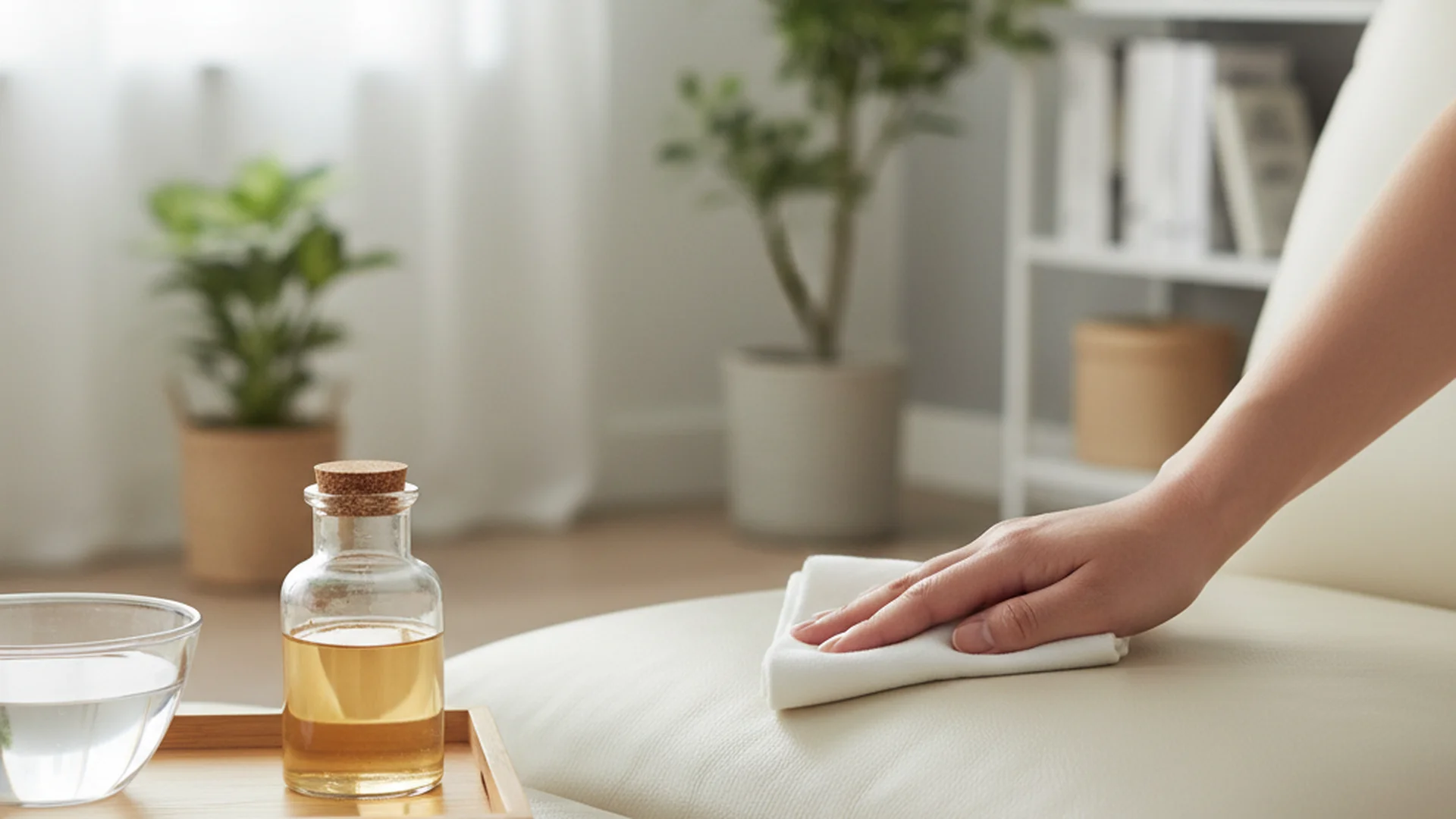
In the modern home, your sofa is more than just a place to sit; it is the centerpiece of your living space and, increasingly, your "home office." Because of this, learning how to clean upholstery has become a vital skill for homeowners looking to protect their health and their financial investments.
Beyond the aesthetics, upholstered furniture acts as a massive "air filter" for your home. A proper deep clean lifts out the common household allergens trapped in the fibers. However, with the rise of remote work putting far more hours on our sofas and desk chairs, a quick dusting no longer cuts it. To maintain a healthy environment, you need a professional-grade strategy.
Understanding Your Upholstery: The First Step
Before you grab a spray bottle, you must understand what you are working with. Every piece of upholstered furniture comes with a "DNA" code—a cleaning tag usually found under the cushions or the base of the frame. Ignoring these codes is the fastest way to ruin an expensive piece of furniture.
Decoding the Cleaning Tags
| Cleaning Code | Meaning | Recommended Cleaning Agent |
|---|---|---|
| W | Water-based | Water-based cleaning foams or detergents |
| S | Solvent-based | Water-free dry-cleaning solvents |
| WS | Both | Either water-based or solvent-based |
| X | Vacuum Only | No liquids; professional cleaning required |
Warning: Never use water on a code "S" fabric. Doing so can cause permanent shrinking, water rings, and "browning" of the fibers that cannot be reversed.
The Professional Hierarchy: How to Clean Upholstery Properly
To achieve professional results, work through a specific "Hierarchy of Cleaning." This ensures you aren't just moving dirt around, but actually removing it.
Step 1: The "Dry-First" Rule
The most common mistake people make is applying liquid cleaner to a dusty couch. This creates a "mud" that sinks deep into the cushion foam.
Tip: Always vacuum thoroughly with an upholstery attachment first. Pay extra attention to the "crumb-catchers"—the deep crevices between the arms and the seat.
Step 2: Spot Treatment and the Blotting Technique
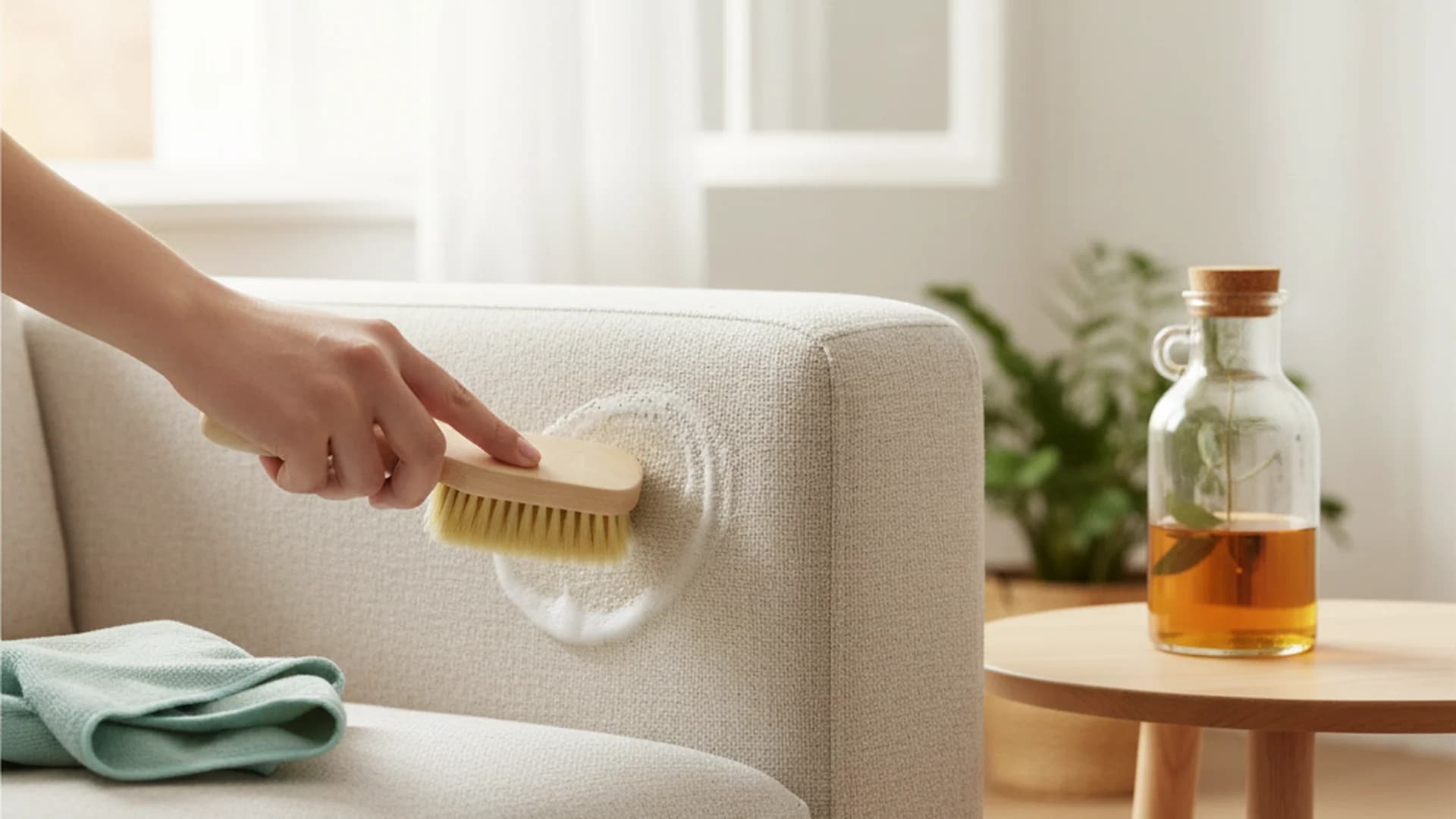
If you have a specific stain, treat it before cleaning the whole piece. The best way how to clean upholstery spots is to use a clean microfiber cloth and blot from the outside of the stain toward the center. This prevents the stain from spreading and creating a larger "halo" effect.
Step 3: Choosing Your Solution (pH Balance Matters)
For most synthetic fabrics (Code W), a pH-neutral cleaner (pH 7) is ideal. In 2025, the industry has shifted toward plant-based surfactants derived from coconut or corn. These are safer for pets and children while remaining effective against oils.
2025–2026 Trends: The Future of Upholstery Care
The world of home maintenance is evolving. Here is what is trending in the industry this year:
Probiotic Cleaners
A major breakthrough in 2025 is the rise of probiotic cleaning solutions. Unlike traditional chemicals that stop working once they dry, probiotic cleaners contain "good bacteria" that continue to consume organic matter—like pet dander, skin oils, and food particles—for days after the initial application.
Smart Extraction Technology
For those looking for how to clean upholstery quickly, the latest 2025 "Smart Extractors" from brands like Bissell and Shark now feature AI-driven sensors. These machines detect the density of a stain and automatically adjust suction power and water flow, significantly reducing drying times.
Performance Fabrics
Many modern sofas are now built with "performance fabrics" like Crypton or Sunbrella. While highly stain-resistant, these require specialized low-residue cleaners to maintain their factory-applied moisture barriers.
Note: If your furniture features 2026’s trending colors like "Antique Cream" or "Walnut," you will notice skin oil transfer more easily. Plan for "armrest and headrest" maintenance every 3 months.
Common Mistakes to Avoid
Even the most well-intentioned DIY cleaner can run into trouble. Avoid these pitfalls to keep your furniture in top shape:
- Over-Wetting: Saturating the fabric can lead to mold growth in the padding. If you can squeeze the fabric and see water, it is too wet.
- Using Dish Soap: Most dish soaps contain high sudsing agents. If you don't rinse it perfectly (which is nearly impossible with upholstery), the residue acts as a dirt magnet, making the couch get dirty faster.
- Aggressive Scrubbing: This can "frizz" or pill the fabric, permanently altering the texture and making the spot look worn.
- Skipping the Hidden Spot Test: Always test your cleaner on a back-bottom edge first to check for dye bleed.
Warning: Vinegar is a popular "natural" cleaner, but its high acidity can "set" protein stains like blood or milk, making them permanent.
Real-World Examples
Case Study 1: The "Antique Cream" Crisis
A homeowner in Austin recently dealt with visible darkening on the armrests of her cream-colored linen sofa. Instead of scrubbing with soap, she used distilled water and a pH-neutral probiotic foam. By using distilled water, she avoided the "water rings" common with tap water minerals, and the probiotics cleared the skin oils over 48 hours.
Case Study 2: The Red Wine Spill
During a dinner party, a glass of red wine met a grey polyester sectional. The owner followed the best way how to clean upholstery in an emergency: she immediately blotted (not rubbed) with a dry microfiber cloth, then applied a specialized solvent-based cleaner (Code S) as directed. Because she blotted toward the center, the stain was lifted without spreading.
Case Study 3: The WFH Chair
After a year of long days working from home, one professional noticed her ergonomic chair had developed a musty smell. She used a handheld smart extractor with a low-moisture setting. The chair was dry in 4 hours, and the AI-driven suction removed deep-seated allergens that a simple wipe-down would have missed.
Frequently Asked Questions
How often should I clean my couch?
Can I use a steam cleaner on any fabric?
How long does it take for upholstery to dry?
What is the "Dry-First" rule?
Conclusion
Mastering how to clean upholstery is an essential part of modern home ownership. By understanding your fabric codes, adopting a "dry-first" mentality, and utilizing the latest 2025 probiotic and smart-suction technologies, you can extend the life of your furniture by 5 to 10 years. Remember to prioritize pH-balanced solutions and always blot rather than scrub.
Success: Regular maintenance not only keeps your home looking beautiful but also removes up to 98% of allergens, creating a healthier living space for you and your family.
Cleaning that keeps score
Every task earns points, every streak multiplies them, and Premium adds a household leaderboard plus a monthly Dustagorgon to beat.
- Free forever
- 30 badges to earn
- Up to 6 in a household
No card needed. Set up your rooms in a couple of minutes.