In this article
What you’ll learn
- Regular cleaning can increase light output by up to 30%.
- Always turn off power at the breaker for deep cleaning to ensure safety.
- Modern materials like rattan and smart sensors require specific dry-cleaning techniques.
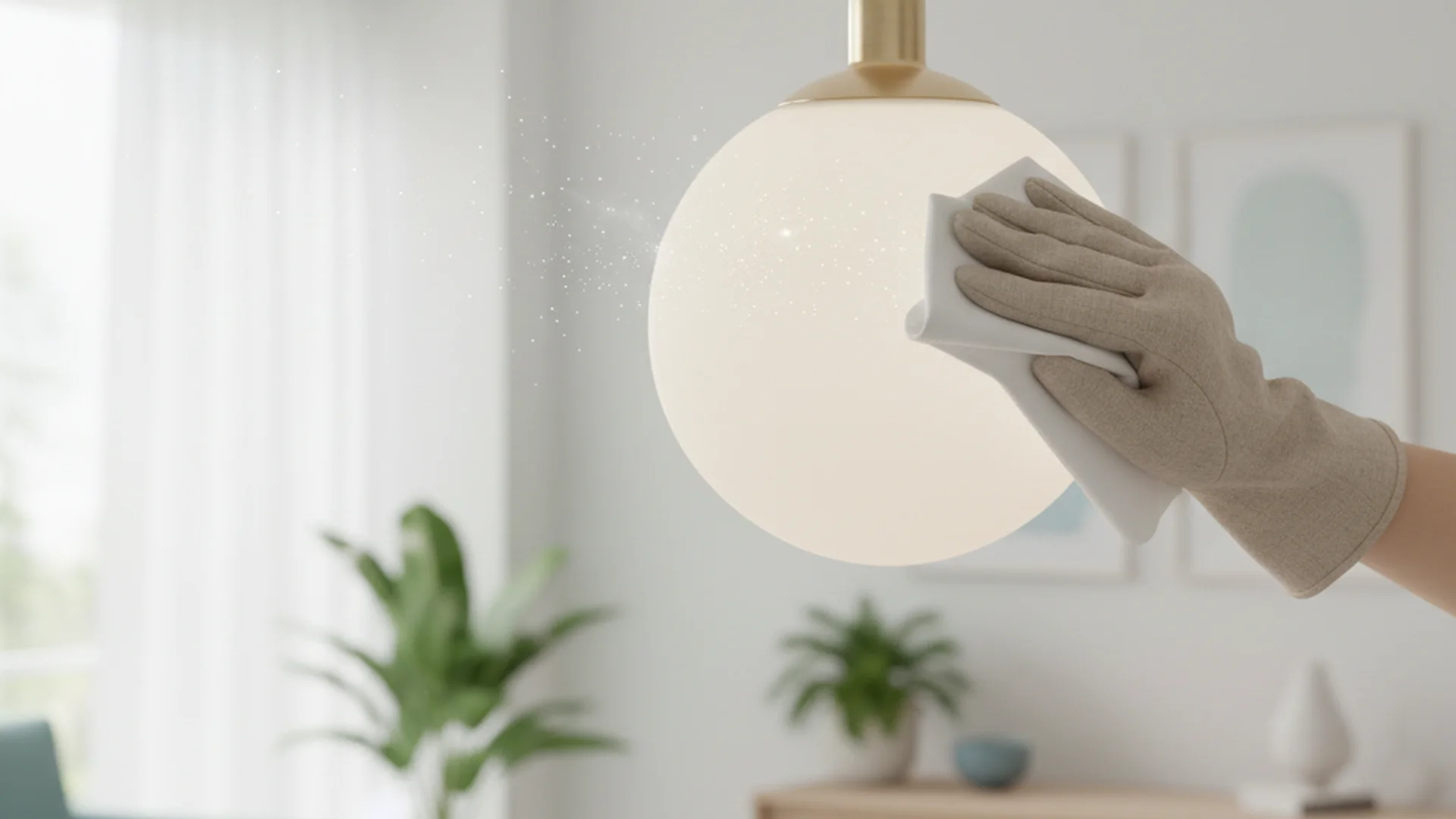
When was the last time you looked closely at your ceiling lights? If you haven't dusted them lately, you are likely living in a dimmer home than you realize. Knowing how to clean light fixtures is more than just a cosmetic chore; it is a vital part of home efficiency. Accumulated dust and grime can reduce the light output (lumens) of a fixture by as much as 30% before the bulb even begins to dim naturally. By keeping your fixtures sparkling, you are effectively "upgrading" your lighting without spending a cent on new bulbs or fixtures.
In this guide, we will explore the most efficient techniques for maintaining your home’s brilliance, incorporating the latest 2025–2026 maintenance trends and eco-friendly practices.
Why Cleaning Your Fixtures Matters
Most homeowners view light cleaning as an optional aesthetic task, but it affects far more than looks. Beyond the light loss, dirty fixtures directly impact your wallet. When fixtures are covered in a film of dust, homeowners often compensate by leaving lights on longer or swapping to higher-wattage bulbs. Keeping them clean can improve home energy efficiency by approximately 10–15%.
Furthermore, dust acts as an insulator. This is particularly dangerous for modern LEDs and integrated electronics. Excess heat trapped by dust buildup can reduce the lifespan of the driver and the bulb by 15–20%. Finally, light fixtures are notorious "dust traps." The heat from the bulbs creates convection currents that circulate allergens throughout your room every time the lights are switched on.
The Safety-First Protocol
Before you grab a ladder, you must prioritize safety. Light fixtures involve electricity and, often, heights.
- Cut the Power: Never clean a fixture while it is "live." Turn off the light at the wall switch. For chandeliers or high-ceiling fixtures, turn off the circuit at the breaker for absolute safety.
- The Cooling Period: Wait at least 20 minutes for bulbs to cool. Touching a hot bulb with a damp cloth can cause the glass to experience thermal shock and shatter.
- Ladder Safety: Ensure your ladder is on a level surface. Never stand on the top rung, and if you are cleaning a heavy chandelier, have a second person nearby to steady the ladder.
Warning: Never spray cleaning solutions directly onto a fixture. Liquid can seep into the socket or internal wiring, causing a short circuit, corrosion, or fire hazards. Always spray your cloth first.
How to Clean Light Fixtures Quickly (The 5-Minute Refresh)
If you are short on time, you can still make a significant impact. The best way how to clean light fixtures quickly involves a "dry-first" approach.
The Telescoping Method
For high-mounted recessed lights or simple pendants, use a telescoping microfiber duster. These tools are designed to grab dust rather than just pushing it into the air.
The Lint Roller Hack
For fabric or parchment lampshades, a standard lint roller is the most efficient tool. It picks up pet hair and fine dust that vacuums often miss, without damaging the delicate material.
Tip: If you’re cleaning a fixture in place, wrap a microfiber cloth dampened with a 1:4 vinegar-water solution around a long-reach tool to wipe away stubborn films without needing a ladder.
Deep Cleaning Room-by-Room
Different rooms present different types of grime. A kitchen pendant requires a different strategy than a crystal chandelier in the foyer.
The Kitchen: Fighting Grease and Grime
Kitchen fixtures are unique because they collect "grease-dust"—a sticky combination of airborne cooking oils and household dust.
- Real-World Example: Consider a glass pendant light hanging over a kitchen island. Over six months, it develops a yellow, tacky film.
- The Fix: Remove the glass globes and soak them in warm water mixed with a heavy-duty degreaser or a squeeze of clear dish soap. Avoid soaps with added lotions, as these leave a residue that attracts dust even faster.
The Bathroom: Combating Hairspray and Humidity
In the bathroom, the primary culprits are hairspray mist and water spots. These create a cloudy film on vanity lights.
- Real-World Example: A chrome vanity bar with clear glass shades often shows "clouding" from daily grooming routines.
- The Fix: Use a microfiber cloth with a dedicated glass cleaner or a DIY vinegar solution. For the chrome base, avoid ammonia-based cleaners which can strip the protective lacquer over time.
The Entryway: Crystal and Sculptural Fixtures
Large chandeliers and sculptural pieces require patience.
- The Crystal Secret: Use distilled water for the final rinse on crystal components. This prevents mineral spots from hard water, ensuring a streak-free shine.
- The Brush Technique: Use small, soft-bristled artist brushes to reach into the intricate crevices of 2026-style sculptural fixtures.
| Fixture Material | Recommended Cleaning Agent | Tool |
|---|---|---|
| Clear Glass | Vinegar/Water Solution | Microfiber Cloth |
| Brass/Metal | Warm Water (Damp) | Soft Cotton Cloth |
| Fabric Shades | None (Dry) | Lint Roller |
| Rattan/Wood | Compressed Air | Vacuum Brush |
2025-2026 Design Trends and Maintenance
Home design in 2025 and 2026 has shifted toward biophilic materials and smart technology. These require updated maintenance habits.
Biophilic & Textured Materials (Rattan, Bamboo, Stone)
Natural materials are trending, but they are porous. Avoid liquid sprays, which can cause warping or mold. Instead, use a vacuum brush attachment or compressed air to blow dust out of the weaves.
Smart & AI Lighting Maintenance
With the rise of AI-powered "Circadian Rhythm" lighting, fixtures now include occupancy and ambient light sensors. Ensure these sensors are wiped clear of film. Dust on a sensor can interfere with the AI’s ability to detect room brightness, leading to incorrect light adjustments and wasted energy.
Minimalist Integrated LEDs
Many modern fixtures do not have replaceable bulbs. For these, cleaning focuses on thermal management. Clear the heat sinks (the metal fins on the back of the fixture) of dust to ensure the LED doesn't overheat.
Note: For "yellowed" glass caused by years of smoke or kitchen grease, a paste made of baking soda and water applied for 15 minutes can restore original clarity.
Common Mistakes to Avoid
- Twisting the Chandelier: Never spin a hanging fixture to reach the other side. This can unscrew the mounting hardware or weaken the internal wiring. Always move your ladder around the fixture.
- Cleaning Hot Bulbs: Beyond the risk of shattering, oils from your skin can create "hot spots" on halogen bulbs, causing them to fail prematurely.
- Using the Dishwasher: While tempting, most light fixture glass is not tempered. The high heat and harsh detergents can crack the glass or etch the surface permanently.
DIY Eco-Friendly Cleaner Recipe
In line with 2026 sustainability trends, you can skip the chemicals and make your own highly effective cleaner.
- 1 cup Distilled Water (prevents spots)
- 1/4 cup White Vinegar (cuts grease)
- 2 drops Clear Dish Soap (breaks surface tension)
- Optional: 2 drops Lemon Essential Oil (for a fresh scent)
Mix in a spray bottle, but remember: spray the cloth, not the fixture.
Frequently Asked Questions
How do I clean a light fixture without taking it down?
Can I put glass light globes in the dishwasher?
How often should light fixtures be cleaned?
What is the best way to clean "yellowed" glass?
Conclusion
Mastering how to clean light fixtures is one of the simplest ways to improve the ambiance and efficiency of your home. By removing the "30% light loss" barrier, you create a brighter, healthier environment while extending the life of your expensive LED bulbs and smart sensors. Whether you are doing a quick 5-minute dust or a deep bi-annual scrub, your efforts will pay off in lower energy bills and a more beautiful home.
Success: Regular maintenance ensures your home stays bright, your energy bills stay low, and your modern fixtures last for years to come.
Cleaning that keeps score
Every task earns points, every streak multiplies them, and Premium adds a household leaderboard plus a monthly Dustagorgon to beat.
- Free forever
- 30 badges to earn
- Up to 6 in a household
No card needed. Set up your rooms in a couple of minutes.