In this article
What you’ll learn
- Always use the "Dry-Wet-Dry" method to avoid creating mud.
- Utilize anti-static dryer sheets to repel future dust buildup.
- Choose the right tools, like telescoping wands, to protect your back.
Cleaning the trim at the bottom of your walls is often dismissed as a secondary chore, yet it is one of the most impactful tasks for your home's hygiene and appearance. If you are wondering how to clean baseboards without spending your entire weekend on your hands and knees, you aren't alone. Baseboards act as a literal "shelf" for allergens, pet dander, and household dust. If anyone in your home is sensitive to dust, maintaining these low-level surfaces is a critical component of indoor air quality.
Why Baseboard Maintenance Matters in 2025
In the modern home, baseboards are more than just decorative trim; they are a frontline defense for your flooring and walls. However, because they are located at ground level where air circulation is naturally lower, they become magnets for debris.
Pollen is a good example. Once it drifts into the home, it settles on flat surfaces. Because baseboards are rarely disturbed by the heavy airflow found at eye level, they hold onto these irritants for months. By learning the best way how to clean baseboards, you aren't just improving the look of your home; you are literally clearing the air for your family.
Note: Baseboards in high-traffic areas like mudrooms and kitchens require more frequent attention—ideally a quick dusting once a week—compared to guest bedrooms.
The Essential 2025 Baseboard Cleaning Toolkit
Before you start scrubbing, you need the right tools. The global cleaning market has shifted toward "Smart Cleaning" in 2025, moving away from harsh chemicals and toward ergonomic, sustainable solutions.
- Microfiber Cloths: Specifically, look for "split" microfiber. These fibers are smaller and more effective at grabbing microscopic dust particles.
- Telescoping Wand: To avoid back strain, a tool like the Baseboard Buddy 2.0 with a 360-degree swivel head is essential.
- pH-Neutral Dish Soap: Safe for almost all finishes, including semi-gloss and oil-based paints.
- White Vinegar: Great for cutting through kitchen grease that has settled on the trim.
- Cotton Swabs: The secret weapon for those intricate corner moldings where cloths can't reach.
- Fresh Dryer Sheets: Used for their anti-static properties to prevent future dust from sticking.
The Step-by-Step "Dry-Wet-Dry" Method
If you want to know how to clean baseboards quickly without leaving streaks or "mud," you must follow the industry-standard "Dry-Wet-Dry" rule. Applying water directly to a thick layer of dust is the most common mistake homeowners make.
Step 1: The Dry Dust
Never start with a wet cloth. This turns the dust into a thick, gray paste that gets trapped in the wood grain or paint texture. Use a vacuum with a brush attachment or a dry microfiber cloth to remove the loose top layer of debris.
Step 2: The Damp Wipe
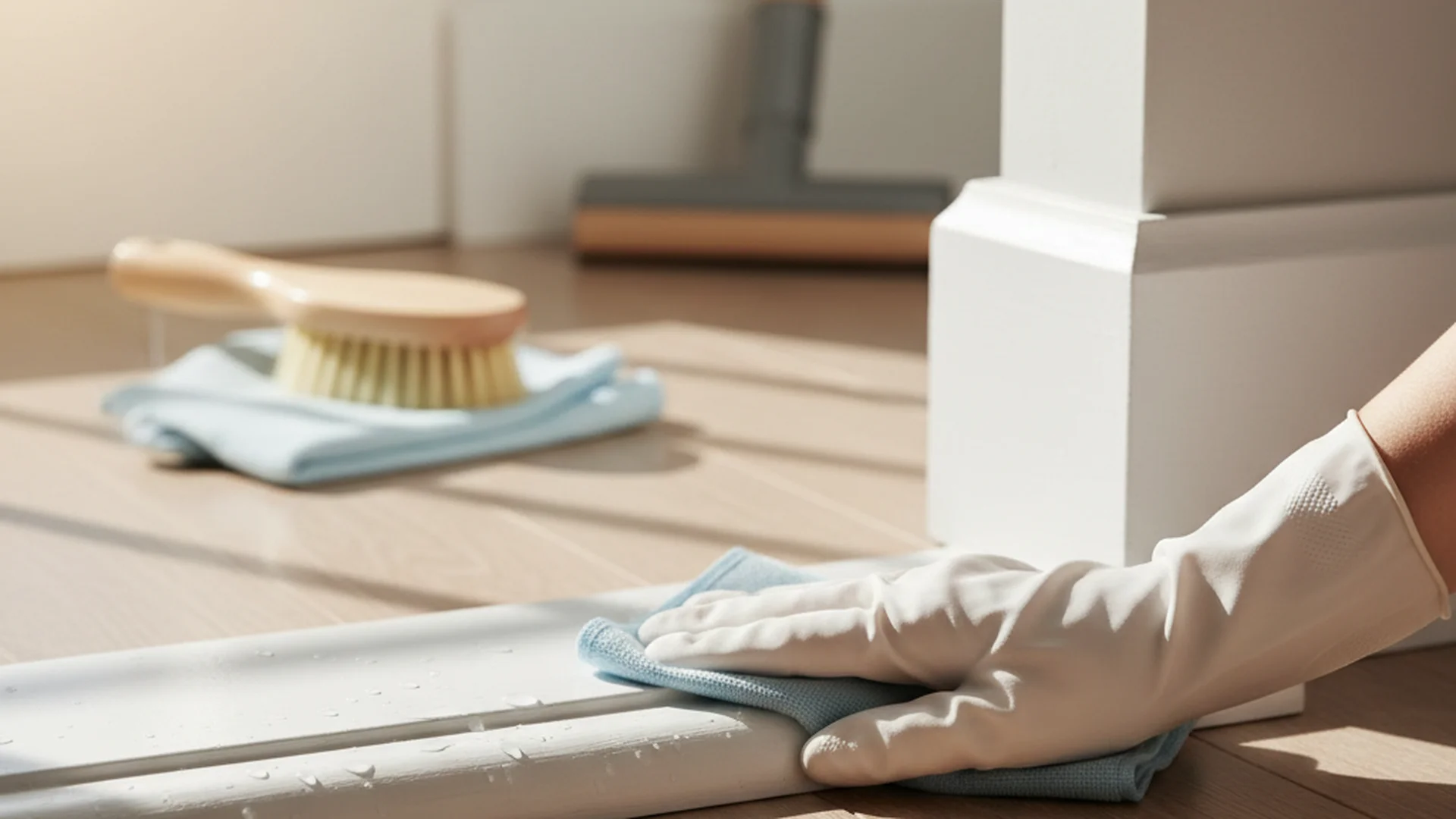
Once the loose dust is gone, mix a few drops of dish soap into a bucket of warm water. Dip your cloth or telescoping mop into the solution, wringing it out until it is only slightly damp.
Warning: If your baseboards are made of MDF (Medium-Density Fiberboard), excess water can cause the material to swell and warp permanently. Always wring your cloth thoroughly.
Step 3: The Buff and Protect
The final "dry" phase involves using a fresh microfiber cloth to buff the surface. This prevents water spots and ensures no soapy residue is left behind to attract more dirt. To take it a step further, wipe the baseboard with a fresh dryer sheet. The positively charged ions in the fabric softener counteract the static electricity that naturally attracts dust.
Success: Using a fresh dryer sheet can keep your baseboards dust-free for up to twice as long as standard cleaning alone.
How to Clean Baseboards Quickly (Without Bending Over)
One of the primary reasons baseboards are neglected is the physical toll of bending and kneeling. Professional cleaners use several "hacks" to speed up the process while remaining upright.
The Broom and Dryer Sheet Hack
If you don't have a specialized tool, you can use a standard household broom. Secure a dryer sheet or a microfiber cloth to the bristles using a rubber band. This allows you to walk along the perimeter of the room, dusting as you go.
Robotic Integration
In 2025, we are seeing the rise of specialized robot vacuums like the Narwal Freo Z Ultra. These units feature "baseboard rag" attachments and extending arms that can actually scrub the vertical edge of your trim while they mop your floors. For a busy household, this is the best way how to clean baseboards with zero manual effort.
Real-World Examples: Choosing the Right Solution
| Surface Type | Recommended Cleaner | Cleaning Frequency |
|---|---|---|
| White Painted (Semi-Gloss) | Water + Dish Soap + Vinegar | Monthly |
| Stained Wood | Wood Soap (Murphy’s) | Quarterly |
| MDF / Particle Board | Dry Microfiber / Minimal Dampness | Monthly |
| Kitchen Baseboards | Degreaser or Probiotic Spray | Weekly |
Example 1: The Multi-Pet Household
Pet hair tends to accumulate in corners and stick to baseboards due to static. In this scenario, using a vacuum first is non-negotiable. Following up with a probiotic surface spray—a 2026 trend—leaves "good bacteria" on the surface that continues to break down pet dander for days after the initial wipe.
Example 2: The Allergy-Sufferer's Deep Clean
For someone dealing with severe seasonal allergies, a "Top-Down" approach is vital. This means cleaning the ceiling fans and furniture before the baseboards. This ensures that any dust knocked loose from higher surfaces is captured during the baseboard phase rather than settling on "clean" trim later.
Example 3: Moving-Out Scuff Removal
When preparing a home for sale, scuff marks from vacuums or shoes can be an eyesore. A damp melamine sponge (Magic Eraser) is the perfect tool here.
Tip: Always test a melamine sponge on an inconspicuous area first, as aggressive scrubbing can dull the sheen of certain paint finishes.
Common Mistakes to Avoid
Even seasoned cleaners can make errors that lead to long-term damage. Avoid these pitfalls to keep your trim looking new:
- Using Bleach: Bleach is too corrosive for most paints and wood finishes. It can break down the chemical structure of the paint, leading to premature yellowing and cracking.
- Using Too Much Water: As mentioned, MDF is particularly vulnerable to moisture. If you see the bottom of your baseboards starting to "bloom" or expand, you are using too much liquid.
- Using Old Dryer Sheets: While used dryer sheets work for a quick dusting, they have lost most of their anti-static coating in the dryer. For the "repellent" effect, use a fresh sheet.
- Skipping the Corners: Dust accumulates most heavily in the 90-degree angles of a room. Use a cotton swab or an old toothbrush to ensure these areas don't turn black over time.
Recent Trends and Updates (2025–2026)
The cleaning industry is moving toward sustainability and biological solutions. One of the biggest trends for 2026 is the use of probiotic cleaners. Unlike traditional disinfectants that kill 99% of everything, probiotic sprays populate the surface with beneficial microbes. These microbes consume organic matter—like skin cells and food particles—that would otherwise feed dust mites.
Additionally, there is a significant surge in biodegradable, plant-based cleaning pastes. These products provide a protective, dust-repellent coating without the synthetic chemicals found in traditional waxes.
Frequently Asked Questions
How often should I clean my baseboards?
Can I use baby wipes on baseboards?
What is the best solution for white baseboards?
Is there a way to clean them without bending over?
Conclusion
Understanding how to clean baseboards effectively is a small change that yields massive results for your home's aesthetic and health. By employing the "Dry-Wet-Dry" method and leveraging modern tools like anti-static dryer sheets or probiotic sprays, you can transform this tedious chore into a quick, manageable task. Whether you choose the high-tech route with a specialized robot vacuum or the DIY "broom hack," consistency is the key to maintaining a spotless home.
Success: Following these expert steps will reduce the time you spend cleaning and significantly improve the air quality in your living space.
Cleaning that keeps score
Every task earns points, every streak multiplies them, and Premium adds a household leaderboard plus a monthly Dustagorgon to beat.
- Free forever
- 30 badges to earn
- Up to 6 in a household
No card needed. Set up your rooms in a couple of minutes.