In this article
What you’ll learn
- Deep clean your mattress every 3 to 6 months to clear out dust mites and allergens.
- Never use steam or excessive water on memory foam to avoid mold and structural damage.
- Use enzyme-based cleaners for organic stains like sweat, blood, or urine.
We spend approximately one-third of our lives in bed, yet the mattress is often the most overlooked item in our cleaning routine. Knowing how to clean mattress surfaces properly is essential for more than just a fresh-smelling bedroom; it is a critical component of home hygiene. Over the course of a year we sweat a remarkable amount into our bedding, creating a damp environment where bacteria and dust mites thrive. If you haven't deep-cleaned your bed recently, you might be sharing your sleep space with millions of microscopic unwanted guests.
Why Mattress Hygiene Matters More Than You Think
Before we dive into the best way how to clean mattress fibers, it is important to understand what is actually hiding beneath your sheets. An unwashed mattress accumulates bacteria year after year, and the longer it goes untreated the heavier that load becomes.
To put this in perspective, unwashed mattresses and pillowcases can hold far more bacteria than a typical toilet seat after just a week of use. For anyone suffering from indoor allergies or asthma, the primary trigger is often dust mite waste. A single mattress can house an enormous colony of mites, and their presence can significantly impact your respiratory health and sleep quality.
The Best Way to Clean Your Mattress: A Step-by-Step Guide
For a true deep clean, you need to go beyond a simple surface vacuuming. Follow this tried-and-tested "Sift and Sit" method to refresh your bed thoroughly.
Step 1: Strip the Bed and Launder
Remove all bedding, including the mattress protector. Wash everything in the hottest water setting recommended on the care label to kill existing dust mites and dissolve body oils.
Step 2: Vacuum Thoroughly
Use your vacuum’s upholstery attachment to go over the entire surface. Pay special attention to the seams and tufts, as these are the primary hiding spots for dead skin cells and mites.
Note: If you have a HEPA-filter vacuum, use it here. Standard vacuums can sometimes blow fine allergens back into the air of the room.
Step 3: Deodorize with the "Sift and Sit" Method
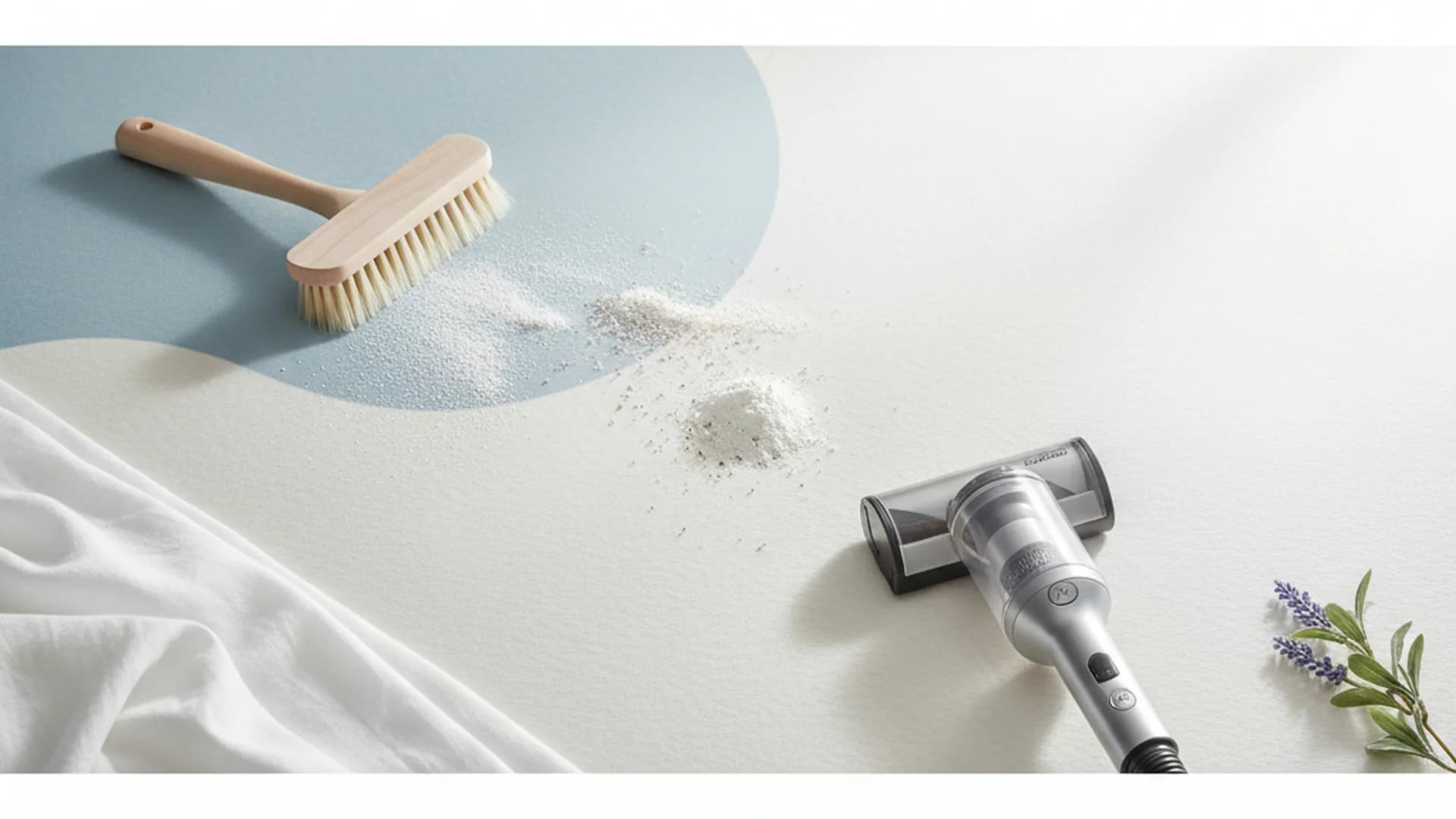
This is a cornerstone of mattress maintenance. Use a fine-mesh sieve to sprinkle a layer of baking soda over the entire mattress. For an added aromatherapy benefit, mix 2–3 drops of lavender or eucalyptus essential oil into the baking soda before sifting.
- Wait Time: Let the baking soda sit for at least 8 hours. It works to draw out moisture and neutralize odors.
- Removal: Vacuum the powder away thoroughly using slow, overlapping strokes.
Step 4: Spot Clean Stains
If you have visible yellowing or spots, you must address them with a targeted approach. For organic stains like sweat or urine, an enzyme-based cleaner is mandatory. These cleaners contain "good" bacteria that digest the organic matter causing the odor and stain.
Tip: For a DIY stain remover, mix a 2:1 solution of 3% hydrogen peroxide and liquid dish soap. Apply a small amount to a cloth and blot—never spray the mattress directly.
How to Clean Mattress Quickly: The Busy Person’s Cheat Sheet
Sometimes you don't have eight hours to wait for baking soda to work. If you need to know how to clean mattress quickly for a guest or a sudden spill, use these high-speed hacks.
| Goal | Fast Hack |
|---|---|
| Instant Deodorizing | Lightly spritz a 50/50 mix of vodka and water. Vodka kills bacteria and evaporates much faster than plain water. |
| Emergency Stain Removal | Apply a paste of baking soda and peroxide; dry it with a hair dryer on a cool setting to speed up the process. |
| Freshness Reset | Switch to a "Zip-Clean" protector that can be swapped for a clean one in under 60 seconds. |
Warning: Never use the "hot" setting on a hair dryer when drying a mattress, especially memory foam, as it can damage the internal structure.
Treating Specific Stains with Real-World Examples
Cleaning a mattress isn't one-size-fits-all. Different types of stains require different chemical reactions.
Example 1: The Morning Coffee Spill
Imagine you’ve spilled your morning latte. To fix this, immediately blot as much liquid as possible with a dry microfiber towel. Mix a solution of water and a mild detergent. Dampen a cloth and blot from the outside of the stain toward the center. This prevents the "ring" effect from spreading.
Example 2: The Pet Accident
If a pet has an accident, standard soap won't work because it doesn't break down the urea. You must use an enzyme-based cleaner. Saturate the area slightly (but do not soak), let it sit for 15 minutes, and then blot dry. The enzymes will "eat" the odor-causing proteins so the pet isn't tempted to return to the same spot.
Example 3: Seasonal Yellowing
Yellowing is common and is usually caused by sweat and skin oils reacting with the air (oxidation). To treat this, use the hydrogen peroxide and dish soap mixture mentioned earlier. Gently scrub the area with a soft-bristled brush and rinse by blotting with a damp (not wet) cloth.
Success: Regular spot cleaning combined with a high-quality waterproof protector can extend the life of your mattress by 3 to 5 years.
2025–2026 Trends in Mattress Care
The world of home cleaning is evolving. We are moving away from harsh chemicals and toward biological and high-tech solutions.
- Probiotic Cleaning Sprays: Products like Cif Infinite Clean are becoming household staples. These sprays leave a layer of beneficial bacteria on your mattress that continues to consume dead skin cells for up to 72 hours after application.
- UV-C and Ultrasonic Vacuums: New specialized vacuums use UV-C light to disrupt the DNA of bacteria and ultrasonic waves to vibrate mites loose from deep within the foam layers.
- Microbiome-Friendly Formulations: New cleaners focus on maintaining a healthy balance of bacteria in your home rather than "scorched-earth" disinfection, which can lead to resistant "superbugs."
Common Mistakes to Avoid
Even with the best intentions, you can ruin a mattress if you use the wrong technique.
- Mistake: Over-Wetting. This is the most dangerous error. If water seeps into the lower layers of foam or padding, it cannot dry easily. This creates a hidden mold and mildew colony within 24–48 hours.
- Mistake: Using Bleach. Bleach is far too corrosive for mattress ticking and can permanently break down the integrity of latex or memory foam.
- Mistake: Rubbing Stains. When you rub a stain, you are mechanically pushing the liquid deeper into the core of the mattress. Always blot.
- Misconception: Vacuuming is Enough. While it removes surface dust, it doesn't touch the sweat salts and bacteria that have bonded to the fibers.
Frequently Asked Questions
How often should I clean my mattress?
Can I use a steam cleaner on memory foam?
What causes those yellow stains on my bed?
Can I clean a mattress without a machine?
Maintaining a Fresh Bed Daily
The easiest way to keep your mattress clean is to prevent it from getting dirty in the first place. Implement the 45-Minute Rule: Do not make your bed immediately after waking up. Instead, pull the covers back to the foot of the bed and let the mattress air out for at least 45 minutes. This allows nighttime moisture and sweat to evaporate rather than trapping it under the covers.
Additionally, invest in a high-quality, breathable mattress protector. Modern "Zip-Off" tops allow you to remove the entire sleeping surface and toss it in the washing machine, making the "how to clean mattress" question much easier to answer in the future.
Cleaning that keeps score
Every task earns points, every streak multiplies them, and Premium adds a household leaderboard plus a monthly Dustagorgon to beat.
- Free forever
- 30 badges to earn
- Up to 6 in a household
No card needed. Set up your rooms in a couple of minutes.