In this article
What you’ll learn
- Cleaning the dryer vent is a critical safety measure to prevent house fires.
- Excessive detergent use is the primary cause of washing machine odors and mold.
- Regular maintenance can improve machine efficiency by up to 15% annually.
Most homeowners view the laundry room as a sanctuary of cleanliness—a place where dirty clothes go to be reborn. However, the irony of the modern home is that the very room responsible for hygiene is often one of the most neglected. From hidden bacterial biofilms in the washer to highly flammable lint buildup in the dryer, knowing how to clean laundry room spaces properly is a vital skill for safety, health, and financial savings.
In this guide, we will move beyond a simple wipe-down. As a professional cleaning consultant, I will walk you through the deep-cleaning protocols used by experts to ensure your appliances run efficiently and your home remains safe from preventable hazards.
The Hidden Importance of Laundry Room Maintenance
Before we dive into the "how," we must understand the "why." In 2025, a clean laundry room is no longer just about tidiness; it is a matter of home safety and appliance longevity.
Recent reports from the NFPA and Gitnux highlight a sobering reality: "Failure to clean" remains the leading factor in 27% of all home dryer fires. In fact, dryers account for 92% of fires involving laundry equipment, causing nearly $238 million in annual property damage. Furthermore, a 2024 National Sanitation Foundation (NSF) study revealed that over 60% of washing machines contain mold or bacteria levels high enough to impact personal hygiene.
By following a structured laundry room cleaning checklist, you aren't just cleaning a room; you are protecting your family and your investment.
Success: Regular maintenance can improve machine energy and water efficiency by 12% to 15% annually, saving you significant money on utility bills.
The Ultimate Laundry Room Cleaning Checklist
A professional clean requires a systematic approach. We categorize the process into three main pillars: the washing machine, the dryer, and the surrounding environment.
The Washing Machine: Eliminating the "Invisible Dirty"
The washing machine is often the greatest culprit of hidden filth. Research from 2025 shows that domestic machines frequently harbor antibiotic-resistant bacteria like Pseudomonas in slimy layers called biofilms.
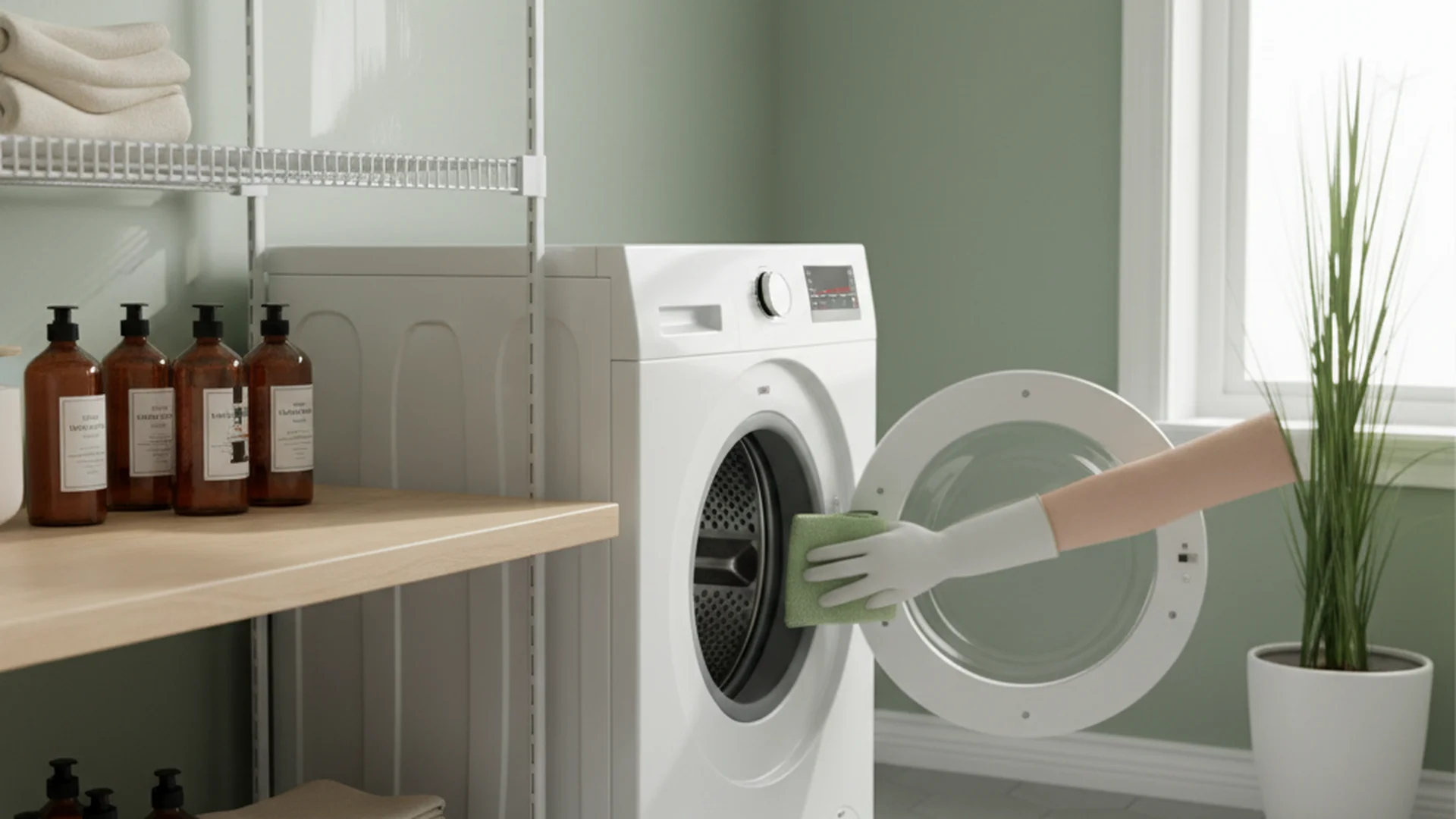
- The Rubber Gasket (Front-Loaders): This is the epicenter for mold. Wipe the seal after every wash. For a deep clean, use a 1:1 vinegar and water solution.
- The Drain Pump Filter: Usually located behind a small door at the bottom front of the unit. Have a tray ready to catch water, and remove any trapped debris like coins, hair, and lint.
- The Detergent Drawer: Detergent and fabric softener leave behind "scrud"—a waxy buildup that attracts mold. Remove the drawer entirely and soak it in warm, soapy water.
- The Maintenance Cycle: Run your machine on its highest heat setting (60–70°C) with a dedicated cleaning tablet or two cups of white vinegar.
Warning: Never mix vinegar directly with detergent in the same cycle. Vinegar is acidic and detergent is alkaline; they neutralize each other, rendering both ineffective.
The Dryer: Safety and Efficiency
Since the dryer is a major fire risk, your cleaning efforts here should focus on airflow.
- The Lint Trap: While you should clean the screen after every load, once a month you should wash the screen with soap and water. This removes the invisible film left behind by dryer sheets that restricts airflow.
- Behind and Under the Unit: Use a vacuum hose attachment to reach the area behind the machine. Flammable lint often accumulates here, near the electrical components.
- The Exhaust Duct: At least once a year, disconnect the duct and vacuum the interior. Ensure the hose is not kinked or crushed.
Note: If your clothes are taking longer than one cycle to dry, it is a primary indicator that your exhaust duct is restricted.
Surfaces and Environment
Once the machines are serviced, focus on the room itself.
- Countertops: Use a non-abrasive, all-purpose cleaner to remove detergent spills.
- Floors: Laundry rooms are high-traffic areas prone to spills. Use a disinfecting mop agent, paying special attention to the corners where "dust bunnies" (often comprised of lint) congregate.
- The "Warm Minimalism" Shift: In 2025 and 2026, design trends are moving away from "clinical" styles. Incorporating earthy tones like mushroom or putty can make the space feel like a sanctuary.
Real-World Examples of Laundry Room Transformation
To illustrate the impact of these cleaning protocols, let's look at three common scenarios I encounter in my consulting work.
Example 1: The "Mystery Odor" Solved
A client complained of a "wet dog" smell in their laundry room despite using premium detergents. Upon inspection, we found the drain pump filter had not been cleaned in three years. We removed three rusted quarters, a child's sock, and a thick layer of decomposing lint. Once the filter was cleared and a high-heat vinegar cycle was run, the odor vanished instantly.
Example 2: The Efficiency Recovery
A family noticed their dryer was taking 90 minutes to dry a standard load of towels. We performed a deep clean of the exhaust duct and discovered a bird's nest in the external vent flap. After clearing the obstruction and vacuuming the internal lint paths, drying time dropped back to 40 minutes, significantly reducing their monthly energy expenditure.
Example 3: The Smart Tech Upgrade
In 2025, we are seeing more homeowners utilize "Self-Cleaning Alerts" on AI-driven machines. A client recently avoided a major flood because their smart washer notified their smartphone that the filter was 90% clogged before the pump failed. Integrating these tech alerts with manual cleaning creates a "failsafe" environment.
Common Mistakes to Avoid
Even the most well-intentioned homeowners make mistakes when learning how to clean laundry room areas. Avoid these common pitfalls:
- Using Too Much Detergent: This is the #1 cause of machine odor. Excess suds trap bacteria in hidden crevices. Always follow the manufacturer’s recommended dosage.
- Closing the Door Immediately: This creates a greenhouse effect. Always leave the washer door and detergent drawer slightly ajar after a cycle to allow moisture to evaporate.
- Overloading the Machine: Overstuffing prevents proper agitation and strains the motor bearings. It also prevents the machine from rinsing away the very dirt you are trying to remove.
- Neglecting the External Vent: Many people clean the lint trap but forget the vent outside the house. If the exterior flap is stuck shut, heat cannot escape, creating a massive fire hazard.
Tip: If you use dryer sheets, use a small brush and dish soap to scrub your lint filter every few months. The wax coating on sheets can "waterproof" the mesh, leading to dryer overheating.
2025-2026 Laundry Cleaning Trends
The world of home maintenance is evolving. Here are the latest laundry room cleaning tips based on current trends:
| Trend | Benefit | Implementation |
|---|---|---|
| Detergent Sheets | Reduced Mess | Switch from heavy plastic jugs to dissolvable sheets to prevent tray buildup. |
| Warm Minimalism | Aesthetic Mental Health | Use raw wood and stone-look tiles to reduce the "chore-closet" feel. |
| Smart Diagnostics | Preventative Maintenance | Connect your machine to your home Wi-Fi for real-time filter status updates. |
| Eco-Conscious Pods | Plastic-Free | Opt for PVA-free pods to reduce microplastic residue in your machine's drum. |
Frequently Asked Questions
How often should I clean my washing machine?
Why does my laundry room smell like mildew?
Can I use vinegar to clean my machine?
How do I clean a dryer vent that goes through the roof?
Conclusion
Mastering how to clean laundry room spaces is a fundamental part of responsible homeownership. By moving beyond the surface and addressing the "invisible" areas—the filters, the gaskets, and the exhaust ducts—you ensure that your appliances work for you rather than against you. A clean laundry room reduces fire risks, eliminates harmful bacteria, and saves you money through increased energy efficiency.
Take an afternoon this weekend to go through this laundry room cleaning checklist. Your clothes, your wallet, and your peace of mind will thank you.
Cleaning that keeps score
Every task earns points, every streak multiplies them, and Premium adds a household leaderboard plus a monthly Dustagorgon to beat.
- Free forever
- 30 badges to earn
- Up to 6 in a household
No card needed. Set up your rooms in a couple of minutes.