In this article
What you’ll learn
- Follow the 7-step professional cleaning sequence for maximum efficiency.
- Prioritize hygiene transparency and sustainable wellness trends for 2025.
- Focus on high-touch disinfection and "invisible" areas like closets and under beds.
Cleaning a spare bedroom involves much more than just fluffing pillows and vacuuming the carpet. When you are learning how to clean guest room areas effectively, you are essentially learning the art of professional hospitality. As we move into 2025 and 2026, guest expectations have evolved. A "clean" room is no longer the ceiling—it is the floor. Today’s visitors look for a "home away from home" experience that blends clinical-grade hygiene with personalized wellness touches.
Whether you are preparing for a visiting relative or managing a short-term rental, this guide provides a comprehensive roadmap to achieving a five-star finish every time.
The Foundation of Modern Guest Hospitality
In the professional cleaning industry, we emphasize that cleanliness is the primary driver of guest satisfaction. Most travellers want visible indicators of cleanliness before they feel truly comfortable in a room. This means your cleaning process shouldn't just be effective; it should be evident.
When you master the guest room cleaning checklist, you aren't just removing dust; you are removing the "mental load" for your guest. A spotless room signals that they are safe, cared for, and welcome.
Tip: If the guest room has been empty for more than two weeks, always perform a "refresh" clean 24 hours before arrival to remove stale air and settled dust.
The 7-Step Professional Cleaning Method
Efficiency is key when preparing a home for visitors. By following a structured sequence, you ensure that you never have to clean the same surface twice. Professional cleaners use a "clockwise and top-to-bottom" approach to guarantee 100% coverage.
Step 1: Ventilate and Strip
The first step in any guest room cleaning checklist is to open the windows. Stagnant air is the biggest giveaway of an unused room. While the room airs out, strip all linens, including pillowcases, sheets, and duvet covers.
Warning: Never shake dirty linens in the room. This releases dust mites and skin cells back into the air and onto the surfaces you are about to clean.
Step 2: Trash and Inspection
Empty all bins and replace liners. This is also the time for a "deep dive" inspection. Look under the bed, inside the back of drawers, and in the far corners of the closet.
Example: The "Left-Behind" Audit In a professional setting, a consultant once found that guests felt most uncomfortable when finding items from previous occupants—even something as small as a stray hair tie or a crumpled receipt. A thorough inspection ensures the room feels brand new for every guest.
Step 3: Dust High to Low
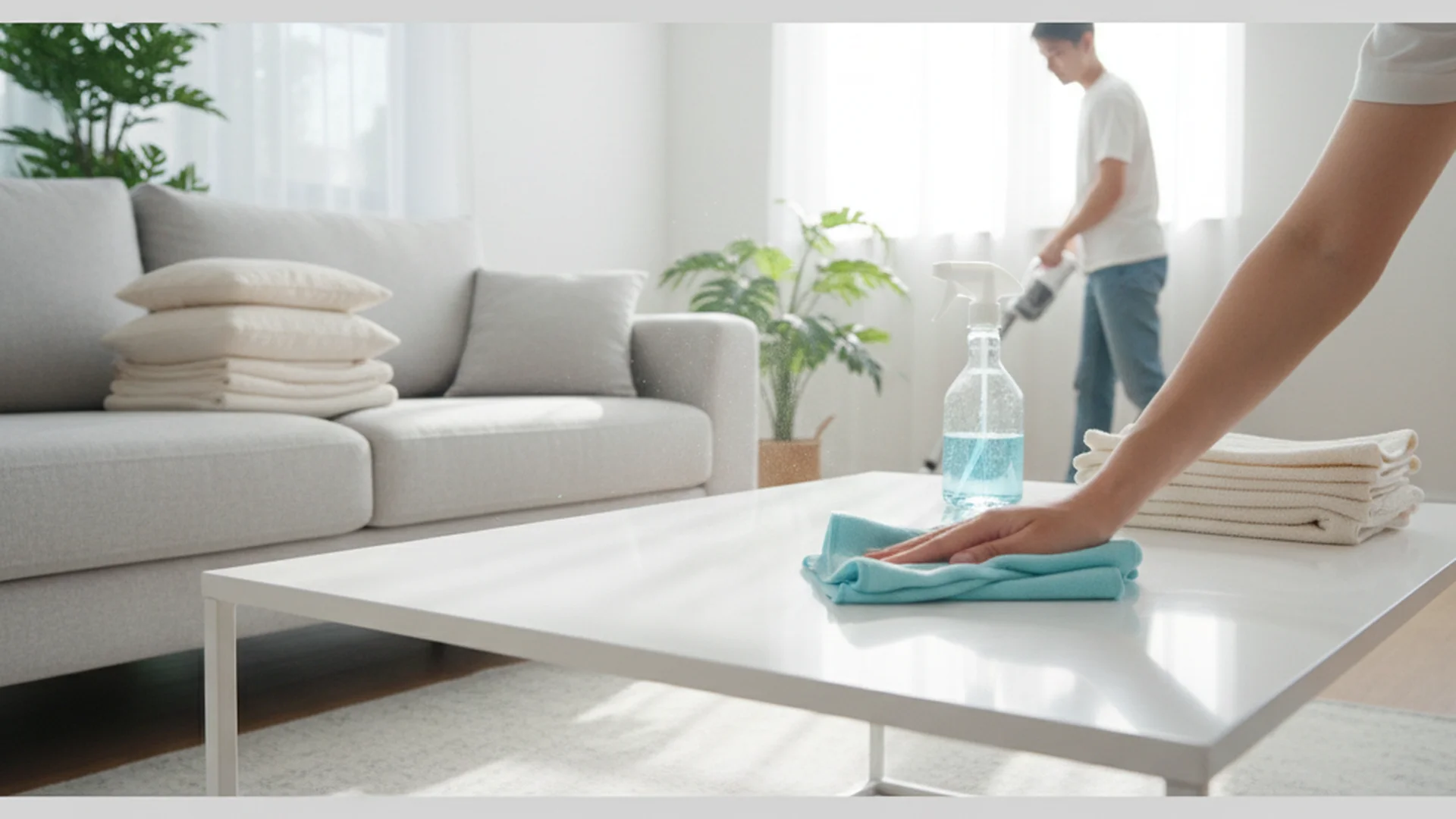
Dusting should always begin at the ceiling and work down to the baseboards. Use a microfiber cloth or a high-reach duster for:
- Ceiling fans and light fixtures.
- The tops of picture frames and mirrors.
- Window sills and blinds.
- Furniture surfaces.
Note: Dusting clockwise around the room ensures you don't miss a single corner or "dead zone" behind furniture.
Step 4: Disinfect High-Touch Points
In 2025, disinfection is a non-negotiable step. Using a hospital-grade disinfectant, focus on the areas that hands touch most frequently. This is where the "invisible" clean happens.
| Item | Disinfection Method | Why It Matters |
|---|---|---|
| Remote Control | Disinfectant wipe / UV light | Most bacteria-heavy item in any room. |
| Light Switches | Targeted spray on cloth | Prevents cross-contamination. |
| Doorknobs | Wrap-around wipe | Touched by everyone entering/leaving. |
| Thermostat | Damp microfiber | High-frequency contact point. |
Step 5: Bathroom Precision
If your guest room has an en-suite, clean from the "cleanest" area to the "dirtiest." Start with the mirrors and vanity, move to the shower/tub, and finish with the toilet. This prevents the spread of bacteria.
Step 6: Replenish and Style
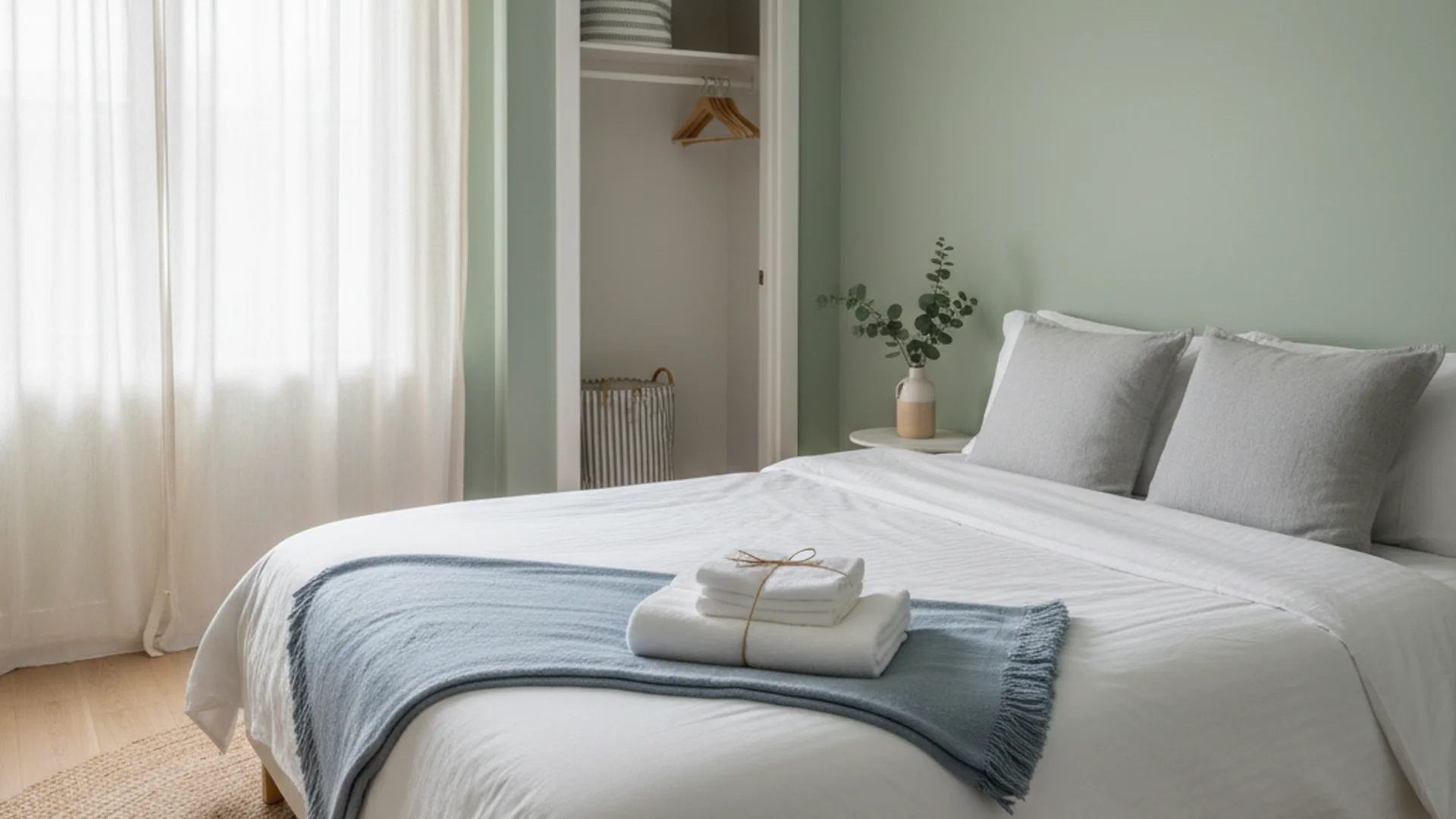
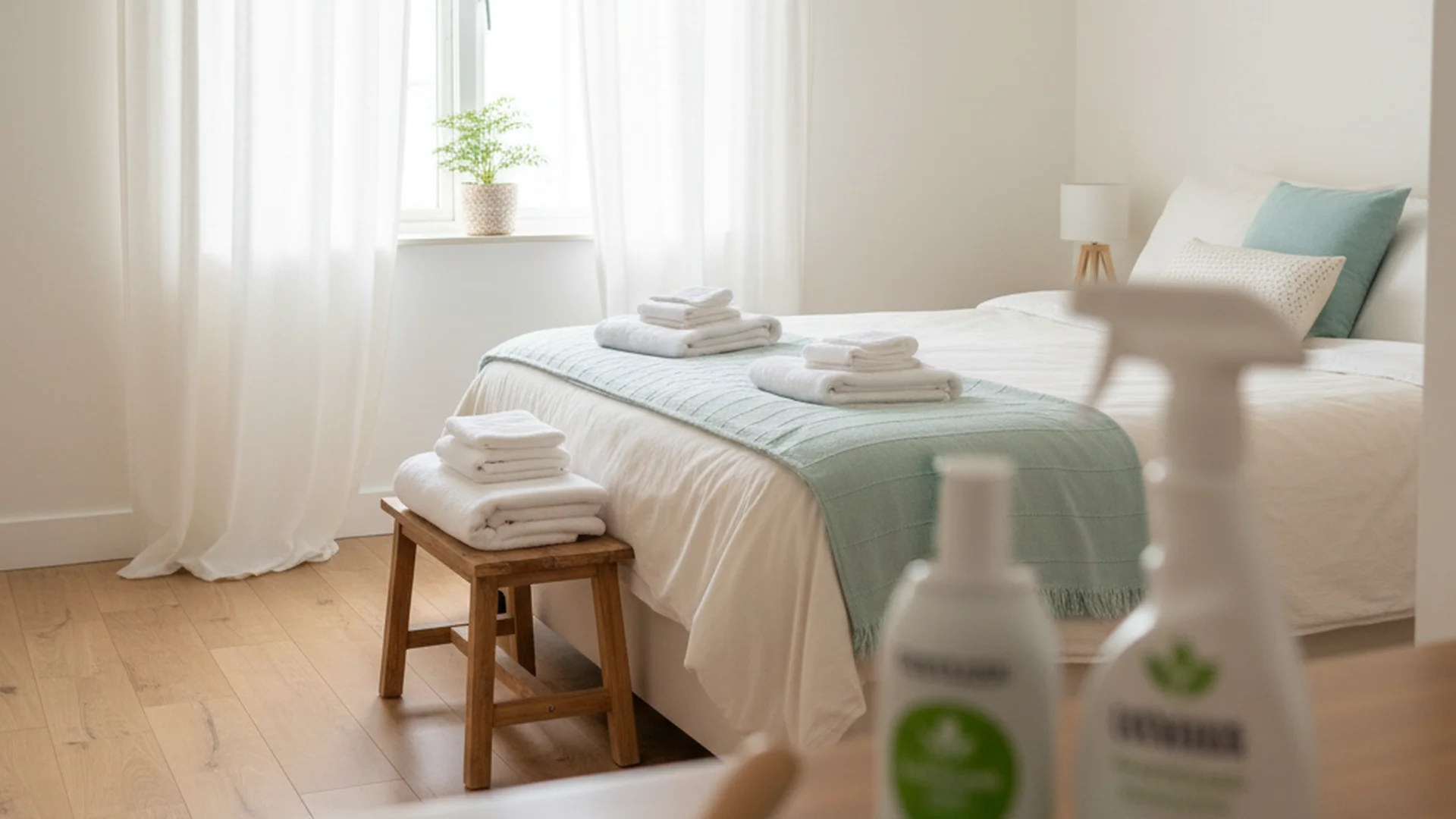
This is the "hospitality" phase. Use "triple sheeting"—a method involving a fitted sheet, a flat sheet, a thin blanket, and another flat sheet on top—to create that crisp, hotel-like feel. Restock your welcome basket and ensure fresh towels are folded neatly.
Step 7: Floor Care
Always vacuum or mop your way out of the room. Start at the farthest corner and end at the doorway to avoid leaving footprints on a fresh floor.
Success: Completing this 7-step cycle in order trims your total cleaning time while improving the quality of the results.
Advanced Guest Room Cleaning Tips for 2025-2026
The industry is shifting toward a "Resimercial" aesthetic—a blend of residential comfort and commercial-grade durability. Here is how to incorporate these modern trends into your routine.
Wellness and Air Quality
Guests are increasingly health-conscious. Providing a HEPA-filter air purifier or a white noise machine is no longer a luxury; it’s becoming a standard expectation.
Example: The Wellness Suite Integration Consider a host who adds a "Yoga Kit" (mat and foam roller) to the guest closet. By including these in the cleaning checklist (wiping down the mat with tea tree oil), the host provides a wellness experience that far exceeds a standard hotel stay.
Biophilic Design and Maintenance
Adding "functional" greenery, such as a snake plant or aloe vera, improves indoor air quality. During your cleaning routine, ensure you wipe the leaves of these plants. Dusty plants look neglected and can actually harbor allergens.
Sustainability and Zero-Waste
The trend for 2026 is moving away from single-use plastic "travel-size" bottles. Instead, install high-quality, refillable glass or ceramic dispensers in the shower. This reduces waste and allows you to provide premium, organic products that guests love.
Tip: Use a QR code on a small card to link to your "Cleaning Log." This provides the kind of hygiene transparency modern travellers appreciate.
Expert Hosting Touches That Matter
Cleanliness gets you a passing grade, but the "extras" get you a five-star review. Interior designer Charlotte Lucas and other hospitality experts recommend several key additions.
- The Luggage Rack: A simple wooden luggage rack prevents guests from putting dirty suitcases on the bed or the floor, protecting your linens and making their stay more convenient.
- Layered Lighting: Ensure there are "warm" bedside lamps so guests don't have to rely on harsh overhead lighting.
- The Universal Welcome Tray: Include a Wi-Fi card, 2-3 universal phone chargers, a carafe of water, and a "just in case" kit (new toothbrush, aspirin, and earplugs).
Common Mistakes to Avoid
Even seasoned cleaners can fall into traps that compromise the guest experience. Avoid these frequent errors:
1. Using Linens as Rags
Never use old towels or washcloths as cleaning rags. Not only does this risk cross-contamination, but it also reinforces a "hand-me-down" vibe that guests find unappealing. Use color-coded microfiber cloths specifically designated for cleaning tasks.
2. Neglecting "Soft" Surfaces
You might polish the nightstand, but when was the last time you vacuumed the upholstery or the inside of the closet? Odors often live in soft fabrics. Wash decorative throws and pillow covers seasonally, and use an air sanitizer to keep the closet smelling fresh.
3. Using Strong Fragrances
A common misconception is that a "clean" room must smell like bleach or heavy floral perfume. In reality, strong scents can trigger allergies or migraines. Aim for a "neutral" fresh scent, or use natural essential oil diffusers with light citrus or eucalyptus notes.
4. Forgetting the Closet "Overflow"
Many homeowners use the guest closet as extra storage for winter coats or old boxes. This is a mistake. Guests need at least 5-10 empty hangers and one clear shelf to feel truly at home.
Warning: Check the "expiration date" of your pillows. If a pillow doesn't spring back when folded in half, it’s time to replace it. A yellowed or flat pillow is an immediate turn-off for guests.
Frequently Asked Questions
How often should I clean the guest room if it’s not in use?
Should I provide full-sized or travel-sized toiletries?
How do I get rid of "old room" smells?
What is the difference between "Stayover" and "Checkout" cleaning?
How do I clean a mattress for guests?
Conclusion
Mastering how to clean guest room spaces is a blend of technical skill and empathetic hospitality. By implementing the 7-step method, staying updated on 2025 wellness trends, and avoiding common pitfalls like heavy fragrances or cluttered closets, you create a sanctuary that guests will remember. Remember, the goal is to make the guest feel like they are the first person to ever stay in that room.
Success: A well-cleaned room doesn't just look good—it builds trust. When your guests see the attention to detail you've provided, they can truly relax and enjoy their stay.
Cleaning that keeps score
Every task earns points, every streak multiplies them, and Premium adds a household leaderboard plus a monthly Dustagorgon to beat.
- Free forever
- 30 badges to earn
- Up to 6 in a household
No card needed. Set up your rooms in a couple of minutes.