In this article
What you’ll learn
- Clean environments help children focus, behave better, and settle more easily.
- Use the "Category Method" to prevent cognitive overwhelm in children.
- Implement a 10-minute nightly reset to maintain order throughout the week.
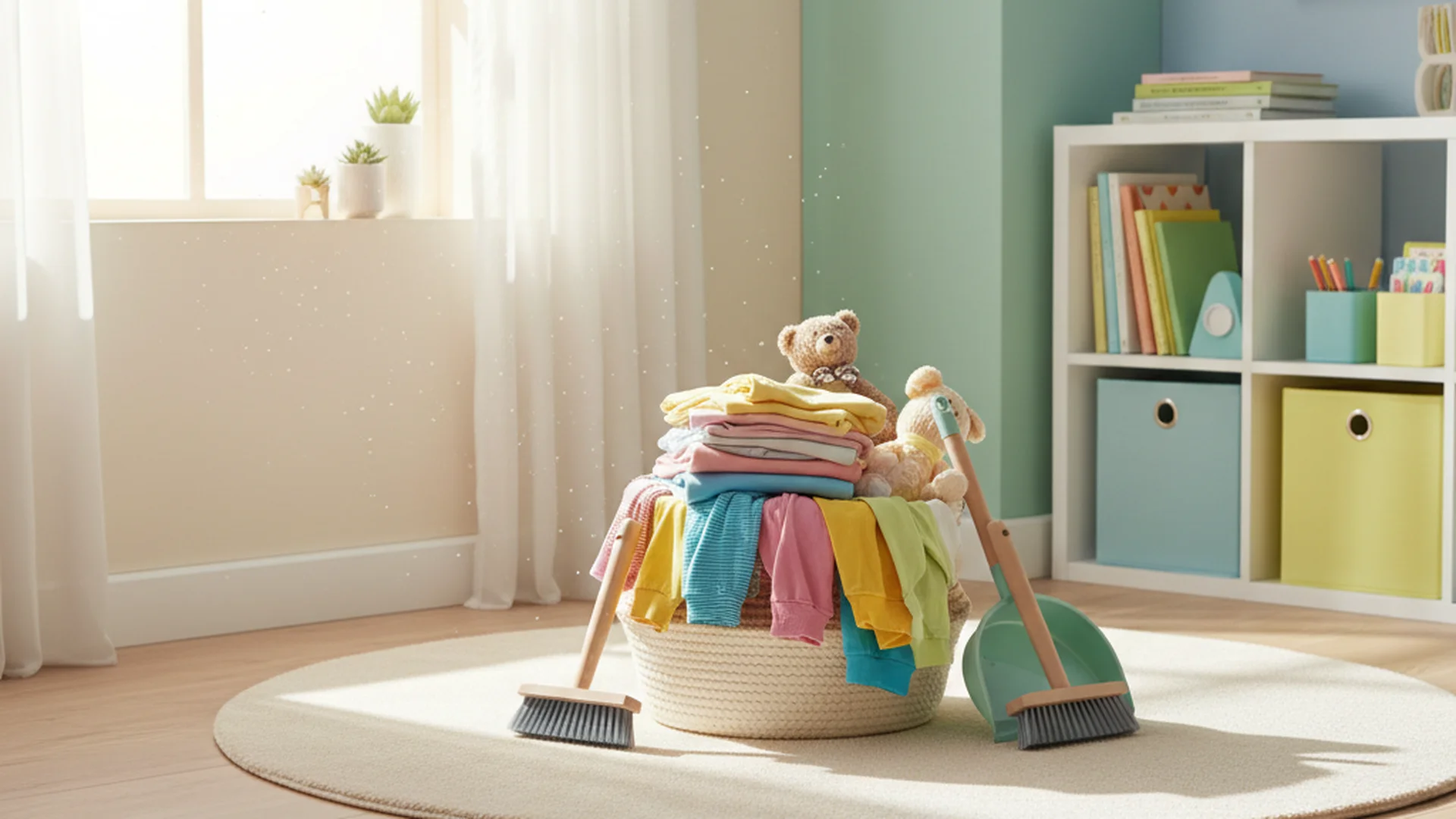
Walking into a child’s bedroom can often feel like stepping onto a battlefield of LEGO bricks, stray socks, and half-finished art projects. If you have ever wondered how to clean kids room without it turning into a multi-hour negotiation or a full-scale meltdown, you are not alone. Maintaining a tidy space for children is about more than just aesthetics; it is a fundamental pillar of their development and well-being. By 2025, the focus on home organization has shifted from rigid perfection to functional, "calm-inducing" spaces that grow with your child.
Why a Clean Room Matters: More Than Just Tidiness
Before diving into the "how," it is essential to understand the "why." The environment a child lives in shapes their mental clarity and emotional regulation. Children tend to concentrate better, behave more calmly, and work more productively in a clean, organized space with a clear desk.
Beyond the tidiness itself, cleaning is a vital life skill. Children who take part in household chores grow up more attuned to the needs of the people around them and more willing to pitch in. When you teach your child how to clean their room, you aren't just tidying a floor—you are building a future citizen.
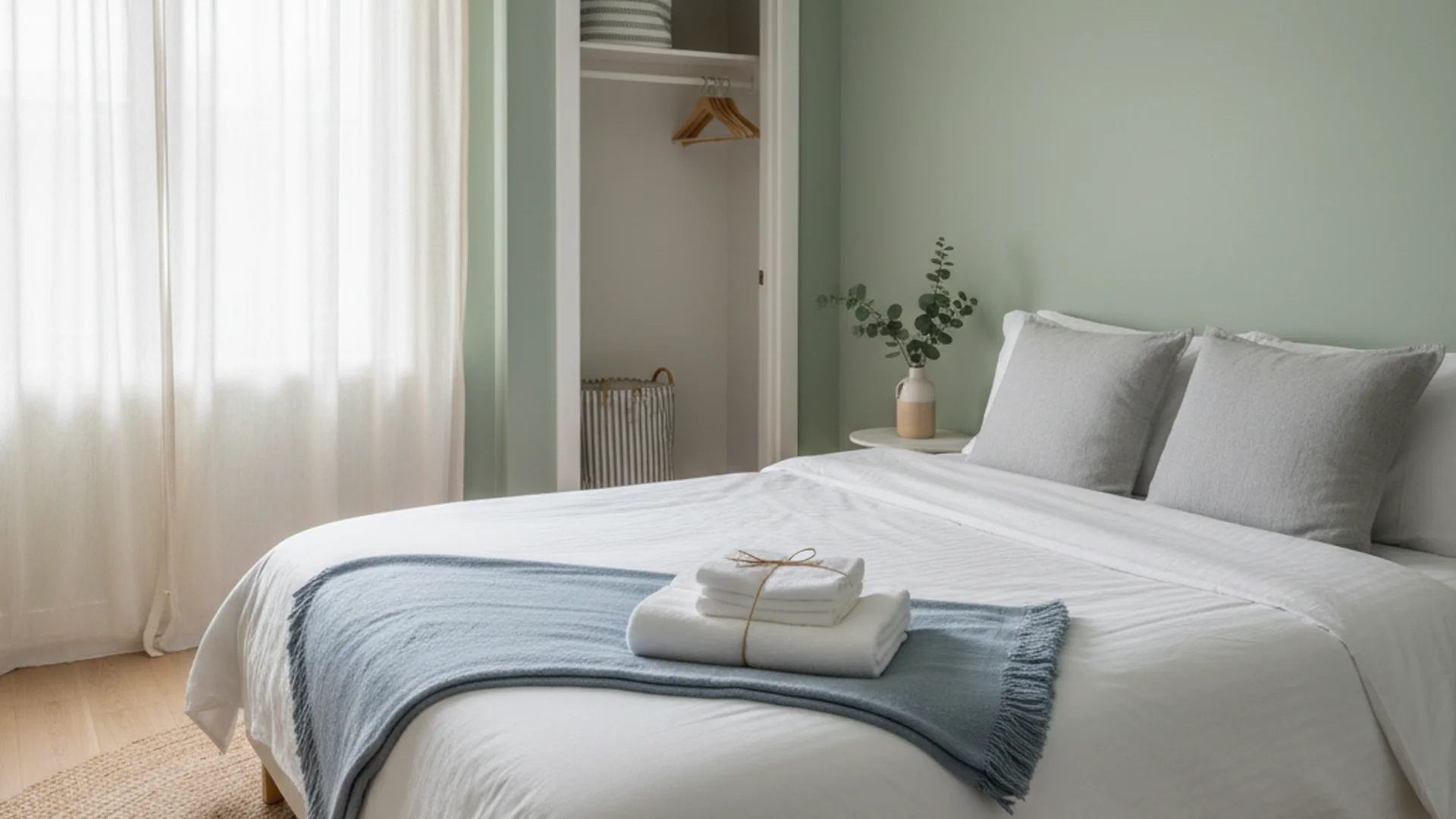
Note: Clean sheets aren't just for adults. Most people sleep more soundly on fresh linens, and good sleep is crucial for a child's cognitive development.
The 2025 Approach: Trends and Modern Methods
The landscape of home organization is evolving. For the 2025-2026 season, we are seeing a significant shift away from the neon-colored, plastic-heavy "theme" rooms of the past.
Warm Minimalism and Textured Neutrals
Modern kids' rooms are adopting "Warm Minimalism." This involves sage greens, clays, and terracotta palettes. These softer colors feel restful rather than stimulating. Because these palettes are "calming," they help mitigate the visual noise that often contributes to "Mess Blindness"—a cognitive state where the brain stops seeing clutter because it is overwhelmed by too many stimuli.
Architectural Integration
We are moving toward "built-in" solutions. Custom-built beds with integrated storage niches are replacing bulky, standalone toy boxes. This trend reduces the number of "hidden" spots where dust and forgotten toys accumulate.
AI-Assisted Chore Management
Surprisingly, AI has entered the playroom. Parents are now using tools like ChatGPT to generate "Dungeons & Dragons" style quests for their children. Instead of "pick up your toys," the prompt becomes "The Kingdom of Legoland has been hit by a giant; return the bricks to their castle to save the citizens." This gamification is a massive trend for 2026.
Tip: Use a "Sunday Reset" ritual. Inspired by CleanTok trends, this involves a full-room refresh, including "laundry stripping" for linens and "slow vacuuming" to capture every allergen.
How to Clean Kids Room: A Step-by-Step Guide
To effectively clean a child's room, you must break the process down into manageable categories. Giving a child a vague command like "clean your room" is often the biggest hurdle to success.
Step 1: The "Category" Method
Instead of focusing on the floor as a whole, focus on categories.
- The Laundry Hunt: Gather all dirty clothes first.
- The Toy Roundup: Specifically look for one type of toy (e.g., "all the cars").
- The Paper Trail: Collect all drawings, school papers, and scraps.
Step 2: "Sort it Twice" Decluttering
This is the gold standard for 2025.
- Category Sort: Group everything into piles (dolls, books, electronics).
- Decision Sort: Decide what to keep, donate, or trash. If a child hasn't touched a toy in six months, it’s a candidate for the "One-In, One-Out" rule.
Step 3: Tackling the "Hot Spots"
Every room has "Hot Spots"—surfaces like desk tops, nightstands, and dressers that naturally attract clutter. Implement a 3-item limit for these surfaces to maintain a sense of calm.
Warning: Avoid "hiding" instead of cleaning. Shoving items under the bed or into a single "junk bin" prevents children from learning real organizational logic.
Age-Appropriate Cleaning Expectations
A common mistake is expecting a six-year-old to clean with the precision of a teenager. Here is the 2025-2026 developmental breakdown:
| Age Group | Responsibility Level | Tasks |
|---|---|---|
| 3–5 Years | Assisted "Resets" | Putting toys in bins, matching socks, "Magic Piece" game. |
| 6–9 Years | Task-Oriented | Making the bed, clearing the desk, sorting laundry. |
| 10–12 Years | Checklist-Driven | Vacuuming, dusting surfaces, managing a weekly schedule. |
| 13+ Years | Independent | Deep cleaning, changing linens, full organization. |
Success: Children who master these skills early tend to find the transition to college or independent living far less stressful.
Real-World Examples of Success
Example 1: The "Magic Piece" Game
A mother in Seattle struggled with her 7-year-old’s resistance to cleaning. She began secretly picking one "magic" item on the floor (like a specific green block). The child would clean until they found the magic piece. The result? The room was cleaned in 15 minutes without a single argument.
Example 2: Magnetic Vertical Storage
In a small New York City apartment, a family used 2026’s vertical storage trend. By mounting magnetic strips on the wall, they organized all art supplies (markers in metal tins) and toy cars. This cleared the floor entirely, making the room feel twice as large.
Example 3: Visual Checklists
A father of a child with ADHD implemented a laminated, icon-based checklist. Instead of verbal instructions which were often forgotten, the child followed the icons: 👕 (clothes), 🧸 (toys), 📚 (books). This reduced the child's "cognitive load" and made the task manageable.
Kids Room Cleaning Checklist
To help you stay on track, use this kids room cleaning checklist for your weekly deep clean:
- Strip the Bed: Wash sheets and pillowcases in hot water to kill dust mites.
- The "High-Low" Dust: Dust the ceiling fan and light fixtures (High), then the baseboards (Low).
- Window Tracks: Wipe down the tracks where dead bugs and dust accumulate.
- Disinfect High-Touch Points: Door knobs, light switches, and drawer pulls.
- The Under-Bed Sweep: Use a long-reach duster or vacuum attachment for the "hidden" zone.
- Sanitize Hard Toys: Use a non-toxic, eco-friendly cleaner on plastic toys and LEGOs.
- Rotate the Rug: If you have an area rug, rotate it to ensure even wear and vacuum underneath.
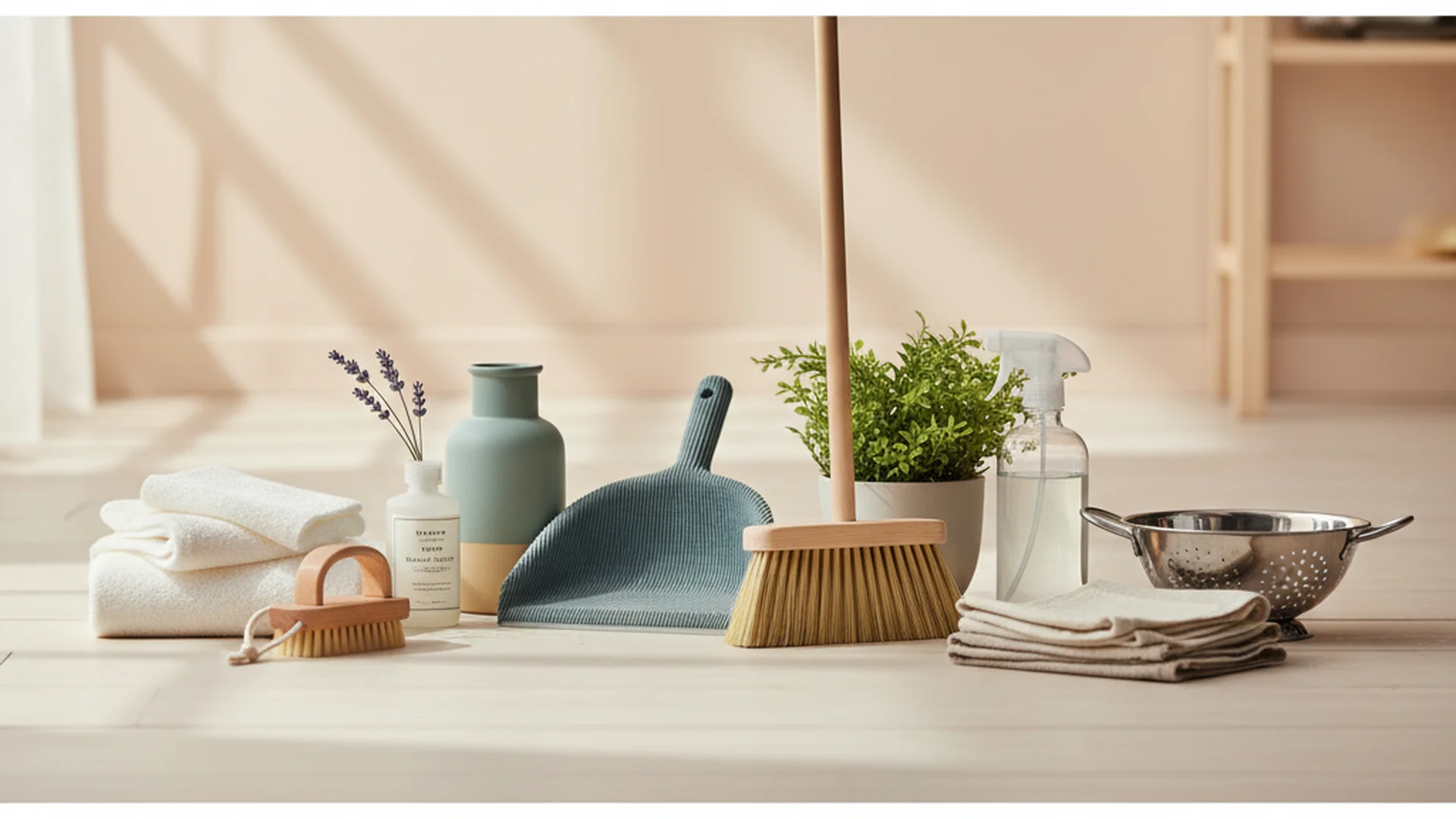
Note: Most parents now reach for green cleaning products. Avoid mixing multiple cleaners, as this can create toxic fumes; stick to a single, high-quality multi-purpose cleaner.
Common Mistakes to Avoid
- Product Overload: Do not fall for TikTok trends that involve mixing five different colorful cleaners. This is dangerous and unnecessary. A simple vinegar-water solution or a certified non-toxic multi-surface spray is usually enough.
- Neglecting Dust Magnets: Many parents focus on the floor but forget the ceiling fan, decorative pillows, and stuffed animals. These are the primary sources of bedroom allergens.
- Too Much Inventory: If a room takes longer than 20 minutes to "reset," there is too much stuff. Use the "One-In, One-Out" rule to keep inventory manageable.
- Skipping the "Scaffolding" Phase: You cannot expect a child to know how to clean instinctively. Use the "I do, you watch; we do together; you do, I check" method to teach the skill properly.
- Ignoring "Mess Blindness": If the room is a disaster, your child's brain might literally be unable to process where to start. Break the room into four quadrants and have them focus on just one at a time.
Frequently Asked Questions
How do I get my child to start cleaning without a fight?
At what age should a child be responsible for their own room?
Should I let my child live in a "pigsty" if it’s their own space?
What is "Mess Blindness"?
How often should I deep clean a child's room?
Conclusion
Mastering how to clean kids room is a journey of patience and systems. By utilizing the 2025 trends of warm minimalism and architectural storage, and by following our kids room cleaning tips, you can transform a chaotic space into a sanctuary for growth. Remember that the goal isn't just a clean floor—it's a clear mind and a more responsible child.
Success: Implementing these strategies takes a lot of the stress out of the household and helps your child sleep better every single night.
Cleaning that keeps score
Every task earns points, every streak multiplies them, and Premium adds a household leaderboard plus a monthly Dustagorgon to beat.
- Free forever
- 30 badges to earn
- Up to 6 in a household
No card needed. Set up your rooms in a couple of minutes.