In this article
What you’ll learn
- Use a flat-weave microfiber cloth rather than paper towels to avoid lint.
- Always spray the cloth, not the mirror, to prevent "mirror rot" on the edges.
- Rubbing alcohol is the secret weapon for removing hairspray and toothpaste.
We have all been there: you spend twenty minutes scrubbing your bathroom until it sparkles, only to catch a glimpse of your reflection and see a roadmap of hazy streaks and lint. Learning how to clean bathroom mirror surfaces effectively is about more than just aesthetics; it is about maintaining one of the most hardworking features of your home.
In 2025, the way we approach home maintenance has shifted. With hard water a fact of life across much of the country and more households moving toward eco-friendly solutions, the "old way" of spraying blue chemicals and wiping with a paper towel is officially outdated. As a Domestic Efficiency Specialist, I have found that the secret to a professional-grade shine lies in a combination of the right tools, specific patterns, and a "less is more" philosophy.
What Actually Builds Up on a Bathroom Mirror
Before we dive into the method, we need to understand what we are actually cleaning. Bathroom mirrors are unique because they are subject to a cocktail of biological and chemical residues. In a typical week, your mirror collects:
- Hard Water Deposits: Calcium and magnesium left behind by evaporating steam.
- Aerosol Residues: Hairspray, deodorant, and perfume that create a sticky film.
- Personal Care Products: Toothpaste splatters and soap scum.
- Skin Oils: Fingerprints and smudges from adjusting the glass.
Glass requires a very different touch than a countertop. If you simply wipe these substances around with water, you are essentially creating a slurry that dries into the very streaks you are trying to avoid.
The Essential Toolkit
To achieve the best way to clean mirror surfaces, you must abandon the paper towel. Paper towels are made of wood pulp; as you rub them across the glass, they disintegrate, leaving behind tiny fibers (lint).
| Tool | Purpose | Why It’s Necessary |
|---|---|---|
| Flat-Weave Microfiber | Main Cleaning | Grabs dust without leaving lint or scratching. |
| Rubbing Alcohol (70%) | Spot Treatment | Dissolves oils and hairspray instantly. |
| Distilled White Vinegar | Main Solution | Cuts through hard water minerals without bleach. |
| Distilled Water | Dilution | Prevents new mineral spots from forming. |
| Glass Waffle-Weave Cloth | Buffing | The final step for a "crystal" finish. |
Note: If you have a modern "Smart Mirror" with LED lights or touch sensors, skip the vinegar. The acidity can damage electronic coatings over time.
Step-by-Step: How to Clean Bathroom Mirror Without Bleach
Many homeowners ask how to clean bathroom mirror without bleach or ammonia. The answer is surprisingly simple and much safer for your home's air quality.
Step 1: Pre-Treat Stubborn Spots
Before you wet the entire surface, look for "gunk." Take a cotton pad soaked in rubbing alcohol and dab at toothpaste spots or hairspray build-up. Rubbing alcohol is a solvent that breaks down organic matter much faster than soap and water. By removing these first, you prevent them from being smeared across the whole mirror during the main wipe-down.
Step 2: Mix Your Green Solution
In a reusable spray bottle, mix a 1:1 ratio of distilled white vinegar and distilled water. This is the gold standard for eco-friendly cleaning in 2025. The vinegar breaks down hard water minerals, while the distilled water ensures no new minerals are introduced.
Step 3: The Cloth-First Rule
This is the most important rule in mirror maintenance.
Warning: Never spray your cleaning solution directly onto the mirror. The liquid can run down the glass and seep behind the frame, causing "mirror rot" (the black spots at the edges where the silver backing lifts).
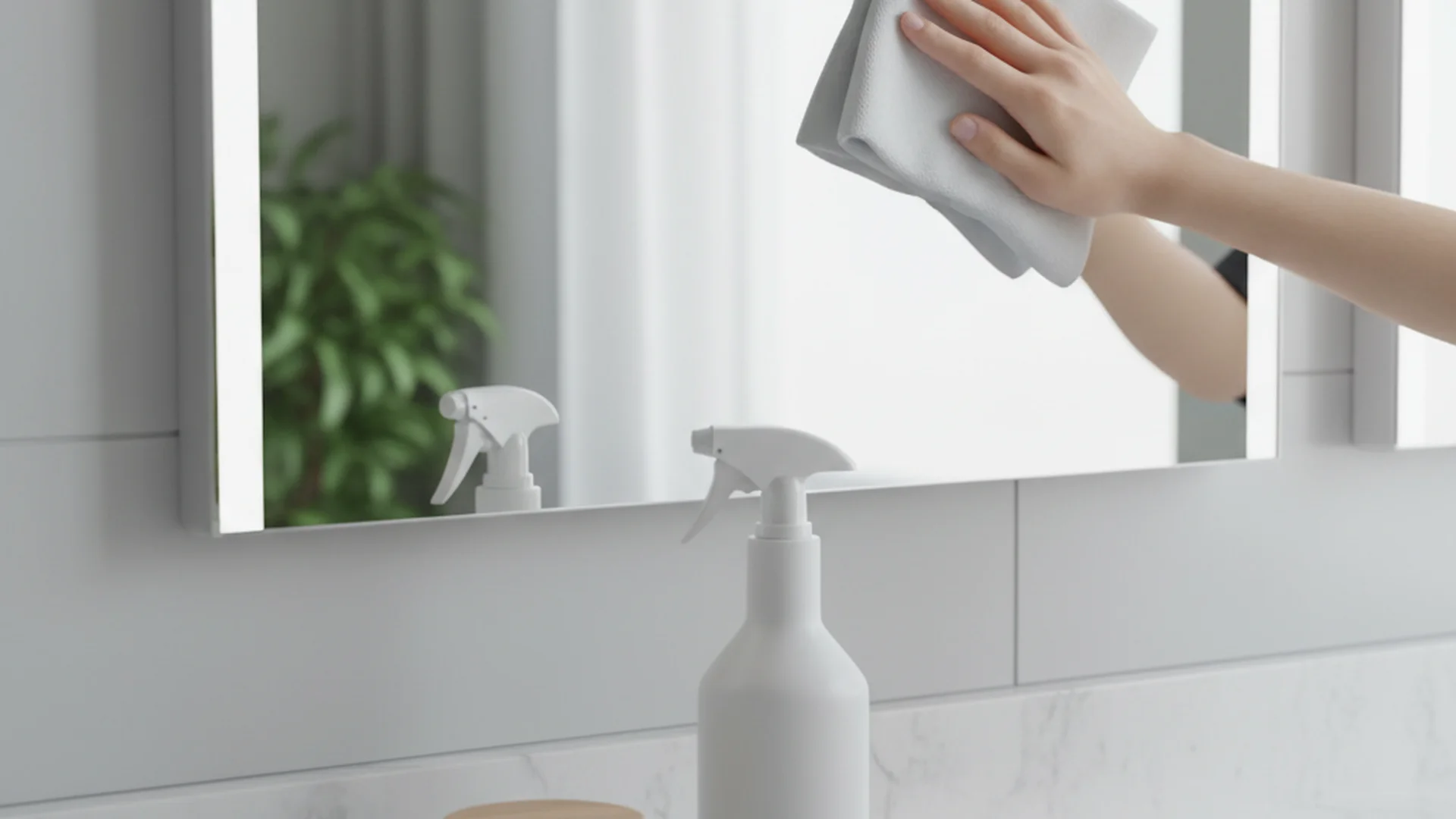
Instead, lightly mist your microfiber cloth. It should be damp to the touch, not dripping.
Step 4: The S-Pattern Technique
Start at the top-left corner. Move the cloth in a continuous "S" or zigzag motion all the way to the bottom. This ensures you never re-deposit dust onto a section you have already cleaned. Avoid circular motions, which tend to trap debris and create swirl marks.
Step 5: The Final Buff
Once the mirror is clean, take a second, completely dry microfiber cloth. Buff the surface using the same S-pattern. This removes any microscopic moisture that could turn into a streak as it air-dries.
Real-World Examples and Trends
Example 1: The "Hairspray Fog"
A client once complained that their mirror always looked "cloudy" even after cleaning. The culprit was a daily habit of using aerosol hairspray in front of the glass. By switching to the rubbing alcohol pre-treat method, they removed the sticky polymer layer that regular glass cleaners simply couldn't touch.
Example 2: The Smart Mirror Dilemma
With the rise of integrated tech, many 2025 bathrooms feature anti-fog smart mirrors. I recently consulted for a household that used a heavy-duty vinegar solution on an LED mirror, which eventually caused the touch-sensor to become unresponsive. For tech-integrated glass, use only a slightly damp, specialized glass cloth and warm water.
Example 3: The Aromatherapy Shift
A growing trend in 2025 is "Cleaning as Self-Care." Many homeowners are now adding two drops of eucalyptus or lavender essential oil to their vinegar-water mix. This turns the chore of cleaning the mirror into a therapeutic aromatherapy experience, making the bathroom feel like a high-end spa.
Common Mistakes to Avoid
- Using Too Much Product: Over-saturating the mirror is the number one cause of streaks. A light mist is all you need.
- Cleaning in Direct Sunlight: If your bathroom has a window, avoid cleaning when the sun is hitting the mirror. The heat causes the liquid to evaporate too quickly, leaving streaks before you can buff them.
- Cross-Contamination: Never use the same cloth you used to wipe the sink or toilet. Soap scum and bacteria from other surfaces will transfer to the glass, creating a greasy film.
- The Newspaper Myth: While people used to use old newspapers, modern soy-based inks can actually smear and leave dark residues on your hands and the mirror frame.
Success: By following the S-pattern and using distilled water, you can extend the "sparkle life" of your mirror, reducing the need for deep cleans from weekly to bi-weekly.
Frequently Asked Questions
How do I clean a mirror without streaks?
Can I clean a mirror without bleach or ammonia?
How can I stop my bathroom mirror from fogging up?
What causes the black spots on the edges of mirrors?
Is rubbing alcohol safe for all mirrors?
Conclusion
Mastering the best way to clean mirror surfaces doesn't require expensive chemicals or hours of labor. By understanding the shift toward green cleaning and respecting the delicate nature of the mirror's backing, you can achieve a professional finish every time. Remember to spot-treat with alcohol, use the S-pattern, and always spray your cloth—not the glass.
With these Domestic Efficiency techniques, your bathroom mirror will remain a clear, bright focal point of your home for years to come.
Cleaning that keeps score
Every task earns points, every streak multiplies them, and Premium adds a household leaderboard plus a monthly Dustagorgon to beat.
- Free forever
- 30 badges to earn
- Up to 6 in a household
No card needed. Set up your rooms in a couple of minutes.