In this article
What you’ll learn
- Use the top-down cleaning method to prevent cross-contamination.
- Never miss the overflow hole, which is the usual source of sink odors.
- Avoid mixing bleach and vinegar to prevent toxic gas.
For many homeowners, the bathroom sink is simply a place to brush teeth or wash hands. The startling reality is that your sink is likely the germiest place in your home, carrying a far heavier bacterial load than the average toilet seat. Learning how to clean bathroom sink surfaces effectively is no longer just about removing toothpaste globs; it is about maintaining a healthy home microbiome in an era of advanced antimicrobial awareness.
As we move into 2026, the philosophy of cleaning has shifted from "scorched earth" chemical disinfection to targeted, material-conscious maintenance. Whether you are looking for the best way to clean sink fixtures or trying to figure out how to clean bathroom sink without bleach, this guide provides a professional framework for a sparkling, sanitary finish.
The Evolution of Sink Hygiene in 2026
The landscape of home maintenance has changed. Homeowners increasingly prioritize "ease of cleaning" over purely aesthetic features when they choose fixtures. This shift has led to the rise of antimicrobial glazes and touchless faucets, but even the most high-tech sink requires a proper manual cleaning routine to prevent the buildup of biofilm—a slimy layer of bacteria that is often invisible to the naked eye.
Note: Biofilms are resilient. Even if a sink looks clean, microscopic layers of bacteria can remain, especially around the drain and the base of the faucet.
Essential Tools and Modern Cleaning Formats
Before we begin the step-by-step process, it is important to choose the right tools. In 2025 and 2026, there has been a massive surge in "solid" cleaning formats. Rather than buying heavy plastic bottles of liquid cleaner, many households have switched to cleaning tablets or concentrated pods that you drop into reusable glass spray bottles.
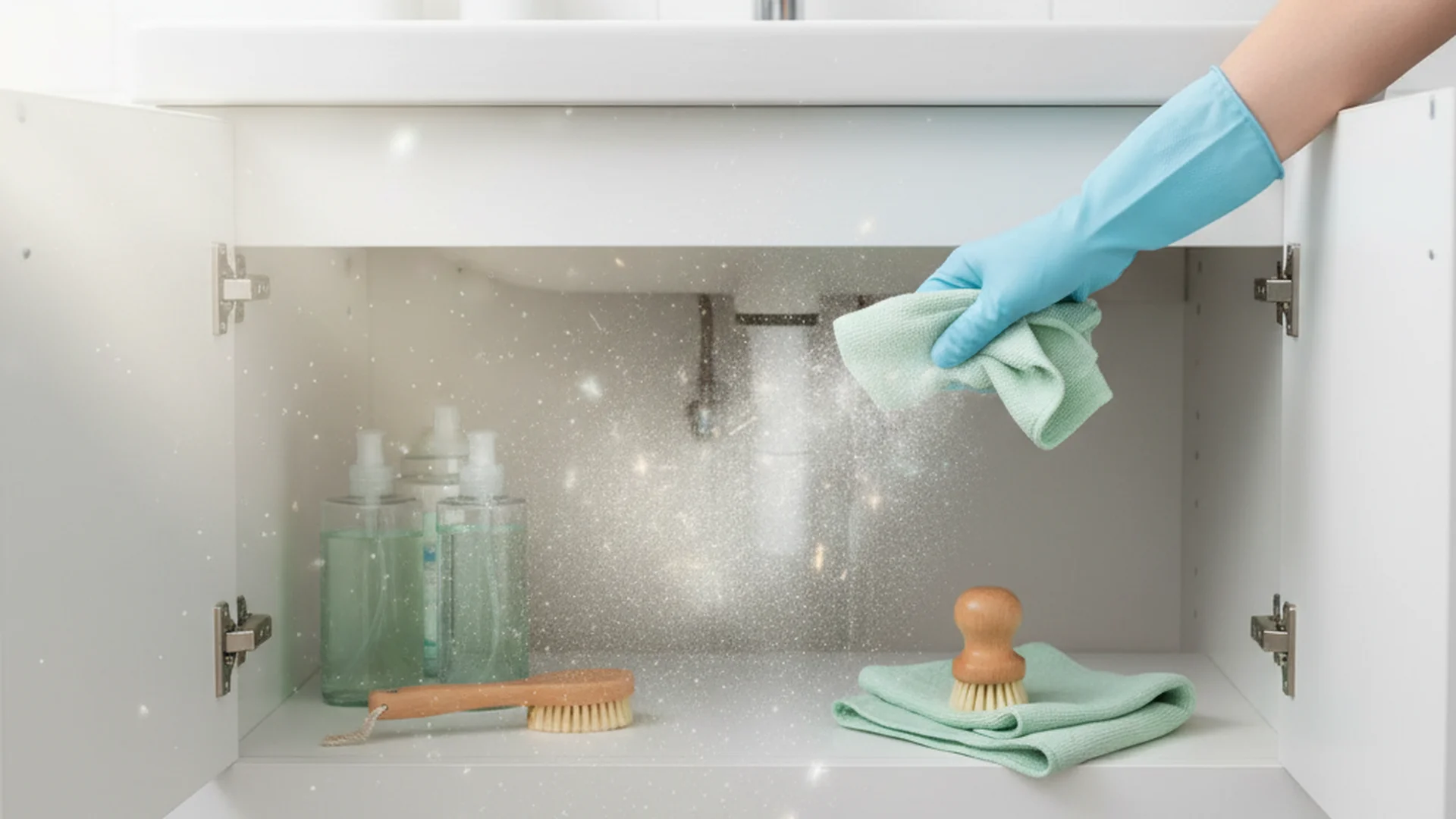
- Microfiber Cloths: Essential for a streak-free finish and for drying the sink to prevent hard water spots.
- Soft-Bristled Brush: An old toothbrush or a dedicated detailing brush for the hardware.
- Probiotic Surface Sprays: The latest trend in 2026, these sprays use "good" bacteria to eat away organic grime for up to 72 hours.
- pH-Neutral Cleaner: Mandatory for natural stone like marble or granite.
Tip: If you are using cleaning tablets, let the tablet dissolve completely in lukewarm water before use to ensure the concentration is consistent throughout the cleaning process.
Step-by-Step: The Best Way to Clean Your Sink
To achieve professional results, you must follow the "Top-Down" method. This prevents you from splashing dirty water onto areas you have already cleaned.
Step 1: Clear and Prep
Remove everything from the sink area, including soap dispensers, toothbrushes, and decorative items. Rinse the basin with warm water to remove loose debris like hair or surface dust.
Step 2: The Faucet and Handles
Start with the highest point. Apply your cleaner to the faucet, handles, and the base where the hardware meets the countertop. This area is a magnet for "hard water crust" and mold.
Warning: Avoid using abrasive scrubbing pads on matte black or gold-plated fixtures. These finishes are delicate and can be permanently scratched or stripped by harsh friction.
Step 3: The Basin and Overflow Hole
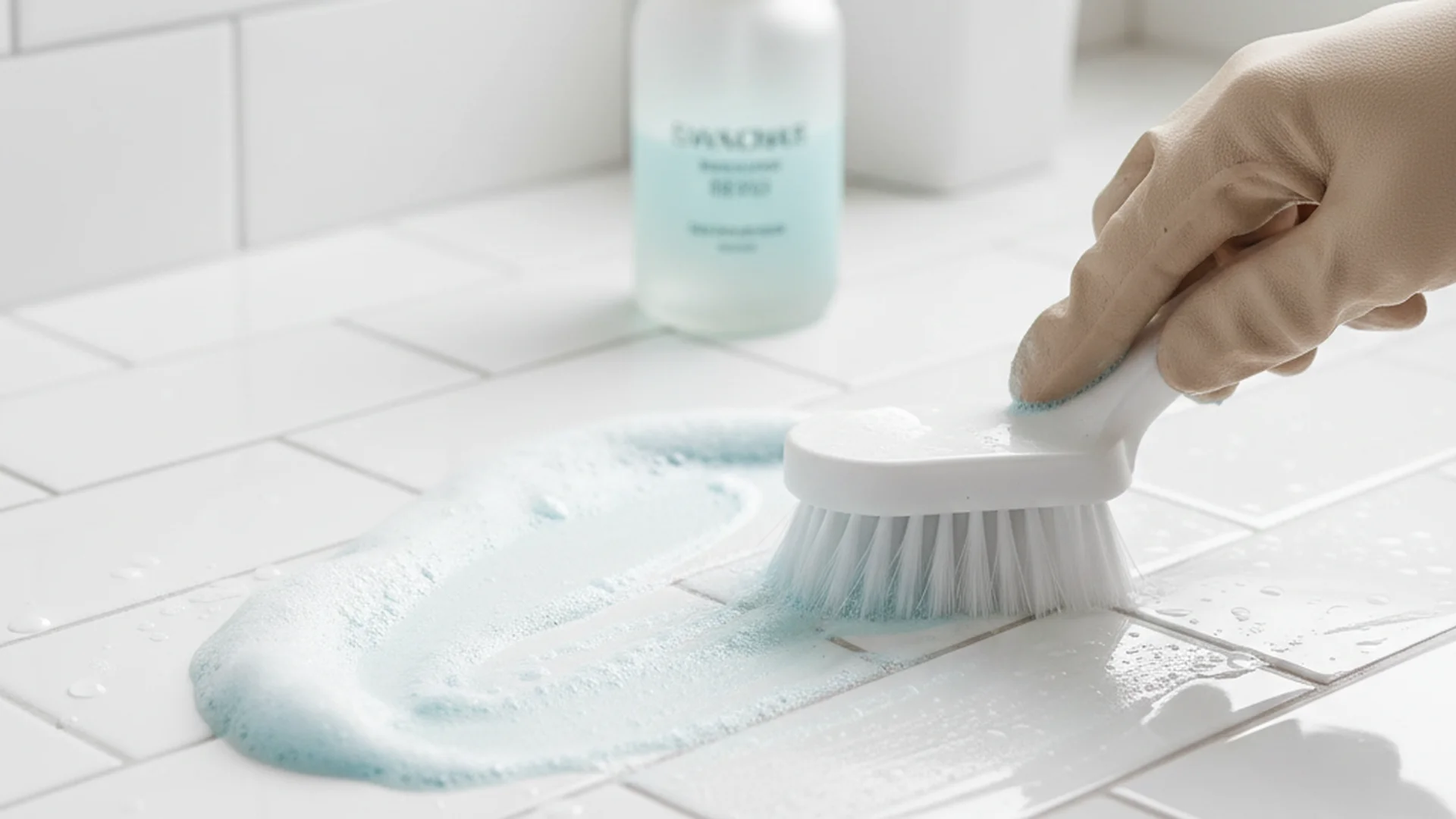
Apply your cleaner to the entire basin. If you are learning how to clean bathroom sink without bleach, a 1:1 mixture of white vinegar and water is highly effective for breaking down soap scum.
The Secret Step: Do not forget the overflow hole. It is where most mystery sink odors come from. Use a flexible pipe cleaner or a long zip-tie to dislodge gunk, then flush it with a mixture of baking soda and vinegar.
Step 4: The Drain
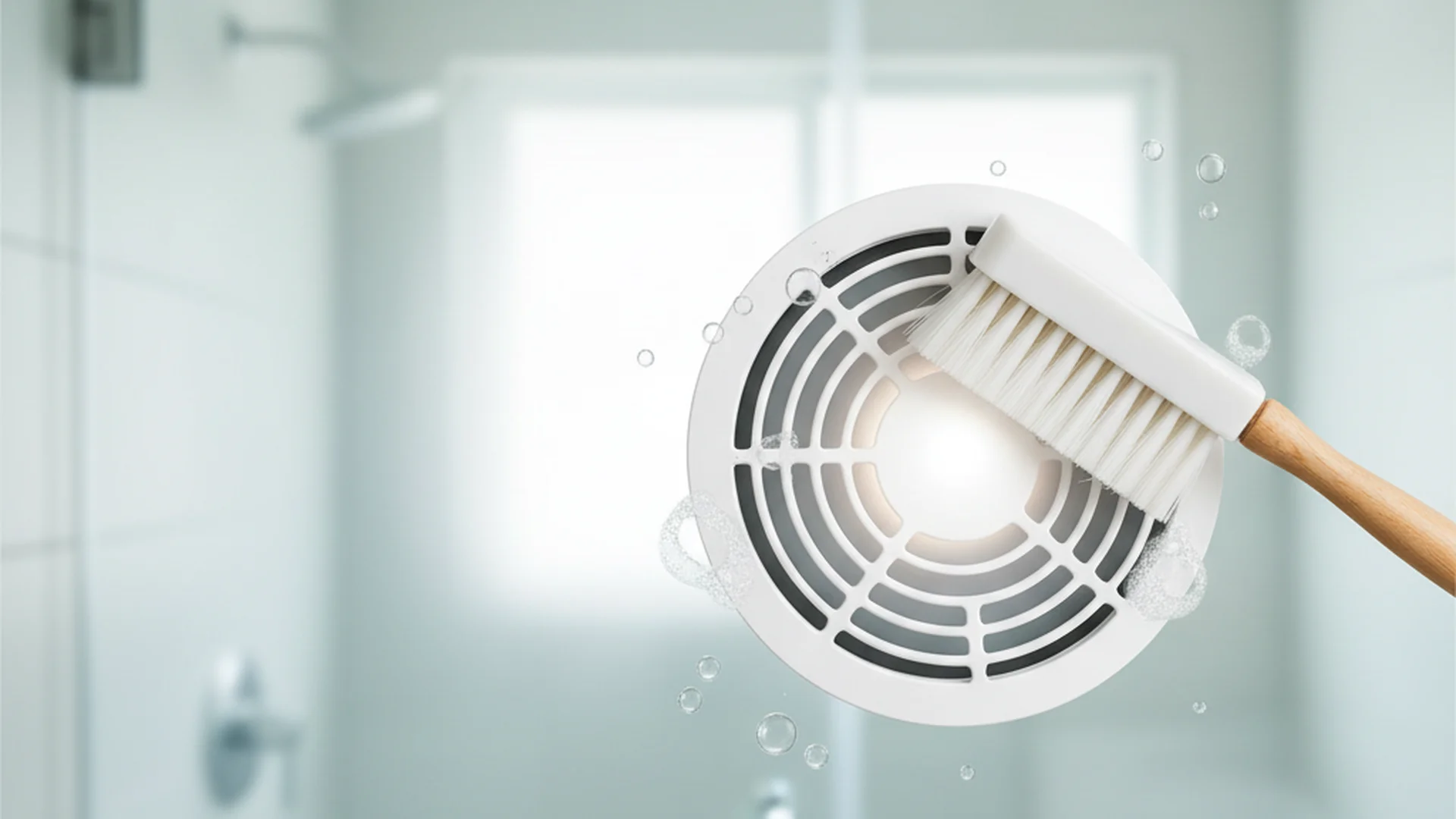
The drain is the epicenter of bacterial growth. Use a dedicated brush to scrub as far down as you can reach. If you have a pop-up stopper, remove it entirely to clean the hair and "bio-slime" that accumulates on the underside.
Step 5: Rinse and Dry
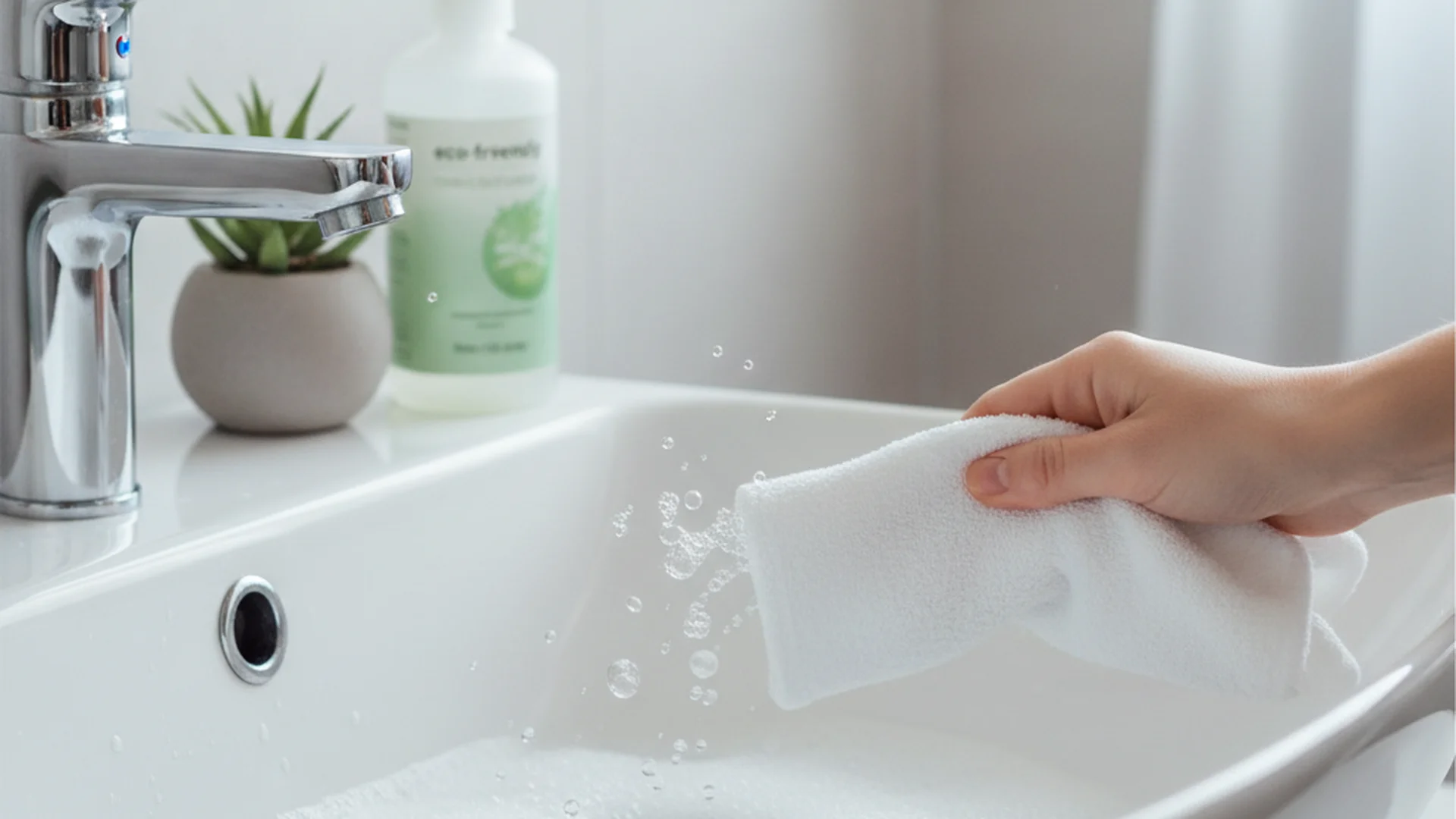
Rinse the entire sink with hot water. The final and most important step is the "60-second dry." Use a dry microfiber cloth to buff the basin and the faucet.
Success: Drying the sink after every deep clean prevents calcium buildup (white haze) and inhibits the growth of new mold in the silicone sealant.
Material-Specific Care Guide
Not all sinks are created equal. Using the wrong chemical on a specific material can lead to "etching" or permanent staining.
| Material | Best Cleaner | What to Avoid |
|---|---|---|
| Porcelain/Ceramic | Dish soap or non-abrasive cream | Steel wool, Ajax, or Comet |
| Stainless Steel | Mild detergent (wipe with grain) | Bleach (causes pitting) |
| Natural Stone | pH-neutral stone cleaner | Vinegar, Lemon, or Bleach |
| Glass/Vessel | Glass cleaner or vinegar | Abrasive sponges |
Real-World Example: The Marble Disaster
A homeowner in San Francisco recently shared a cautionary tale: after searching for "how to clean bathroom sink without bleach," they used a high-concentration vinegar spray on their new Carrara marble sink. Within minutes, the acidic vinegar "etched" the stone, leaving permanent dull spots that required a professional stone restorer to fix. Always check your material before applying acids.
Common Mistakes to Avoid
Even seasoned cleaners can make errors that damage their fixtures or compromise their health.
- Mixing Bleach and Vinegar: This is the most dangerous error in home maintenance. Combining these two creates toxic chlorine gas.
- Using a Toilet Brush for the Sink: Never cross-contaminate. Even a "clean" toilet brush can transfer fecal coliform bacteria to the surface where you wash your face.
- Neglecting the "Grain" on Metal: If you have a stainless steel sink, scrubbing against the grain will create micro-scratches that trap dirt and make the sink look dull over time.
- Leaving the Sink Wet: Allowing water to air-dry leads to mineral deposits. In regions with hard water, this can create a "crust" around the faucet base that is nearly impossible to remove without heavy chemicals.
Warning: Never use a drain snake through a sink's overflow hole; you risk damaging the internal piping or getting the tool stuck in the narrow passage.
Advanced 2026 Cleaning Trends
If you want to stay ahead of the curve, consider these emerging technologies:
- Steam Cleaning: Handheld "dry steam" cleaners are becoming a household staple. They sanitize surfaces at 200°F+, killing 99.9% of bacteria without a single drop of chemical cleaner.
- Probiotic Balancing: Rather than sterilizing everything, 2026 trends focus on "balancing the microbiome." Probiotic sprays leave behind beneficial bacteria that continue to clean the sink for days.
- Antimicrobial Glazes: Many modern sinks are manufactured with silver or copper ions infused into the glaze. These sinks require less frequent deep cleaning as they naturally inhibit bacterial growth.
Frequently Asked Questions
How do I clean a sink without using bleach?
Why does my sink still smell after I clean it?
Can I use vinegar on my marble or granite sink?
How often should I deep clean my sink?
Conclusion
Mastering how to clean bathroom sink surfaces is a blend of traditional techniques and modern technology. By moving away from harsh chemicals like bleach and embracing material-specific care and the "Top-Down" method, you can ensure your bathroom remains a sanctuary rather than a germ sanctuary. Remember that the best way to clean sink fixtures is the one that protects both your health and the longevity of your home’s materials.
Success: By implementing a weekly "Top-Down" routine and a daily "60-second dry," you will extend the life of your sink by years and significantly reduce household bacteria.
Cleaning that keeps score
Every task earns points, every streak multiplies them, and Premium adds a household leaderboard plus a monthly Dustagorgon to beat.
- Free forever
- 30 badges to earn
- Up to 6 in a household
No card needed. Set up your rooms in a couple of minutes.