In this article
What you’ll learn
- Utilize the 'bottom drawer hack' to access the floor without moving the entire unit.
- Degreasing is a critical first step to break the bond between dust and floor surfaces.
- Regular cleaning under appliances reduces fire risks and prevents pest infestations.
In every kitchen, there is a "black hole"—a mysterious, narrow void where Cheerios, stray spoons, and pet hair go to disappear. This area is, of course, the space beneath your range. Most homeowners avoid this chore because the prospect of lugging a heavy appliance across a finished floor is daunting. However, learning how to clean under stove surfaces effectively is about more than just aesthetics; it is a fundamental part of home safety and hygiene.
Whether you are dealing with a lingering "burnt" smell you can’t quite place or you’ve simply noticed a colony of dust bunnies migrating toward your baseboards, this guide will provide the most efficient, modern methods for 2025 and 2026. From the "bottom drawer hack" to the latest in steam technology, we will explore the best way clean under stove areas without breaking your back or scratching your expensive flooring.
Why Cleaning Under Your Stove is Non-Negotiable
It is easy to adopt an "out of sight, out of mind" mentality regarding the floor beneath your appliances. However, neglecting this area can have serious consequences for your home’s safety and air quality.
Fire Hazards and Grease Build-up
Grease build-up on and around cooking appliances is a well-known cause of kitchen fires. Underneath the stove, crumbs and oil splatters combine to create a highly flammable "mat." If an electrical short occurs or a gas flame licks underneath the unit, this debris acts as literal kindling. By maintaining a clean environment, you are directly contributing to a safer household.
Pest Prevention and Hygiene
If you’ve ever wondered why your kitchen has a persistent fruit fly problem or why you’ve seen a stray ant near the oven, the answer likely lies beneath. Hidden debris behind and under large appliances is one of the most common reasons pests settle into a kitchen. A single dropped noodle can feed a pest colony for weeks in the dark, warm microclimate provided by your oven’s motor and pilot lights.
Success: Households that follow a regular cleaning schedule for hidden appliance areas tend to face fewer safety scares and lower pest control costs over time.
The Best Way Clean Under Stove Areas Without Moving It
One of the biggest misconceptions about kitchen maintenance is that you must slide the stove out to clean the floor. For many, this is physically impossible or risks damaging the floor. Here is how to clean under stove easily using the "Bottom Drawer" method.
Step 1: The Bottom Drawer Hack
Most modern ranges (both gas and electric) feature a removable bottom drawer. While many use this for storing cookie sheets, its primary design function is often to provide service access.
- Empty the drawer completely. Note that while a drawer might weigh only 10 lbs empty, it can exceed 30 lbs when filled with cast iron pans.
- Pull the drawer out to its stop point.
- Lift the front of the drawer up and continue pulling; most will slide right off the tracks.
- Set the drawer aside. You now have a direct "window" to the floor beneath the stove.
Step 2: Dry Debris Removal
Once the drawer is removed, you will likely see a thick layer of dust and food particles. Do not start with a wet mop yet, as this will only create a "mud" of grease and hair.
Tip: Use a vacuum with a crevice tool or a "flat-head" attachment. This is the most efficient way to remove dry debris like pet hair and crumbs before applying liquid cleaners.
Step 3: The Degreaser First Rule
Dust under a stove isn't like dust on a bookshelf; it is usually "glued" to the floor by vaporized cooking oils. To remove this effectively, you need a degreaser.
- The Method: Spray a non-toxic degreaser (like Dawn Powerwash or a 1:1 vinegar and water mix) across the floor surface.
- The Dwell Time: Let it sit for 5–10 minutes. This allows the chemicals to break the molecular bond of the grease.
Warning: Never clean under or around a stove immediately after use. The floor and the appliance frame can retain heat, and certain cleaning agents can produce harmful fumes when hitting a hot surface.
Essential Tools for 2025-2026
The cleaning industry has evolved, and we no longer need to rely on wire hangers and wet rags.
The Retractable Gap Duster
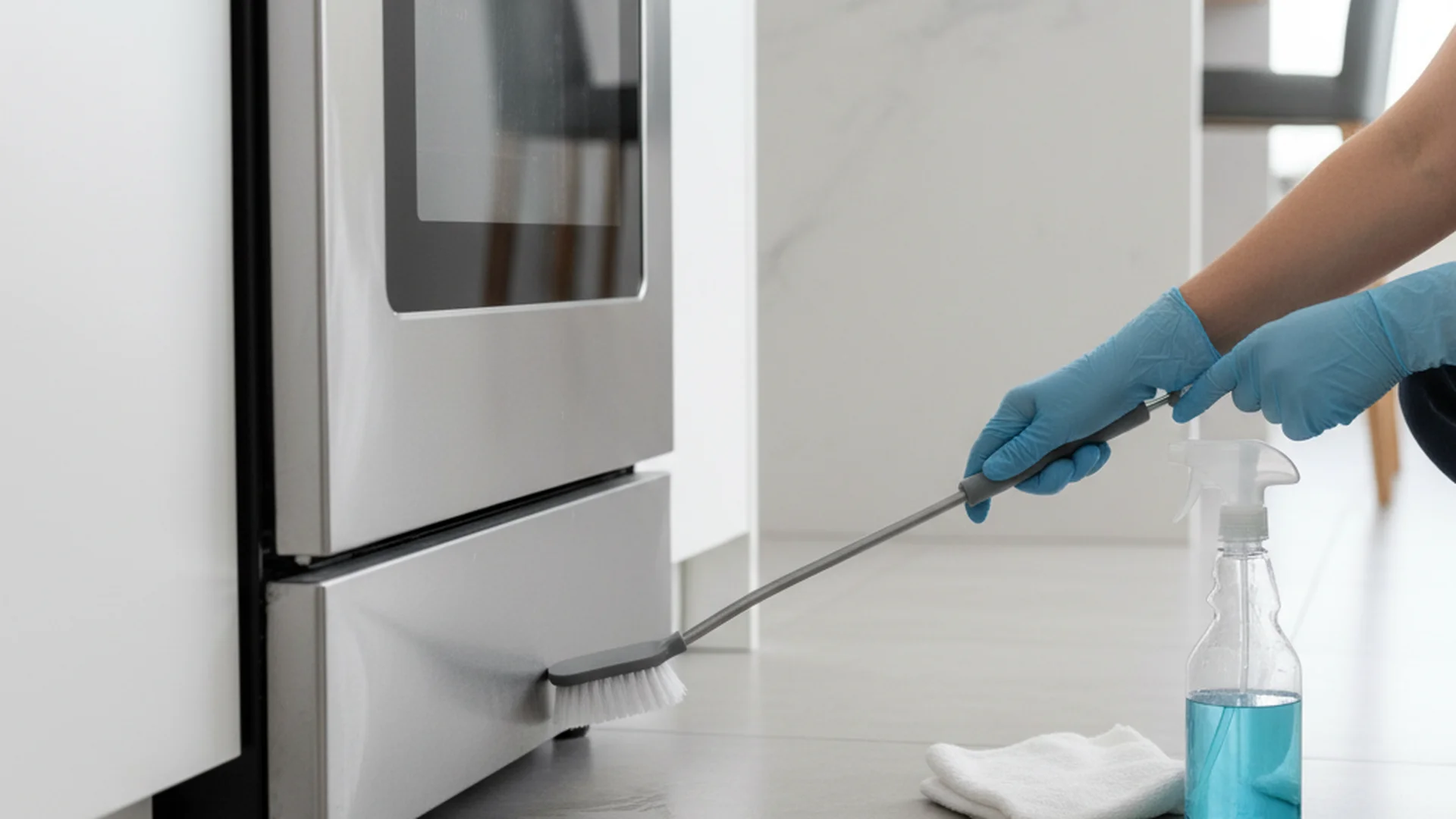
For 2025, the retractable gap duster (such as the Auruza model) has become the gold standard. These tools are ultra-thin (approx. 3 inches wide) and feature telescoping handles that reach up to 60 inches. This allows you to reach the back wall and the corners where the stove meets the cabinets without needing to remove the drawer at all.
Hybrid Steam Vacuums
As we look toward 2026, tools like the Polti Rollysteam are trending. These are hybrid wet-dry vacuums that use high-pressure steam to melt grease and kill bacteria simultaneously. This is particularly useful for tile floors where grease can seep into grout lines.
| Tool Type | Best For | Reach |
|---|---|---|
| Gap Duster | Monthly maintenance / Dusting | 60 inches |
| Vacuum Crevice Tool | Initial debris removal | 12-18 inches |
| Steam Mop | Deep sanitization / Grease | N/A (Requires access) |
| Microfiber Wand | Finished hardwood | 48 inches |
Common Mistakes to Avoid
Even with the best intentions, cleaning this area can lead to home damage or personal injury if done incorrectly.
1. The "Moving" Risk
If you do decide to move the stove, never "walk" it across the floor. Sliding a heavy appliance without appliance sliders or a protective sheet of 1/8-inch plywood is the #1 cause of torn linoleum and scratched hardwood.
2. Chemical Mixing
A common but dangerous mistake is mixing vinegar (an acid) and bleach (a base) to tackle a particularly "gross" area. This combination creates toxic chlorine gas, which can be fatal in enclosed kitchen spaces.
3. Ignoring the Anti-Tip Bracket
Safety regulations require stoves to be secured with an anti-tip bracket. If you move your stove, you must ensure the rear foot slides back into this bracket. Failing to do so creates a major tipping hazard, especially if children are in the home.
4. Neglecting the "Sides"
Most people focus on the floor but forget the "hidden walls"—the sides of the cabinets facing the stove. These areas are usually the greasiest parts of the kitchen. As you clean the floor, take a moment to wipe these vertical surfaces down with a degreaser.
Note: If you have a gas stove, be extremely careful if you choose to move the unit. Overextending the flexible gas line can cause leaks. Cleaning through the bottom drawer is always the safer alternative for gas models.
The Future of Kitchen Cleaning: 2026 and Beyond
We are seeing a massive shift in how kitchens are maintained. The "Induction Shift" is a primary driver; as households switch to induction ranges (projected to be the dominant cooking technology by 2028), the nature of the "mess" is changing. Induction produces less ambient heat, meaning grease doesn't vaporize and travel as far. Under-stove debris in induction-heavy homes is becoming primarily dry dust rather than sticky grease.
Furthermore, AI-driven robotics are now featuring "edge-cleaning" and "ultra-slim" profiles designed specifically to navigate the 4-inch gaps beneath modern cabinetry and appliances.
Frequently Asked Questions
Do I have to move the stove to clean under it?
How often should I clean under the stove?
Can I use a vacuum under there?
What is the safest cleaner for the floor under the stove?
Conclusion
Cleaning under the stove may not be the most glamorous part of your home maintenance routine, but it is one of the most impactful. By removing the hidden layers of grease and dust, you are protecting your home from fire hazards, deterring pests, and improving your overall indoor air quality.
Remember to utilize the "bottom drawer hack" to make the job easier, and always prioritize safety by avoiding the movement of gas lines and the mixing of chemicals. A simple 15-minute routine twice a year is all it takes to keep your kitchen truly clean from the floor up.
Success: By following this guide, you’ve turned a daunting task into a manageable routine, ensuring your kitchen remains a safe and healthy space for your family.
Cleaning that keeps score
Every task earns points, every streak multiplies them, and Premium adds a household leaderboard plus a monthly Dustagorgon to beat.
- Free forever
- 30 badges to earn
- Up to 6 in a household
No card needed. Set up your rooms in a couple of minutes.