In this article
What you’ll learn
- Manual removal of hair is the most effective first step for any clog.
- Baking soda and vinegar are excellent for maintenance, but won't dissolve large hair balls.
- Avoid using boiling water in PVC pipes to prevent joint damage.
Most homeowners don't think about their bathroom plumbing until the water starts pooling around their ankles. However, learning how to clean shower drain systems is about more than just convenience—it is a critical health necessity. Beneath that metal grate lies a thriving ecosystem of bacteria and organic matter. Shower drains are prime breeding grounds for biofilms, harbouring astonishing concentrations of bacteria. These colonies often include pathogens like Pseudomonas, which can lead to skin infections and respiratory issues if left unchecked.
Why Your Shower Drain Clogs
Before we dive into the "how," we must understand the "what." Unlike kitchen sinks that deal with food grease, shower drains face a unique cocktail of biological and chemical debris.
Hair is the undisputed king of shower blockages, responsible for the vast majority of slow drains. Soap scum follows closely, and accounts for a good share of the rest. This sticky residue acts as a "glue," catching hair and skin cells as they wash down. Furthermore, most American households deal with hard water. The mineral deposits (scaling) from hard water create a rough surface inside your pipes, making it even easier for debris to snag and build up.
Note: Preventing a clog is significantly cheaper than fixing one. Preventive maintenance costs roughly $120 annually, while emergency repairs for pipe bursts or water damage can skyrocket past $3,500.
The DIY Toolkit: Natural Methods and Tools
When you want to clean shower drain easily, you don't always need to reach for a bottle of caustic chemicals. In fact, many professional plumbers advise against them. Here are the most effective tools for the job.
The Natural Power Duo: Baking Soda and Vinegar
This is the best way to clean shower drain surfaces and deodorize the P-trap without damaging your plumbing.
- Prep: Pour a pot of hot (not boiling) water down the drain.
- React: Pour 1/2 cup of baking soda down the drain, followed by 1 cup of white distilled vinegar.
- Wait: Let the mixture fizz for at least 15 minutes. This chemical reaction helps break down the "glue" of the soap scum.
- Flush: Rinse with more hot water.
Mechanical Removal Tools
If the water isn't moving, the "fizz" won't be enough. You need to get physical.
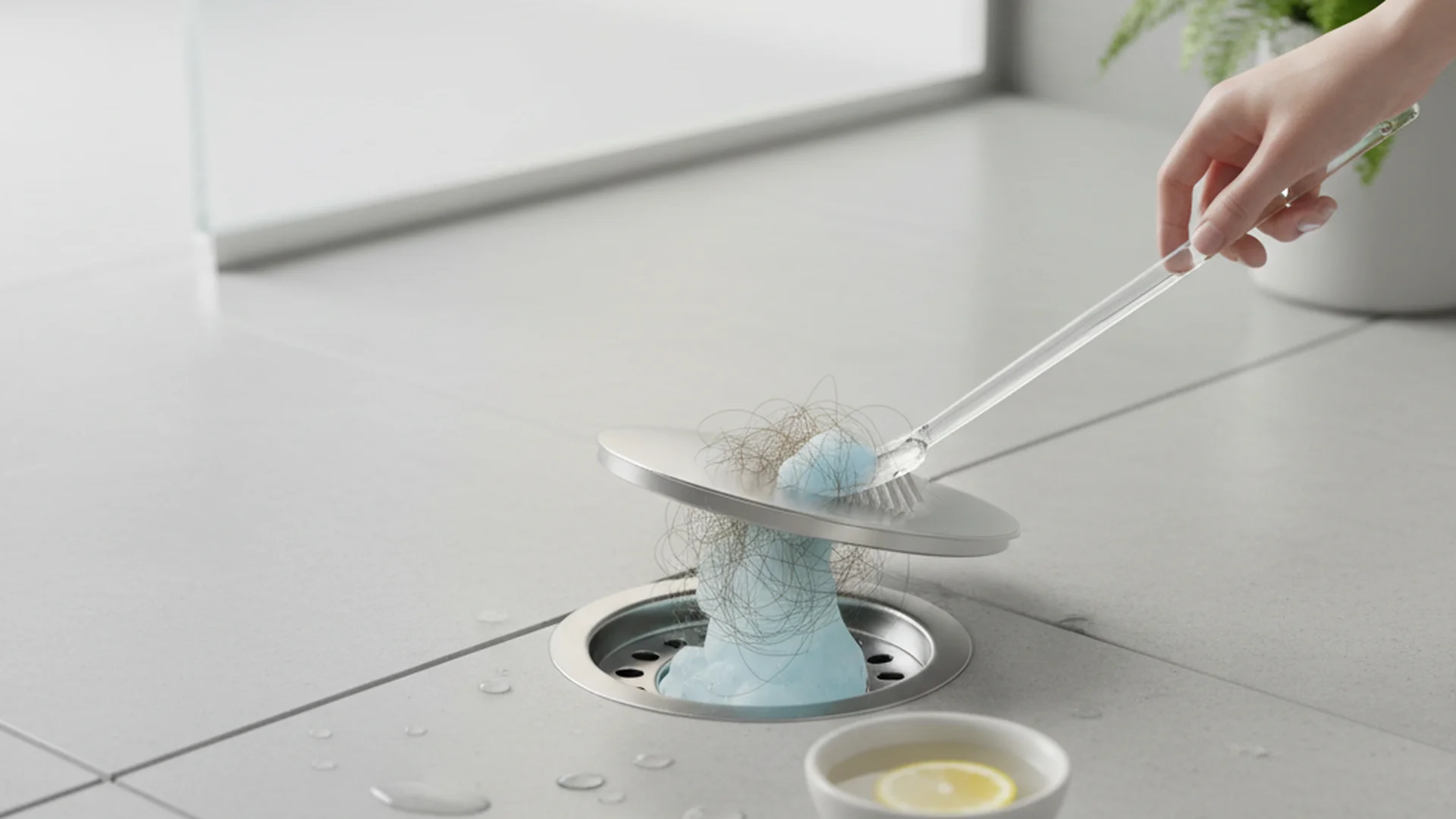
- Zip-Style Tools: These are thin, flexible plastic strips with barbs. They are incredibly effective at pulling out hair clumps near the surface.
- The Cup Plunger: Ensure you are using a standard flat-bottomed cup plunger, not a flanged toilet plunger.
- Drain Snakes: For deeper clogs, a hand-cranked snake can reach several feet into the plumbing to break up obstructions.
Tip: Before using a plunger, apply a small amount of petroleum jelly to the rim of the cup to create an airtight seal against the shower floor.
Step-by-Step Guide to Cleaning Your Drain
To clean shower drain pipes thoroughly, follow this professional-grade workflow.
Step 1: Remove the Grate or Stopper
Most modern "clogs" are actually just hair tangled around the drain grate or the pop-up stopper. Use a screwdriver to remove the grate or simply unscrew the stopper.
Step 2: Manual Extraction
Using a pair of gloves and a zip-style tool, reach into the drain and pull out any visible hair. This is often the "gross factor" that people avoid, but it is the most vital step.
Step 3: Apply an Enzyme Cleaner
In 2025, the industry is shifting away from caustic acids toward enzymatic cleaners. These products use live bacteria or enzymes to "eat" organic matter like skin cells and hair over several hours. They are safer for your skin, your pipes, and your septic system.
Step 4: The Flush
After the enzymes have worked their magic, flush the system with hot tap water for several minutes to ensure all loosened debris is cleared.
| Pipe Material | Boiling Water Safe? | Recommended Cleaning Method |
|---|---|---|
| PVC (Plastic) | No | Hot tap water + Enzymes |
| Copper | Yes | Boiling water + Baking Soda |
| Cast Iron | Yes | Snake + Vinegar |
Common Mistakes to Avoid
Even well-intentioned homeowners can accidentally damage their plumbing. Here are the most frequent errors I see in the field:
- The "Chemical Quick Fix" Fallacy: Liquid drain cleaners are often high-pH caustic bases. If they don't clear the clog, they sit in your pipes, generating intense heat. This heat can soften PVC joints or cause older metal pipes to corrode from the inside out.
- Using Metal Hangers: While it's a classic "hack," using a wire coat hanger is risky. The sharp metal ends can easily puncture aged pipes or scratch the smooth interior of PVC, creating new catch-points for future clogs.
- Ignoring the P-Trap: If your drain smells like rotten eggs, the issue might be a dry P-trap. If a guest bathroom isn't used frequently, the water seal evaporates, allowing sewer gases to enter your home.
- Misusing Boiling Water: As mentioned, never use boiling water on PVC pipes. It can melt the seals that hold your pipes together, leading to catastrophic leaks behind your walls.
Warning: Never mix different types of chemical drain cleaners. Combining an acid-based cleaner with a bleach-based cleaner can create toxic chlorine gas.
Modern Trends in Drain Technology (2025–2026)
The world of bathroom maintenance is evolving. If you are renovating, keep an eye on these trends that make it easier to clean shower drain systems:
- Linear Drains: These long, sleek drains are popular in "curbless" showers. They now often come with "comfort-coated" lift-out keys, allowing you to remove the entire grate easily for cleaning.
- Smart Self-Cleaning Drains: High-end models for 2026 feature integrated UV-C light strips. These lights automatically activate between showers to kill bacteria and prevent biofilm buildup before it starts.
- Cylindrical Hair Baskets: Moving away from flat mesh screens, new deep-basket designs capture significantly more hair without slowing the water flow, reducing the frequency of deep cleans.
- Sustainable Refill Pods: Major brands are now offering concentrated enzyme pods in plastic-free packaging, catering to the many homeowners who prioritize sustainability in 2025.
Frequently Asked Questions
How often should I clean my shower drain?
Why does my drain smell even when it isn't clogged?
Can I use a vacuum to suck out a clog?
Is vinegar safe for all types of drains?
Conclusion
Mastering the best way to clean shower drain systems is a combination of the right tools, the right timing, and a bit of "elbow grease." By moving away from harsh chemicals and embracing mechanical removal and enzymatic cleaners, you protect your plumbing, your health, and your wallet. Remember the "30-second rule": run hot water for half a minute after every shower to flush down oils and soap before they solidify. This simple habit, combined with monthly maintenance, will keep your bathroom running smoothly for years to face.
Success: Regular maintenance ensures you never have to deal with the stress and expense of a $3,500 emergency plumbing repair.
Cleaning that keeps score
Every task earns points, every streak multiplies them, and Premium adds a household leaderboard plus a monthly Dustagorgon to beat.
- Free forever
- 30 badges to earn
- Up to 6 in a household
No card needed. Set up your rooms in a couple of minutes.