In this article
What you’ll learn
- Clean and inspect the under-sink area at least twice a year to prevent mold.
- Use L-shaped organizers and vertical storage to maximize space around plumbing.
- Install a smart leak detector to avoid thousands of dollars in water damage.
We often spend hours scrubbing our bathroom tiles and polishing the vanity mirror, but there is one dark corner that remains the "final frontier" of home maintenance: the cabinet under the sink. Learning how to clean under bathroom sink spaces is more than just an aesthetic choice; it is a vital part of home hygiene and preventative maintenance. Between the maze of pipes, the occasional slow leak, and the graveyard of half-empty hairspray bottles, this area can quickly become a breeding ground for mold and clutter.
In this guide, we will explore the best way clean under bathroom sink cabinets to ensure your home remains healthy, organized, and protected from hidden water damage.
Why Under-Sink Maintenance Matters
It is easy to adopt an "out of sight, out of mind" mentality for cabinetry, but neglecting this area is a risky move. Water damage is one of the most common and expensive problems homeowners face. A slow, undetected drip under a bathroom sink can lead to floor rot and mold remediation costs that range from $500 to over $3,000.
Beyond the financial impact, cleanliness influences how a bathroom feels to use. An unclean restroom leaves a lasting negative impression on anyone who walks into it, and the same psychology applies at home—a clean, organized bathroom (even inside the cabinets) creates a sense of serenity and well-being.
| Potential Issue | Repair Cost (Est.) | Prevention Method |
|---|---|---|
| Slow Pipe Leak | $150 - $400 | Semi-annual inspection |
| Mold Remediation | $500 - $3,000+ | Proper ventilation & cleaning |
| Cabinet Rot | $200 - $1,000 | Waterproof silicone mats |
The Step-by-Step Deep Cleaning Process
To clean under bathroom sink easily, you cannot simply wipe around the bottles. You must follow a systematic approach that addresses both the surface grime and the structural integrity of the area.
Step 1: The "Empty-First" Rule
The most common mistake people make is trying to clean a crowded cabinet. To do this right, remove every single item. Place everything on the bathroom floor or in a hallway so you can see exactly what you have.
Tip: Use this opportunity to check expiration dates. Most skincare products and sunscreens expire within 12 months, and medications should be disposed of properly if they are past their prime.
Step 2: Vacuum and Dust
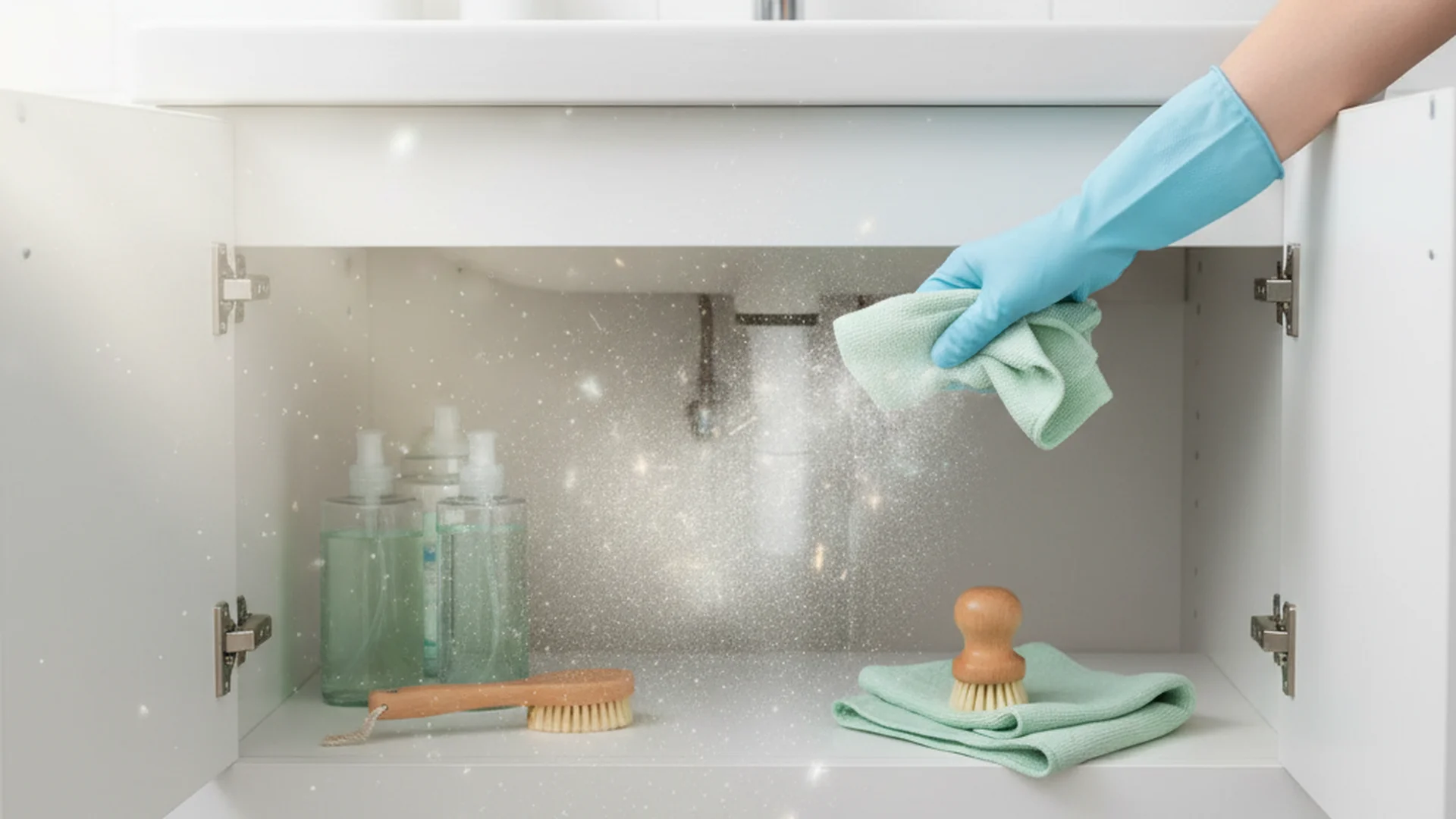
Once the cabinet is empty, you will likely see a layer of dust, hair, and perhaps some dried soap residue. Use a hand vacuum or a hose attachment to clear out the debris from the back corners. Don't forget to wipe down the P-trap (the U-shaped pipe); these pipes often collect condensation which traps dust, creating a layer of grime.
Step 3: Tackle Sticky Residue
Bathroom cabinets are notorious for "product rings"—those sticky circles left behind by leaking soap or hair serum.
Success: For stubborn gunk, a cleaning paste like "The Pink Stuff" or a simple mixture of dish soap and warm water works wonders. If the residue is oil-based, a little rubbing alcohol on a microfiber cloth will dissolve it instantly.
Step 4: Disinfect and Dry
Use a 1:1 mixture of white vinegar and water or a mild enzyme cleaner to wipe down the walls and floor of the cabinet. Vinegar is excellent for killing surface mold spores without the harshness of bleach.
Warning: Never mix cleaning products. For example, using an ammonia-based glass cleaner and then a bleach-based wipe can create toxic chloramine gas. Stick to one cleaning solution at a time.
Modern Trends in Under-Sink Organization (2025-2026)
As we move into 2025 and 2026, the focus has shifted toward "functional minimalism" and sustainable materials. The best way clean under bathroom sink today involves setting up a system that stays clean longer.
L-Shaped Sliding Organizers
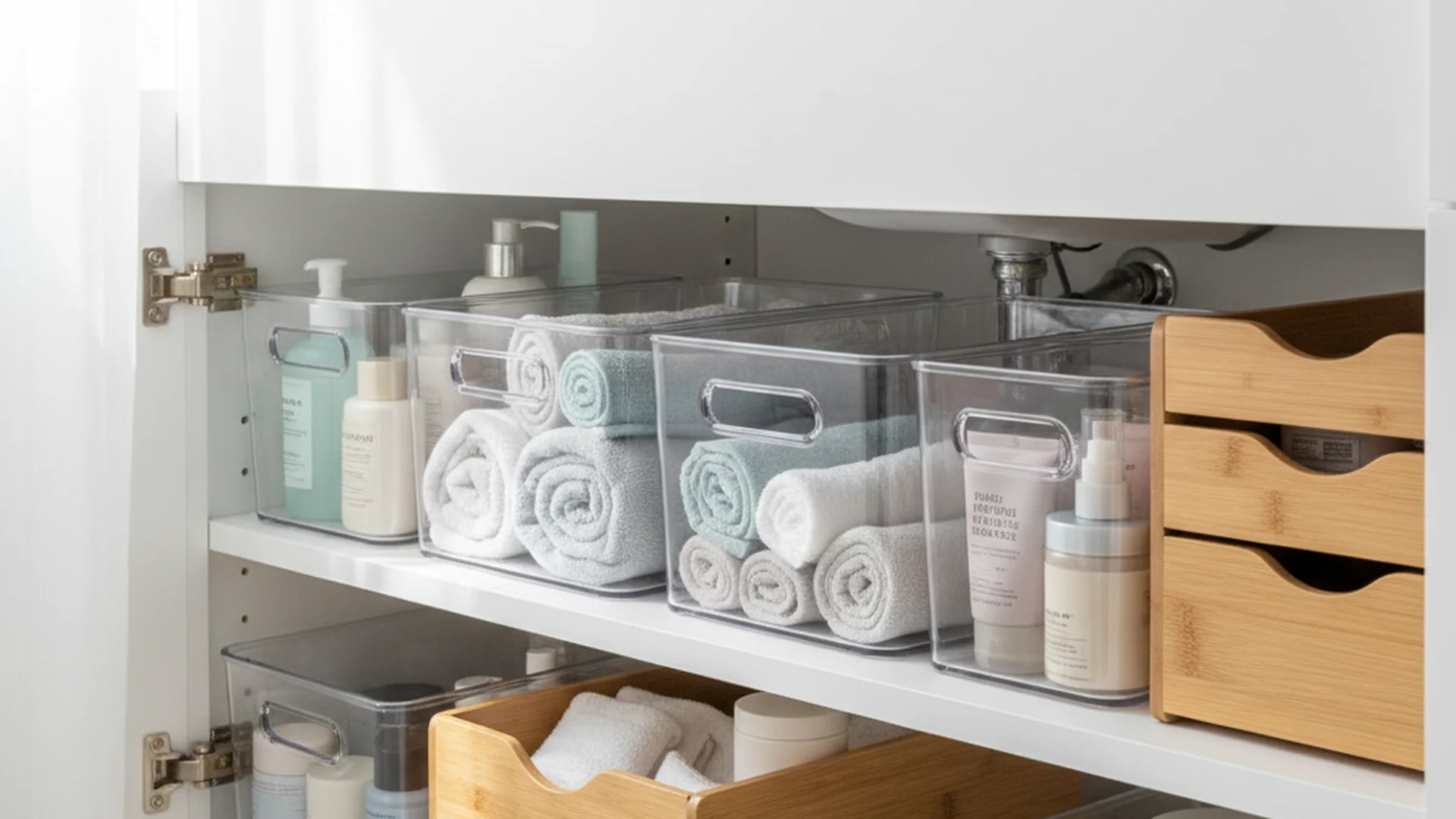
The biggest challenge under a sink is the plumbing. New L-shaped organizers are the top-rated solution for 2026. They feature a narrow top shelf that fits alongside the pipe and a wider bottom shelf. This allows you to use the full height of the cabinet without hitting the drain.
Diatomaceous Earth (Stone) Mats
Moving away from plastic and rubber, the trend is now shifting toward stone mats made of diatomaceous earth. These "instant-dry" mats absorb moisture naturally and prevent mold growth. They are perfect for placing under hand soap refills or damp cleaning bottles.
Smart Leak Detectors
In 2025, no modern bathroom is complete without a Wi-Fi-enabled leak sensor. Devices like the IKEA KLIPPBOK or Moen Smart Leak Detector sit on the cabinet floor. If even a teaspoon of water touches them, they send an immediate alert to your phone.
Note: A $30 sensor can save you $3,000 in flooring repairs.
Common Mistakes to Avoid
Even seasoned cleaners can fall into traps when maintaining the bathroom vanity. Here are the top errors to avoid:
- The "Bleach-Everything" Myth: While bleach is a powerful disinfectant, it can be too abrasive for wood finishes and can actually damage certain PVC or metal pipe coatings if spilled.
- Storing Wet Items: Never put a damp sponge or a recently used cleaning cloth back into the dark cabinet. This creates a humid micro-environment perfect for mildew.
- Ignoring the P-Trap: The U-shaped pipe under your sink is designed to hold water to block sewer gases, but it also catches hair and soap scum. Twice a year, place a bucket underneath and unscrew the "slip joints" to clear out any debris.
- Over-Minimalism: Don't throw away all your organizers in an attempt to look "clean." Without bins, items will inevitably scatter and spill again within weeks.
Real-World Example: The "Damp Sponge" Disaster
Consider the case of a homeowner who stored their wet grout sponge in a plastic bucket under the sink. Because the cabinet was closed and had no airflow, the sponge never dried. Within three weeks, the entire back wall of the cabinet was covered in black mold, requiring the replacement of the drywall behind the vanity. Always let items dry completely before storing them.
Frequently Asked Questions
What is the best way to remove sticky residue from cabinet floors?
How do I get rid of the musty "sink smell"?
Can I use chemical drain cleaners for clogs under the sink?
Is a waterproof mat really necessary?
Conclusion
Learning how to clean under bathroom sink cabinets is a fundamental skill for any homeowner or renter. By following the "Empty-First" rule, inspecting your pipes for leaks, and utilizing modern L-shaped organizers, you can transform this cluttered "invisible" space into a clean, functional part of your home. Remember that consistency is key; a deep clean every six months will prevent major mold issues and keep your bathroom feeling like a spa rather than a storage unit.
Success: Regularly maintaining the space under your sink not only protects your home's value but also makes your daily routine faster and more enjoyable.
Cleaning that keeps score
Every task earns points, every streak multiplies them, and Premium adds a household leaderboard plus a monthly Dustagorgon to beat.
- Free forever
- 30 badges to earn
- Up to 6 in a household
No card needed. Set up your rooms in a couple of minutes.